Anoma has only been around since 2024, but the brand has already built a recognizable identity around one unusual silhouette: the A1, a rounded, roughly triangular case that founder Matteo Violet Vianello drew inspiration from a 1950s free-form table designed by Charlotte Perriand. Previous variations, including the Slate, the Optical, and the permanent Abyss and Stone models, mostly played with the dial. The case stayed the same.
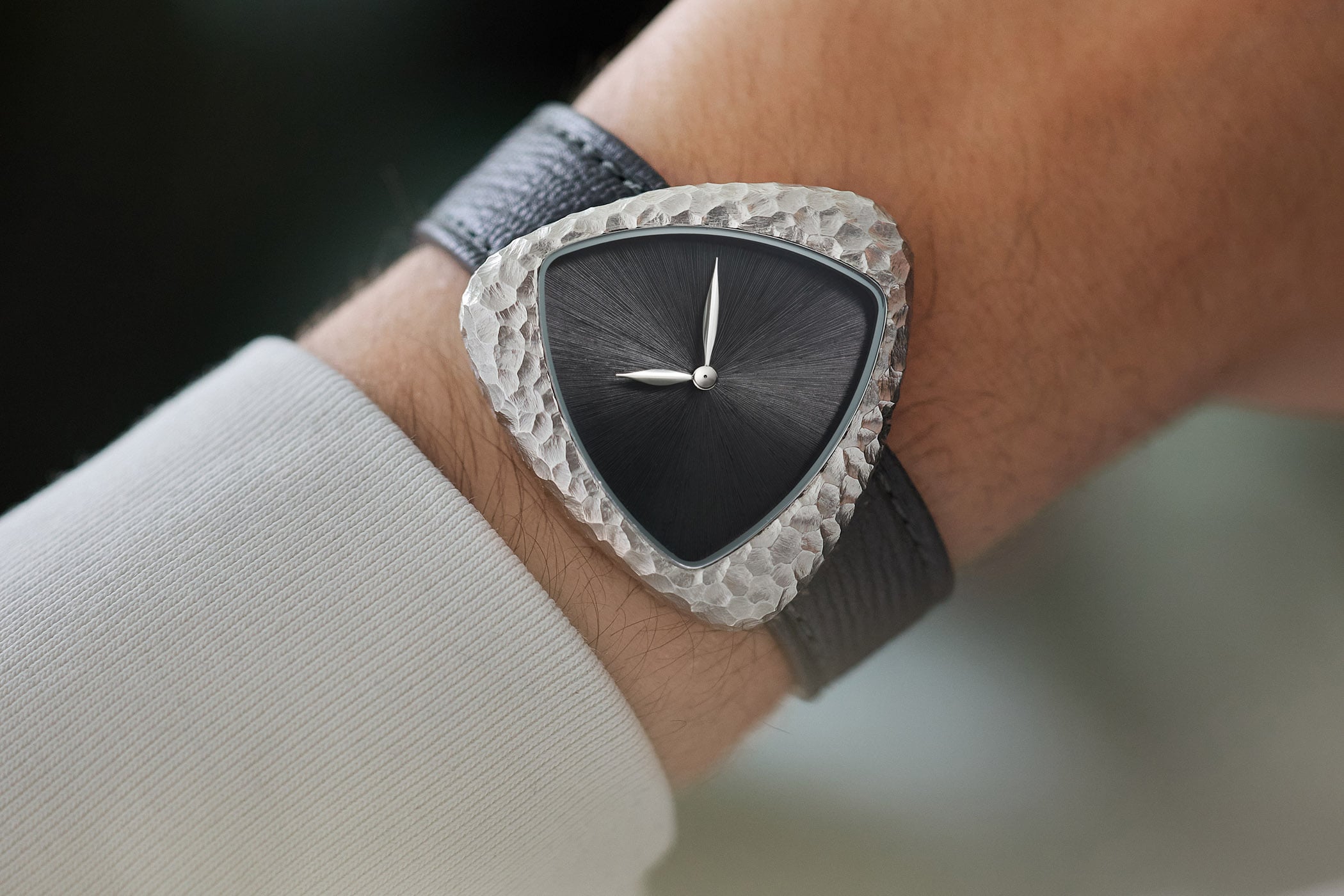
The A1 Prehistoric changes that. For the first time, Anoma has gone after the case itself, covering it in a hand-chiselled texture that looks less like a refined watch and more like something pulled out of an archaeological dig. It's a deliberate choice, and it traces back to a specific moment: Vianello standing in the Centre Pompidou during a Brancusi exhibition, surrounded by the sculptor's collection of primitive tools and Stone Age artifacts. That visit clearly stuck with him.
The result is the most aggressive version of the A1 so far, and probably the most interesting one too.
What's Actually Different
The core shape is the same asymmetric triangle you know from the A1 family. But every surface of the Prehistoric case has been worked by hand with a chisel, leaving an irregular, faceted texture across the entire case. There's no uniform pattern here. Each watch looks slightly different because each one was worked by a craftsperson rather than a machine. That's not marketing language, it's just what hand-chiselling means in practice.
Previous A1 models were striking because of their silhouette. The Prehistoric earns attention through texture and the way it catches light differently at every angle. Up close, it reads almost geological. From a distance, it has a matte, roughened quality that sets it apart from anything else on the market right now.
Every other A1 variant asked you to look at the dial. The Prehistoric makes you look at the case first, which is exactly the kind of inversion that keeps a young brand from going stale.
The Inspiration Behind It
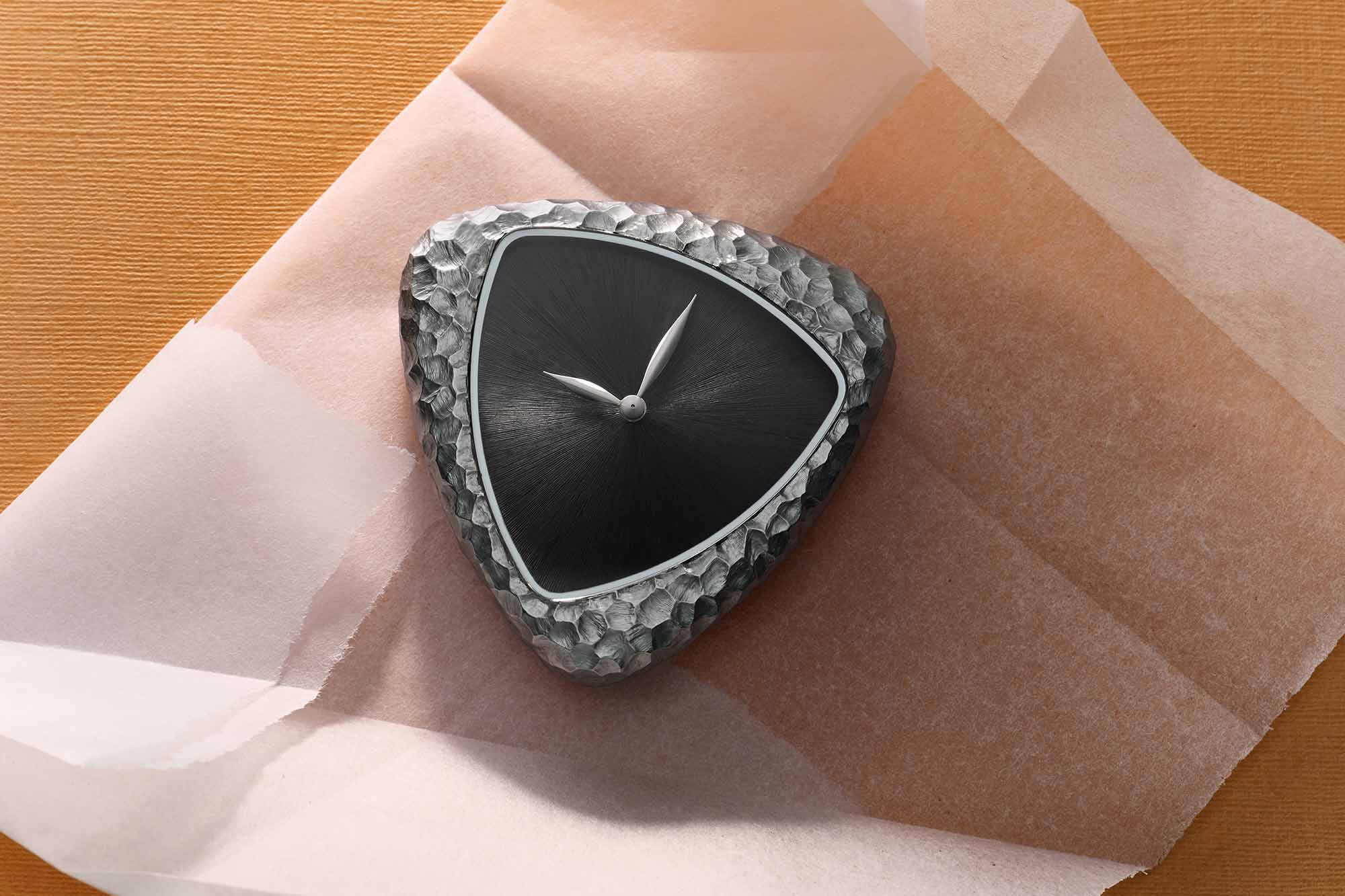
Vianello has been consistent about his references from the start. The original A1 tied back to Charlotte Perriand's furniture design and Constantin Brancusi's sculptures. The Prehistoric adds another layer from the same Brancusi world: the sculptor's personal collection of primitive tools, the kind of objects made by early humans who were shaping stone without any of the refinement we associate with craft today.
There's something honest about that reference. A hand-chiselled watch case actually shares a process with those tools, even if the context is completely different. It's not a superficial aesthetic nod. The making method and the inspiration line up.
Who This Is For
You already have to be a certain kind of person to wear an A1. The triangular shape isn't subtle, and it doesn't sit on the wrist the way a conventional round or rectangular watch does. The Prehistoric pushes that further. This isn't a watch for someone easing into independent watchmaking. It's for someone who's already comfortable being the person in the room with the interesting wrist.
- Collectors who follow the independent and micro-brand space closely
- People drawn to craft and visible hand-work over machine finishing
- Anyone tired of the same polished-brushed finishing debate on conventional cases
- Fans of design references that go beyond watches, including architecture, sculpture, and furniture
- Existing A1 owners looking for the most distinctive version in the lineup
How It Fits in the A1 Lineup
The A1 family now covers quite a bit of ground. The Abyss and Stone are the permanent catalog pieces, more wearable day-to-day and slightly less confrontational. The Slate and Optical were smaller series with distinct dial personalities. The Prehistoric sits above all of them in terms of how far it pushes the concept.
What Anoma has done well across these releases is avoid repeating themselves at the dial level while keeping production numbers tight enough that each version feels considered. The Prehistoric is the first time they've made the case the story, which opens up a new direction for the brand if they want to pursue it. Given how young Anoma is, having this much range already is genuinely impressive.
If you've been watching the A1 evolve and waiting for the version that felt truly different rather than just new, the Prehistoric is probably it. Worth your attention.

Comments
No comments yet, be the first to weigh in.