Last September, Girard-Perregaux marked the Laureato's 50th anniversary with a 200-piece limited edition. It sold. People wanted more. So GP listened, and now the Laureato Fifty is a proper, ongoing collection with four new references in 36mm and 39mm stainless steel.

That's the headline. No more hunting for a limited allocation. The Laureato Fifty is here in full, regular production, in sizes that cover a genuinely broad range of wrists. Four references at launch, all steel, all sharing the same octagonal case and integrated bracelet that has defined this watch since 1975.
What's Actually New
The original Laureato Fifty was rose gold. Beautiful, yes. Accessible to most of us, no. These new references flip the script. Full stainless steel means the price comes down to a realistic place, and the two case sizes mean there's no excuse for the watch not to fit you.
The 39mm is the historically correct size, a faithful reading of the original 1975 proportions. The 36mm is new to the Fifty line, and it works just as well. Neither is a shrunken afterthought or an inflated statement piece. They're both just right.
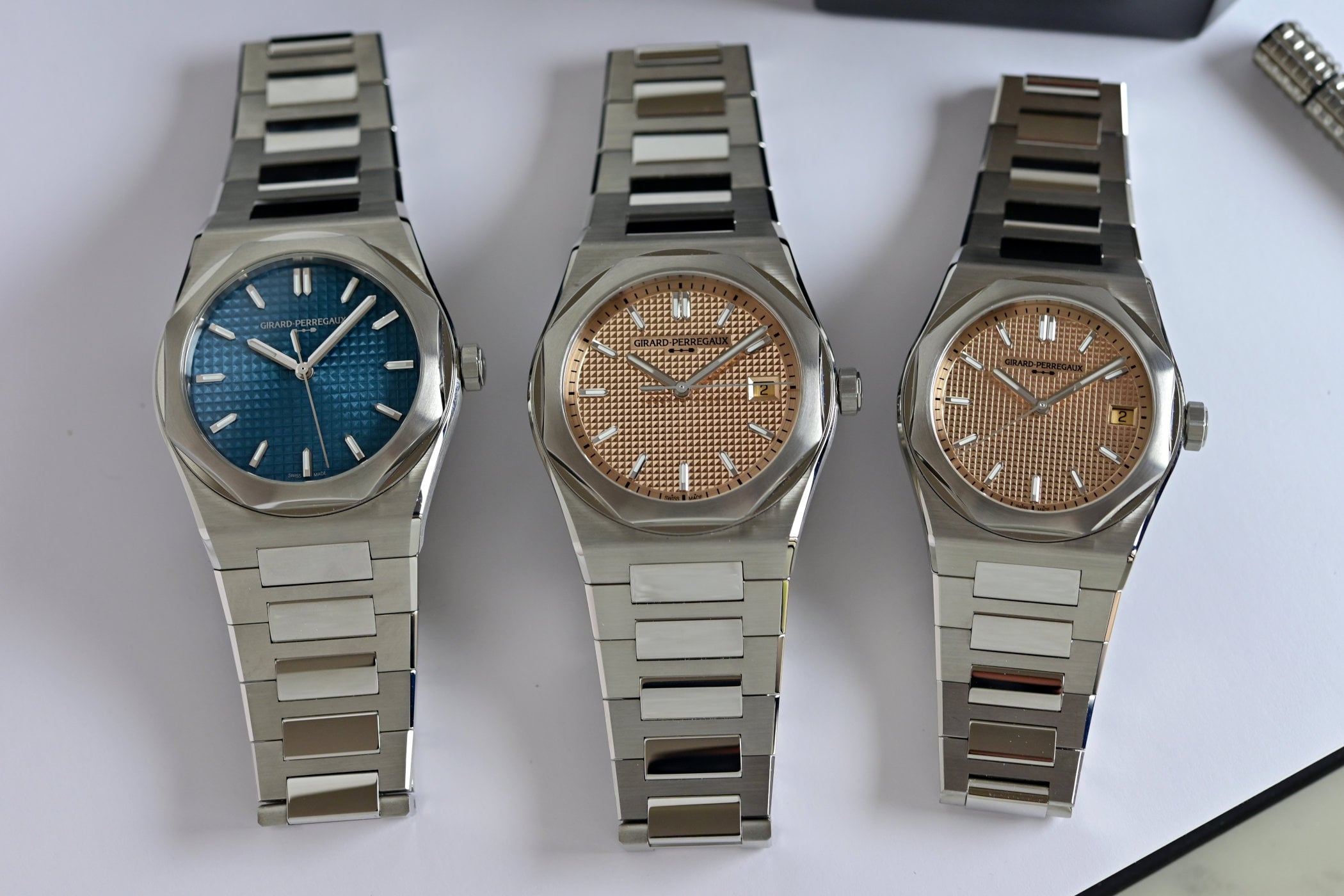
All four references run the in-house GP4800 automatic movement. The dial options are where things get interesting. You can go deep blue flinqué enamel, a finish that involves firing translucent enamel over an engine-turned base to get that layered, almost three-dimensional look. Or you can spec a solid 18k rose gold dial if you want precious metal somewhere in the build. There's also a diamond-set variant in the 36mm. Four references, genuinely distinct personalities.
The flinqué enamel dial is the one to get. It's the kind of finishing that quietly justifies the price more than any press release ever could. Put it next to a competitor's sunray-brushed dial and you'll understand immediately why it costs what it does.
The Design, If You Need a Refresher
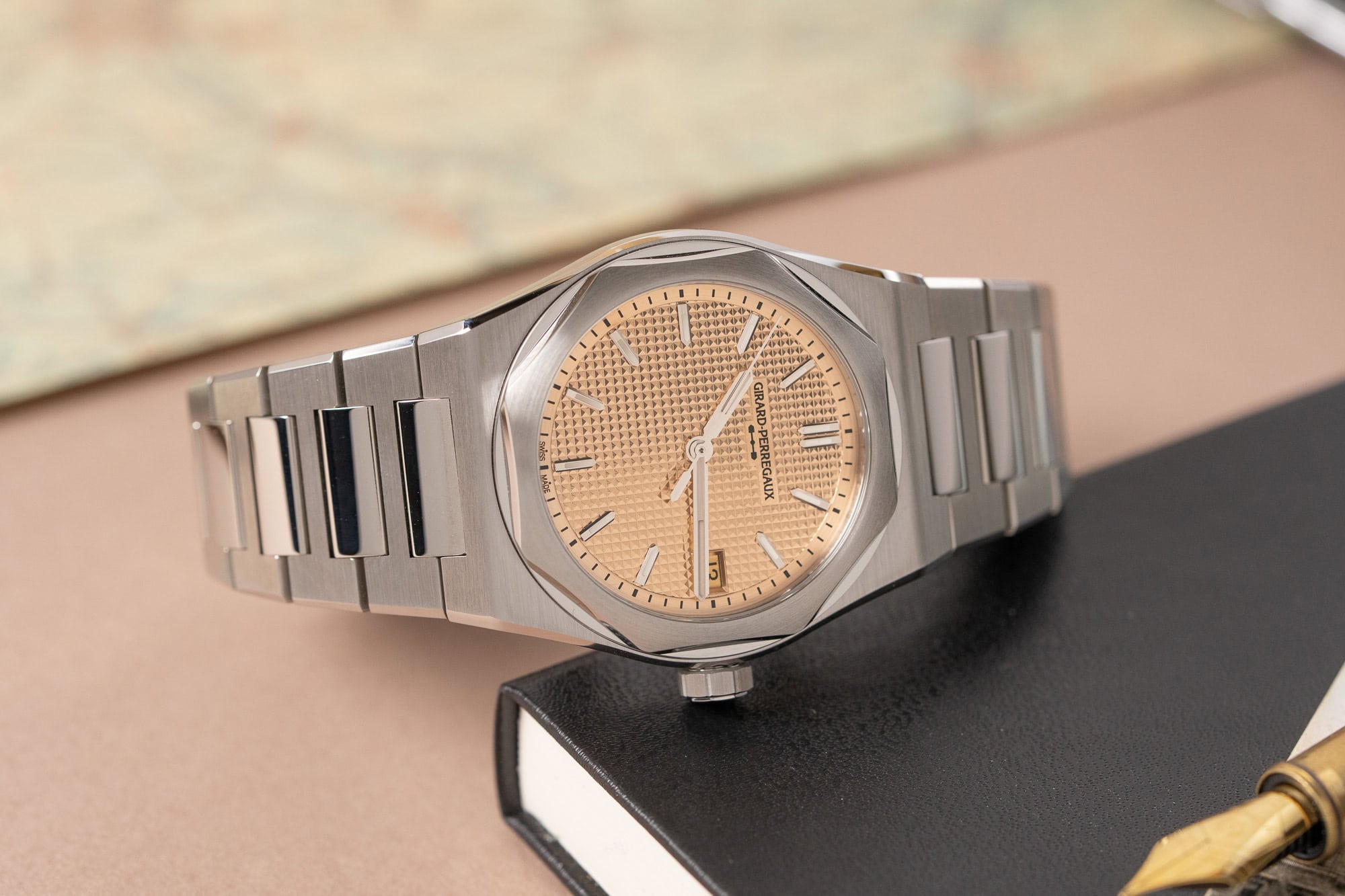
The Laureato is one of those rare watches that didn't need saving. When GP introduced it in 1975, the octagonal bezel sitting on a circular case middle was already a strong, considered design. It was built to compete with the Royal Oak and the Nautilus, and it has always held its own aesthetically. The integrated bracelet flows into the case cleanly. The finishing alternates between brushed and polished surfaces in a way that catches light without being flashy.
The Fifty variants keep all of that intact. There's no reinterpretation here, no contemporary redesign. This is the Laureato as it should be, just in materials and sizes that make it approachable.
Who This Is For
If you've been watching the integrated bracelet sports watch category and felt priced out or poorly sized, this is your entry point into one of the most underrated designs in the segment. The 36mm will suit smaller wrists without compromise, and the 39mm hits that sweet spot for people who find the Royal Oak's 41mm a touch too large.
It's also worth saying this out loud: the Laureato has always lived in the shadow of its more famous competitors. That's been good news for buyers who did their research. The design is just as strong, the movement is in-house, and the price has historically been more reasonable than what you'd pay for equivalent finishing elsewhere.
- Four new references: 36mm and 39mm, each with dial options including flinqué enamel and rose gold
- All powered by the in-house GP4800 automatic calibre
- Full stainless steel case and integrated bracelet throughout the range
- Diamond-set variant available in the 36mm
- Regular production, not limited, meaning you can actually plan a purchase
How It Compares
The obvious comparisons are the Royal Oak and the Nautilus. Both are larger in their standard references, both carry significant premiums, and both have secondary market dynamics that make a straightforward boutique purchase feel like a transaction from a different era. The Laureato doesn't have that baggage. You walk in, you buy one, you wear it.
Closer in spirit, the Piaget Polo and the Vacheron Overseas offer integrated steel sports watches at a similar level of finish. The Laureato competes on design originality, the octagonal bezel is genuinely its own thing, and on movement quality. The GP4800 is a credible in-house calibre, not a base movement dressed up.
The flinqué enamel dial in particular puts the Laureato Fifty in a category where very few competitors can follow. That kind of dial treatment is rare at any price. Finding it in a steel sports watch is rarer still.
GP has been building toward this moment since last September's limited release. These four references feel like the real launch. Steel, two sizes, proper production quantities, and dials that give you a reason to choose one over the other. The Laureato Fifty has arrived.
Comments 1