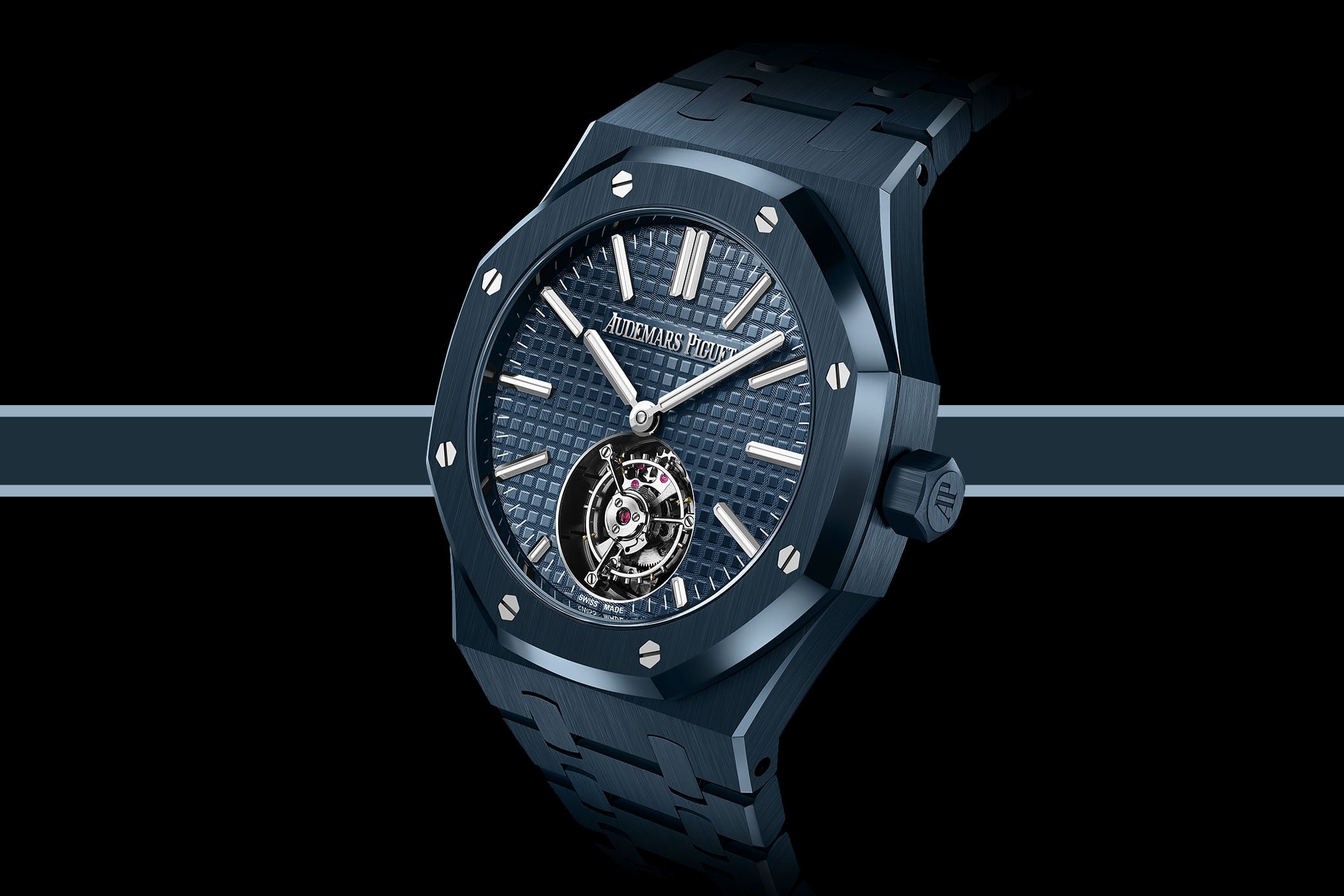
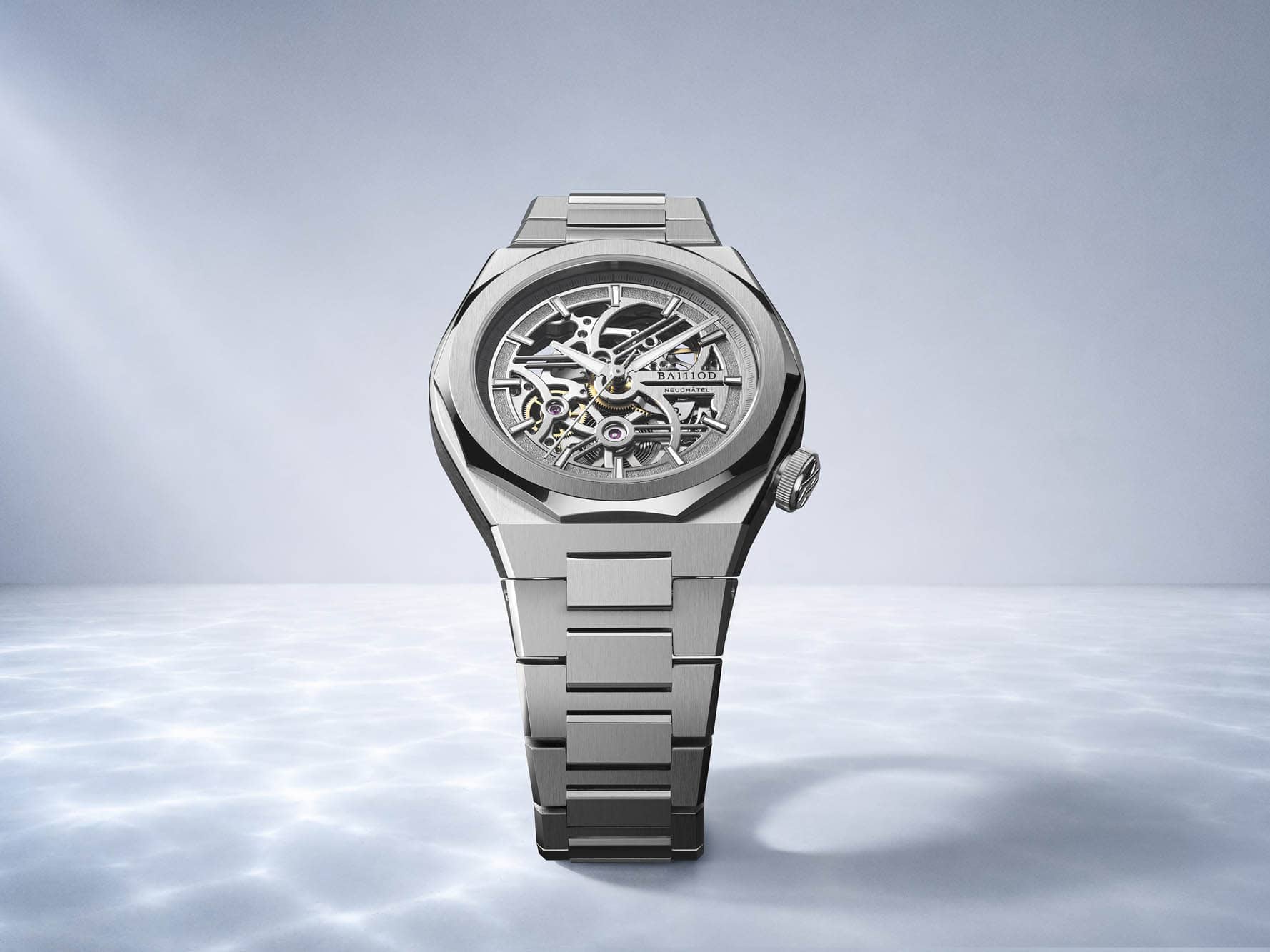
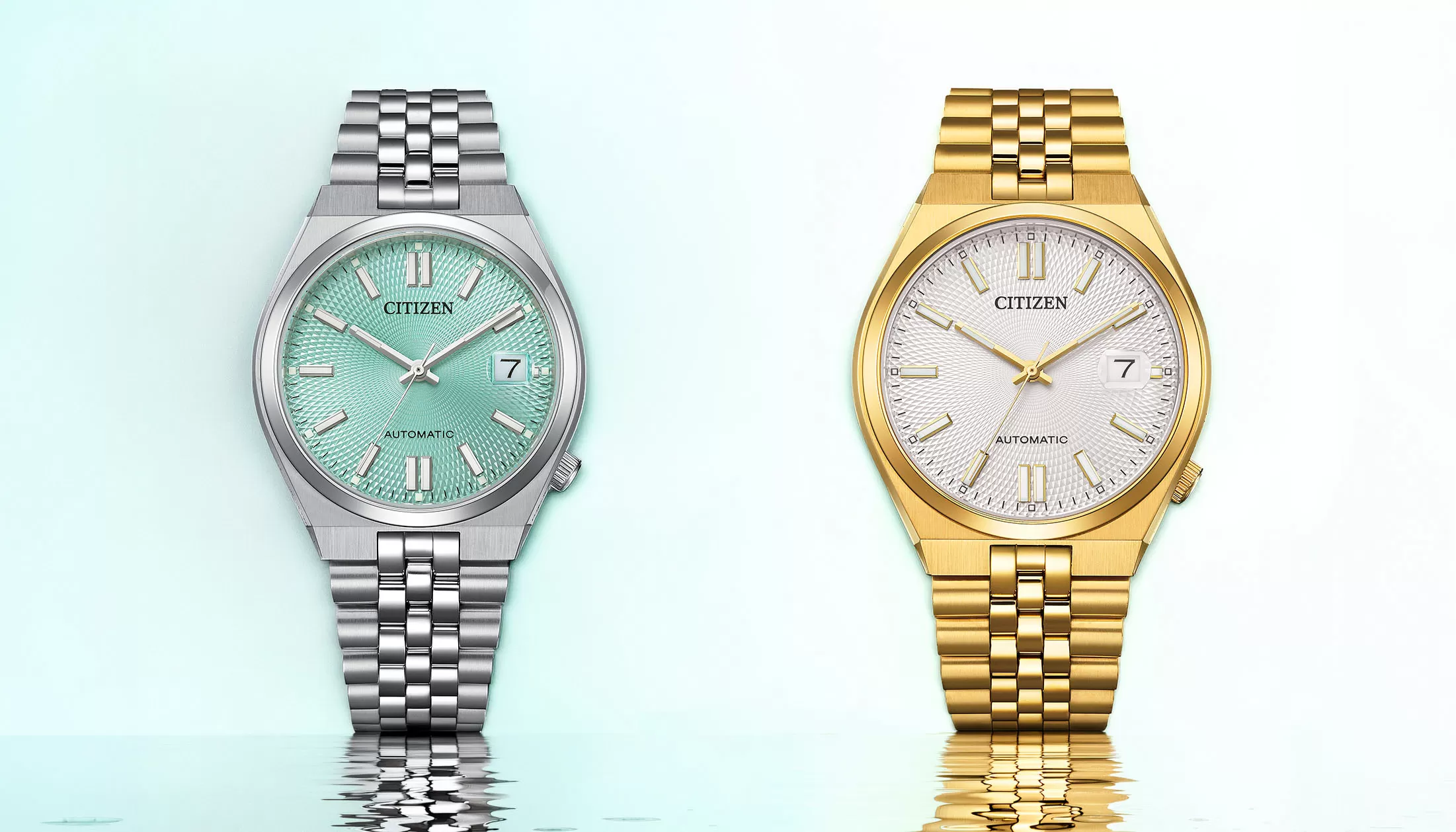
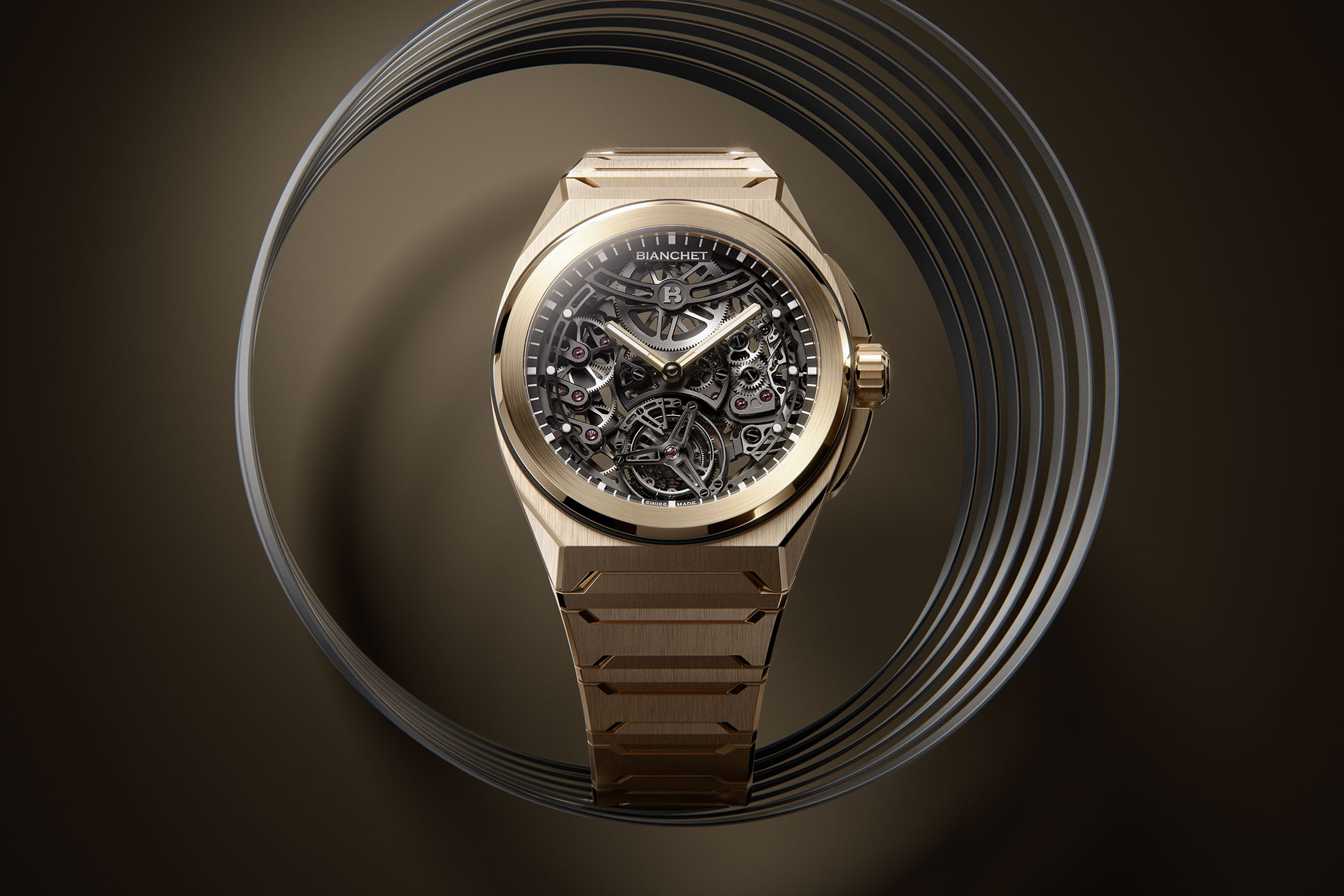
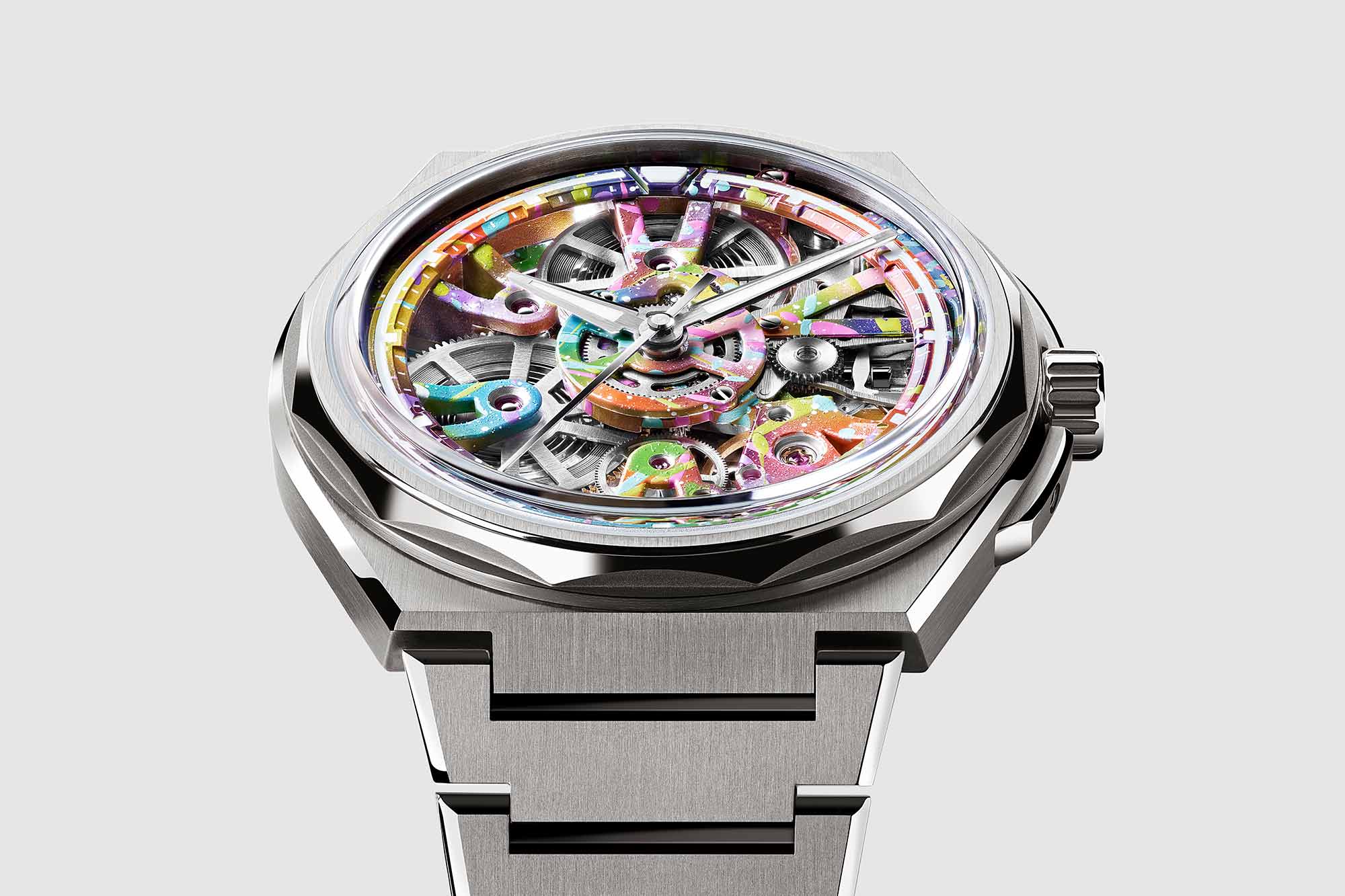
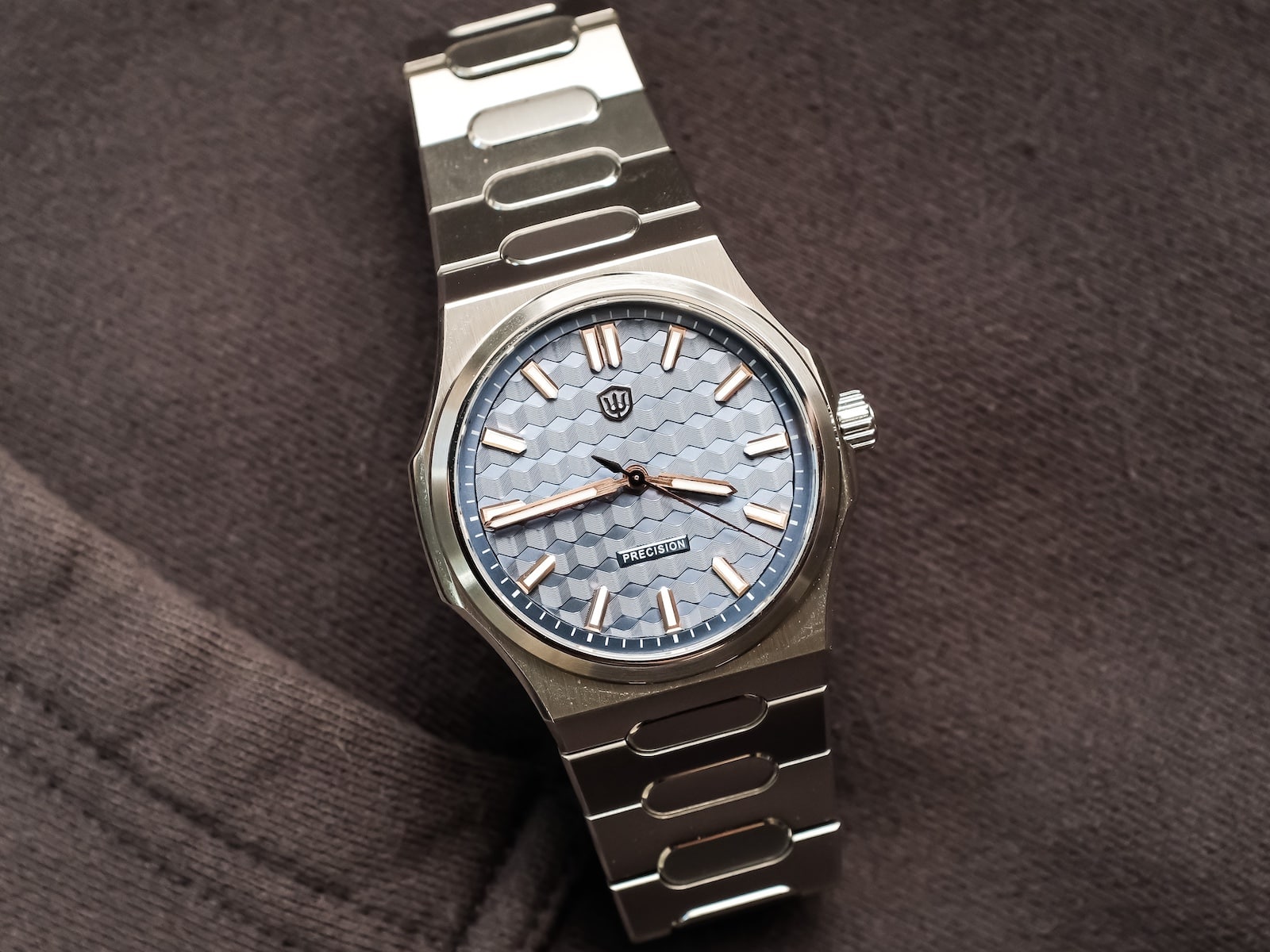
An integrated bracelet is, in collector vocabulary, the design where the watch case and the bracelet are conceived as a single object rather than as two interchangeable parts. On a non-integrated watch (Submariner, Speedmaster, Datejust, most everything pre-1972), the case has spring-bar holes between the lugs and the bracelet has a separate end-link that bridges from those spring bars to the first removable link. The end-link is a discrete piece, often visually different from the bracelet links, and the user can swap to a leather strap simply by replacing the bracelet with a strap on the same spring bars.
On an integrated bracelet, this is impossible. The first "end link" is shaped to follow the case profile precisely, and is sometimes physically the same piece as part of the case lugs. There are no spring bars in the conventional sense; the bracelet attaches via screws or proprietary fastenings concealed in the case-bracelet junction. Removing the bracelet to swap to leather requires either a specialist conversion (third-party makers like DeLugs, ABP Concept, Strapcode, or Zealande produce shaped leather and rubber straps fitted to specific integrated cases) or just replacing the watch on a different bracelet variant from the same brand.
"The integrated bracelet was the moment a steel watch stopped being a tool and became a piece of jewellery. Genta saw it twenty years before the market understood it."- Hodinkee Reference Points, Royal Oak 50th anniversary essay
The form was created by Gérald Genta for the Audemars Piguet Royal Oak in 1972. Genta's sketch (legendarily completed overnight, on commission from AP CEO Georges Golay, for the 1972 Basel Fair) introduced the integrated octagonal bezel and the matching octagonal-link bracelet that flows from the same geometric language. The watch was priced at CHF 3,300, more than a steel Submariner, and was widely ridiculed at launch as too expensive for a steel sports watch. By 1976 it had defined a new genre.
Genta's 1976 Patek Philippe Nautilus ref. 3700/1A used the same approach with a different visual language: porthole-inspired case, horizontal grooved dial, and an integrated bracelet that flowed from the case ears in flat-link form. The Genta-designed 1976 IWC Ingenieur SL ref. 1832 (rediscovered and reissued in 2023), 1980 Piaget Polo, 1976 Vacheron Constantin 222 (precursor to the modern Overseas, 1996), and 1977 Bulgari Bvlgari Bvlgari all extended the integrated genre across the Holy Trinity and the broader luxury market.
The integrated bracelet has measurable consequences for fit and feel. Most importantly, the watch wears smaller than its diameter suggests because lug-to-lug distance equals approximately the case length itself; there's no leather strap to bunch up against the wrist or to absorb wrist curvature. A 41 mm Royal Oak Jumbo at 39.5 mm L2L wears smaller than a 40 mm Submariner at 47.5 mm L2L. This is why integrated-bracelet sports watches are often the choice for collectors with smaller wrists who want a "big" watch without the projection.
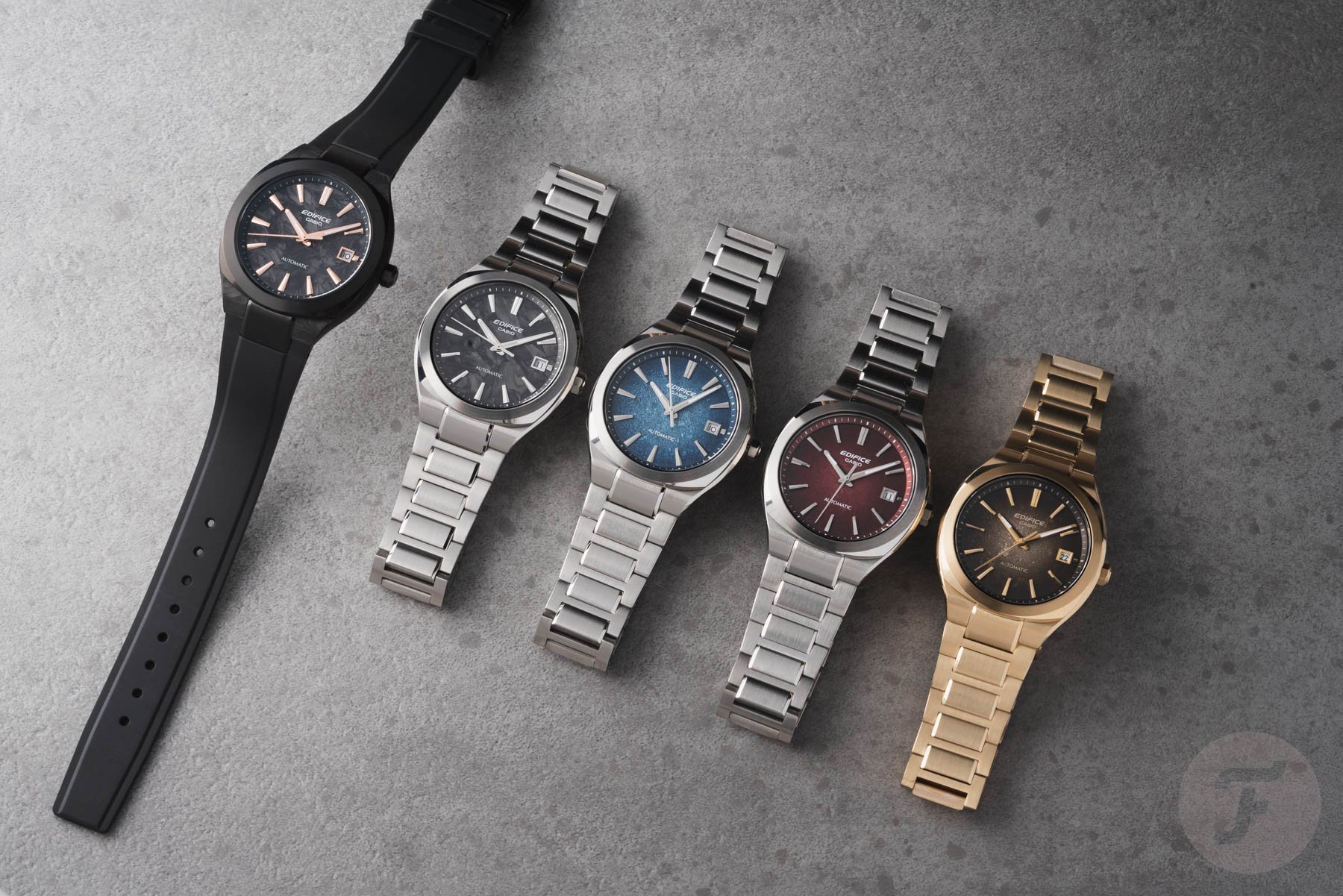
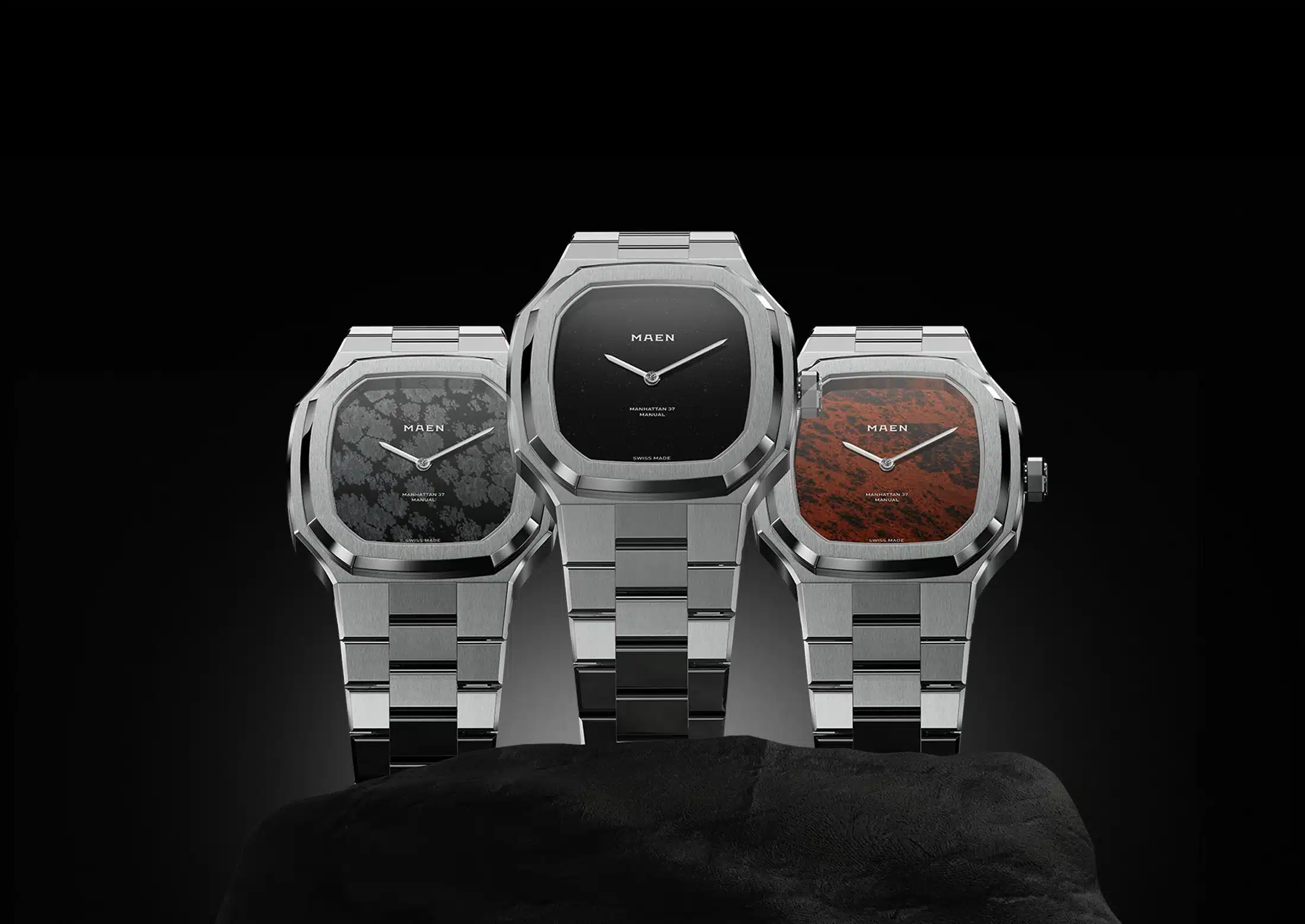
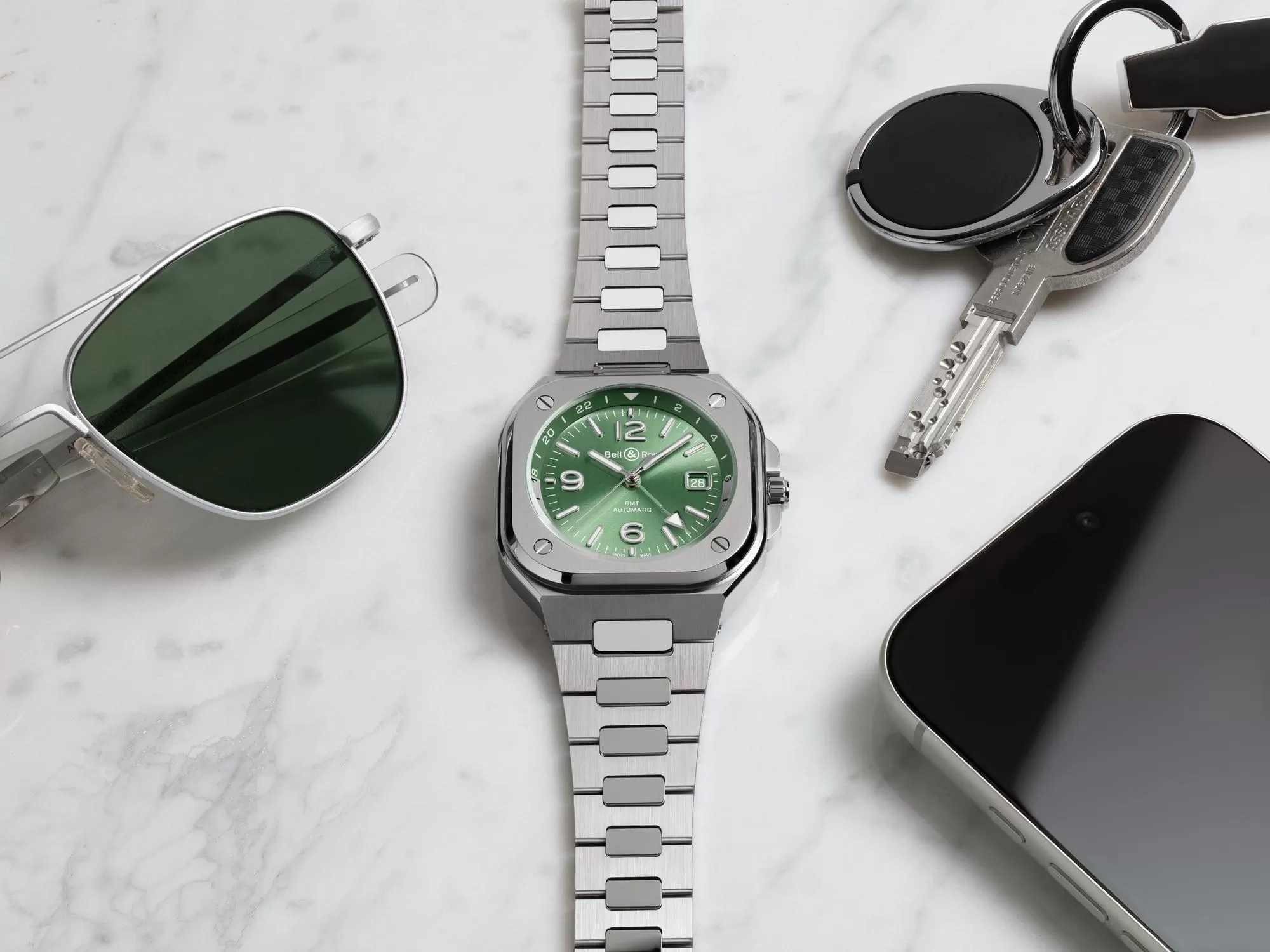
The 2010s-2020s have seen an integrated-bracelet revival across the entire luxury market: the Tudor Royal (2020), the IWC Ingenieur reboot (2023), the AP Code 11.59 Sport (2024), the Vacheron 222 Historiques reissue (2022), the Bulgari Octo Finissimo series, the Czapek Antarctique, the H. Moser Streamliner, and dozens of microbrand and mid-luxe entries. The category that Genta defined in 1972 is now the dominant new-product segment in luxury Swiss watchmaking, and the integrated bracelet is the visual signature that says "I am a luxury sports watch" in a single glance.



Comments 1