Louis Erard has spent the last few years doing something genuinely useful: taking the design vocabulary of watches that cost five or six figures and putting it somewhere closer to earth. Their collaborations with independent watchmakers have been the clearest proof of that. Now they've done it again, and this one might be the most ambitious yet.
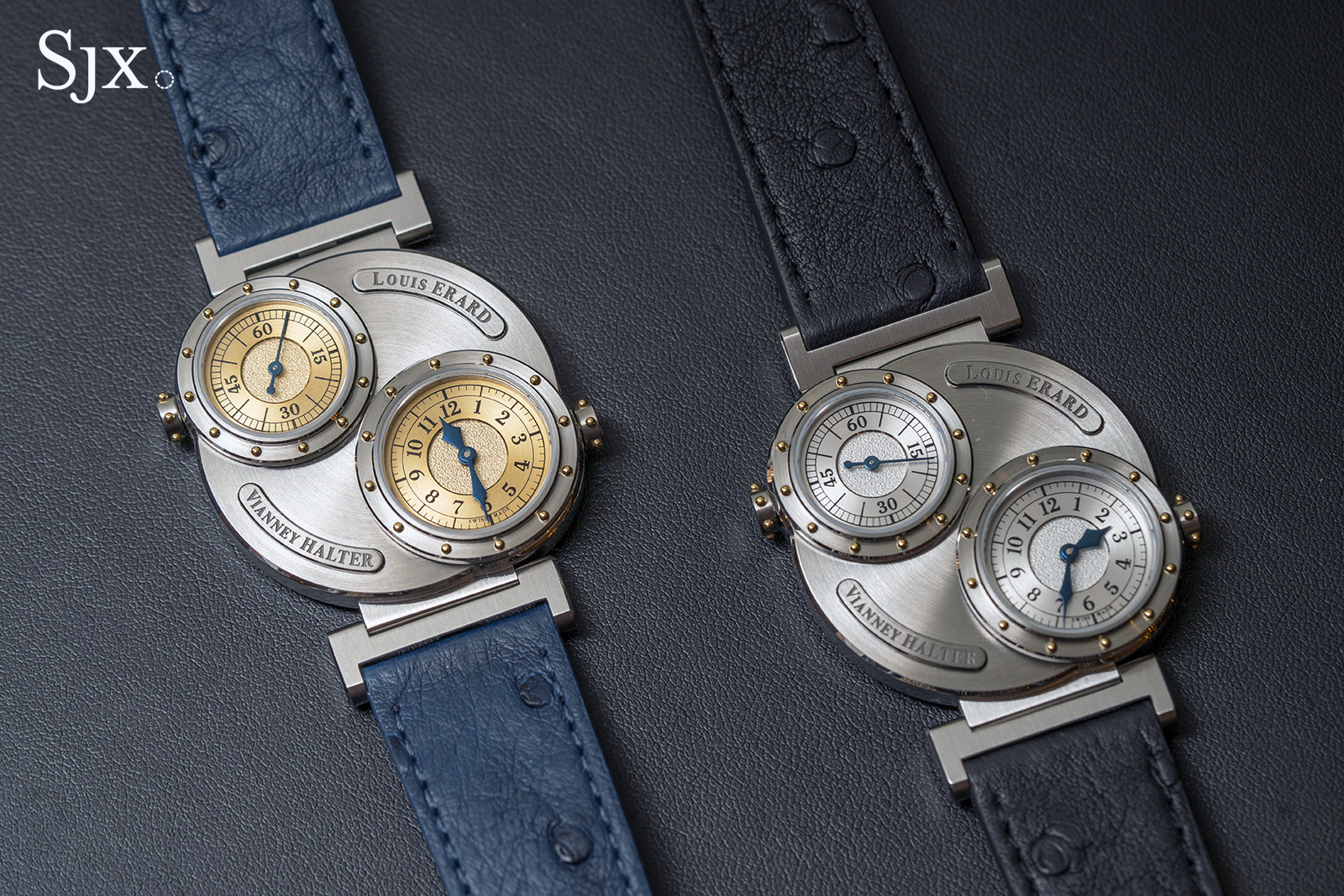
The Louis Erard x Vianney Halter Futur Antérieur draws directly from Halter's cult classic, the Antiqua perpetual calendar. That watch is one of the most distinctive pieces in modern independent watchmaking, famous for its porthole-style subdials and its unapologetically retro-futurist attitude. The Futur Antérieur borrows that visual spirit and reconfigures it as a regulator-style display, powered by not one but two separate automatic movements running simultaneously inside the case.
That's the headline. Two movements. Regulator layout. Antiqua DNA. Let's talk about what that actually means in practice.
What's Actually Going On Inside
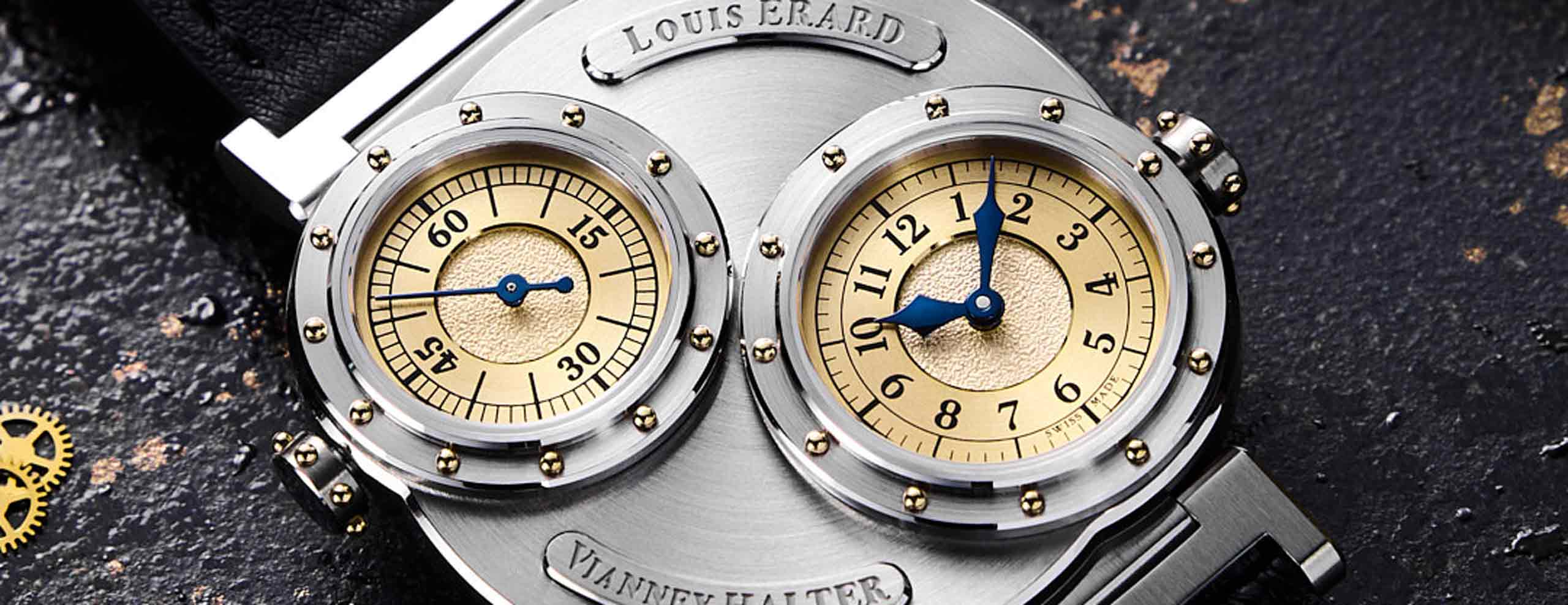
Running two separate automatic movements in a single watch is an unusual choice. It's not a simple split-seconds complication or a dual time zone on a single caliber. These are two distinct movement architectures sharing a case, each presumably driving different parts of the display. The regulator format separates hours, minutes, and seconds onto individual subdials, which already gives the dial a composed, technical look. Add the Antiqua's circular window aesthetic into that layout and you get something that reads as genuinely complex without screaming for attention.
Halter's original Antiqua is not cheap. Getting close to that design language for a Louis Erard price point requires real creative work, and from what's been shown, the Futur Antérieur pulls it off without feeling like a photocopy.
Two automatic movements in one case is an engineering statement most brands wouldn't bother making at this price tier. Louis Erard is betting that the people who know what that means are exactly the buyers they want.
What Changed from Previous Collabs
Louis Erard's earlier collaboration pieces with independent makers like Alain Silberstein and Michel Jordi leaned heavily on dial design and color. Fun watches, well executed. This one goes further. The dual-movement architecture is a mechanical argument, not just a styling exercise. And sourcing Vianney Halter, whose Antiqua is genuinely iconic among watch collectors, signals that Louis Erard is aiming at a more technically literate audience this time around.
- Inspired by the Vianney Halter Antiqua perpetual calendar, one of the most recognizable indie pieces of the last two decades
- Regulator-style display separates hours, minutes, and seconds across individual subdials
- Powered by two separate automatic movements housed in a single case
- Continues Louis Erard's established pattern of high-concept, accessible collaborations
- Retro-futurist aesthetic that feels cohesive rather than derivative
Who This Is For
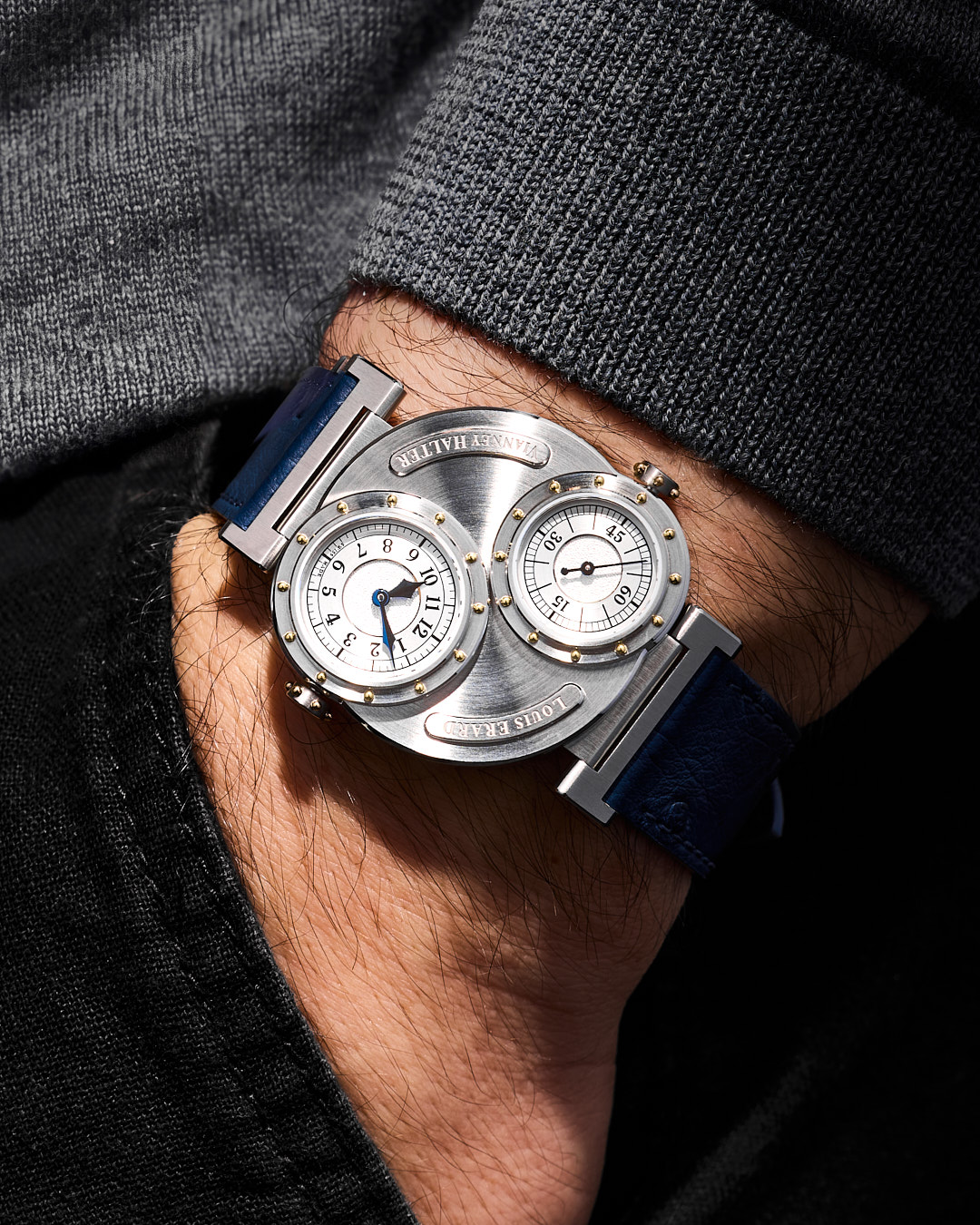
You're probably already thinking about this in one of two ways. Either you know the Antiqua, you've always wanted something in that orbit, and the Futur Antérieur looks like your entry point. Or you're a collector who appreciates mechanical ambition at a price that doesn't require a year on a waiting list and a relationship with a boutique.
This isn't a watch for someone who needs a reliable everyday piece and wants to keep things simple. The dual-movement setup and the separated display are conversation starters. They require a bit of knowledge to appreciate. If you wear watches around people who notice things, this will get noticed.
How It Sits Against the Competition
The obvious comparison is the Antiqua itself, but that's almost a category error. The Halter original is a handmade perpetual calendar from an atelier that produces tiny numbers. The Futur Antérieur is a different proposition entirely, closer in spirit to what MB&F did with their more accessible lines, or what Czapek achieved by bringing serious mechanical ideas to a wider buyer pool.
Within Louis Erard's own catalog, this is their most technically stated collaboration to date. Previous pieces were great looking. This one also has something going on mechanically that you can point to and explain, which matters to a certain kind of buyer.
Specific pricing hasn't landed in our inbox yet, but Louis Erard's collaboration pieces have historically sat in a range that makes collectors pause in a good way. If the dual-movement execution is clean, this could be the one that gets the most attention of any of their collabs so far. Keep an eye on official channels for final specs and availability.
Comments
No comments yet, be the first to weigh in.