Watch brandsWatch wikiWatch videosVariousWatch calendarSaved articles
PopularRolexOmegaPatek PhilippeAudemars PiguetTudorGrand SeikoCartierSeikoIWCTAG HeuerBreitlingJaeger-LeCoultreA. Lange & SohneZenith
WristBuzzWatch WikiPerpetual Calendar
📅 Complication · Since 1762

Perpetual Calendar

A mechanical calendar that knows 30- and 31-day months, and leap years, automatically, through the year 2100

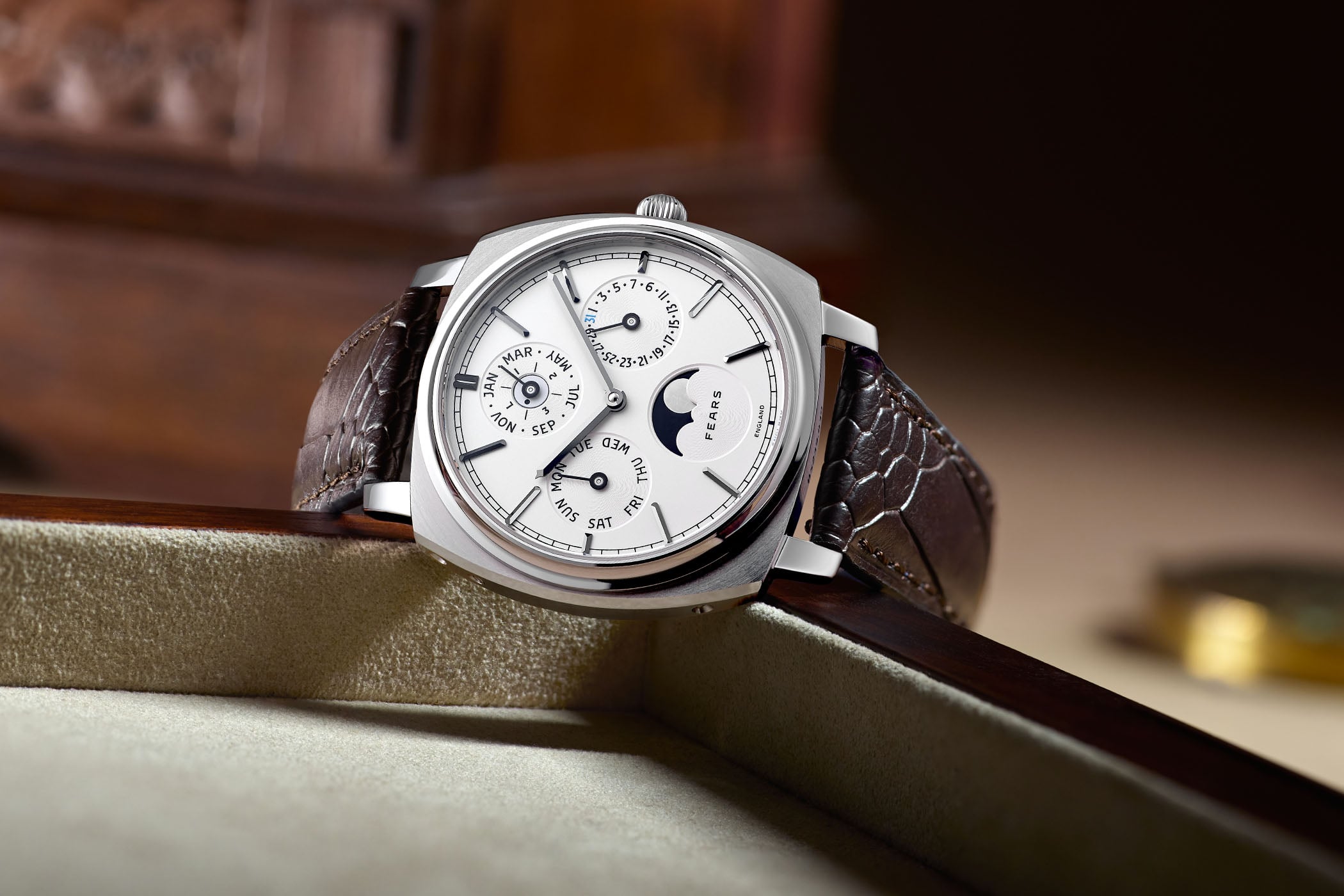
The most complex "useful" complication in mechanical watchmaking. Tracks day, date, month, leap year, and moon phase. Correctly skips February 29 in non-leap years and advances from 28 February straight to 1 March, without user intervention, every four years, for the rest of the 21st century.

First pocket watchThomas Mudge (c.1762)
First wristwatchPatek Philippe (1925)
First serialPatek 1526 (1941)
Common displayDay · Date · Month · Leap
CorrectionManual in 2100
WristBuzz Articles968
Perpetual Calendar

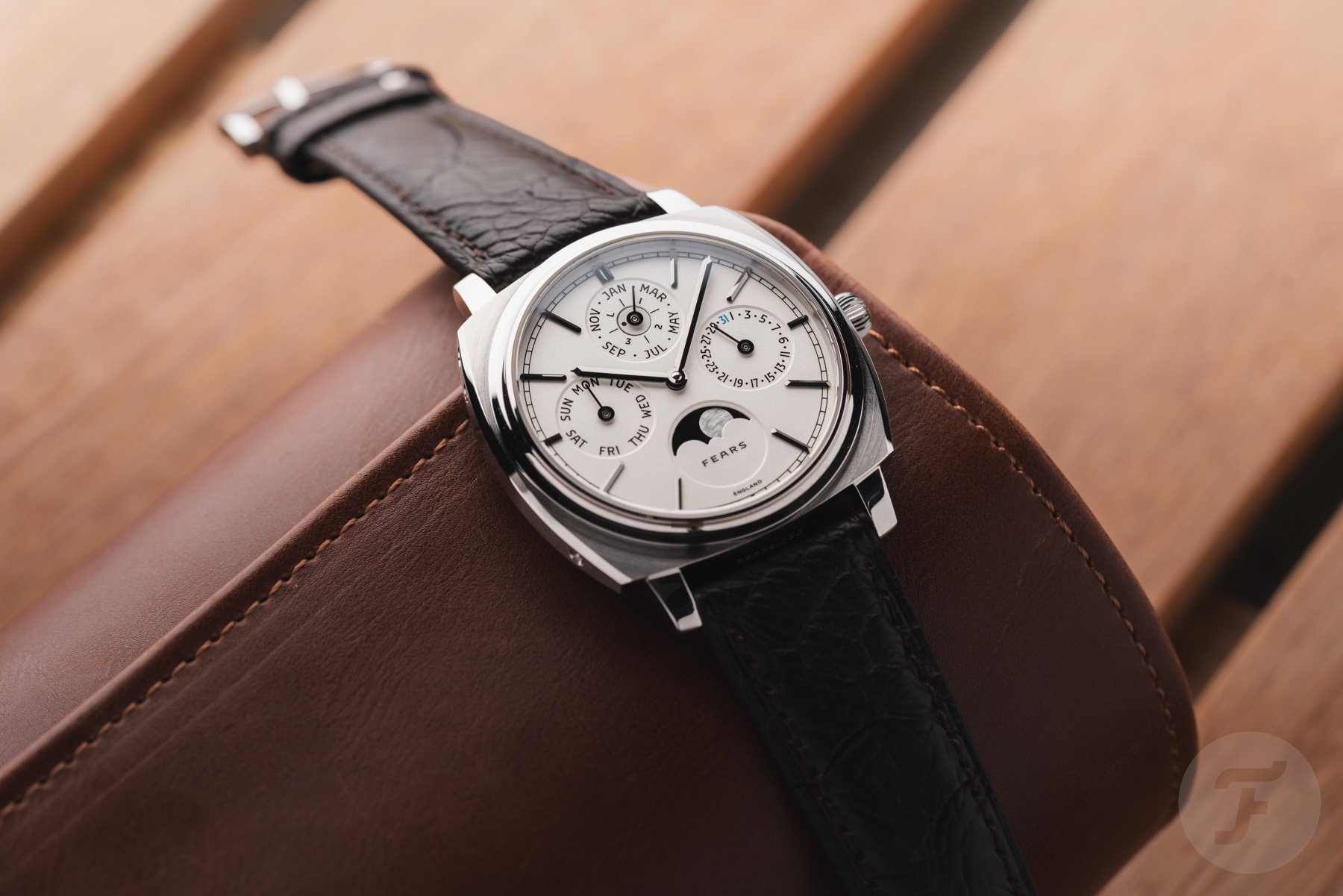
Photo: Fratello · Yesterday

1762First Pocket Watch
1925First Wristwatch
2100Next Manual Reset
4 yrLeap Cycle
968WristBuzz Articles

The Perpetual Calendar Story

The first mechanical perpetual calendar was built around 1762 by the English watchmaker Thomas Mudge, the same man who invented the Swiss lever escapement used in virtually every modern mechanical watch. Mudge's perpetual calendar pocket watch, now in the British Museum, solved a problem no practical device had ever addressed: a calendar that correctly handled the full Gregorian cycle, accounting for months of 28, 29, 30, or 31 days, and knowing which years were leap years, all mechanically, without battery, computer, or reset.

The engineering challenge is bigger than it first appears. The movement must contain a mechanical "memory" of the calendar's full four-year (1,461-day) cycle. Each day, a 24-hour wheel advances the date counter by one; at the end of each month, a month cam, a shaped disk with varied-depth lobes for 28, 29, 30, and 31-day months, tells the date mechanism when to skip. A second cam, rotating once every 48 months, holds the deepest notch for February in a leap year. If any one of these parts is off by even a few hundredths of a millimetre, the watch miscounts a month. Modern perpetual calendars use a 168-position month-cam with the February-29 logic integrated into a single 48-month disk.

"In our metier, the perpetual calendar is the supreme test. You can make a tourbillon that doesn't perform well and still sell it. A perpetual calendar that skips a day is worthless."- Philippe Dufour, in conversation

The perpetual calendar arrived on the wrist in 1925, when Patek Philippe produced the world's first perpetual-calendar wristwatch, a one-off commissioned piece based on a Victorin Piguet pendant-watch movement from 1898. Patek's first serial perpetual-calendar wristwatch, reference 1526, arrived in 1941, followed by the perpetual-calendar chronograph reference 1518 in 1941, the ultimate Patek collectible, now trading at €3–€10 million depending on condition. Audemars Piguet launched its first perpetual in 1955; Vacheron Constantin 1884; Rolex has never made a serial perpetual calendar.

Every modern perpetual calendar will need one manual correction in its lifetime, on 1 March 2100. The Gregorian calendar rule is that a century year is a leap year only if divisible by 400 (2000 was; 2100 is not). Mechanical perpetuals can't practically encode the 400-year rule, so they treat 2100 as a normal leap year and will show February 29 when the actual date is March 1. The owner will have to push the correctors to skip forward one day. Every one of us will be dead before this happens, but every watch made since the 1980s is already counting down to this appointment.

Annual calendars, a simpler relative, introduced by Patek Philippe in 1996 (reference 5035), handle 30- and 31-day months but require a manual adjustment once a year at the end of February. They cost roughly one-fifth of a perpetual and now outsell perpetuals roughly 10 to 1. The equation of time, the sidereal time, and the secular perpetual (valid without correction for 10,000+ years) exist as exotic extensions, but the standard perpetual calendar, day, date, month, leap year, moon phase, four sub-dials on a classical round dial, remains the aristocrat of mechanical complications.
Landmark Perpetual Calendars

1941 · Patek Philippe
Reference 1518
1,518 · 281 pieces made

The world's first serial perpetual-calendar chronograph wristwatch. Steel, rose gold, yellow gold. Only four steel examples are known to exist; one sold at Phillips in 2016 for CHF 11,002,000, then a world record.

Record Holder
1981 · IWC
Da Vinci
Ref. 3750 / Cal. 79261

Kurt Klaus's ingenious simplification: just 82 parts added to a base chronograph movement, all advance-able via the crown alone, no correctors needed. Made the perpetual calendar viable for wider series production.

Engineering
1984 · Audemars Piguet
Royal Oak Perpetual Calendar
Ref. 25554

The perpetual calendar that brought AP into the modern complicated-watch market. Tapisserie dial, four sub-dials inside the octagonal bezel, 3mm-thin Cal. 2120/2. The foundation for every Royal Oak perpetual since.

Integrated
1985 · Patek Philippe
Reference 3970
Ref. 3970 · 4 series

The successor to the legendary Ref. 2499. Perpetual calendar chronograph with moon phase, in production 1986-2004 across four series. Built on the Lemania 2310 base, the last great Swiss chronograph ebauche before in-house manufacturing.

Vintage Modern
1999 · A. Lange & Söhne
Langematik Perpetual
Ref. 310.025

The first perpetual calendar from the relaunched Lange. Big-date display from the Lange 1, zero-reset seconds, perpetual calendar with moon phase. 50-hour power reserve, all correctors advance via single pusher at 10 o'clock.

GlashĂĽtte
2015 · MB&F
Legacy Machine Perpetual
Cal. ST-003

Stephen McDonnell's rethink of the perpetual calendar, the first all-new mechanical perpetual architecture since Mudge's 1762 original. No end-of-month skip; the date can't "jump" past the actual day. 581 components in a round 44mm case.

Modern Invention

Latest Perpetual Calendar News

Fratello
Hands-On With The Patek Philippe Ref. 5236P-011 In-Line Perpetual Calendar With A New Warm Silver-Gray Dial
Yesterday
Deployant
Review: new Patek Philippe Cubitus Perpetual Calendar Skeleton Ref. 5840P-001
2 days ago
Fratello
Sunday Morning Showdown: Jaeger-LeCoultre Master Control Chronometre Perpetual Calendar Vs. IWC Ingenieur Perpetual Calendar 41
2 days ago
SJX Watches
Hands On: Patek Philippe Cubitus 5840 Perpetual Calendar
4 days ago
SJX Watches
Hands On: A. Lange & Söhne Saxonia Annual Calendar
5 days ago
Monochrome
Hands-on – The Patek Philippe Cubitus Perpetual Calendar Skeleton 5840P
6 days ago
Monochrome
Hands-on – The Ghost-Like H. Moser & Cie. Endeavour Perpetual Calendar Concept Tantalum
Apr 28, 2026
Fratello
Introducing: The H. Moser & Cie Endeavour Perpetual Calendar Concept Tantalum
Apr 28, 2026
Worn & Wound
Watches & Wonders: Hands-On with the Parmigiani Fleurier “Toric Anniversaire” Collection
Apr 24, 2026
Hodinkee
In Partnership - Happenings: Join Us For A First Look At The Future Of Gerald Charles In SoHo
Apr 24, 2026
Teddy Baldassarre
Our Favorite Complicated Watches From Watches & Wonders 2026
Apr 23, 2026
Worn & Wound
Watches & Wonders: Frederique Constant Offers a Smart Update to their Classic Worldtimer Manufacture
Apr 22, 2026
View all 968 articles

Learn More