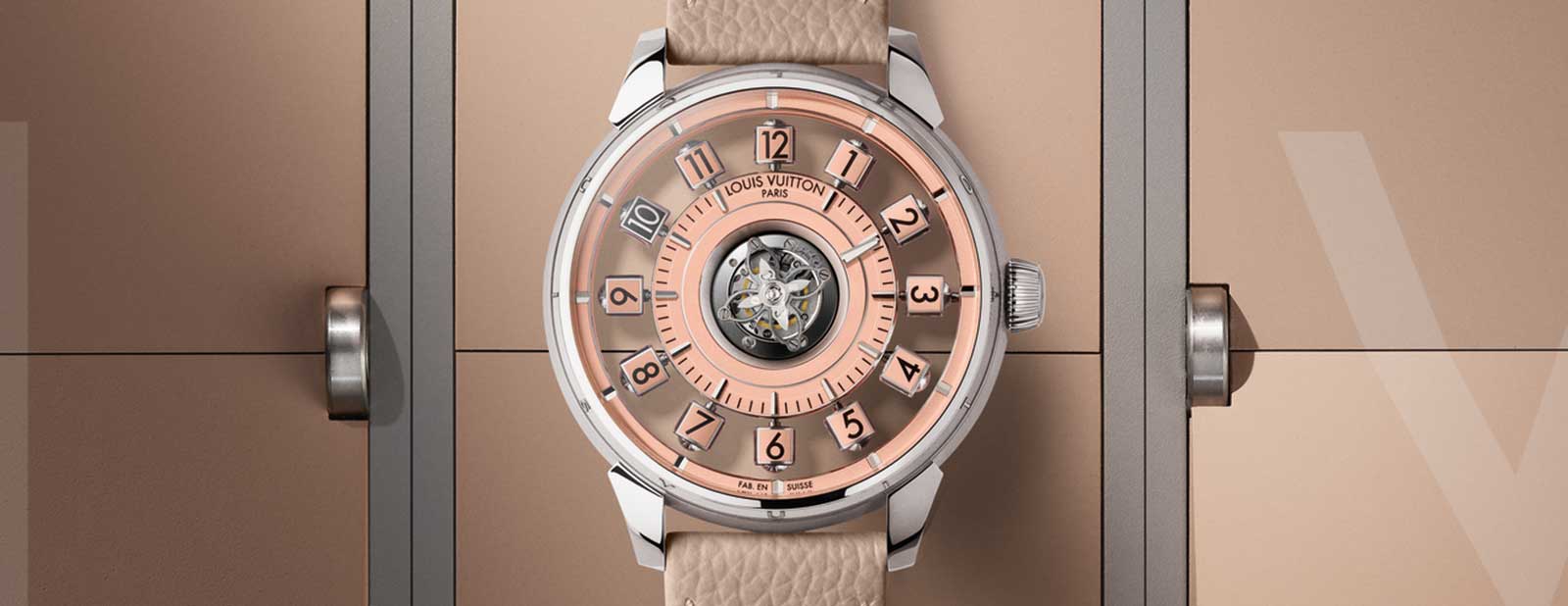
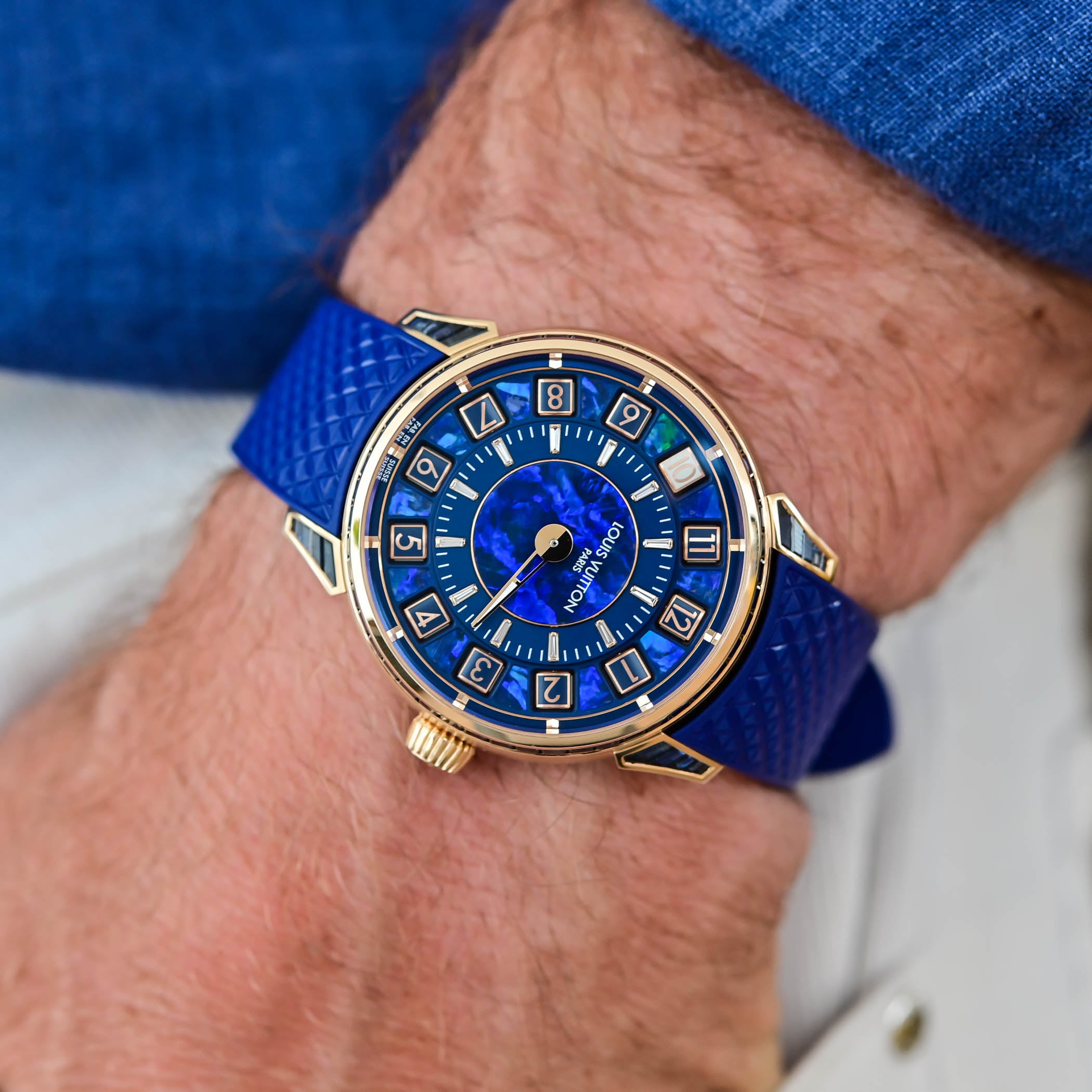
The Louis Vuitton Tambour Spin Time has been around since 2009, and if you've ever seen one in person, you already know why people remember it. Twelve small cubes rotate on their axes to tell the time, one face showing the current hour, the whole thing feeling more like a kinetic sculpture than a watch dial. It's a bold idea, and it works.
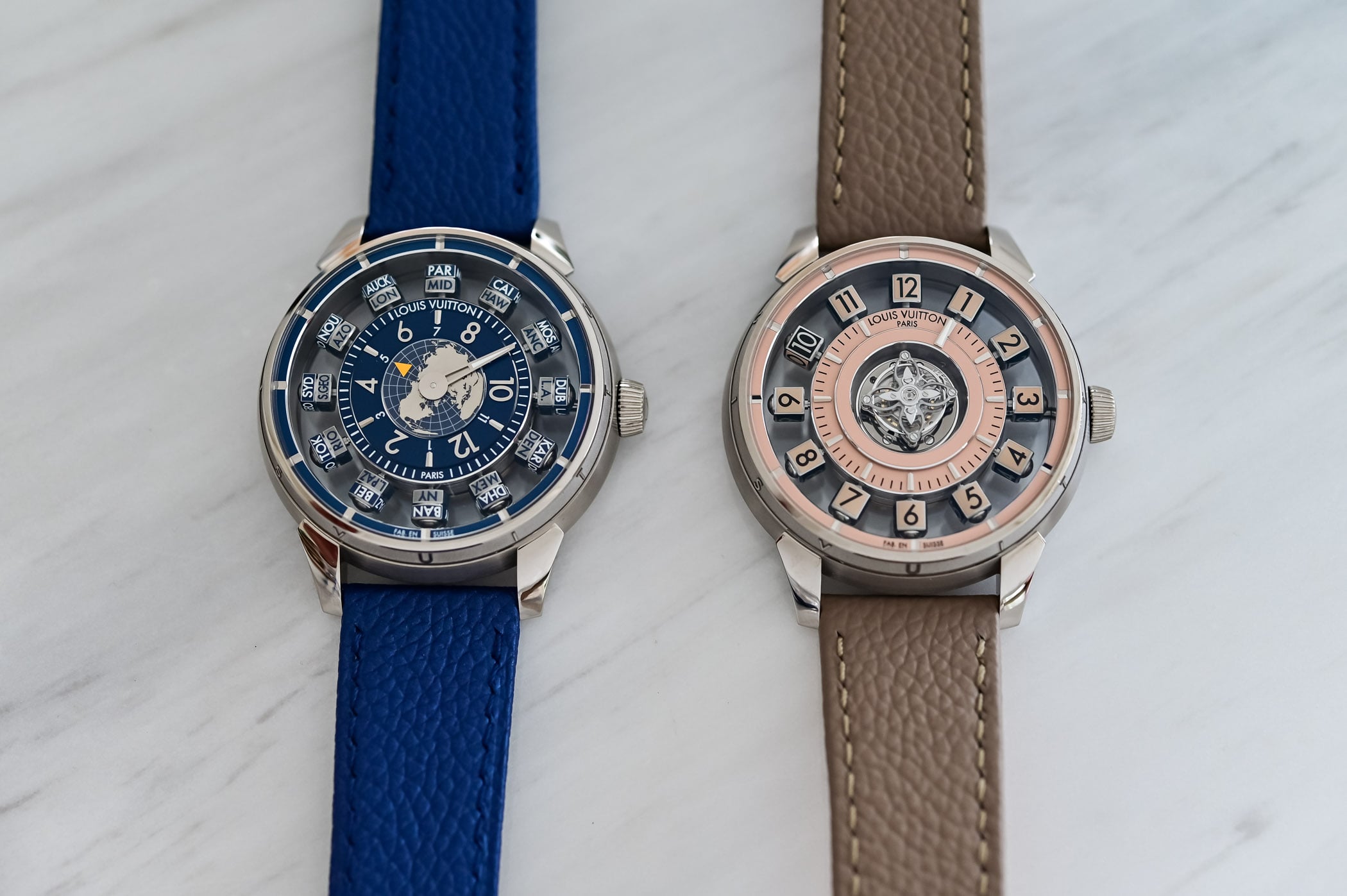
For years it came and went in limited runs and special editions. Now Louis Vuitton is making it permanent. The Spin Time joins the core Tambour collection, which means it'll be consistently available rather than something you have to chase at auction or through a well-connected boutique contact.
That's the actual news here. The core mechanism hasn't been reinvented. What changed is the commitment: this watch now has a stable place in the lineup.
What the Spin Time Actually Does
The display concept was inspired by the old split-flap boards you'd see at airports and train stations. Each of the 12 cubes sits in a dedicated position around the dial. As the hours change, the relevant cube flips to show its numbered face. The rest stay neutral. It's a modern take on the jumping hour, but far more theatrical about it.
Reading the time takes a second to get used to. You're not glancing at hands. You're identifying which cube is active and what number it's showing. Once it clicks, it becomes intuitive fast. And watching the transition happen in real time is genuinely satisfying.
Who This Watch Is For
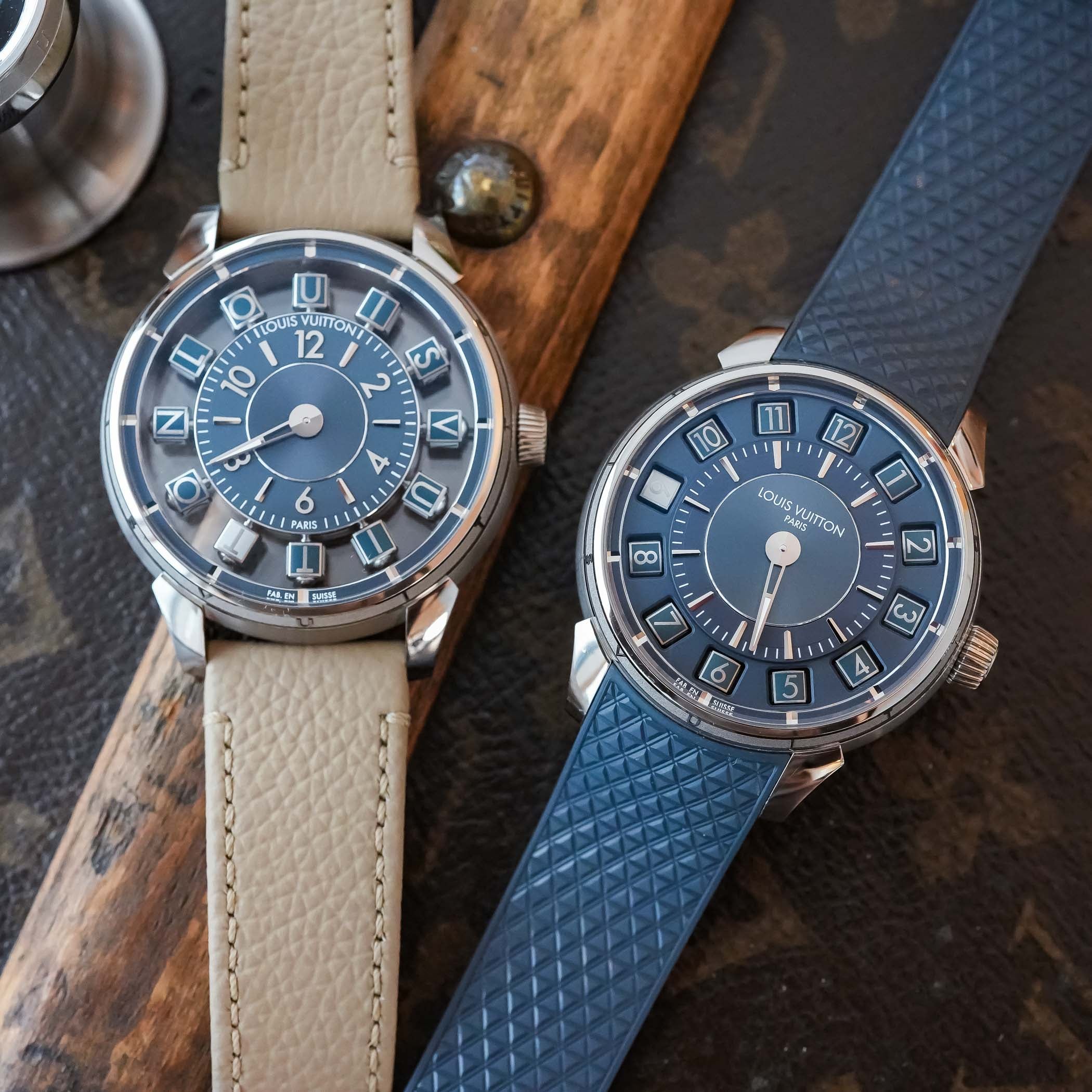
Be honest with yourself before you start eyeing one. This is not a subtle watch. The Tambour case is substantial, the dial is all movement, and the Spin Time's whole point is to make telling the time a visual event. If you gravitate toward dress watches and restrained dials, this probably isn't your thing.
But if you appreciate watchmaking that takes a creative swing, and you're comfortable wearing something that'll draw comments, the Spin Time delivers. It sits at the intersection of serious horological craft and the kind of design confidence Louis Vuitton has always leaned into through its fashion work. That crossover isn't for everyone, but it's a real and coherent identity.
- Strong appeal for collectors who want something genuinely different from the usual complications
- Works well as a statement piece in a collection that otherwise skews traditional
- The permanent status makes it easier to buy with confidence, no more hunting limited stock
- LV's in-house movement development has matured considerably since 2009, so this isn't just nostalgia
- Not ideal if you need a versatile daily wearer that disappears under a cuff
How It Sits Against the Competition
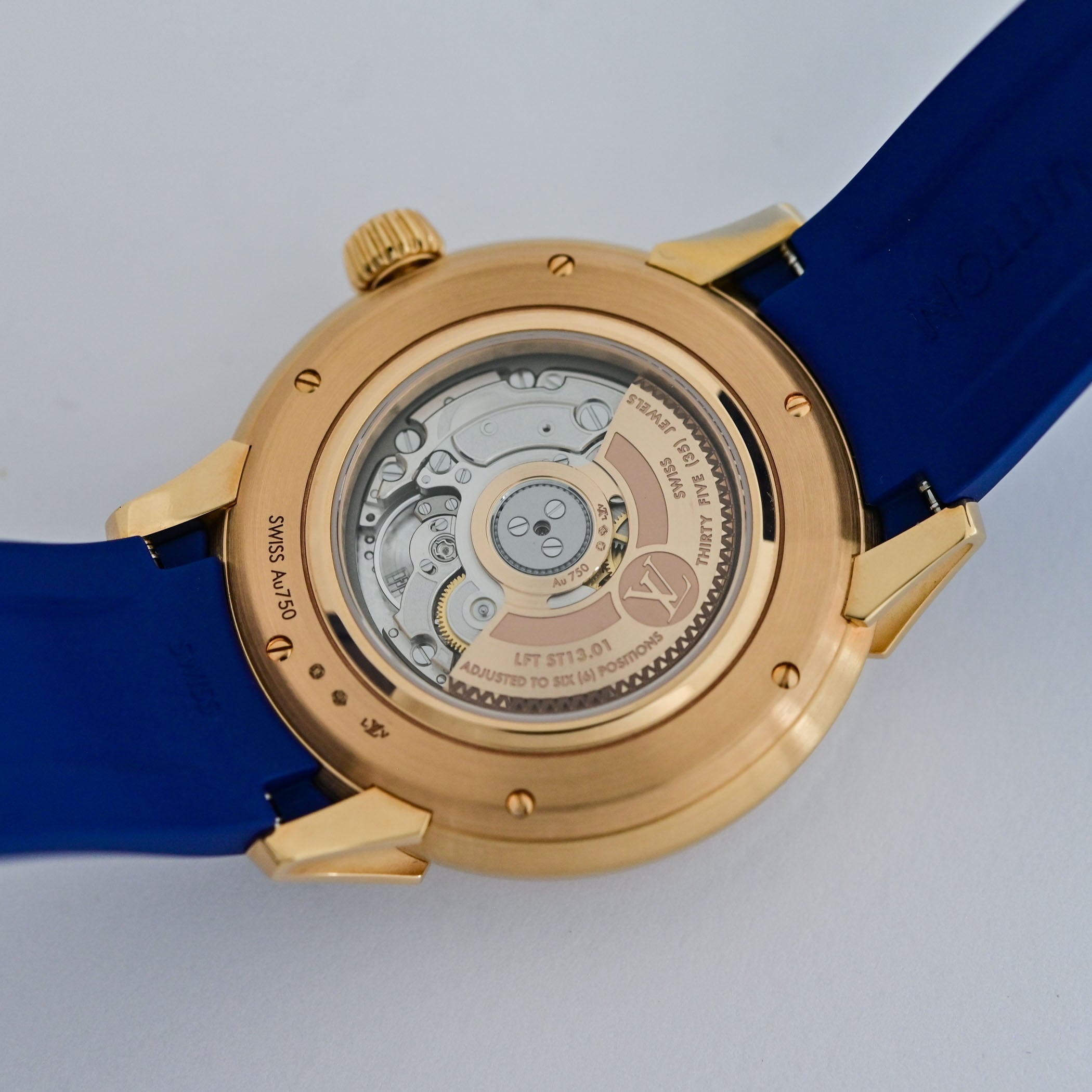
Jumping hour and unconventional time displays are a crowded space at this price level. You've got options from brands with deeper horological CVs. But most of those options don't look like this. The cube-based display is genuinely unique, and that's a real differentiator when you're spending serious money on something that's also meant to express a point of view.
The comparison that keeps coming up is with other fashion-house watches that take architectural approaches to the dial. But Louis Vuitton actually builds its own movements now. This isn't a case of buying a brand name on a generic base. The Spin Time mechanism is theirs, and the execution reflects real investment in the craft side of things.
At the same time, if pure horological pedigree is your primary criterion, independent watchmakers with smaller case counts and longer histories will always have an argument. The Tambour Spin Time asks you to weigh creativity and visual boldness alongside technical execution. That's a fair trade-off, not a weakness.
The Specs Worth Knowing
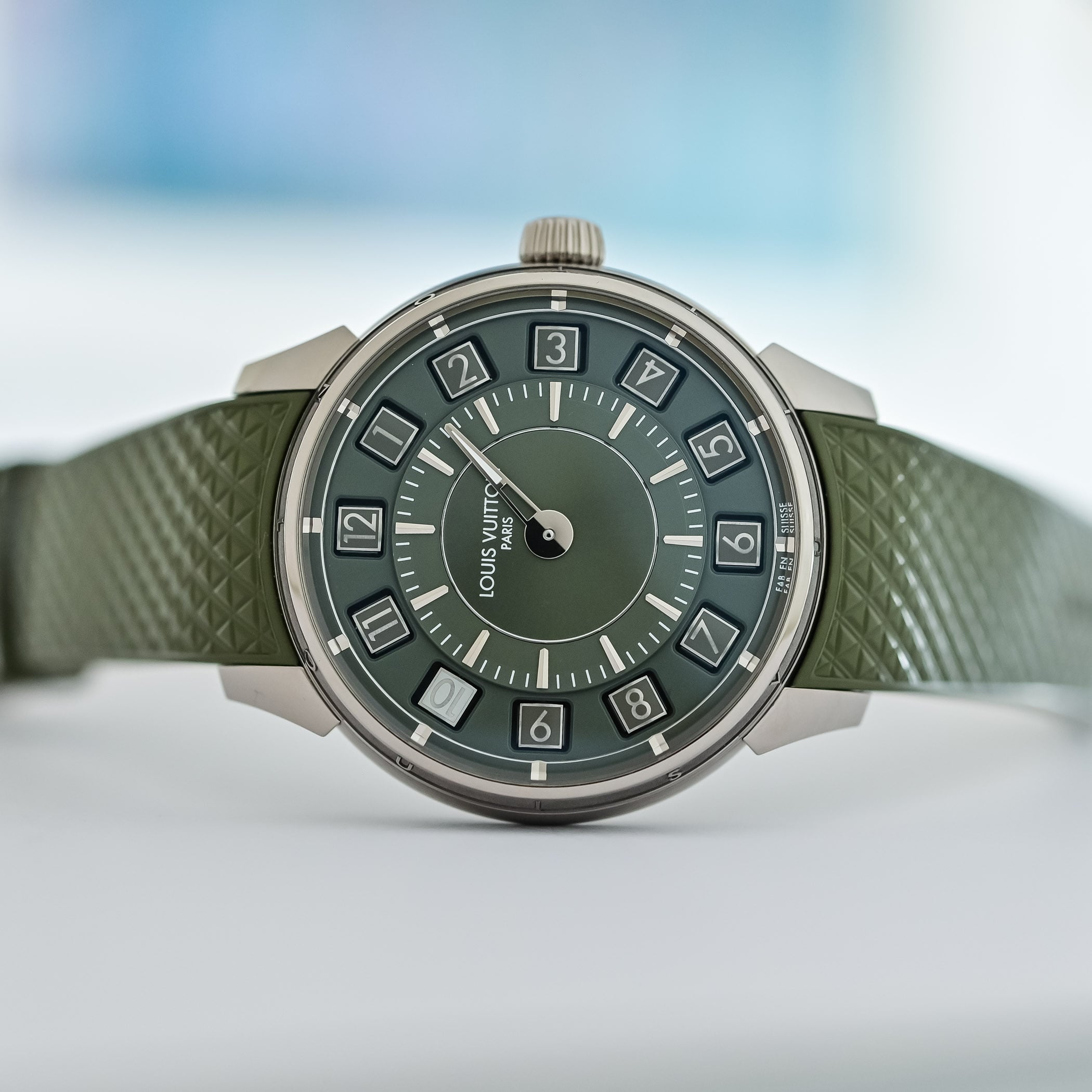
The Tambour Spin Time going permanent is the right call. It's one of the more recognizable complications Louis Vuitton has produced, and keeping it in consistent supply means more people get a real shot at owning one without the secondary-market markup. If the watch has been on your radar, now's a reasonable time to take it seriously.
Comments
No comments yet, be the first to weigh in.