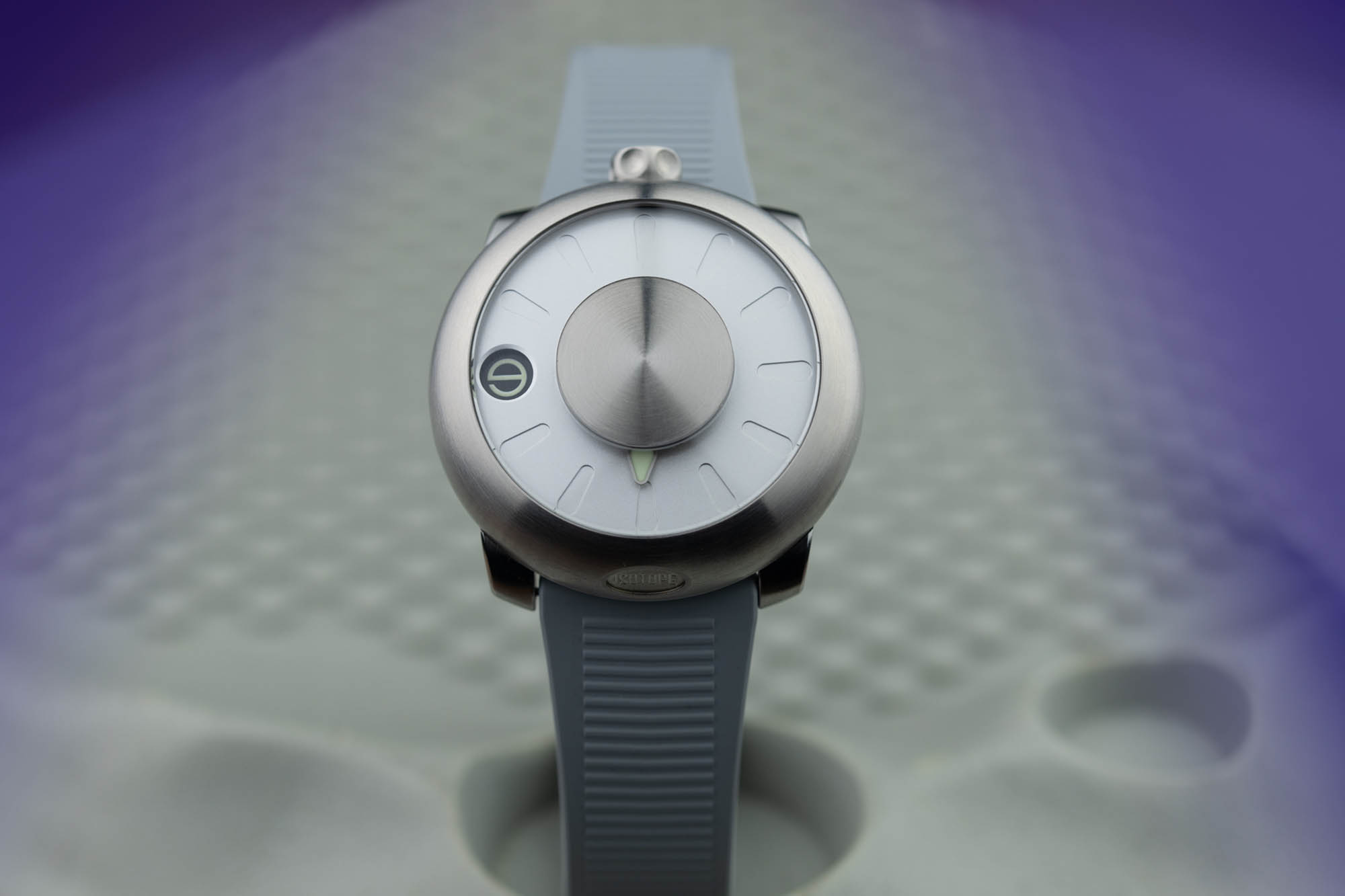
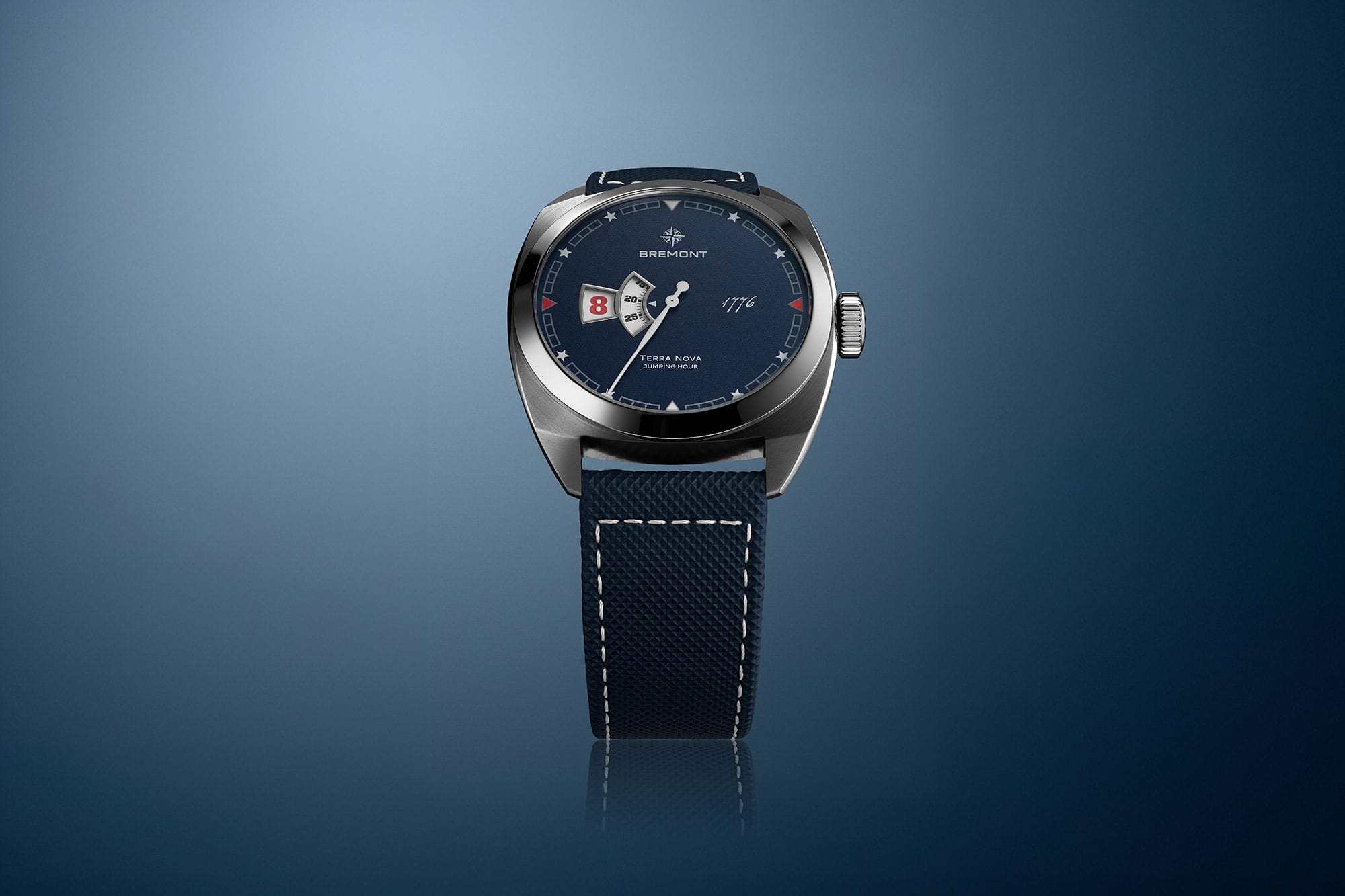
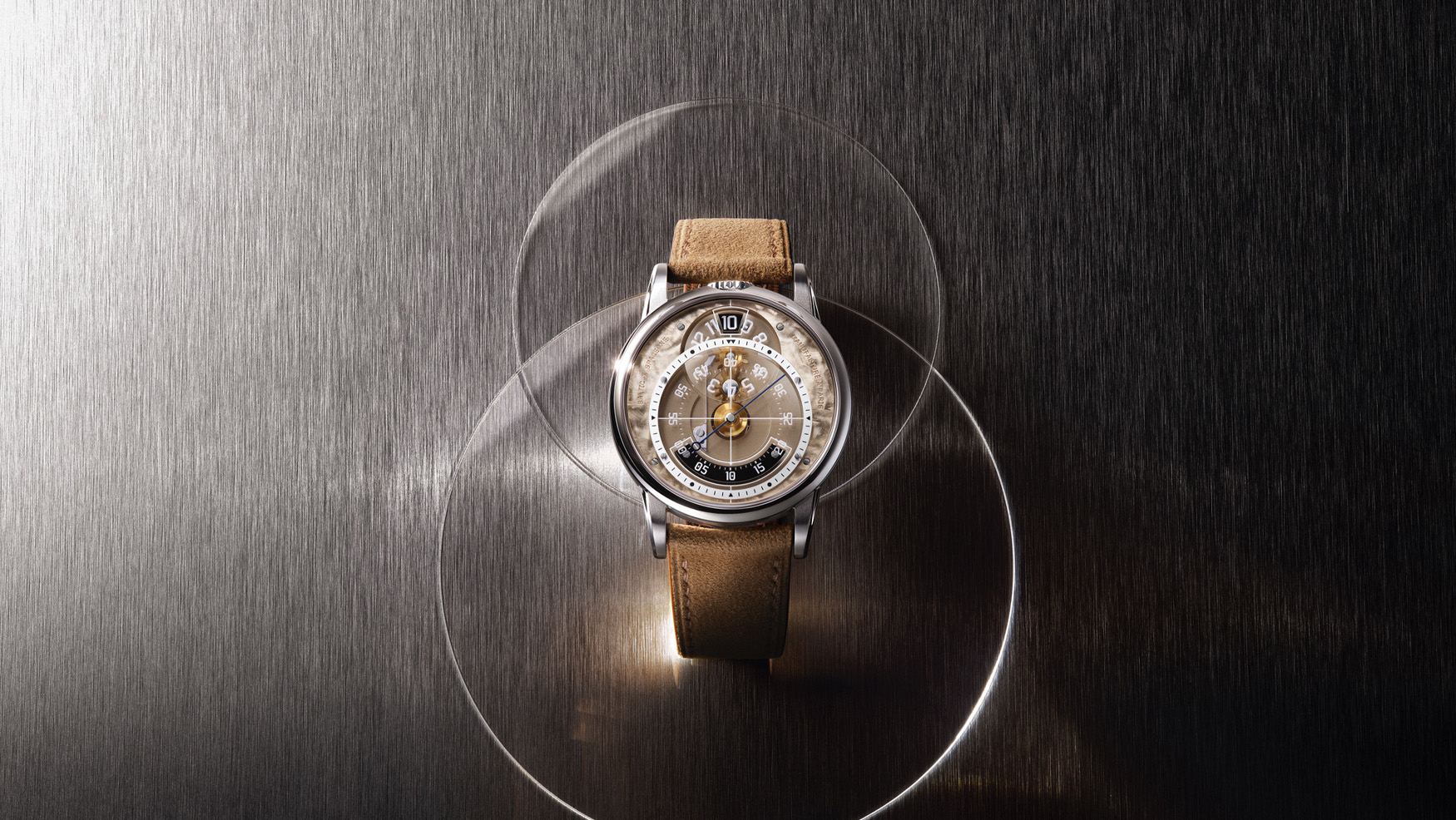
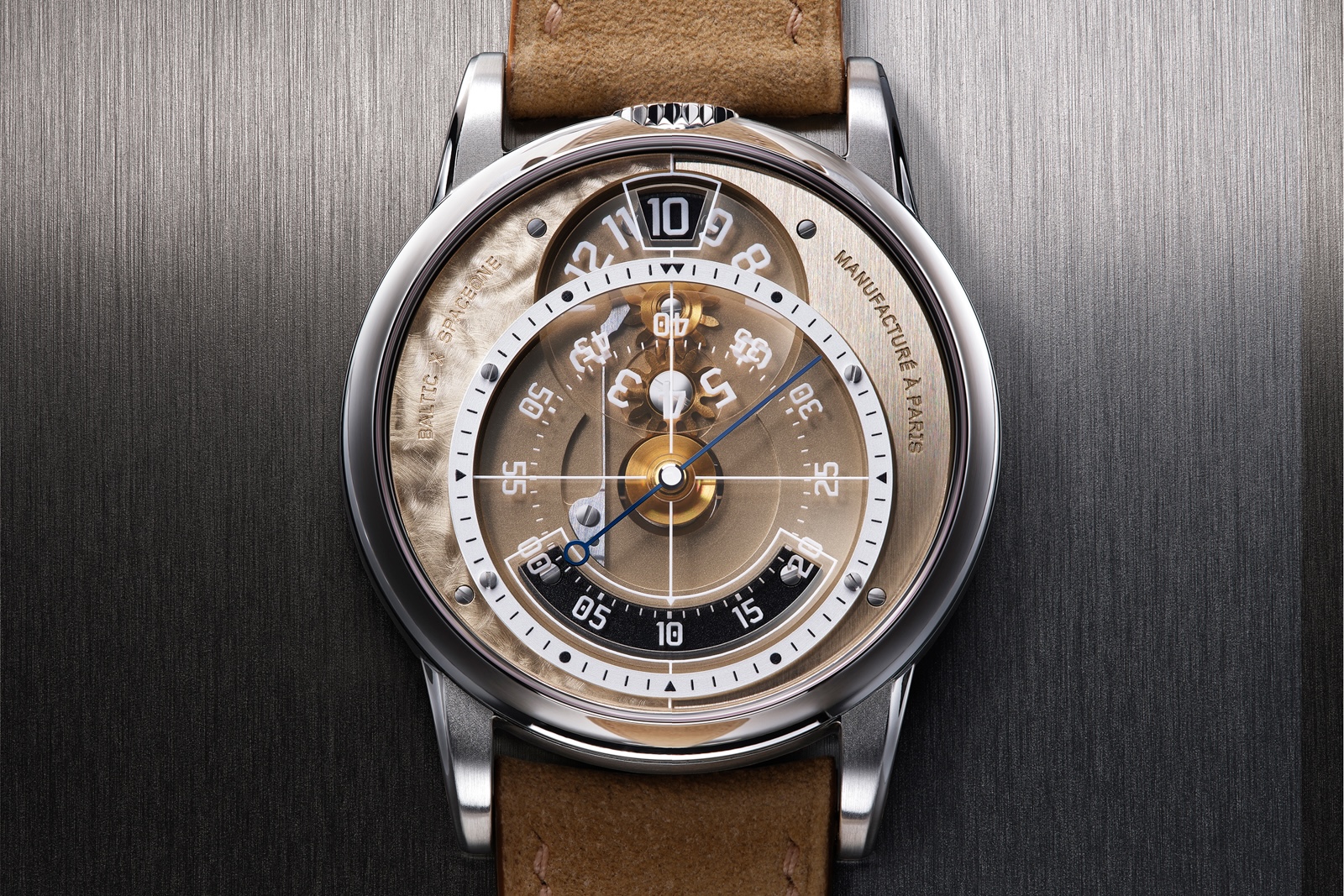
A jumping hour is a complication in which the hour reading on a watch is displayed through a small aperture (window) on the dial, and the displayed numeral changes instantaneously at the top of every hour, rather than rotating gradually as a conventional hour hand does. The minute reading is typically shown by a conventional hand on the outer chapter ring, while the hour disc behind the dial is held under spring tension and released to "jump" forward exactly one position when the minute hand crosses 60. The visible result is a digital-style hour with an analogue minute, making the watch easier to read at a glance for the hour while preserving the analogue minute scale.
The complication was patented in 1883 by Joseph Pallweber, an Austrian watchmaker working in Salzburg. Pallweber's original patent was for a fully digital pocket watch (both hour and minute through windows), and he licensed the technology to IWC Schaffhausen, Cortébert, Dürrstein, and several other Swiss makers between 1884 and 1890. IWC Pallweber pocket watches from this period are now collector references; the brand revived the design in 2018 as the "Tribute to Pallweber" wristwatch (ref. IW505001), 150 years after the original patent.
"A normal watch shows you time gradually; a jumping hour shows you the moment it has changed. That moment is the entire complication."- Watchmaking commentary on the jumping-hour aesthetic
Wristwatch jumping hours emerged in the 1920s as the wristwatch format itself matured. Early examples include unique pieces from Cartier, Audemars Piguet, and Breguet; the Cartier Tank à Guichets (1928) is the most famous early-period example, with the hour and minute both shown through windows in an Art Deco rectangular case. Production volumes were small (typically tens to low hundreds of pieces) and the complication remained a haute-horlogerie curiosity through the 1950s-1990s, with occasional revivals at Daniel Roth and AP.
The modern jumping-hour benchmark is A. Lange & Söhne's Zeitwerk, launched in 2009. The Zeitwerk uses three large disc-windows (hours, tens of minutes, units of minutes) for an entirely digital time display; the German "Drei-Brücken" architecture of the underlying caliber L043.1 visible through the sapphire caseback. Lange's engineering trick: a constant-force escapement (remontoire) dedicated to driving the heavy minute disc, ensuring the disc jump is crisp and doesn't drain power from the timekeeping train. The Zeitwerk is essentially the technical pinnacle of the jumping-hour wristwatch genre; pricing runs CHF 95,000+ at retail.
F.P. Journe's Vagabondage III (2017) takes a different approach, with both hour and minute on jumping discs but using a much simpler underlying mechanism (no remontoire); the case shape is the brand's signature curved-pebble Vagabondage. IWC's Tribute to Pallweber (2018) revives the original 1883 layout with hour and minute both through windows. Other notable producers include Konstantin Chaykin (Joker variants with the Joker face revealed at the hour), Vincent Calabrese, and several AHCI-member independents. Annual jumping-hour wristwatch production worldwide is in the low thousands.
For collectors, a jumping-hour wristwatch is one of the strongest "unusual time display" signals. Where a wandering-hours piece replaces the entire hour hand, a jumping hour replaces only the smoothness; the minute hand stays conventional. The complication's aesthetic appeal is the crisp visual transition at the top of the hour, which is genuinely satisfying to watch. Vintage jumping-hour Cartier and AP pieces from the 1920s-30s are six-figure auction items; modern Lange Zeitwerks hold their value well in the secondary market; F.P. Journe Vagabondage III has appreciated significantly post-launch.



Comments 2