Most watches that say water resistant aren't water-resistant for a waterpark in the way the printing implies. 3 ATM means handwashing; not splash zones with kids. 5 ATM means showering; not cannonball off the lazy-river-edge. The bar for a day at the park is 10 ATM and ideally 20 ATM (200 metres), partly for the standing pressure when a slide drops you into a four-foot pool, partly for the chlorine which is meaner to gaskets than salt water is.
There's a separate concern that doesn't get printed on the case-back, which is the velocity differential when you stop. A 60-degree water slide ends with the wrist hitting four inches of water at maybe 35km/h. The watch has been pressurised, decelerated, and impacted within roughly half a second. Fragile crystal coatings and oversized chronograph pushers don't enjoy this. Tool divers and field-tank Casios do.
What works: a moulded resin case (G-Shock pedigree), or a tested screw-down crown with double gaskets (Citizen Promaster, Seiko Prospex). A rubber, silicone, or steel strap. A lume that's still readable inside a darkened tube ride. Quartz wins again for predictability, but a few automatics make the cut. Apple Watches do not - the touch interface in chlorinated wet hands is a misery, and the speakers fill with water.
Casio
GWF-A1000-1A4 - 49.1mm - quartz solar
The dive-rated Frogman makes a waterpark feel like a kiddie pool.
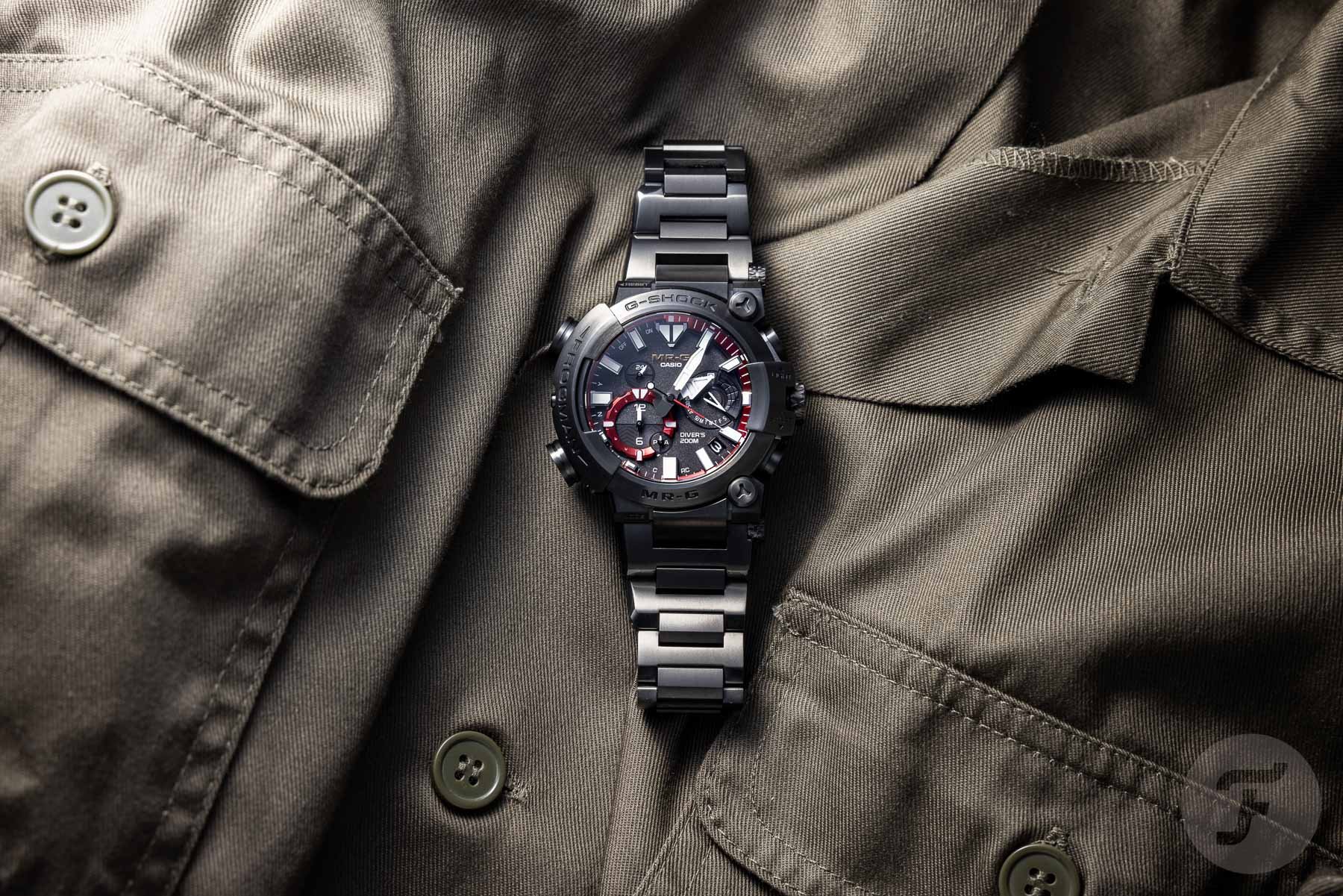
The Frogman is ISO 6425 dive-rated to 200m, has a screw-back, an asymmetric bezel that won't catch on slide hardware, solar charging that you'll never have to think about again, and the moulded carbon-fibre case lugs that mean nothing breaks at the strap pin. Around €700, which is at the top end of the list, but the Frogman is the one watch here that you genuinely don't have to think about. Multiband-6 atomic timekeeping. The hands are oversized to the point of cartoonishness, which sounds inelegant but reads cleanly through a wet goggle. If you're going to spend the day on slides with kids and you want the wrist taken care of, this is the answer.
Casio
GG-1000-1A3 - 56.2×55.3mm - quartz
Less expensive Frogman alternative; same brief, larger case.
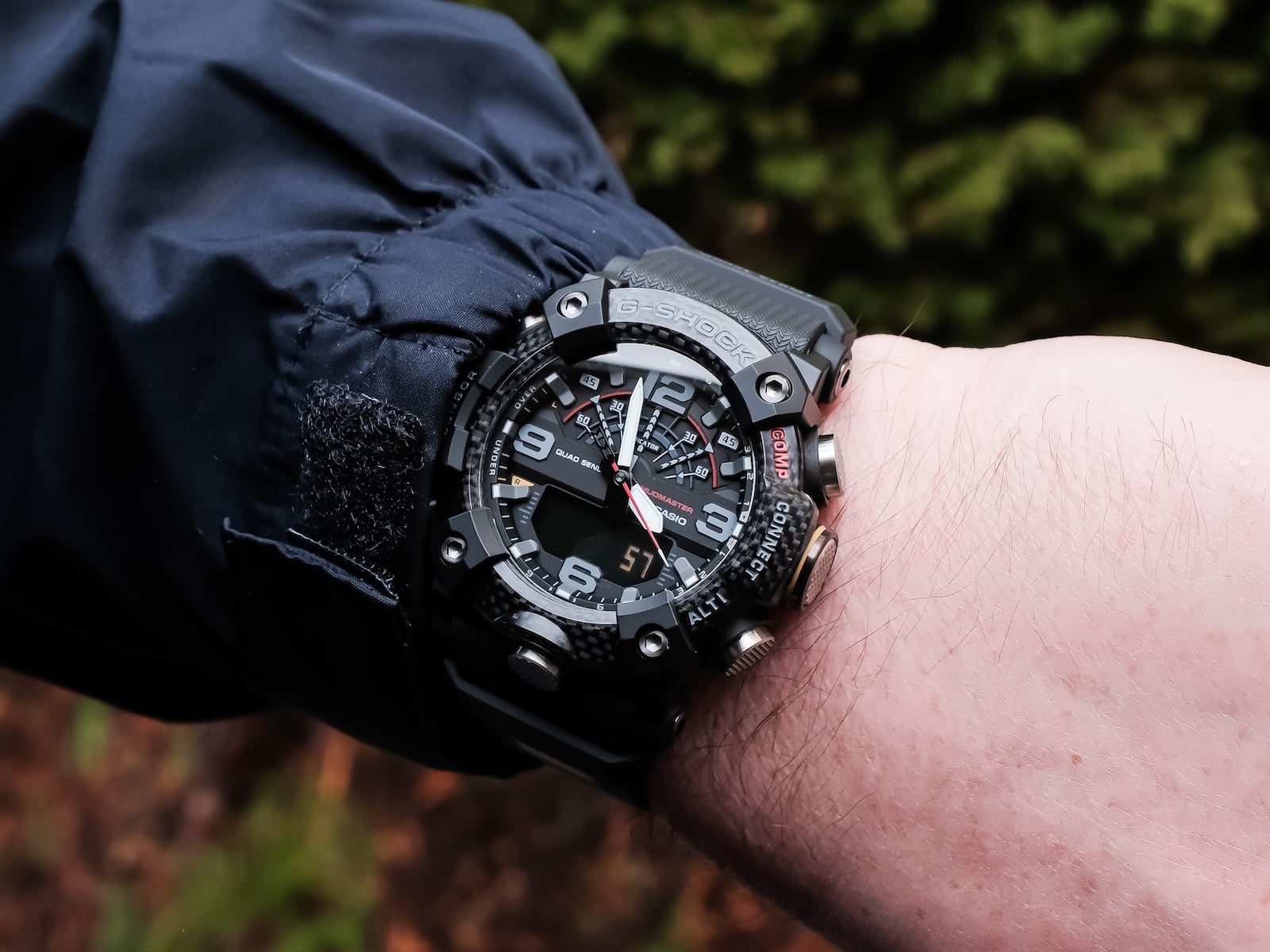
The Mudmaster is the off-road sibling: 200m WR, mud-resist gaskets on every external surface, twin-sensor altimeter and compass, screw-back. Around €350, considerably cheaper than the Frogman. The case is bigger and the lume is less elegant, but it's the same idea: a watch you do not need to fuss with for a six-hour park day. The advantage of the larger case at a waterpark is the bezel takes the slide-edge knocks before the crystal does. Strap is silicone with chlorine resistance documented in the manual. The watch self-corrects via radio at night. Fit on smaller wrists is poor, so this is the option for adults rather than for kids.
Citizen
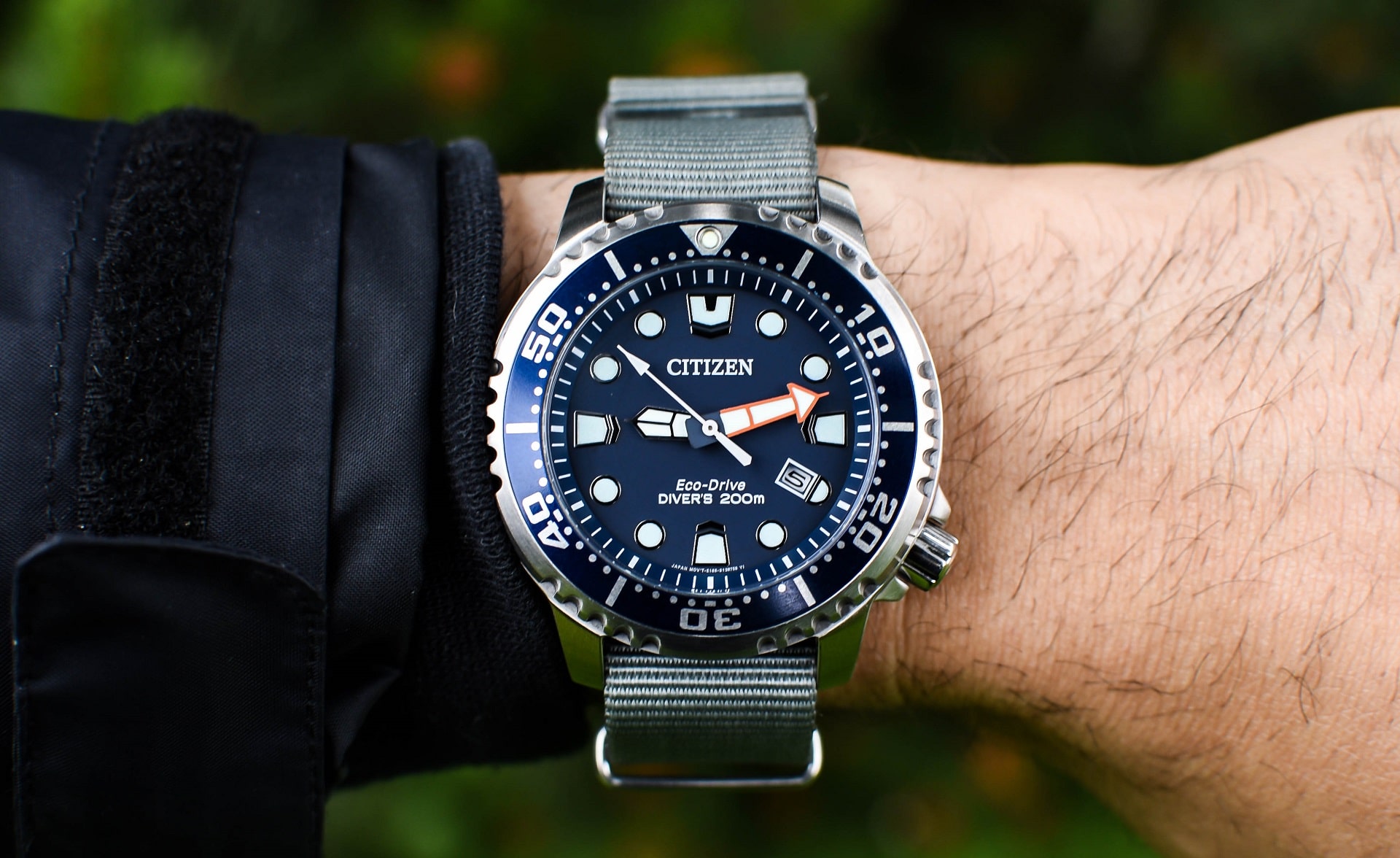
BN0150-28L - 44mm - eco-drive
The €350 ISO-6425 quartz diver that does this for a living.

The Citizen Promaster Diver is the real-job version of a waterpark watch: 200m ISO-rated, screw-down crown, Eco-Drive solar (no battery service), and a polyurethane strap that handles chlorine without fading. The orange-on-black variant is the most legible underwater, which matters when you're trying to see the time before your turn at a slide. Around €350. The case is light enough at 100g to forget about, and the bezel is grippy enough to count down a snack break for the kids. Citizen's QC at this price point is consistently better than Seiko's; the Promaster is the watch a divemaster wears as a backup, which says enough.
Garmin
Instinct 2 Solar - 45mm - quartz
The watch that tells you how many minutes you've stood in the lazy-river queue.

The Garmin Instinct 2 Solar is 10 ATM water-resistant, solar-charged, and indestructible to slide-end deceleration - the case is built around the screen rather than around it, so impact loads don't compress the crystal. Around €400. It also tracks heart rate (you can see what the slides actually do to you), GPS-tracks the park you're walking around, and has a working timer for sunscreen reminders. Battery life is functionally infinite in summer sun: park lights compete with the sensor, but a clear sky-day-out tops it up faster than you drain it. Strap is silicone, fully chlorine-rated. The downside is that it's still a smartwatch in feel; if you wanted a real watch, see the other four.
Seiko
SRP777K1 - 45mm - automatic
If you must wear a mechanical, this is the chlorine-tested one.
The Turtle's case shape is asymmetric, which sounds aesthetic but is actually functional in a waterpark setting: the lugs sit close to the wrist so the case doesn't snag, and the bezel is recessed so the slide-rim friction goes through the case rather than catching the timing ring. 200m WR, 4R36 automatic, 41-hour reserve. Around €450. The bracelet is acceptable but the rubber strap option (also from Seiko) is the right answer for a chlorine day. Lume is excellent. Service interval is generous and most service centres take Turtles back without a fuss. It's the only mechanical here, and we've kept it as the fifth option deliberately: chlorine is mean to gaskets, and a quartz Promaster is the more responsible answer. But for the day-out wearer who wants to feel a sweep second on the wrist while waiting in line, the Turtle is the right compromise.
A note on what NOT to wear
Skip the dress watch, even on a leather strap nobody told you was 'water-treated'. Skip the chronograph with a 50m rating; the pushers are not designed for sudden pressure. Skip mesh bracelets entirely (they trap pool chlorine and skin oils). Skip the smartwatch that needs Bluetooth re-pairing every time you step into a tube ride. The waterpark wrist is the same as the dive-watch wrist, with the small difference that you'll walk back to a snack stand carrying a wet four-year-old. Plan accordingly.
Frequently asked questions
What watch survives a waterpark day?
A Casio G-Shock Frogman GWF-A1000, G-Shock Mudmaster GG-1000 or Citizen Promaster Diver all handle chlorinated water, slide friction and lazy-river grip. All three are ISO 6425 rated to at least 200m and cost under 700 euro so the wrist damage is affordable.
Will chlorine damage a dive watch?
Chlorinated water is harsher on gaskets than fresh water but gentler than salt. A Rolex Submariner or Omega Seamaster survives it if rinsed the same evening. Long-term chlorine exposure can degrade rubber gaskets in five years vs seven for freshwater use. Rinse after every visit.
Can I go on water slides with a mechanical watch?
The 60-70 km/h slide impact and the deceleration at the bottom are within a Seiko Turtle or Tudor Pelagos shock tolerance. The bigger risk is the watch catching on a slide seam or another rider. A resin G-Shock is the smarter waterpark choice for a full day of slides.
Is an Apple Watch Ultra good for a waterpark?
The Apple Watch Ultra 2 is 100m rated and handles pool and slide use. It's not ideal for a full day because the touchscreen goes unusable when wet, but it survives the day. A G-Shock Frogman remains the smarter pure-waterpark answer at half the price.
Comments 6