
Bulgari's Octo Finissimo launched in 2014 with the Octo Finissimo Tourbillon, a 5mm-thick wristwatch with a manual-wind tourbillon (Cal. BVL 268) that broke the record for thinnest mechanical tourbillon ever produced. The result triggered a near-decade competition between Bulgari and other haute-horlogerie brands (notably Piaget and Audemars Piguet) for ultra-thin records, with Bulgari setting eight successive world records across different complications between 2014 and 2024.
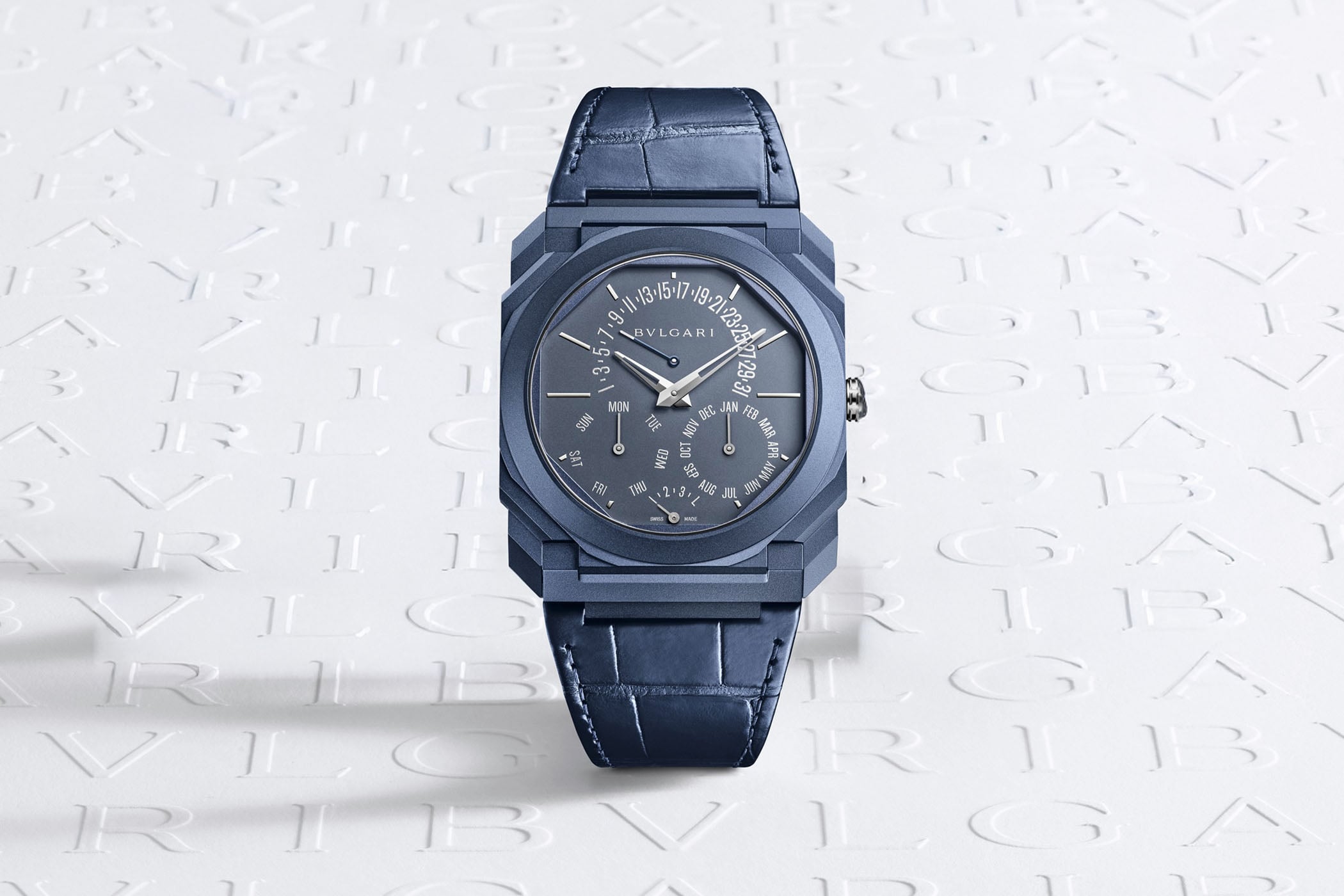
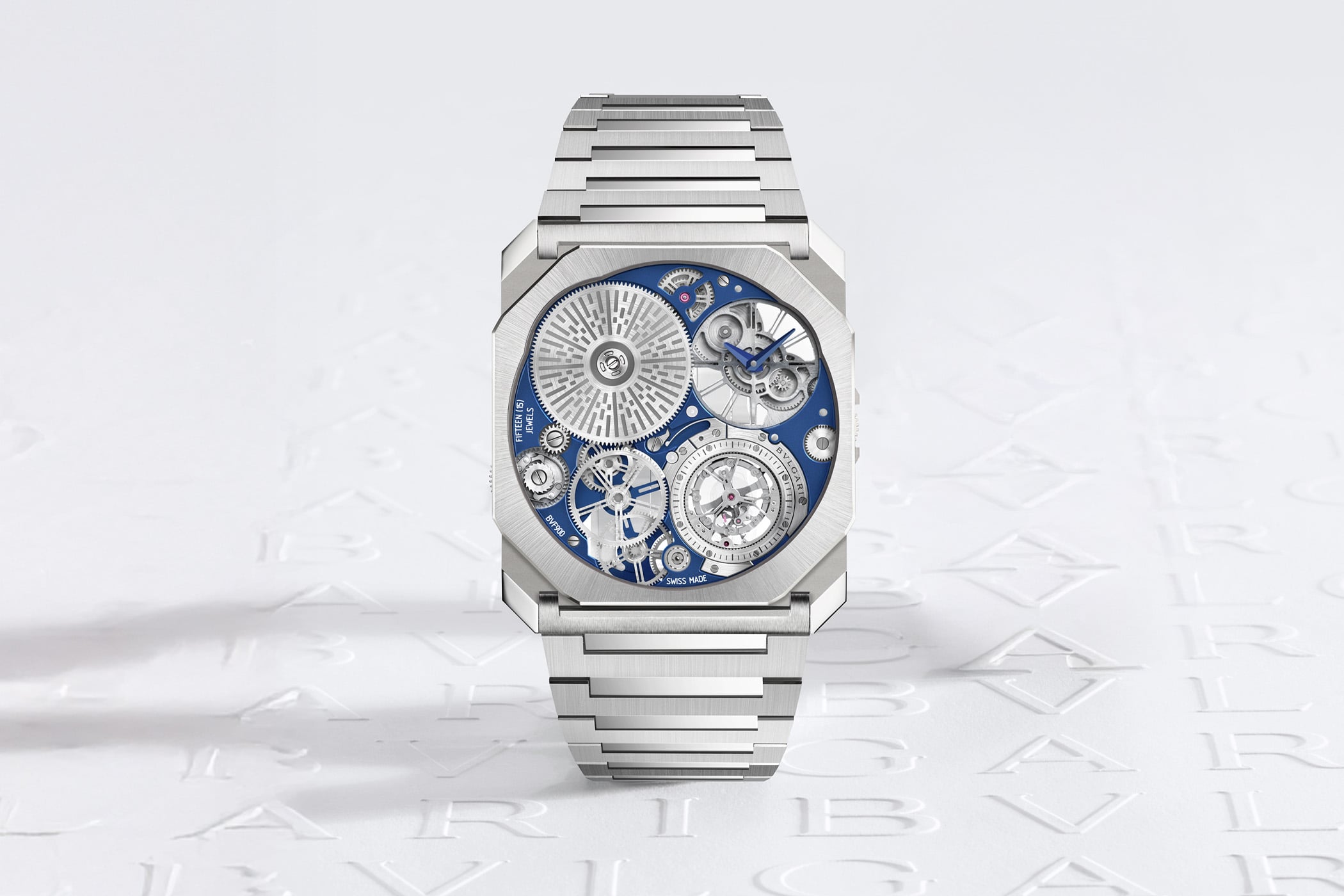
The records: 2014 Tourbillon (5mm, Cal. BVL 268), 2016 Minute Repeater (6.85mm, Cal. BVL 362), 2017 Automatic (5.15mm, Cal. BVL 138, the line's volume movement), 2018 Tourbillon Automatic (3.95mm, Cal. BVL 288), 2019 Chronograph GMT Automatic (6.9mm, Cal. BVL 318), 2020 Tourbillon Chronograph Skeleton (3.5mm, Cal. BVL 388), 2021 Perpetual Calendar (5.8mm, Cal. BVL 305), 2022 Octo Finissimo Ultra (1.8mm, Cal. BVL 180, the absolute thinness record across any mechanical wristwatch).
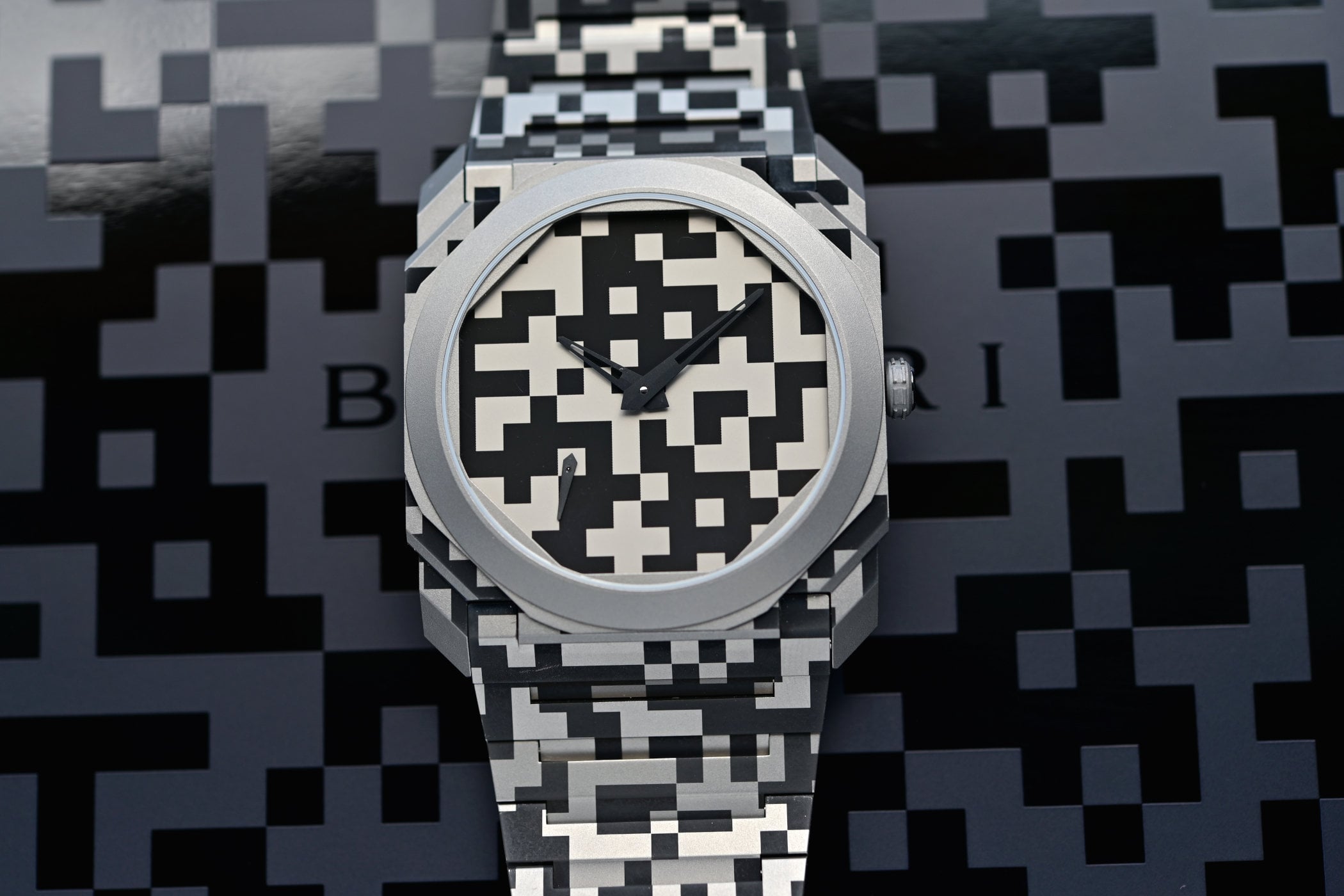
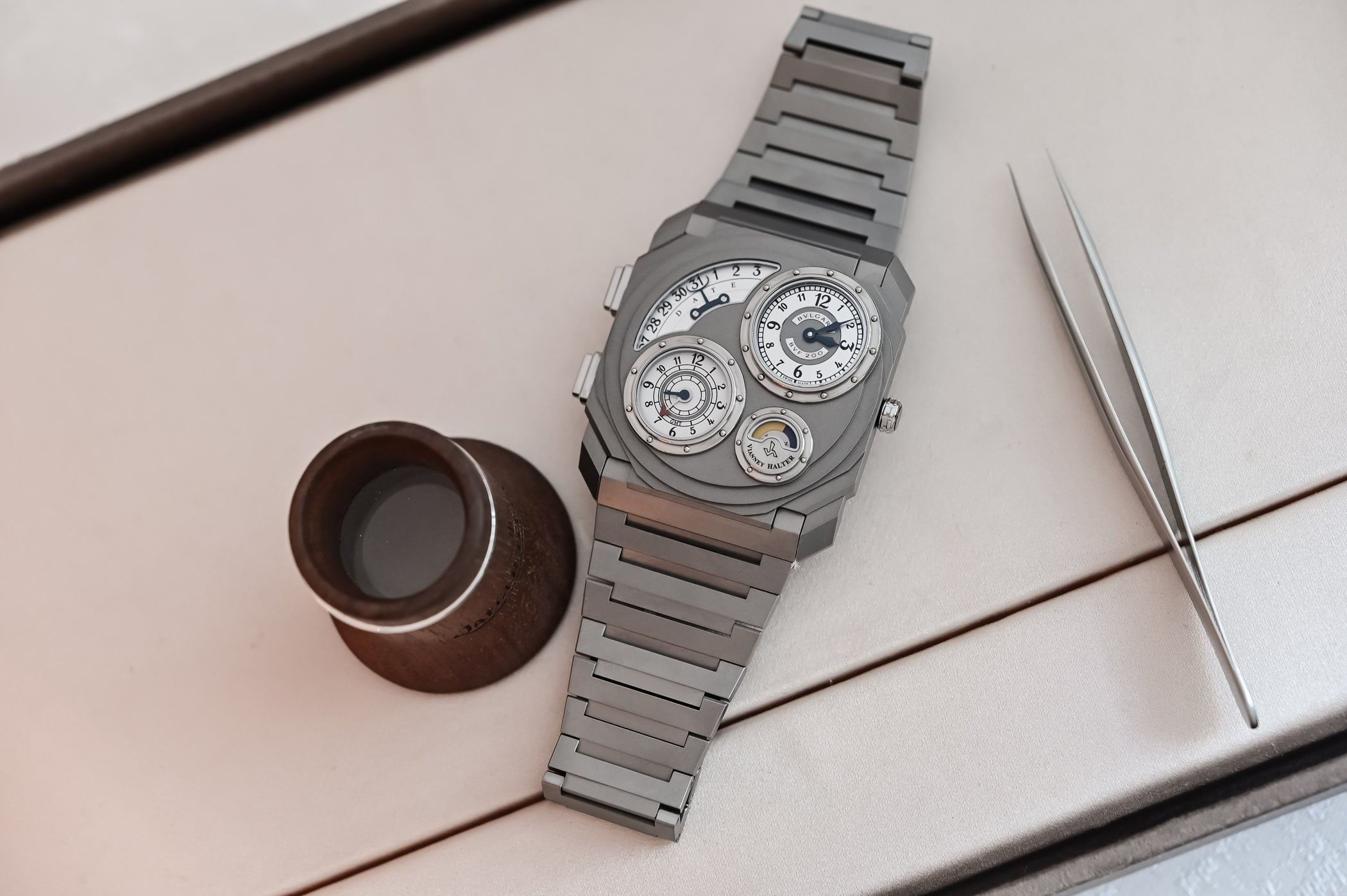
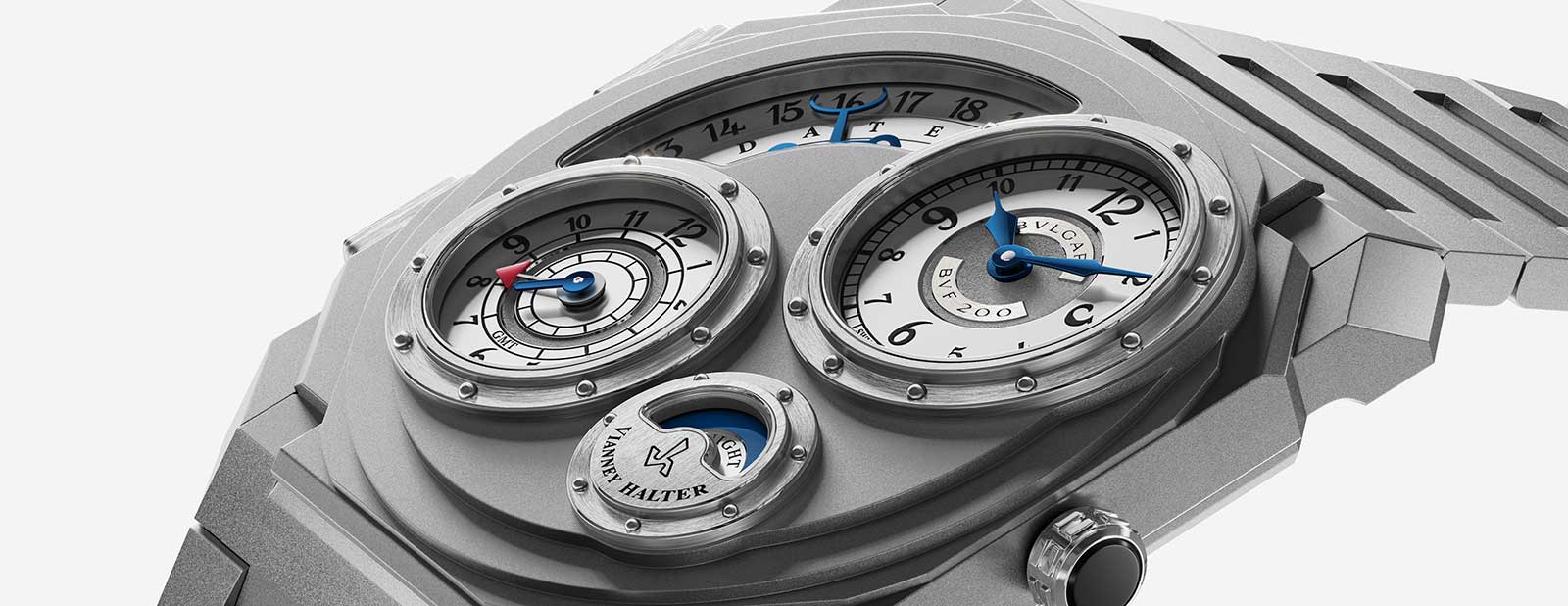
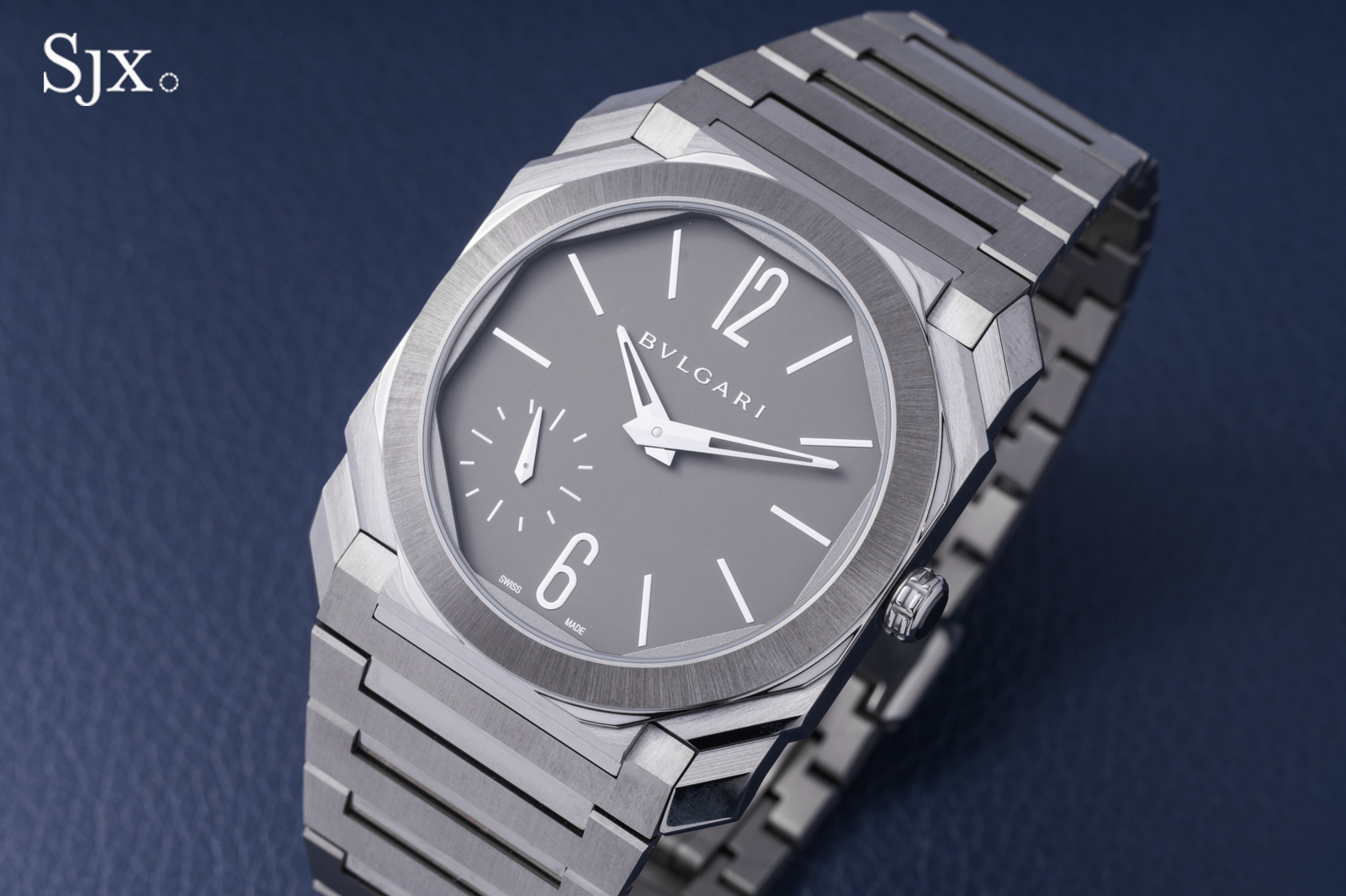
The case is the Octo, an architecturally complex case with 110 facets arranged in geometric step-pyramid layers, originally designed by Gerald Genta for the Octo Bi-Retrograde in the 1990s and adapted to the Finissimo line in 2014. Materials span steel, titanium, rose gold, platinum, and (for the absolute record references) tungsten carbide in the Octo Finissimo Ultra. Most volume references are titanium for the lightness that complements the thinness, the Octo Finissimo Automatic in titanium weighs ~70 grams.
The Octo Finissimo became one of the most mechanically distinguished contemporary watch collections. It is also commercially successful: Bulgari produces volume-tier Octo Finissimo Automatic references at ~€14,000 retail in titanium, with the haute-complications scaling to ~€150,000 (Tourbillon Skeleton) and ~€440,000 (Octo Finissimo Ultra COSC). Allocation is moderate; the line is among the most-talked-about modern Bulgari references and the brand's strongest haute-horlogerie statement.




Comments
No comments yet, be the first to weigh in.