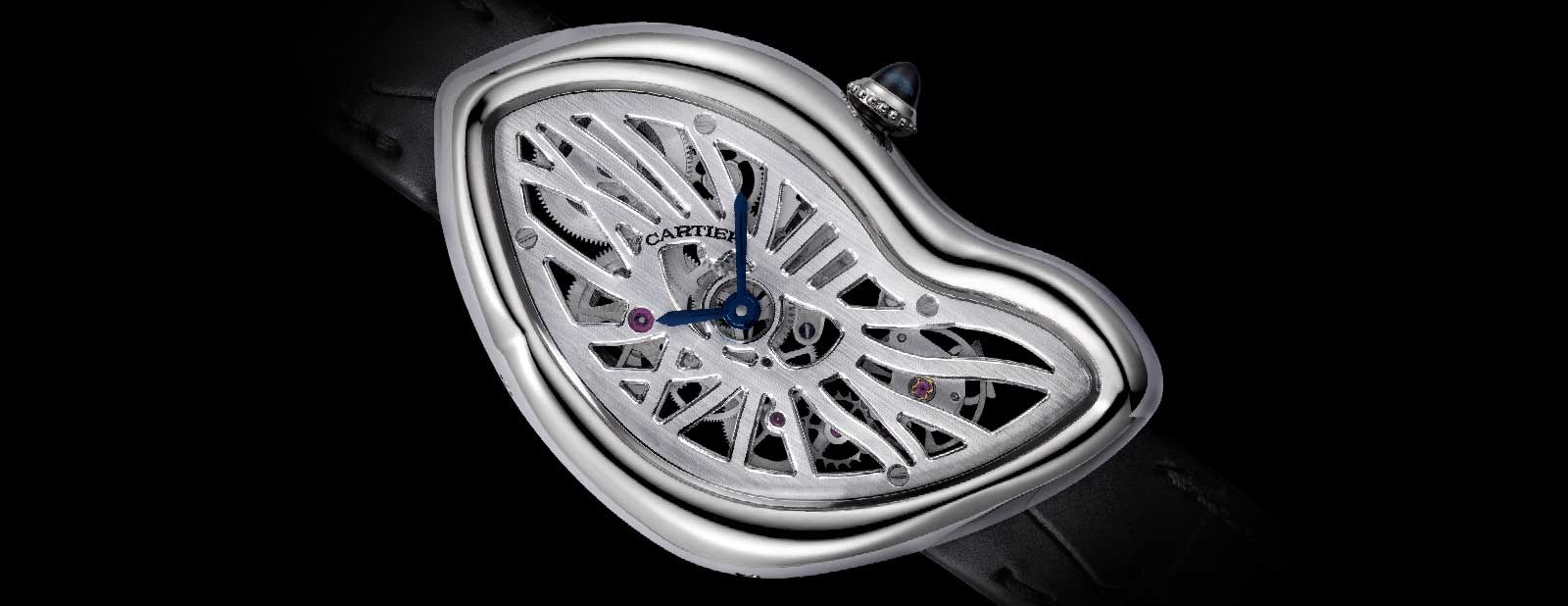
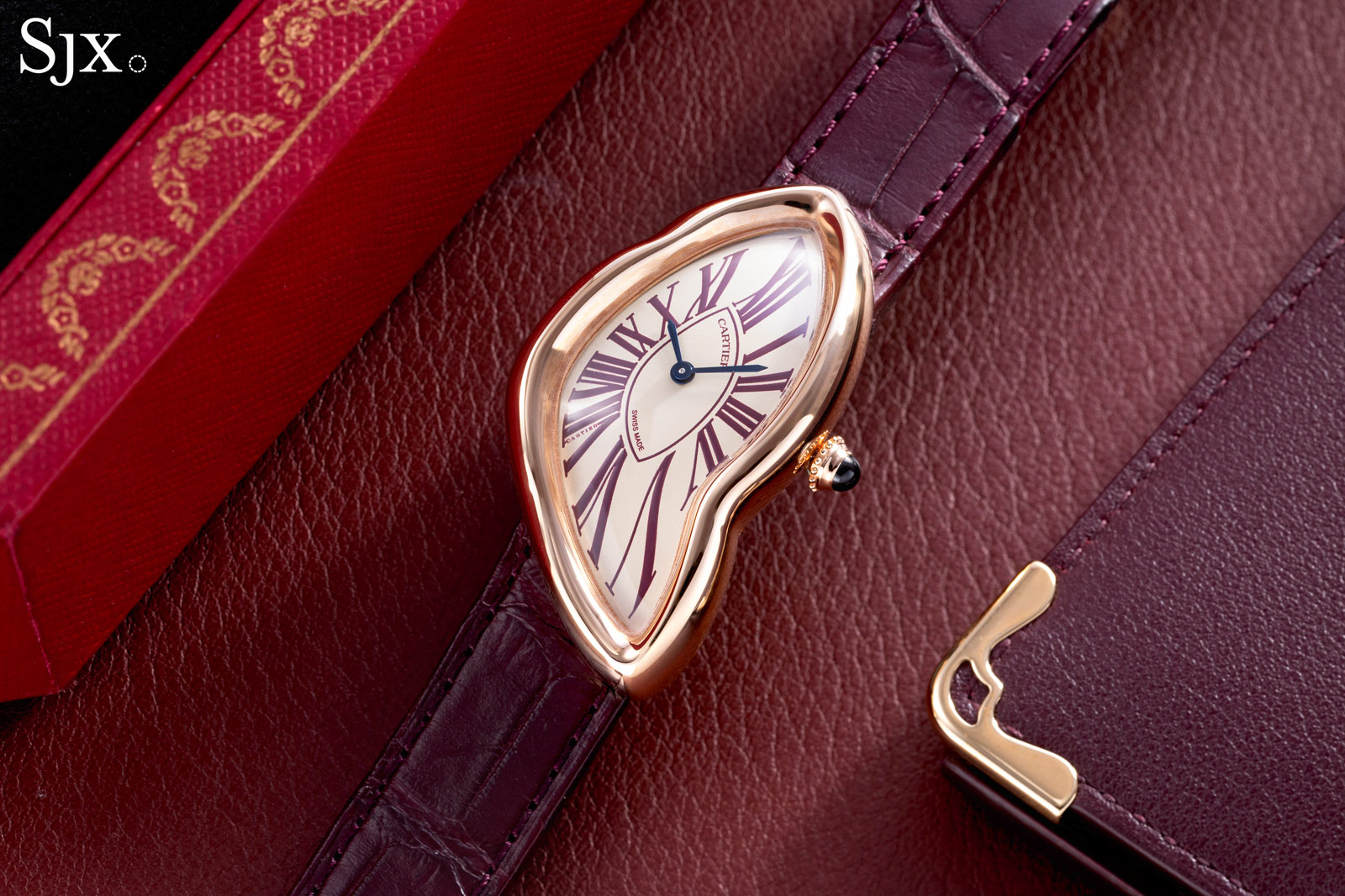
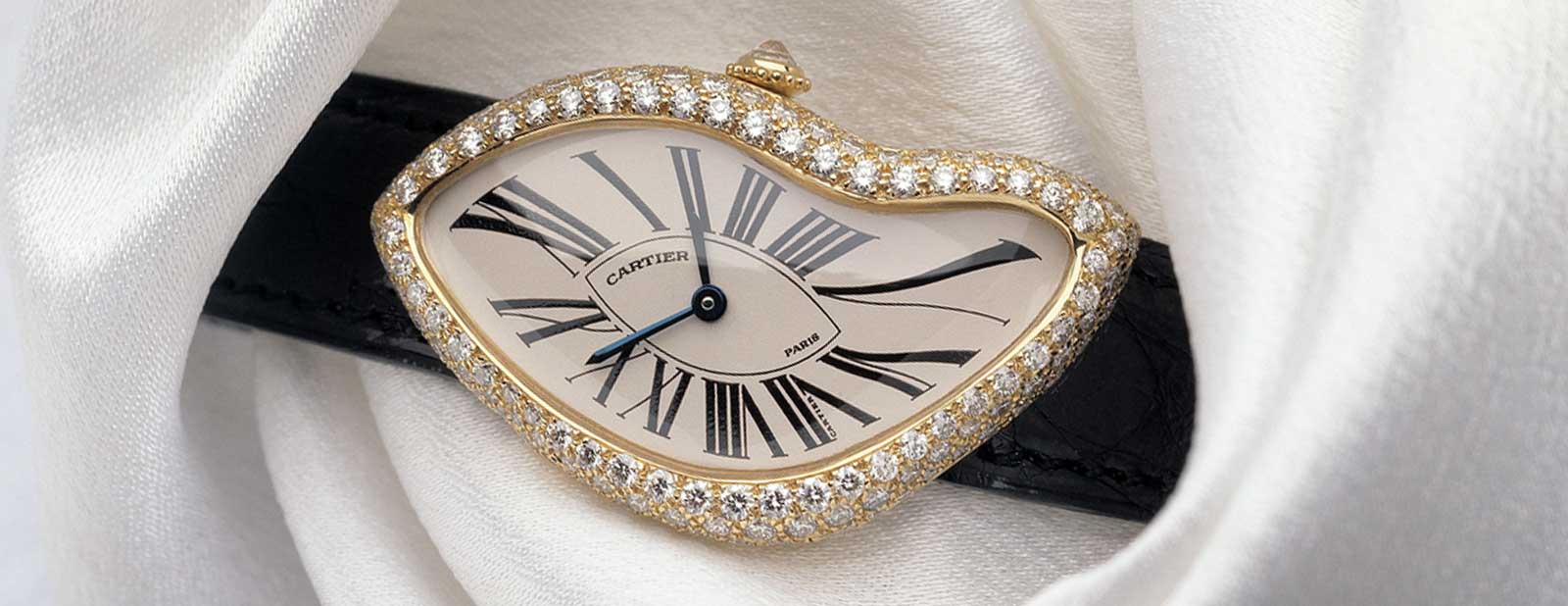
Cartier opened its London boutique on New Bond Street in 1902, and by the 1960s the London branch under Jean-Jacques Cartier (great-grandson of founder Louis-François Cartier) had developed an experimental, design-forward identity distinct from Paris and New York. Among the London-era references were the Maxi Oval, Tortue, Asymmetrique, and a small handful of pieces that broke from Cartier's otherwise restrained dress-watch tradition. The most extreme of these was the Crash, created in 1967: an asymmetric cushion case with a "melted" or "crushed" silhouette, blued Breguet hands, blue sapphire cabochon crown, and an enamelled Roman-numeral dial.
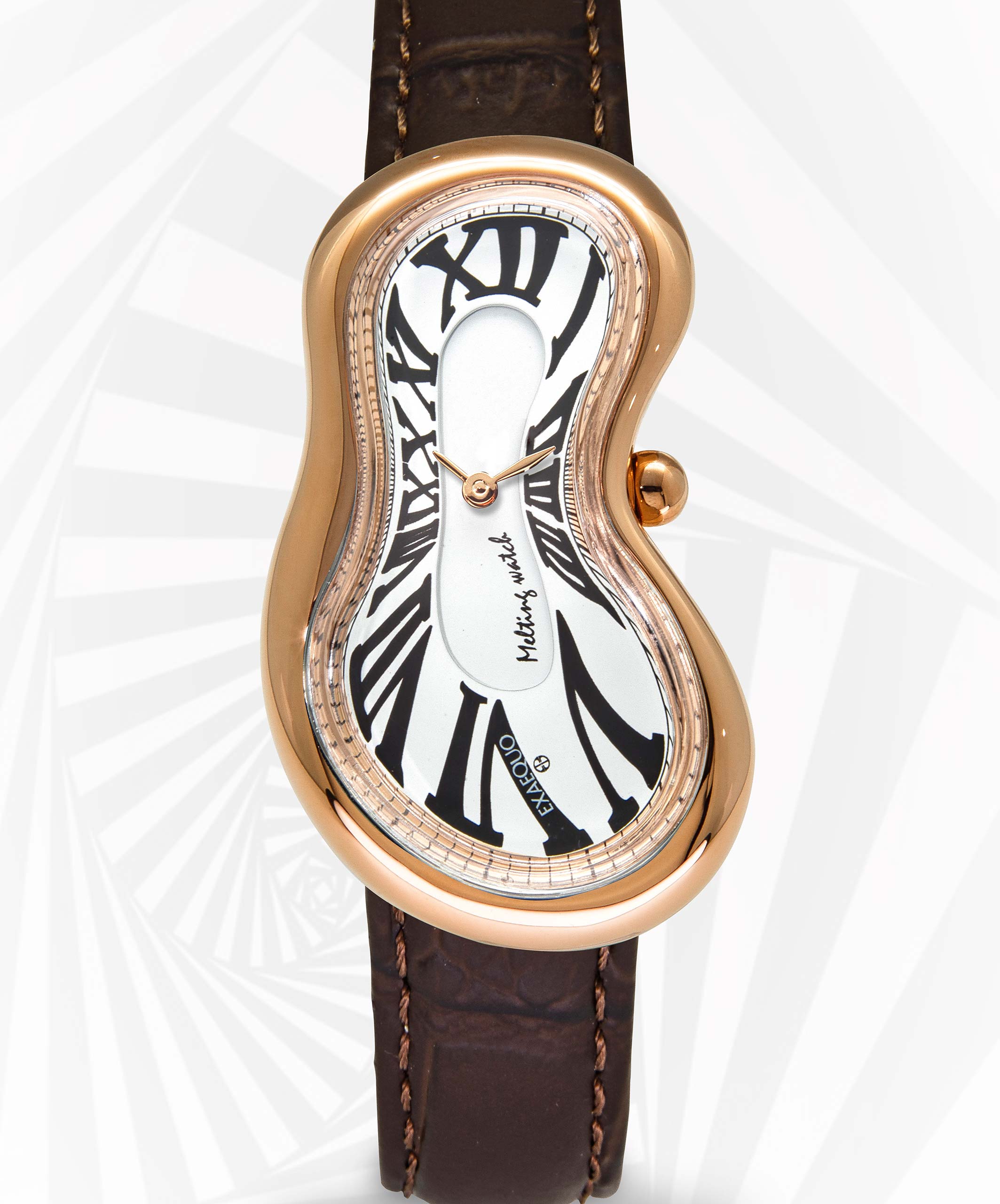
The origin story is debated. The most-cited version credits Jean-Jacques Cartier with the design after a Cartier Maxi Oval was found burned and distorted following a customer's automobile accident; the resulting twisted shape inspired the Crash. A second version credits Salvador Dalí's 1931 melting clock from The Persistence of Memory as the visual reference. A third credits Cartier London's independent design studio working through 1960s Pop and Op-Art influences. All three may be partially true. Approximately 12 original 1967 Crashes are documented, all in 18k yellow gold, all hand-built at Cartier London.
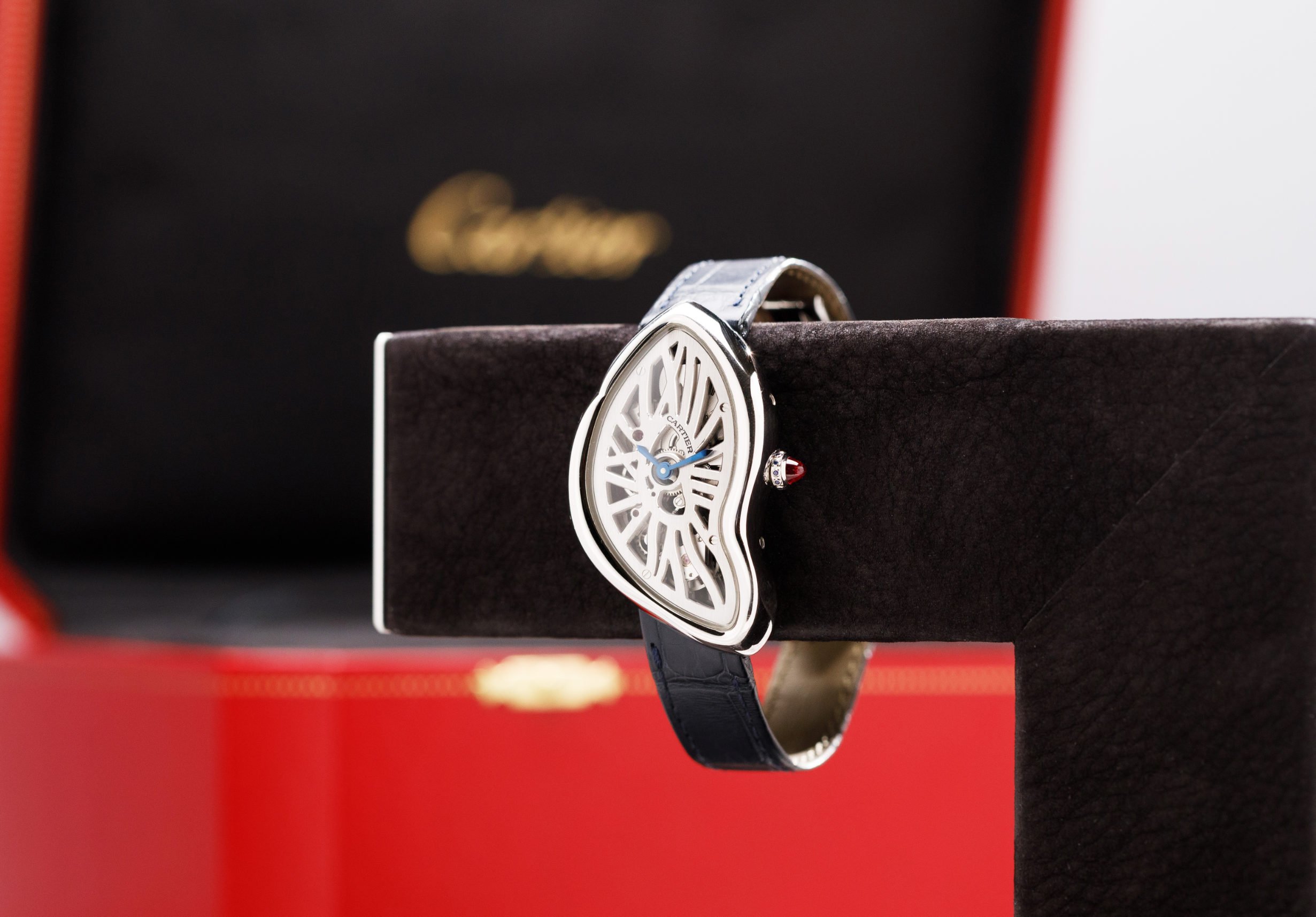
After the original 1967 production, the Crash entered a sleeper period. In 1991, Cartier London produced a Crash London revival in 18k yellow gold; fewer than 200 pieces were made over several years, all hand-engraved with the words "CARTIER LONDON" on the caseback. In 2013, Cartier Paris made a Crash Paris revival of 267 pieces in 18k pink gold, signed CARTIER on the dial without the LONDON. In 2015 the Crash Skeleton launched: a 28.15mm × 45.32mm 18k pink-gold case with a fully skeletonised in-house Cal. 9618 MC manual movement, the dial entirely cut away to show the curved bridges of the calibre.
In 2022 Cartier launched the Crash Skeleton in 18k yellow gold (a slightly larger 45mm version with revised proportions) and the rare Crash Skeleton White Gold. The Crash has remained one of the most desirable Cartier references; vintage 1967 originals have crossed USD 1.5 million at Sotheby's and Phillips. The 1991 London Crashes trade for USD 250,000-500,000+ depending on condition and provenance. Modern Crash Skeleton retail is approximately USD 80,000-100,000; modern release pieces sell out instantly via boutique allocation. Cartier does not list the Crash in conventional catalogue copy; allocation is exclusively VIP and waitlist-driven.


Comments
No comments yet, be the first to weigh in.