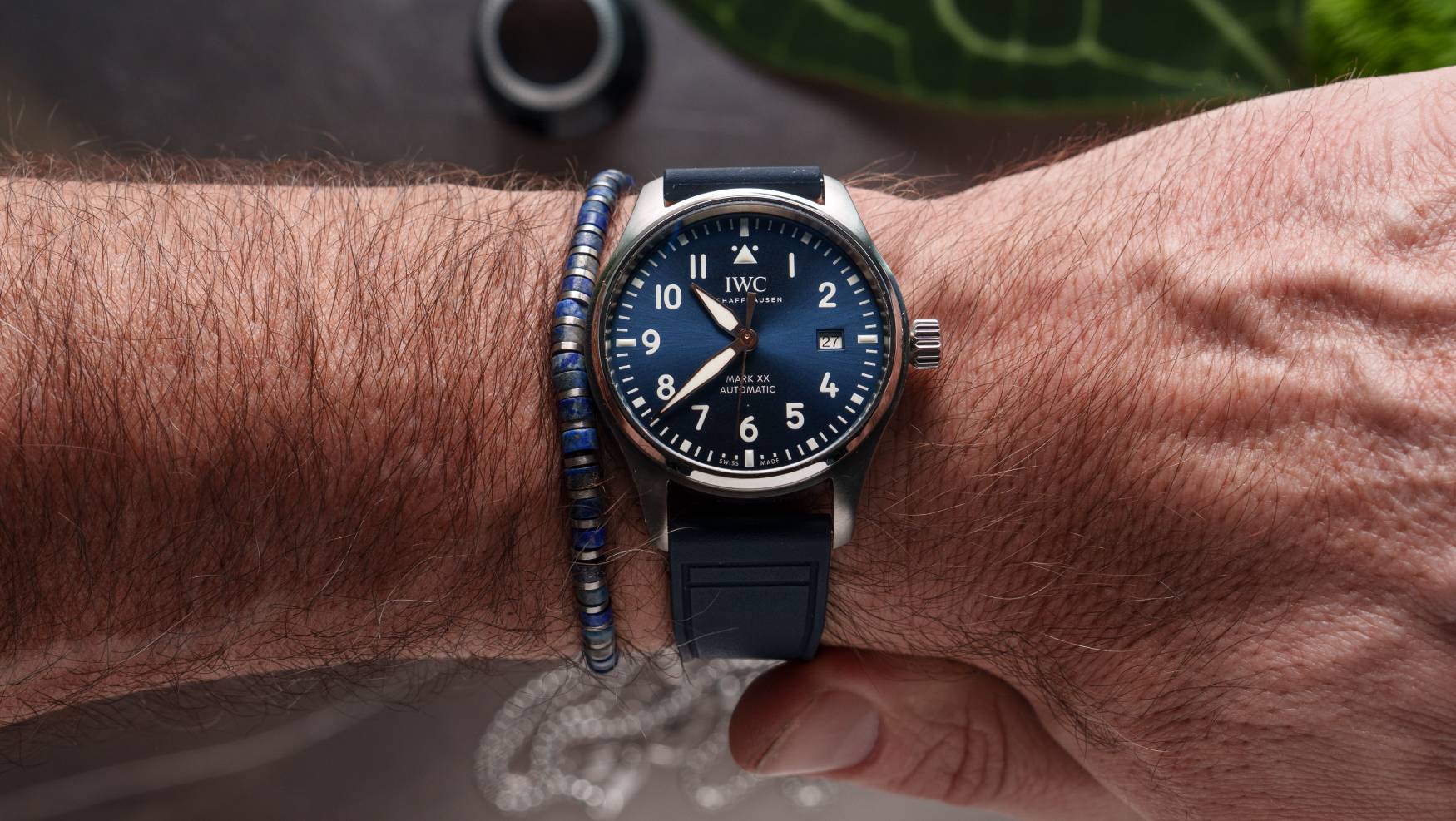
In 1948 the Royal Air Force issued a specification (6B/346) for a navigator's wristwatch with a precision movement, soft-iron anti-magnetic inner case, hacking seconds, and rugged construction suitable for cockpit use in the new jet age. IWC's response, the Mark 11, used the in-house Cal. 89 hand-wound movement and was issued to RAF navigators from 1948 through 1981, an unusual three-decade production run for a single military reference.
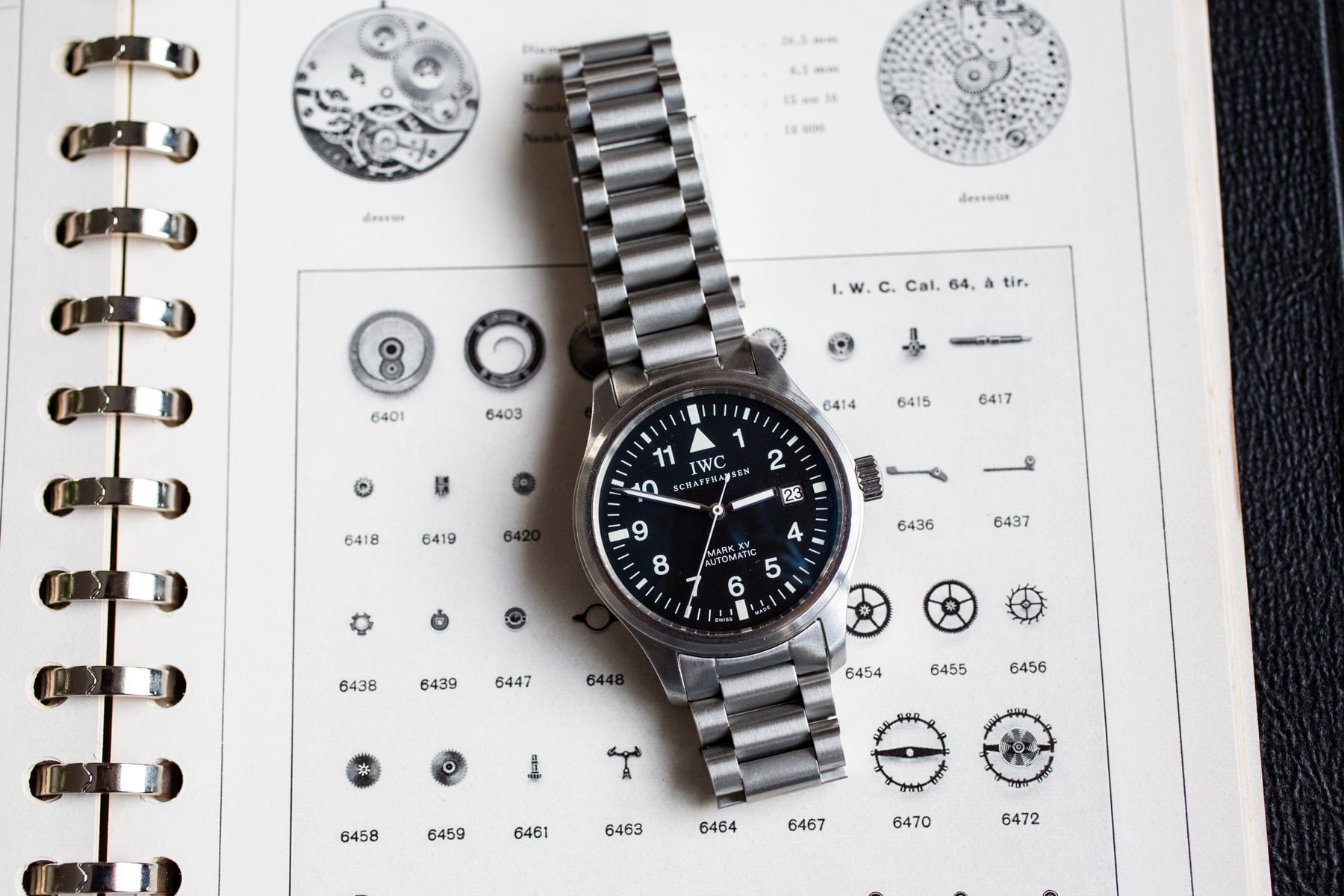
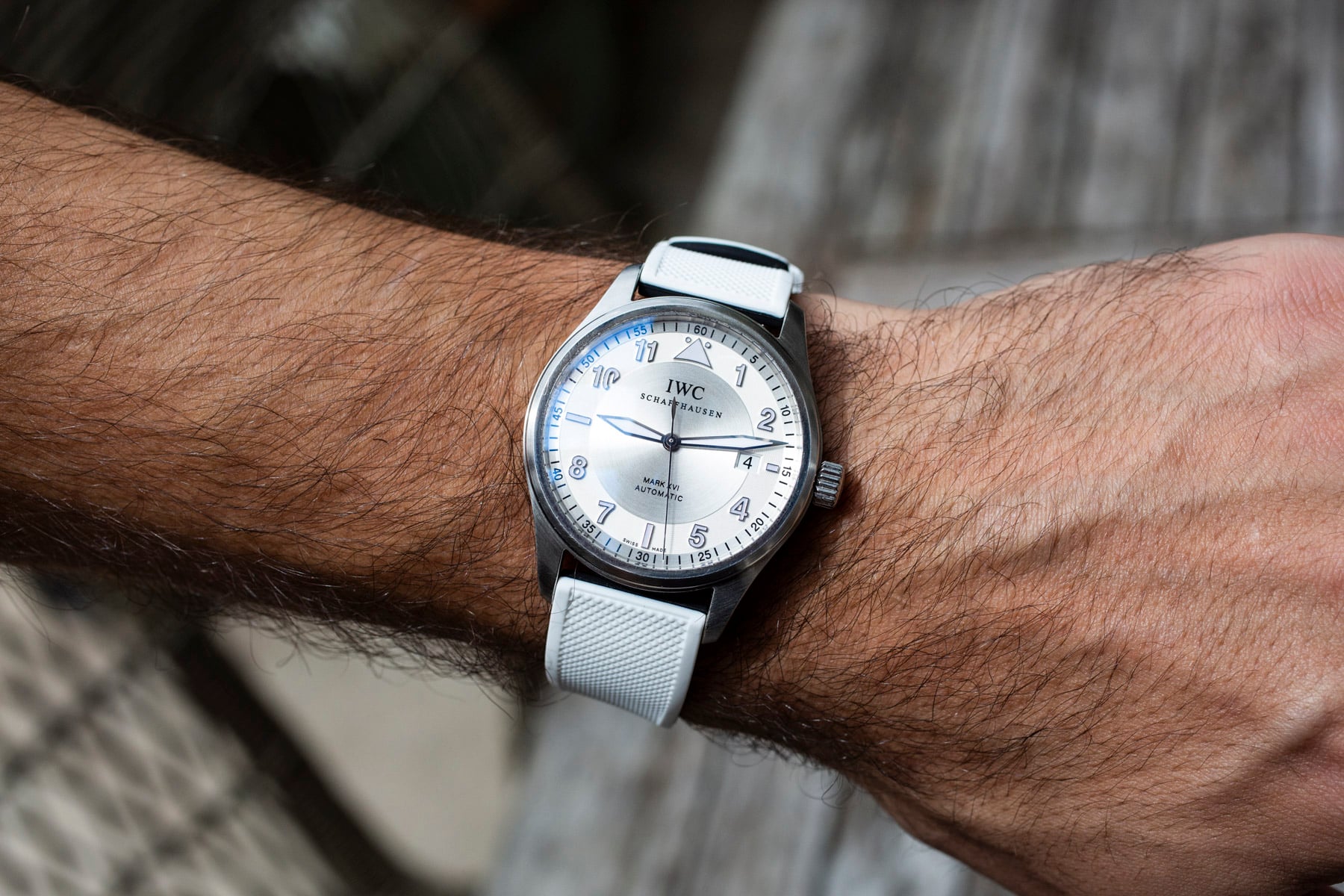
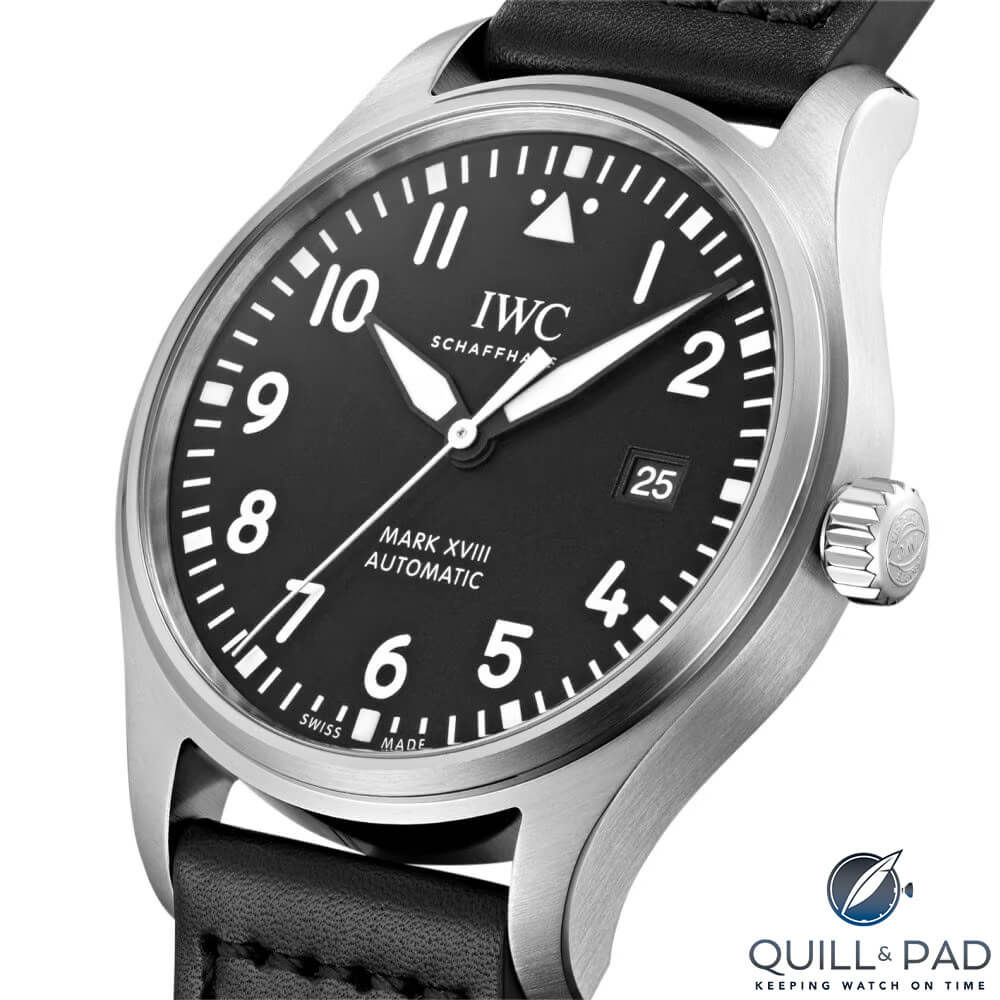
The Mark 11 became the most-collected vintage pilot watch and the founding reference for the entire Mark series. After a long pause IWC revived the line in 1994 with the Mark XII, then progressed through Mark XV (1999), Mark XVI (2006), Mark XVII (2012), and Mark XVIII (2016, the longest-running modern Mark with the simplified "Mark XII-style" dial). Each Mark refined the proportions toward the modern 40mm steel case while keeping the legibility-first dial that defined the original.
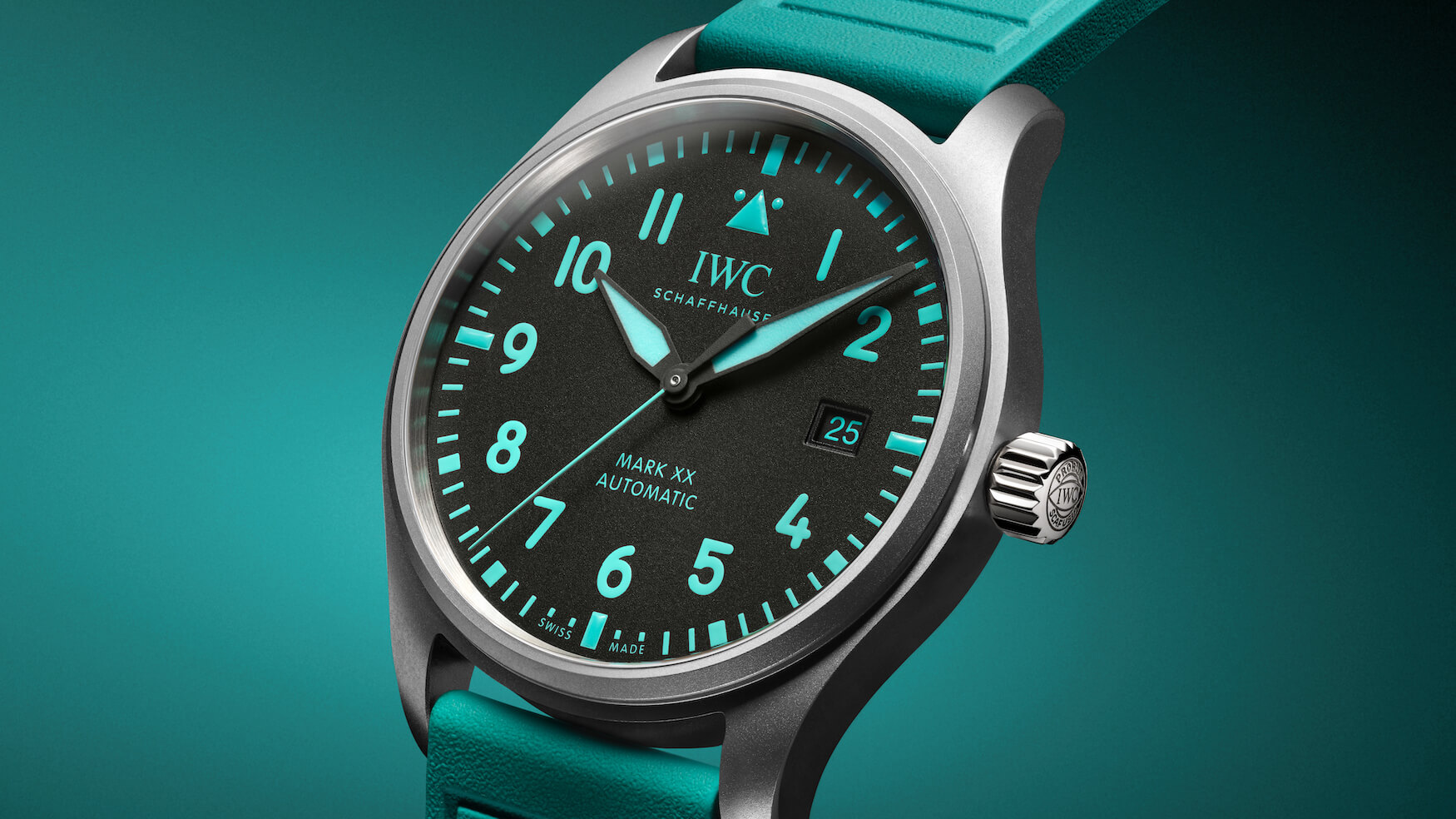
The current Mark XX launched at Watches and Wonders 2022, replacing the Mark XVIII. The headline upgrade is the new Cal. 32111 (Sellita SW300-1 base) with 120-hour power reserve (5 days), more than double the Mark XVIII's 42-hour reserve. 40mm steel case, anti-magnetic soft-iron inner case rated to 80,000 A/m, sapphire crystal secured against pressure changes (a classical IWC pilot feature), 100m water resistance. The dial is unchanged from the Mark XVIII: black, large arabic numerals, triangular 12-index, sword hands.
The Mark XX is positioned as IWC's most-honest entry-tier pilot watch. Steel case, leather or steel bracelet, no complications. Retail starts at ~€6,200 for the steel reference. Allocation is light by Swiss-luxury standards; available at most IWC ADs without waitlist. The reference for buyers who want pilot heritage and serious anti-magnetic engineering at the entry tier rather than the oversized Big Pilot.






Comments
No comments yet, be the first to weigh in.