If you've ever pulled a watch out of a sink at the end of a service and watched stock pour out from under the bezel, you already know most of this. Kitchens chew through watches the way they chew through sneakers: heat, steam, citrus juice, oils, salt, the occasional sharp object. Anything you're not prepared to retire in eighteen months has no business being in there.
What works on a line is the opposite of what's on a wrist shot. Resin or rubber strap. Quartz movement, ideally solar so you don't open the case for a battery service mid-year. 20-bar water resistance minimum - 'splashproof' means nothing in a kitchen. A face you can wipe clean with a side towel without scratching it. A timer or stopwatch you can hit with the side of your thumb without looking. Above all: a watch you don't have to care about.
What doesn't work: leather straps (they'll rot in three weeks), sapphire crystals that crack on a corner of stainless prep counter, mesh bracelets that trap onion skins, anything with a screw-down crown you've forgotten to close, and any watch you'd be unhappy to lose to a deep-fryer. Mechanical watches survive a kitchen, but a kitchen punishes them harder than diving does, and the service bills will pile up. Quartz wins here; the wrist that carries a Submariner through a busy Saturday brunch is the wrist that drops it in the soup the following week.
Casio
DW-5600E-1V - 42.8×48.9mm - quartz
The line cook's de-facto wedding ring. Cheap, quiet, replaceable.

The classic 200m-water-resistant Square is the watch you see on more chefs' wrists than every other watch combined, and the reasons are obvious the first time you wear one through a dishpit shift. The resin case doesn't pick up grime; the strap rinses clean under hot water; the timer and stopwatch are both two-button operations. The screen is dim enough not to glare under a heat lamp and bright enough to read at four in the morning during prep. Around €70 retail. When the strap finally goes (three years into daily abuse), it costs €15 to replace. Nobody in the kitchen will ever tell you to take it off, and nobody will ever ask you about it, which is two of the most valuable properties a watch can have on a line.
Casio
F-91W-1 - 35×38mm - quartz
The €15 backup that lives in your locker forever.
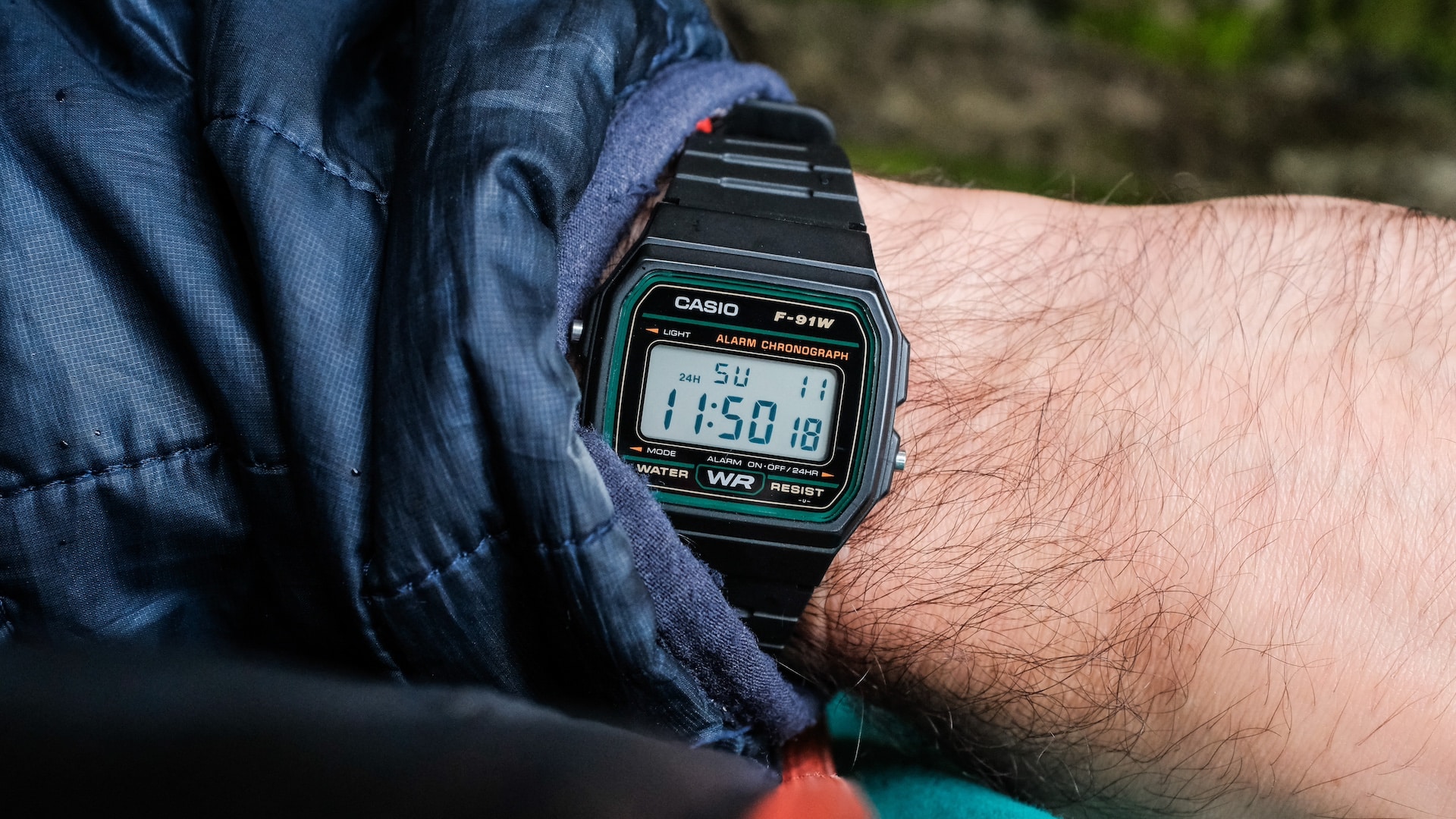
The F-91W has the smallest profile in the genre, which matters more than you think when you're folding pasta dough or piping mousse - under 35mm, 8.5mm thin, 22g on the wrist. It will not snag a glove, it will not catch on a hotel pan, and it has a stopwatch that goes to one hour. Replace one every two years for the cost of an espresso. The case is sealed enough for handwashing but not for full submersion, which is fine because you're going to lose this one in a sink eventually anyway. Some chefs wear two F-91Ws on a single shift, one for proteins, one for desserts. The fact that's possible (financially, hygienically) is the entire pitch.
Apple
A2722 - 44mm - quartz/digital
Multi-timer wrist. The only watch you'd ever set seven alarms on.

If you're plating five dishes and three of them have specific finish times (90 seconds for the rouille, 6 minutes for the fish, 4 minutes for the gnocchi), the Apple Watch's simultaneous-timer interface is unmatched. None of the other picks here can do that. The SE is the cheapest entry, around €260, with a sport band that survives every kitchen liquid and rinses clean under the tap. Battery is the weak point - you'll need to charge mid-day on a long shift - but stations with a USB plug solve it. The wrist gestures and notifications are the small problem you adapt to (silent mode, theatre mode). The big problem - the watch falling apart in your hand from heat or moisture - doesn't happen.
Citizen
BN0211-09L - 42mm - eco-drive
The chef's-jacket version of a tool watch: indestructible, dressy enough to pass muster front of house.
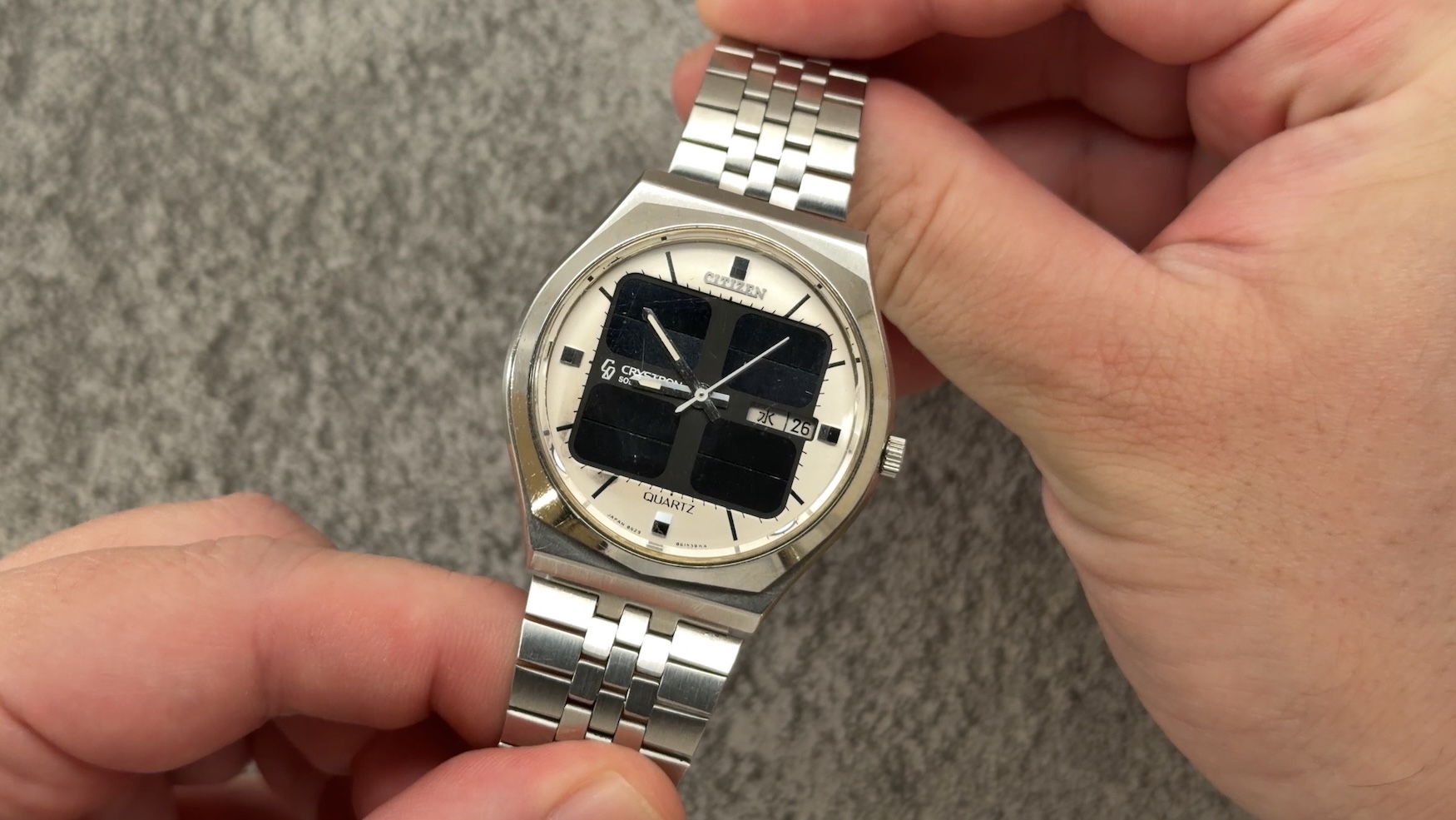
The Promaster Tough is the watch the kitchen-supply catalogue would carry if it sold watches: Eco-Drive (no battery service ever), 200m water resistance, double-shelled stainless case, monobloc construction, tritium tubes for the lume. It costs around €450 and is built to outlive you. The bracelet is the only weak point in a kitchen - swap it for the rubber strap option at purchase, and the watch is bulletproof. Acceptable on a line that asks you to look the part during a guest visit (it's a real watch, not a toy), and tough enough that you're not babying it the rest of the time. Solar is the killer feature: never opens the caseback for service, never picks up a flour-dust contamination on the gaskets.
Tissot
T145.407.97.057.00 - 41mm - automatic
If you must wear a mechanical, this is the one that survives.

Plenty of cooks insist on a mechanical and we're not here to argue, but most luxury divers will eventually get unhappy in a kitchen environment. The reissued Tissot Sideral S in forged carbon is the right compromise: 300m water resistance, an integrated rubber strap that handles bleach, a forged-carbon case that's nearly impossible to scratch, and the Powermatic 80 movement which is robust enough to take ambient temperature swings without losing time. About €1,150. Cooks-who-collect tend to land here because it satisfies the watch-person itch without the existential horror of seeing a Submariner caseback bake at line height. Still: keep it on the rubber strap, screw the crown, rinse it after service, and accept that some pieces aren't going home with you eventually.
A note on what NOT to wear
Skip leather straps - they go rancid faster than you'd believe. Skip dressy bracelets that trap citrus pith. Skip your grail; nothing about a Saturday brunch service was designed with a perpetual calendar in mind. Skip anything you can't rinse under a hot tap. The right kitchen watch is the one you can run through a dish station at the end of a shift, dry on the side towel, and put back on the next day. Anything else stays in the locker.
Frequently asked questions
What watch can I wear in a professional kitchen?
A Casio G-Shock DW-5600E, F-91W or Apple Watch SE all survive brigade shifts. They wipe clean of butter, dough and citrus, cost little enough to replace if a knife catches them, and the digital timer beats a wall clock when you're plating six covers. Mechanical watches don't belong on the line.
Do chefs actually wear watches while cooking?
Most don't wear anything on the wrist during service: knife safety, glove hygiene, and the risk of caramelised sugar in the bracelet. If you wear one, it's the timer watch. A G-Shock DW-5600 at 60 euro is the working chef's standard for a reason.
Can I wear a mechanical watch in the kitchen?
Not during service. A hand-wound movement takes shocks from a knife edge or pan handle it won't survive, and the crown gets pushed into the case by a glove. Off-shift, an Aqua Terra 38 works for menu meetings and food photography. On the line, plastic and rubber only.
Is an Apple Watch better than a G-Shock for kitchen work?
Different jobs. The Apple Watch SE handles timers, order tickets and voice notes better. The G-Shock survives a drop into hot oil and doesn't need charging on a triple shift. Many head chefs run both: G-Shock on the line, Apple Watch for admin.
Comments 4