You know exactly which watch. You have known for three weeks. You have opened the same product page every morning like you are checking the weather. You have three browser tabs comparing caliber specs. You have a spreadsheet. You know the reference number, the movement, the lug-to-lug, and roughly where every seller is priced. Your Instagram algorithm now shows you nothing except this watch, in every colour, on every wrist.
Then the FedEx guy shows up. You unbox it. It is beautiful. You wear it. Three days later, it is in the winder. Two weeks later, you are opening a new product page. Every morning. Like the weather.
What just happened?
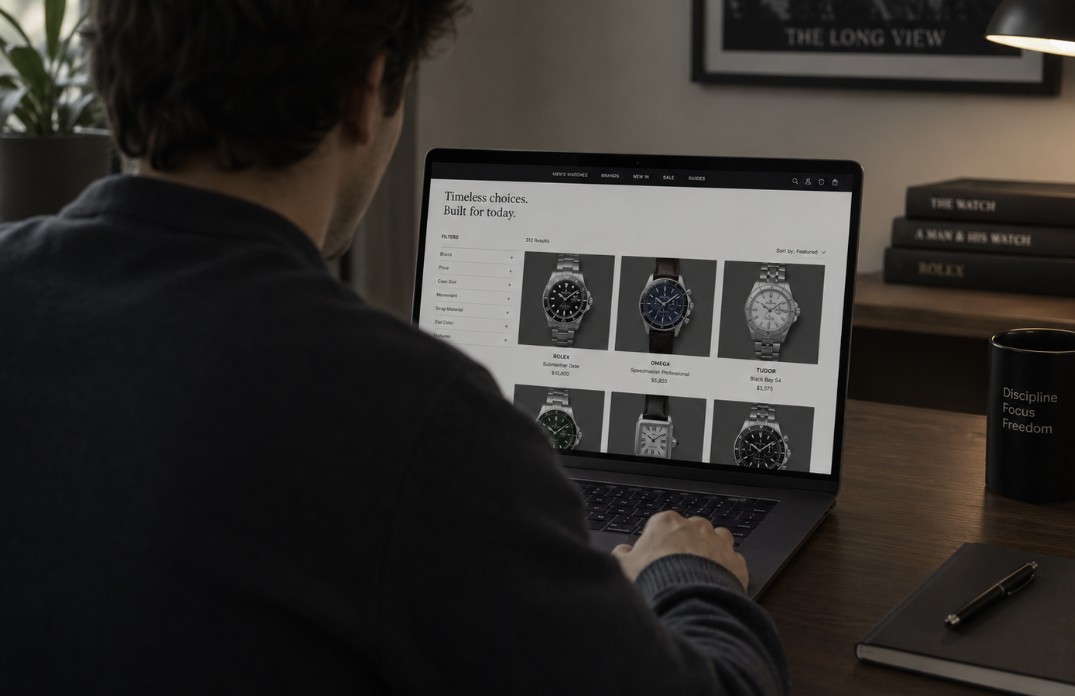
The hunt: three sources of joy in one bad habit
The reason the pre-purchase phase feels so good is not that we have unusually good taste in dopamine hits. It is that the human brain rewards anticipation more than it rewards possession. Neuroscience has been saying this for decades. Wanting the thing produces a bigger and longer chemical response than having the thing. Collectors of anything (watches, sneakers, records, comic books, plants) have known this in their bones for even longer. The watch community just happens to talk about it in charmingly specific terms.
The joy of the hunt is built out of three separate pleasures, and all three end at checkout.
- The dopamine spike. Every time you open the product page, every time you refresh the second-hand listing, every time you see the reference on someone else's wrist in a random YouTube video, your brain lights up a little. It is anticipatory, not conclusive, so it never quite closes the loop. It just keeps giving.
- The discovery. Reading forums at 11pm. Comparing the Cal. 3235 to the Cal. 3230 for the fourth time. Watching a full hour of a Teddy Baldassarre video about a watch you have already decided to buy. Learning that the reference you thought had a Miyota inside actually has a Sellita. This is where collecting becomes a genuine hobby. The information stack you accumulate on the way to buying one Speedmaster is the same information stack that makes you fun at a watch dinner.
- The fantasy. The most important one. The watch in your head is always perfect. It fits. It matches everything. It looks incredible in every light. You will wear it every day for a year. You will finally stop looking at other watches. Nothing in a box has ever lived up to the version of it that lived in your head.
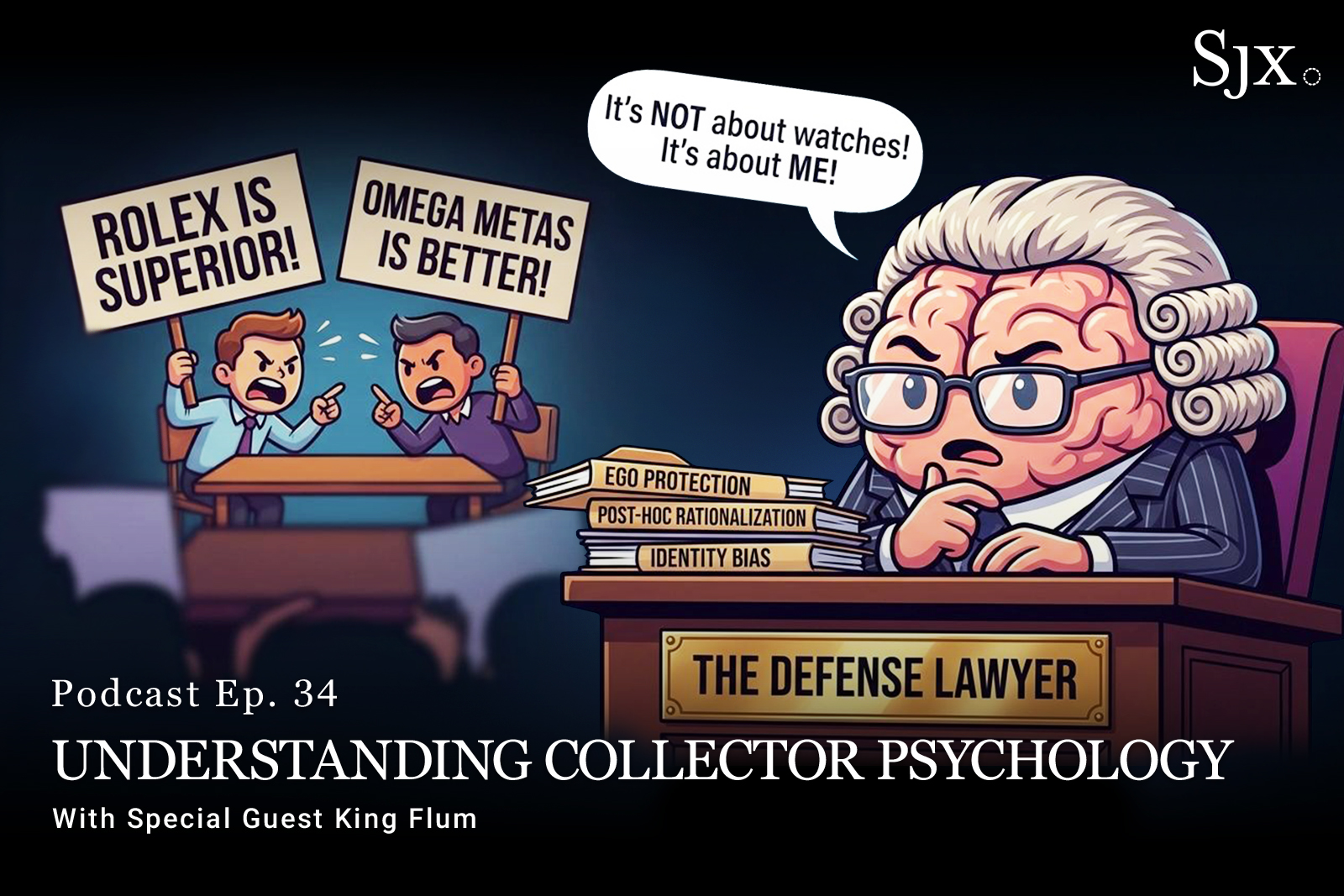
Rough field observation from years of watching myself and other collectors: the honeymoon lasts about three days. Day one is bliss. Day two is still very good. Day three you are already scrolling. By day four the watch has moved from "the one I just got" to "one of the ones I have". If your honeymoon lasted six months, congratulations, that is actually the watch you were looking for. Most of us do not get six months out of one watch.
Ownership: the honeymoon and the fade
Nothing has actually gone wrong when the honeymoon ends. The watch is exactly what it was on Instagram. It is exactly what you researched for three weeks. The specs are correct, the fit is correct, the price was reasonable, the seller was fine. The problem is that ownership is a settled state and settled states do not generate the same chemistry that anticipation does. Your brain moves on because that is what your brain is built to do. It has no interest in maintaining a low-grade celebration of a spec sheet you already memorised.
Hodinkee has a lovely piece on the stages of a relationship with a watch. Discovery, obsession, purchase, honeymoon, plateau, doubt, either sale or reconciliation. Most of us cycle through the first four in a fortnight.
The WatchUSeek thread on this is a slow, gentle read that never quite lands a solution. Because there is no solution. There is only awareness.
What to do about it (or not)
If any of this is a problem, three things help:
- Rotate. Nothing brings back the honeymoon like six weeks in a drawer followed by an accidental rediscovery. Same watch, same case, same movement, and suddenly you are twelve years old again unwrapping a Casio F-91W.
- Extend the hunt on purpose. Do not buy the watch you researched for three weeks. Research it for three months. Read the forum you have not read yet. Watch the review you have not watched. If the desire survives all of that, you have found a watch that is not just dopamine and imagery.
- Take pictures of your own watches. Weirdly, photographing a watch you already own gives you a version of the hunt-feeling in reverse. You see it fresh. You notice the light on the bezel again. You remember why you wanted it in the first place.
Or do not do any of it. This is a very silly hobby and the loop of hunt, buy, honeymoon, fade, hunt is basically the whole game. It is only a problem if you are pretending it is not the game. Sit with the fact that the best part of a new watch is the part before you own it, and you have understood watch collecting more accurately than most of the industry that sells to you.
Now, if you will excuse me, my product page needs refreshing.
Comments
No comments yet, be the first to weigh in.