It is a Monday morning in late July. I sit down at my desk, look at my wrist, and my IWC Ingenieur is loose. Not vaguely loose. Actually flopping. By 3pm the same watch has become a mild tourniquet. My wrist has done its usual summer trick and put on two millimetres of circumference between breakfast and the third meeting of the afternoon. The watch is fine. The clasp is not.
Every enthusiast knows this problem and no one enjoys it. Wrists swell in the heat. They swell after a coffee, a plane flight, a run, a beer, a long meeting in a warm room, a walk from Amsterdam to the office in July humidity. And then they shrink back overnight. A well-fitting bracelet at 9am is a tight one at 2pm and a loose one at midnight. Sizing to the middle of that swing does not work either. Going one link larger to survive August means the watch dangles all winter. Loose is not a compromise. It is just a different form of being wrong.
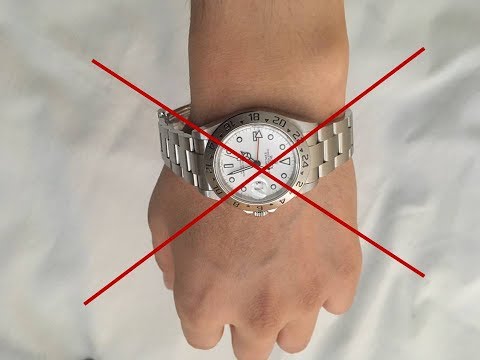
Some brands who solved this and have not been fully copied yet (DO IT ALREADY!)
Some manufacturers figured out on-the-fly micro-adjustment years ago. It is not a mystery. It is not expensive. It is not new.
- Rolex Glidelock: the gold standard. A stepped rail under the clasp cover lets you slide the bracelet out in 2mm increments across a 20mm total range, no tools, roughly five seconds. It sits on the Submariner Date, the Sea-Dweller, the Deepsea, the Yacht-Master 42 Oysterflex. Once you have used it, no other clasp feels acceptable.
- Rolex Easylink: a simpler flip-out link that adds 5mm. Not as fine as Glidelock but it exists on the Datejust, GMT-Master II, Explorer II, Sky-Dweller, Air-King. A quick pull, a snap, done. It is not perfect but it is present, and it works.
- Tudor T-fit: Tudor's answer, and quietly the best in class from a value standpoint. Spring-loaded slider, five positions, roughly 8mm of range in 2mm steps. Ships on the Pelagos 39, Pelagos 42, Pelagos FXD Chrono, Ranger, Black Bay 58 GMT. On a titanium Pelagos 39 it feels like a small piece of magic.
- Omega Speedmaster (2021 update): when Omega refreshed the Moonwatch with the Cal. 3861, they finally fixed the clasp. Two comfort adjustment positions, plus a diver-style extension. Not Glidelock-fine, but the difference from the old Speedy clasp is genuinely night-and-day. Owners noticed within a week.
The 2021 Speedmaster Moonwatch clasp with two comfort adjustment positions. Small change on paper, huge change on the wrist. Source: OmegaForums. - Grand Seiko Evolution 9 (2026 update): as of the SLGH029 / SLGH031 / SLGH033 / SLGH035 refresh, the Evolution 9 bracelet finally gets a proper micro-adjust clasp. It only took Grand Seiko a decade. Welcome to the party.
The offenders (and yes, they know who they are)
Now for the awkward part. Some of the most expensive bracelets in the industry still do not have on-the-fly micro-adjust:
- Audemars Piguet Royal Oak. €27,600 to €73,600. No micro-adjust. You visit the boutique, they take a link out, you hope the fit lands somewhere useful across the year. It does not.
- Patek Philippe Nautilus and Aquanaut. Same story, higher price. The 5811 launched in 2023 with the same bracelet approach as the 5711 before it.
- Bulgari Octo Finissimo. A world-class integrated bracelet on a 5.15mm ultra-thin case, and the clasp has no adjustment. In summer, this hurts.
- Cartier Santos de Cartier. QuickSwitch strap changes are lovely. Micro-adjust would be lovelier.
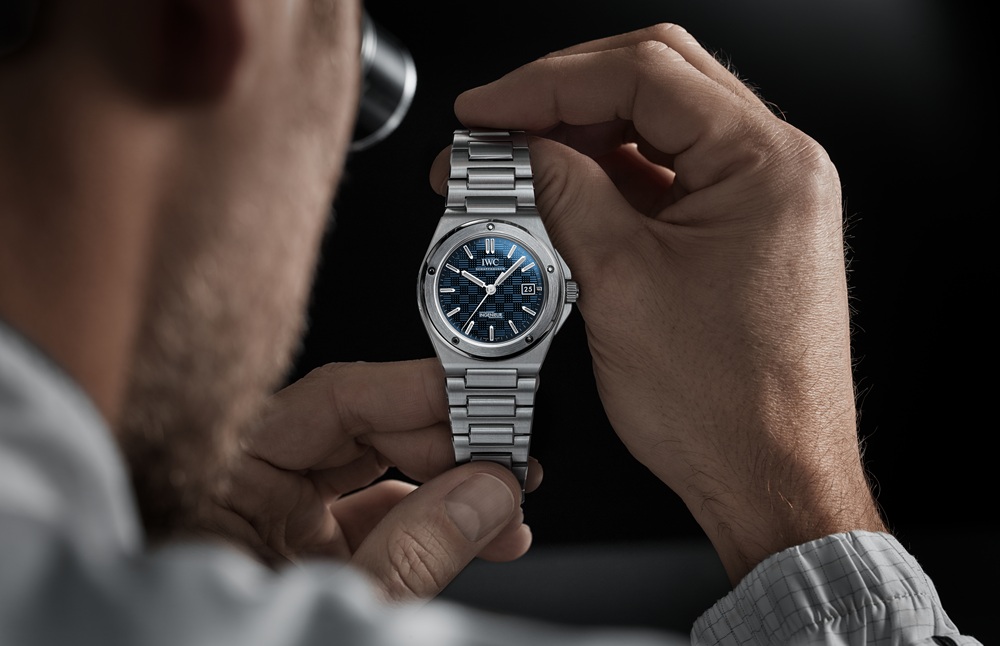
- IWC Ingenieur Automatic 40. The most-recent poster child. Beautiful watch, integrated bracelet, no micro-adjust. The forum workaround is to buy an IWC Pilot bracelet clasp separately (roughly USD 400+) because it happens to fit. That says everything. The community is spending real money on a spare-parts hack to make a €13,000 watch survive summer. That is not a feature request. That is a diagnosis.
- Most microbrands. The sub-thousand-euro tier does not have the tooling to invent a proprietary clasp. Fair. But an Easylink-style flip link is cheap. Somebody licence it, please.
The integrated-bracelet excuse
The standard defence is that integrated bracelets do not have room for a micro-adjust mechanism. The bracelet flows out of the case, the clasp is folded and shallow, the geometry is constrained, the aesthetic requires unbroken lines. All true, all real design work. And also all solvable.
Vacheron Constantin put a functional micro-adjust into the Overseas clasp starting with the 2016 refresh. It works. The bracelet still looks like an Overseas bracelet. The world did not end. If Vacheron can do it inside the Overseas silhouette, the rest of the integrated-bracelet establishment can do it inside theirs. The mechanism is smaller than a Rolex Glidelock. The engineering brief is not "reinvent horology". It is "please, five millimetres of comfortable range, hidden".
You are on a bracelet, on a summer flight, on a hot day, three hours into a meeting, coming off a run, or one drink deep at dinner. If you cannot adjust your bracelet by 2 to 4 millimetres without a small screwdriver and a soft cloth, the clasp has failed at its actual job. Diameter, thickness, movement, dial finishing: all secondary. If it does not fit today, it does not matter.
What we would like, kindly, by 2027
Not a lot. Just this:
- Every steel bracelet at any price point: at minimum an Easylink-equivalent flip-out link. Five millimetres. Zero tools. It costs almost nothing to design in.
- Every sports and tool bracelet above two thousand euros: a proper slider like Glidelock or T-fit. This should be table stakes.
- Every integrated-bracelet luxury sports watch: a compact micro-adjust hidden under the clasp cover. Vacheron already did it. There is no excuse for anyone still shipping a 2016 clasp architecture on a 2026 watch.
The industry has proven the mechanism works, at every price tier from a €4,000 Tudor Pelagos to a €15,000 Rolex Submariner. What is left is politeness. Just extend the courtesy. Wrists change size. We noticed. So did every enthusiast who has ever spent a July day at a wedding wondering whether the watch was going to leave a mark.
Love, and with continued admiration for the work,
the wrists of your customers.
Comments
No comments yet, be the first to weigh in.