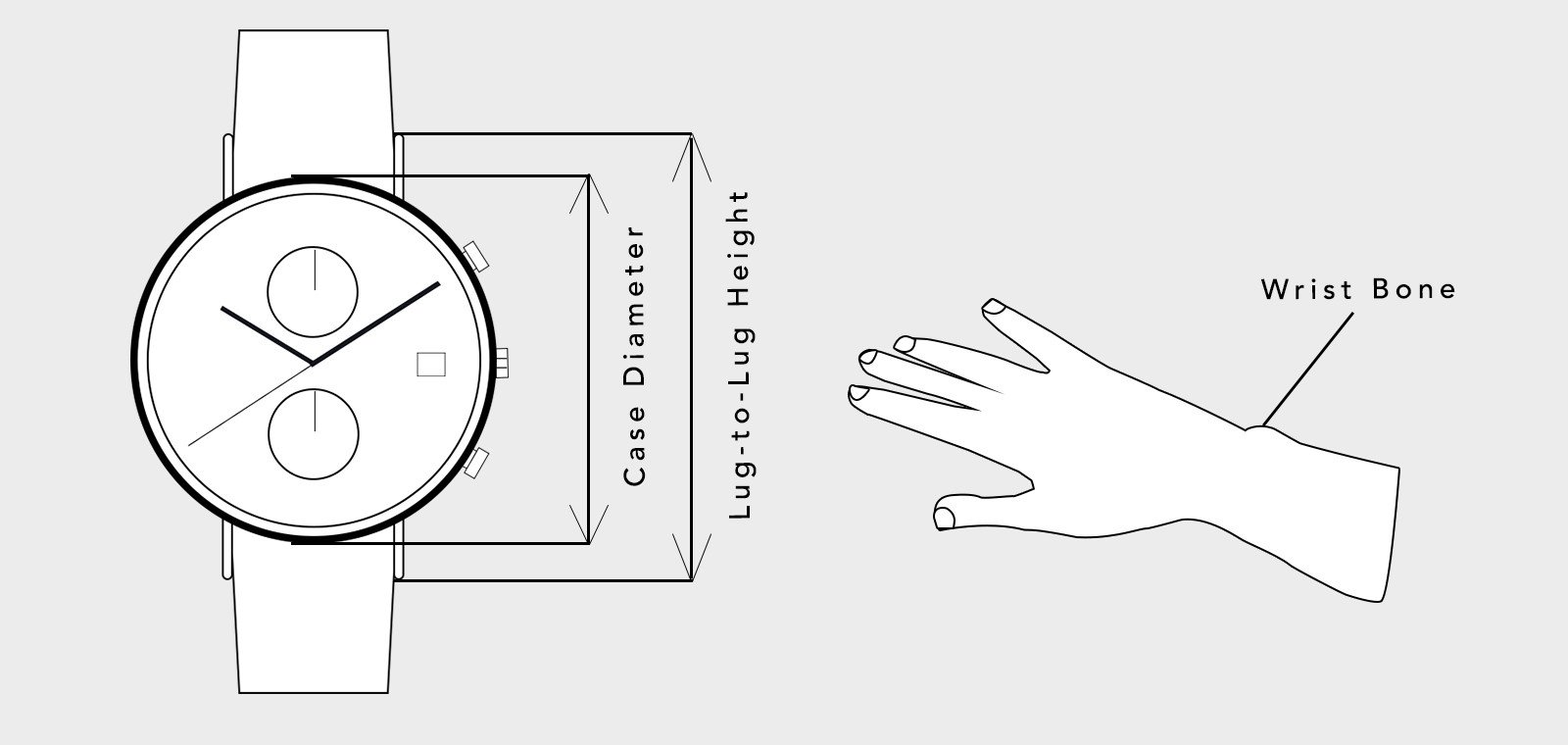
Lug-to-lug (also written "L2L" or "lug span") is the linear distance from the upper lug tip to the lower lug tip on a wristwatch case, measured along the strap axis. It is, in collector vocabulary, the single most important sizing measurement; case diameter ("38 mm", "42 mm", "44 mm") is the headline number marketing uses, but L2L is the actual dimension that determines whether the case fits or hangs off your wrist. A 42 mm watch with a 53 mm L2L (e.g. a vintage IWC Big Pilot) overhangs a 175 mm wrist; a 44 mm watch with a 47 mm L2L (e.g. an AP Royal Oak Jumbo) sits cleanly within it. The disjoint between case diameter and L2L is the central trap of buying watches online or by spec sheet alone.
Three case factors influence L2L beyond the headline diameter. Lug length is the obvious one: short stubby lugs (Patek Calatrava, Reverso) keep L2L close to diameter; long downward-flowing lugs (1960s Omega Constellation, modern IWC Pilot) extend L2L significantly. Lug curvature matters as much: a flat-lug 47 mm L2L watch sits as if it were 50 mm because the lug tips don't hug the wrist; a curved-lug 47 mm L2L watch (Tudor BB58, Pelagos, Omega Speedmaster) wraps around the wrist edges and feels smaller. Case thickness indirectly matters: a thick case with curved lugs requires the curve to "lift off" the wrist edge, which makes the lugs project further outward (the modern complaint about Patek 5990 and AP Royal Oak Offshore Diver).
"You can wear a 44 mm watch comfortably; you cannot wear a 53 mm lug-to-lug watch comfortably. The two numbers are independent, and the second one decides whether you should buy."- Hodinkee Reference Points, "Watch Sizing for Real Wrists"
Practical sizing guide for the average male collector with a 175 mm (~6.9") circumference wrist measured at the watch position: comfortable maximum L2L is roughly 50 mm, with curved lugs more forgiving than straight. Watches with L2L >50 mm "look big" but are wearable; >52 mm typically projects past the wrist edges and looks wrong from above. For a 165 mm wrist (most women, smaller-framed men): max comfortable L2L is roughly 47 mm, with the Tudor Black Bay 58 at 47.5 mm being the universal "biggest watch I can wear" reference. For a 185 mm+ wrist: anything up to ~55 mm L2L wears comfortably; a 50 mm L2L watch can look small.
Some specific reference numbers worth memorising. 38 mm Calatrava 96: ~40 mm L2L (effectively no projection past case). 40 mm Submariner: 47.5 mm L2L. 42 mm Speedmaster Professional: 47.5 mm L2L (curved lugs). 40 mm Royal Oak 15202: 39.5 mm L2L (octagonal case integrated). 40 mm Nautilus 5711/1A: 43 mm L2L. 41 mm Black Bay 58: 47.5 mm L2L. 42 mm Tudor Pelagos: 50 mm L2L. 42 mm Omega Aqua Terra: 50 mm L2L. 43 mm IWC Mark XX: 51.5 mm L2L. 46 mm IWC Big Pilot: 53 mm L2L. 44 mm Panerai Luminor: 51 mm L2L. 50 mm Patek 5524 Pilot: 47 mm L2L.
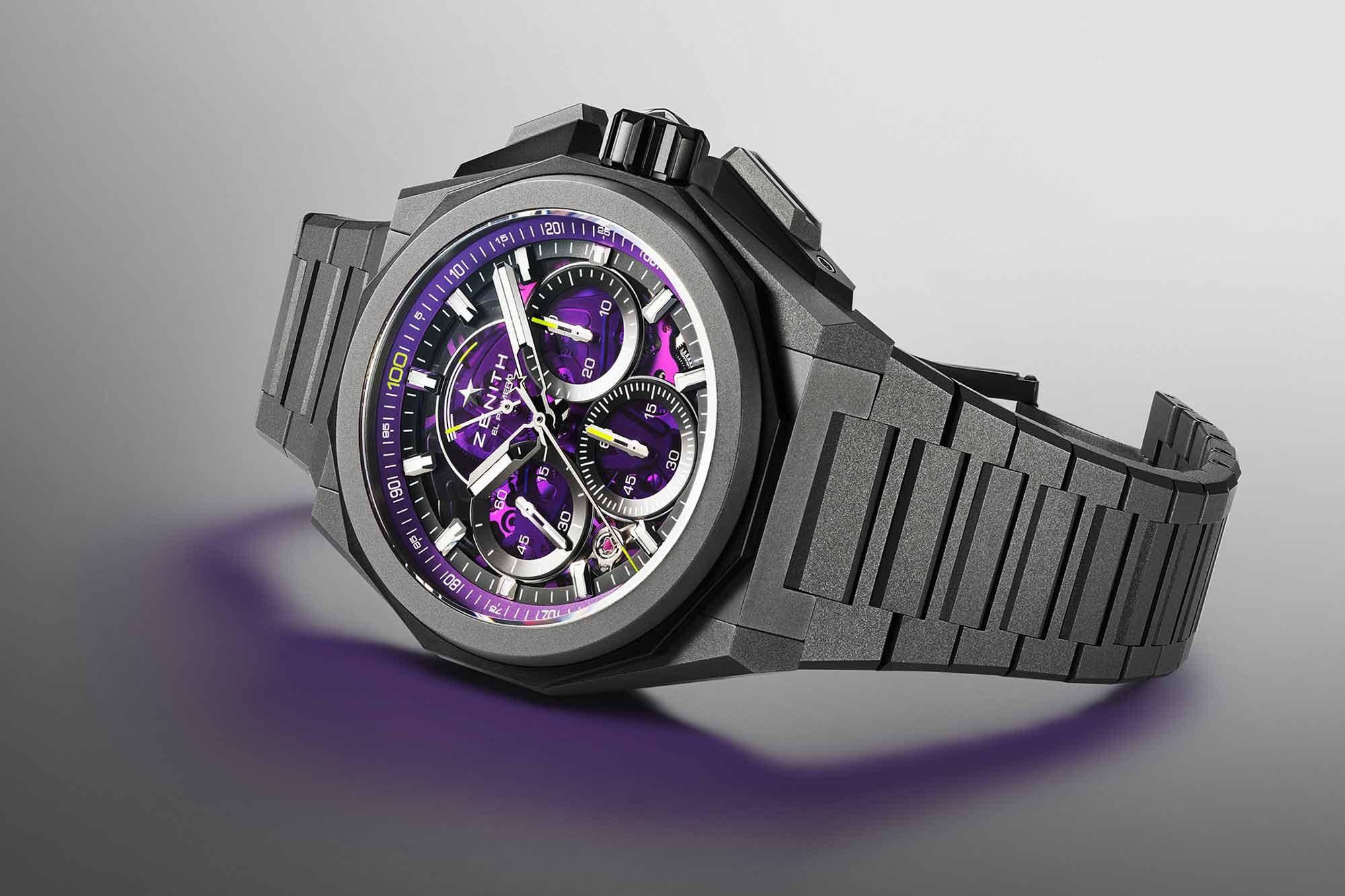
Integrated-bracelet watches behave differently. The Royal Oak, Nautilus, Overseas, and Ingenieur all have lugs that flow directly into the bracelet, so the L2L number is essentially the case length itself; without a separate strap to absorb wrist curvature, the L2L is also the wrist-contact length. This is why a 41 mm Royal Oak feels significantly smaller than a 41 mm Submariner, the L2L is shorter (39.5 mm vs ~48 mm) and the bracelet has no leather to bunch up. For collectors with smaller wrists, integrated-bracelet sports watches at 38-41 mm are typically the most flexible choice.
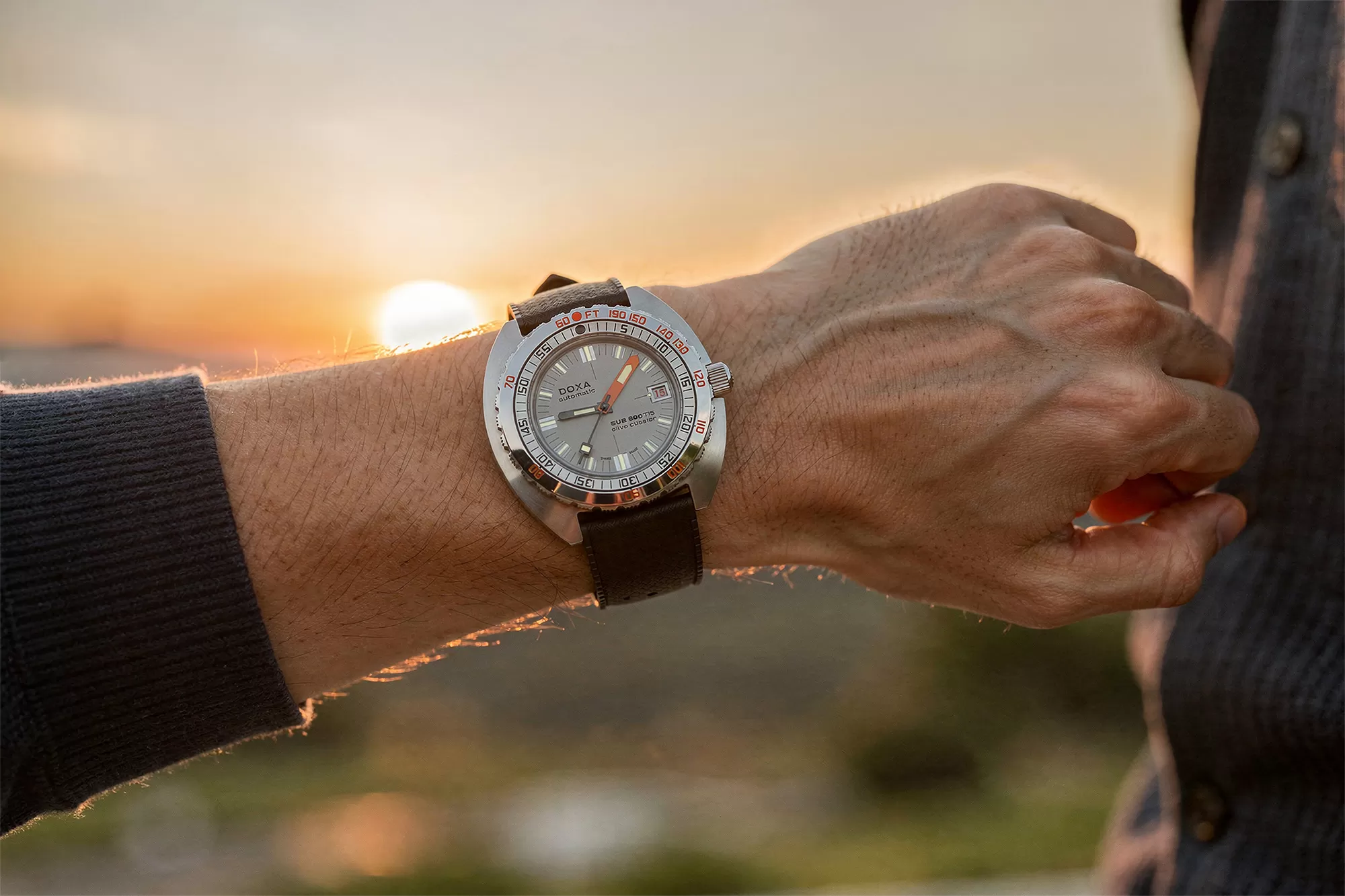
How to measure L2L on your own watches: place the watch face-up on a flat surface, set a digital caliper across the lug tips parallel to the strap (not at an angle). Brand-listed dimensions, when listed at all, are accurate to ±0.5 mm; third-party reviewer measurements (Hodinkee, Time+Tide, the WatchUSeek "real numbers" megathreads) are accurate to ±0.3 mm. For sub-millimetre precision, a flatbed scanner with a ruler placed beside the watch produces the most accurate measurement. The simplest practical heuristic before buying: find a published "wrist shot" of the watch on a wrist of similar circumference to yours.




Comments 1