Ming keeps solving watchmaking's minor irritations before the rest of the industry admits they exist. The 57.05 Comet, the 9th-anniversary piece the Kuala Lumpur atelier just announced ahead of Geneva Watch Days 2026, is a worldtimer with a patent-pending two-bezel DST mechanism that finally makes the switch from summer to winter time an actual one-second operation. 40mm x 10.33mm steel case, Sellita for Ming 330.M2, multi-layered blue dial with a "Comet Tail" interference pattern, limited to 200 pieces. Pre-orders open 27 August 2026 at 1pm GMT. From CHF 6,950 (~€7,400) ex tax.
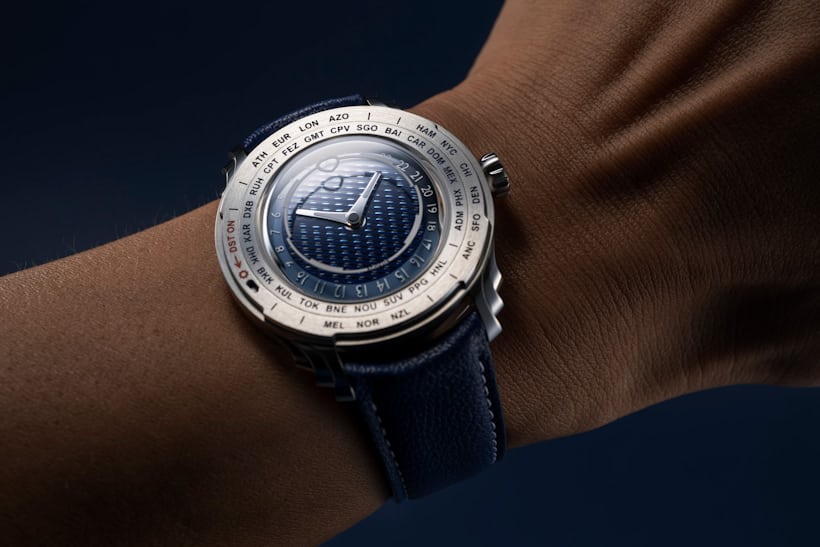
The DST trick, explained
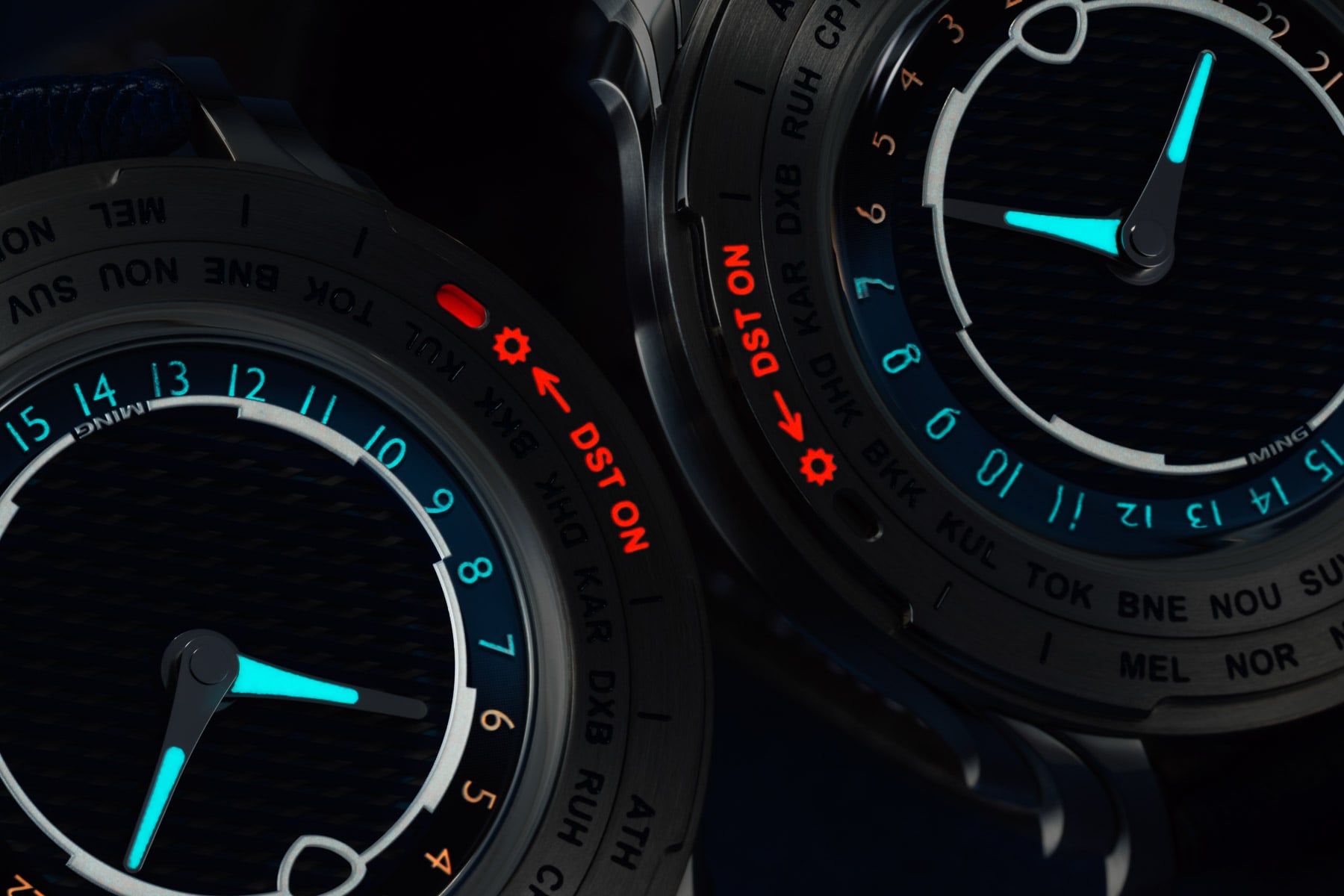
Traditional worldtimers show 24 city names around the dial or on a rotating bezel. Twice a year, if you use the piece to keep tabs on cities in different DST regimes, you have to remember which cities changed and which did not. Ming's fix is elegant: split the city ring into two independent bezels.
- Inner bezel: cities that do not observe DST (Tokyo, Dubai, Singapore, most of Asia).
- Outer bezel: cities that do observe DST (London, New York, Los Angeles, most of Europe and North America).
- The mechanism: the outer bezel clicks in 15-degree increments. One click = one hour. When DST kicks in on the last Sunday of March, you rotate the outer ring one click forward and every DST city advances by an hour against the 24-hour scale. Non-DST cities on the inner ring stay put. In autumn, click back one position.
That is what every worldtimer buyer has quietly wanted for two decades. Nobody built it because it required a two-crown or two-bezel case architecture that most brands considered too complex for a mid-market piece. Ming shipped it in a limited edition of 200.
The specs, in one glance
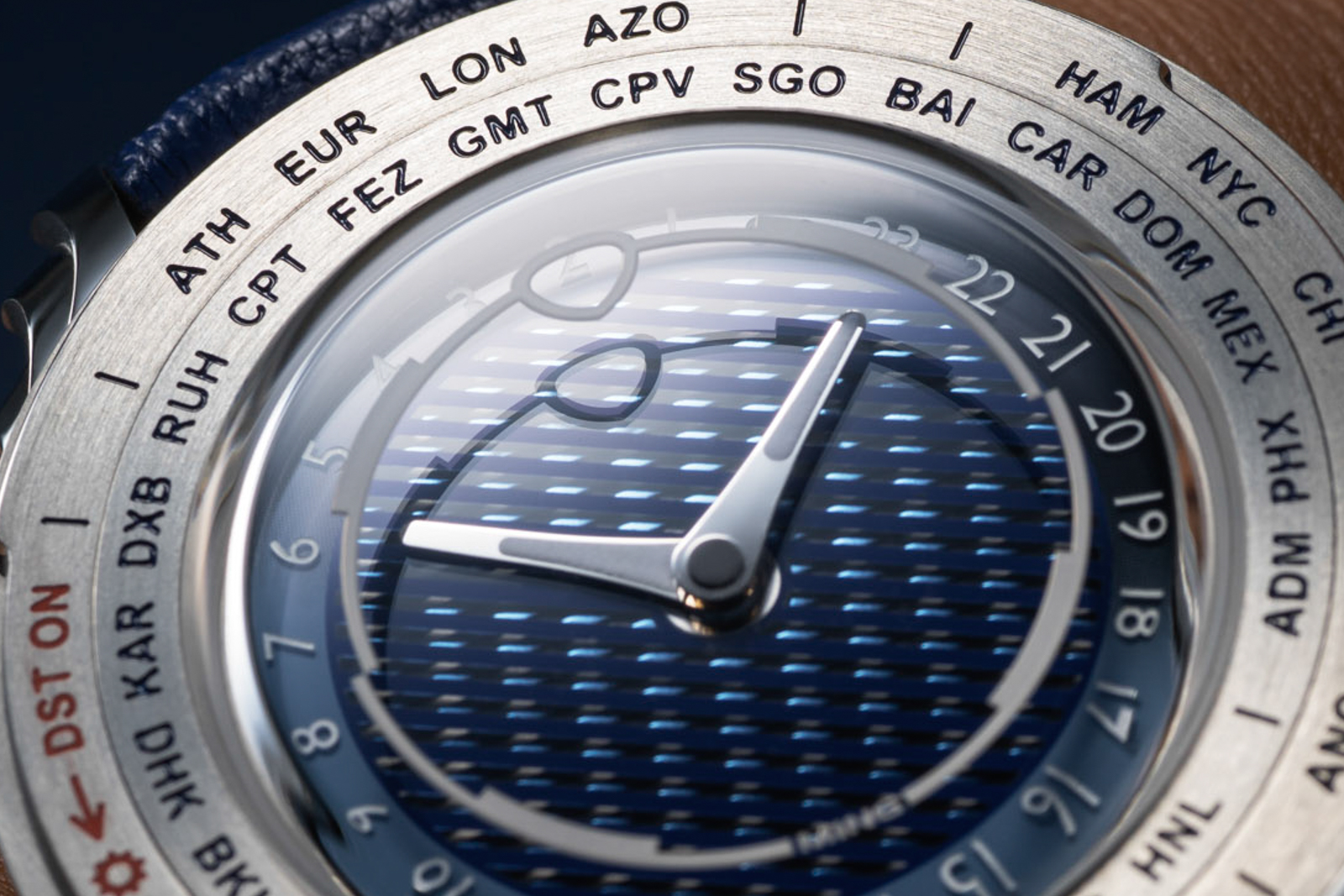
- Case: 40mm x 10.33mm, lug-to-lug 47.8mm, 316L stainless steel. Ming's triple-stepped lugs (nine individual components per side) are back.
- Water resistance: 100m.
- Bezels: Two independent rotating rings. Outer ring detented in 15-degree clicks; inner ring fixed.
- Movement: Sellita for Ming 330.M2. Automatic, 25 jewels, 28,800 vph, ~50-hour reserve, 26.2mm diameter.
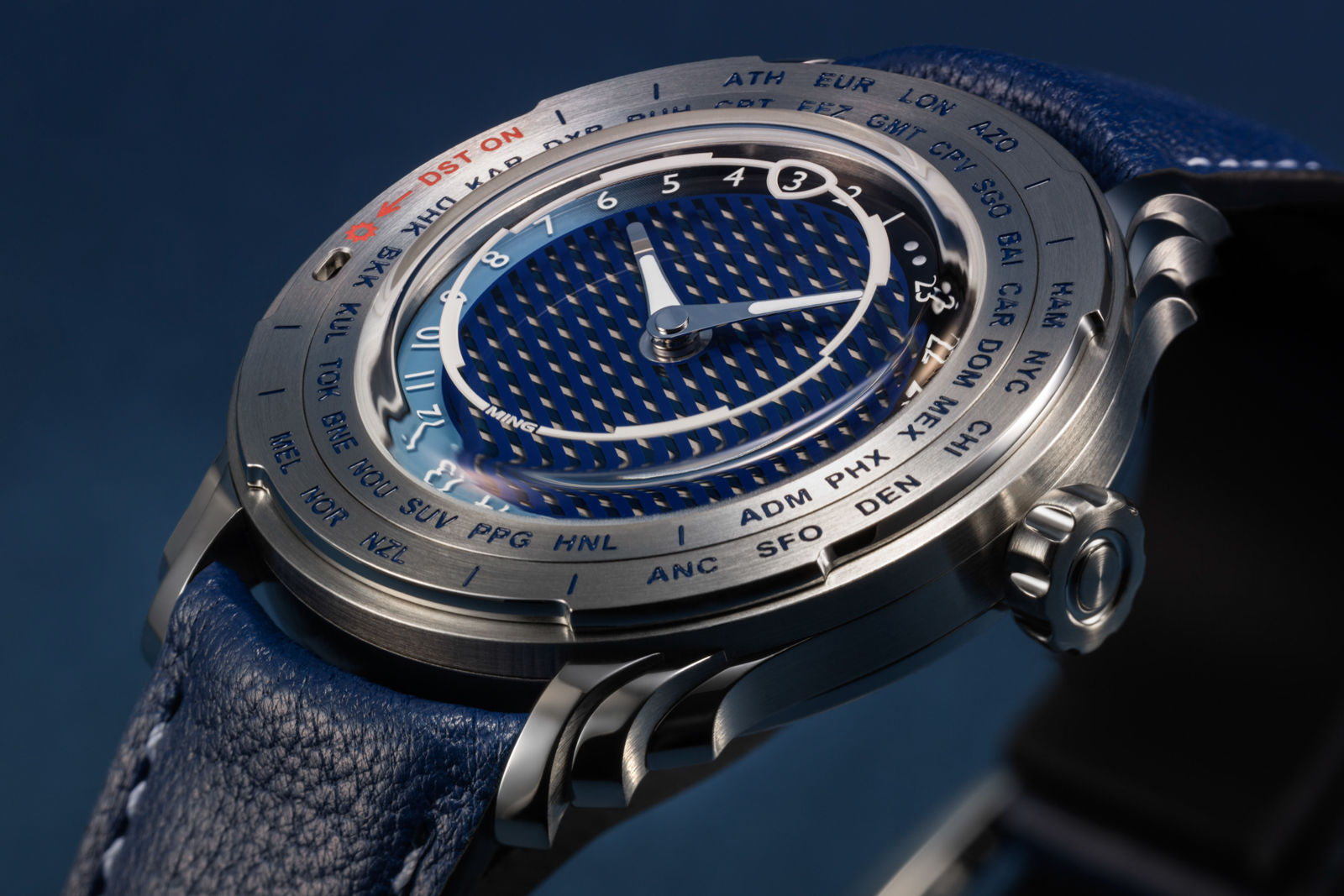
- Dial: Multi-layered blue with overlapping raster structures that generate the Comet Tail interference pattern. It shimmers under angle changes and reads as a genuine visual signature at arm's length.
- Production: 200 pieces, single production run, not repeated.
- Price: CHF 6,950 (~€7,400) on leather strap, CHF 7,950 (~€8,500) on Ming's Polymesh titanium bracelet. Both prices are ex tax.
- Pre-order: Opens 27 August 2026 at 1pm GMT via ming.watch and select retailers (Collective Horology handles the US).
Why this piece matters
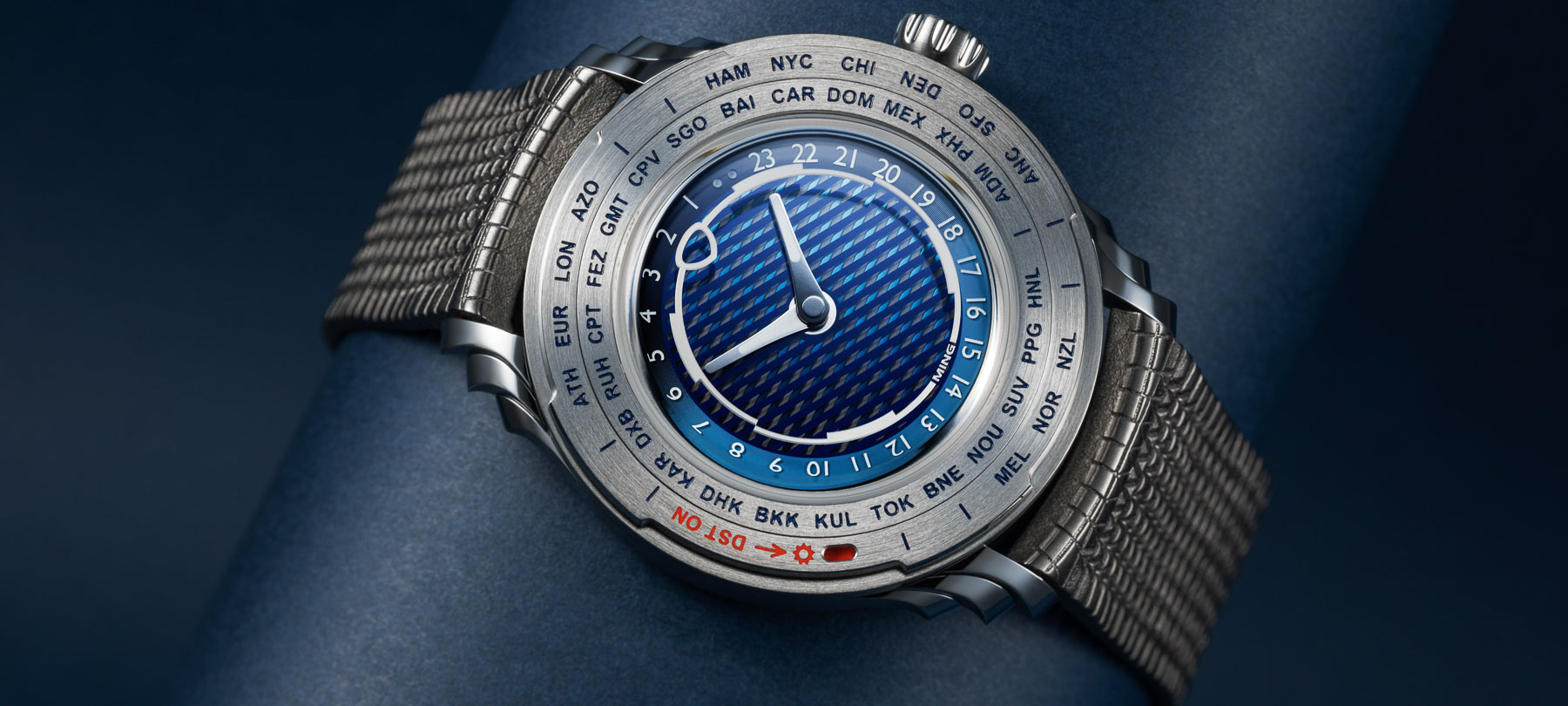
Ming's playbook has always been "solve the little thing nobody else bothered with, and price it fair". The 37.02 gave enthusiasts a 38mm proper-thin case at €3,000 when everyone else was 42mm+. The 27.02 shrank the moonphase to something wearable. The 37.06 Lightning collaboration with J.N. Shapiro re-legitimised heat-blued titanium at €10k, not €80k. The Comet is the same pattern applied to a worldtimer.
Every other worldtimer at this price bracket (Frederique Constant, Baume & Mercier, entry Longines Master Worldtime) uses a single-bezel city ring and shrugs at DST. The Comet solves it with a patented mechanical detail that costs Ming case-engineering time rather than movement development cost. That is exactly the kind of "just fix it properly" move that has built Ming's reputation.
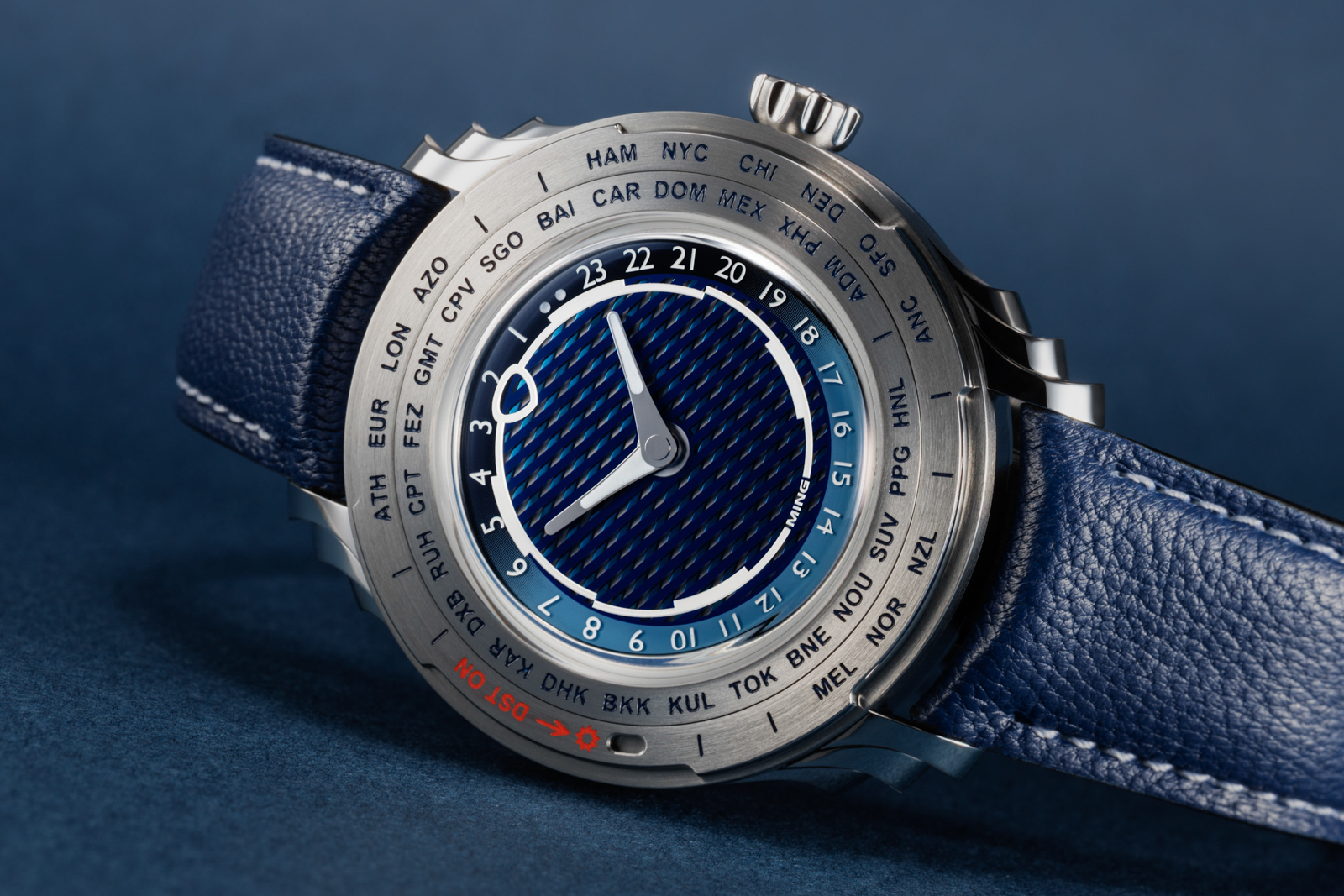
Multi-layered blue with overlapping raster patterns that create a rippling interference effect as light moves across the dial. Reads as a normal deep-blue worldtimer at arm's length; up close it looks like the sky at dusk with a moving comet streak. The dial is the piece that will decide whether buyers who liked the DST-fix on paper actually pull the trigger.
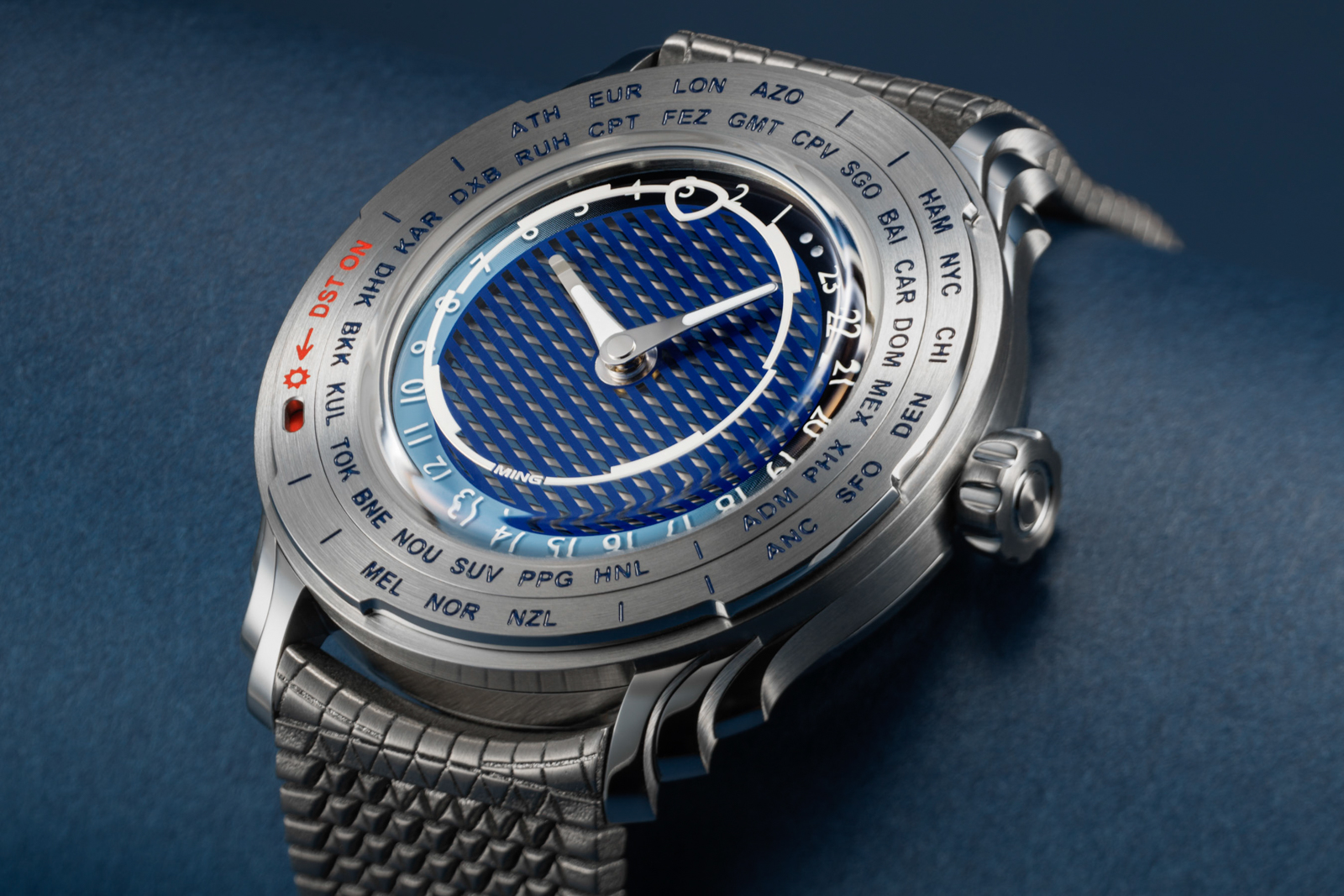
Wrist-fit and case detail
40mm diameter, 10.33mm thick, 47.8mm lug-to-lug. That is compact enough to disappear under a shirt cuff and long enough to fill a 7-inch wrist without looking small. Ming's triple-stepped lugs (each side machined from nine separate components) hug the wrist better than most brands manage with a two-piece lug. On the Polymesh titanium bracelet the piece disappears entirely at 90-95 grams; on leather it reads dressier than a Nautilus alternative.
Buying it
- Ming.watch direct: opens 27 August 2026, 1pm GMT. Ships worldwide from Malaysia.
- Collective Horology (US): same window, priced in USD, no import duty for US-domestic delivery, free express shipping, Ming's two-year warranty.
- Ming's normal retailer network: expect small allocations at Oster Jewelers (US), a few European stockists, and the Ming Discord community will absolutely be sharing exact drop-times in real time.
200 pieces globally, split between leather and Polymesh configurations. Previous Ming limited editions of this size (37.02 Founders, 27.02 GMT) sold out in minutes. This one will not last a lunch break in Zürich.
The verdict
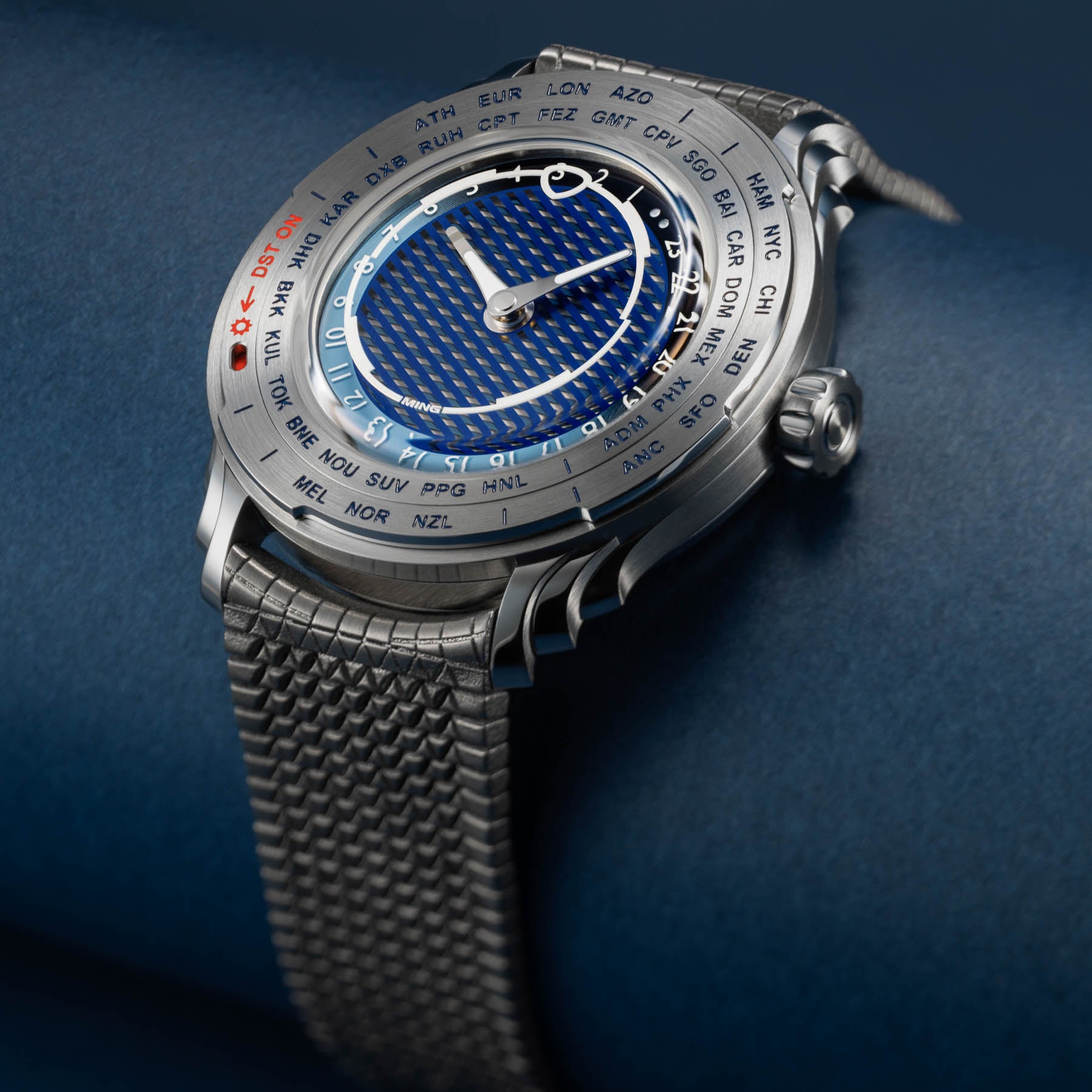
The Ming 57.05 Comet is Ming being Ming: notice something the industry has ignored for twenty years, engineer a proper mechanical answer, price it fairly, run 200 pieces, ship. The DST bezel-click is the sort of detail that becomes a permanent talking point on the wrist. The Comet Tail dial is the sort of finishing signature that stops the piece being just a technical demo. And CHF 6,950 for a patented worldtimer from one of the most respected independent atelierss of the last decade is honest money. If you have wanted a "clever" worldtimer that is not Vacheron Constantin Overseas territory, set an alarm for 27 August, 1pm GMT.
Comments
No comments yet, be the first to weigh in.