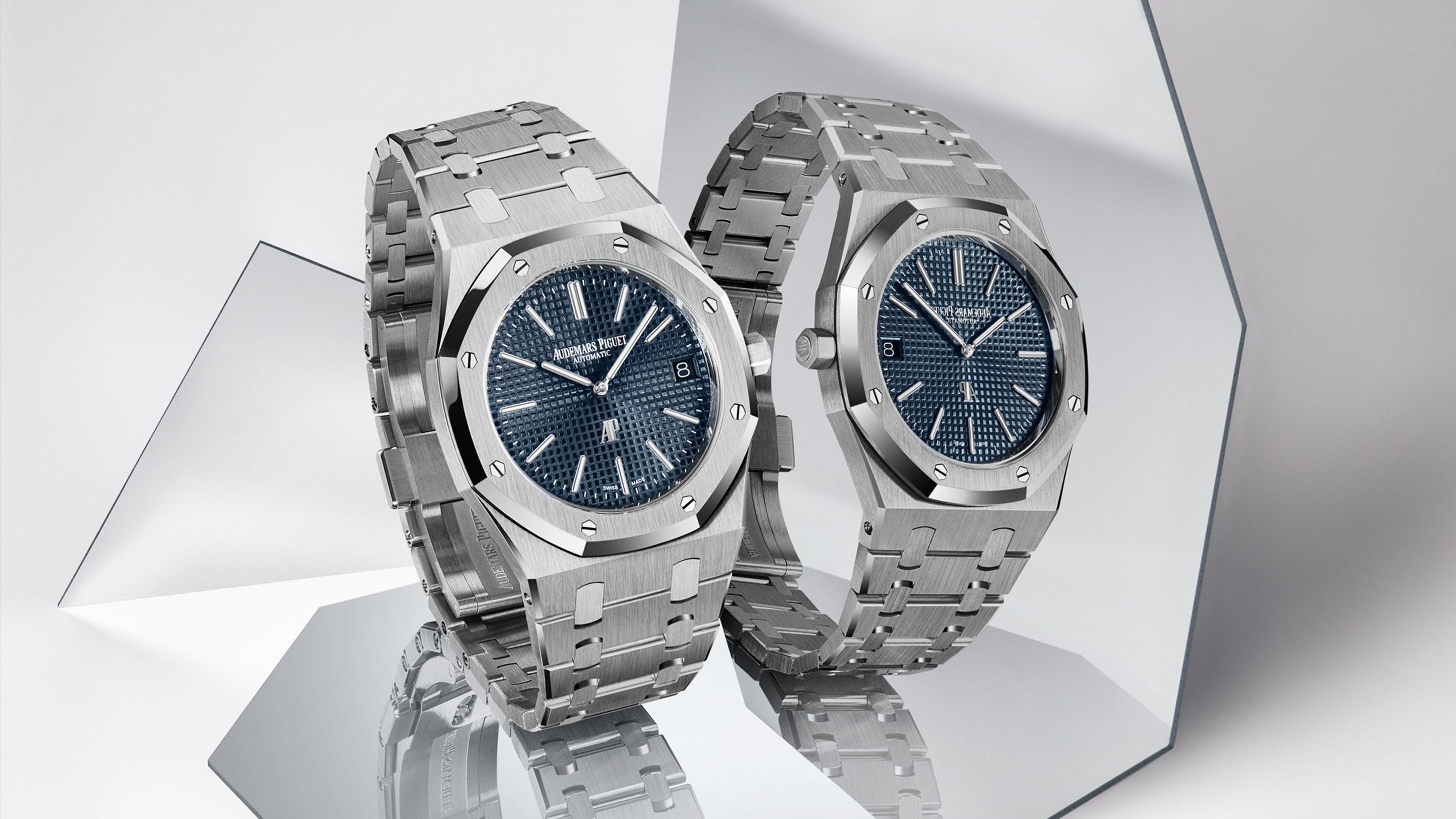
Audemars Piguet
Royal Oak Jumbo Extra-Thin
16202ST · 39mm · 50m
Genta's 1972 octagonal sport icon. Petite Tapisserie dial.
Two octagonal-bezel integrated-bracelet sport watches at opposite ends of the design philosophy. Royal Oak Jumbo at €41,000 vs Octo Finissimo at €14,300, both with octagonal cases and very different ethos.
Gérald Genta sketched the Royal Oak overnight in April 1971. Octagonal bezel held by eight visible hexagonal screws, integrated bracelet, Petite Tapisserie textured dial. The 1972 launch was a steel watch priced at three times a Rolex Datejust. Today's 16202ST Jumbo Extra-Thin preserves the original 39mm proportions.
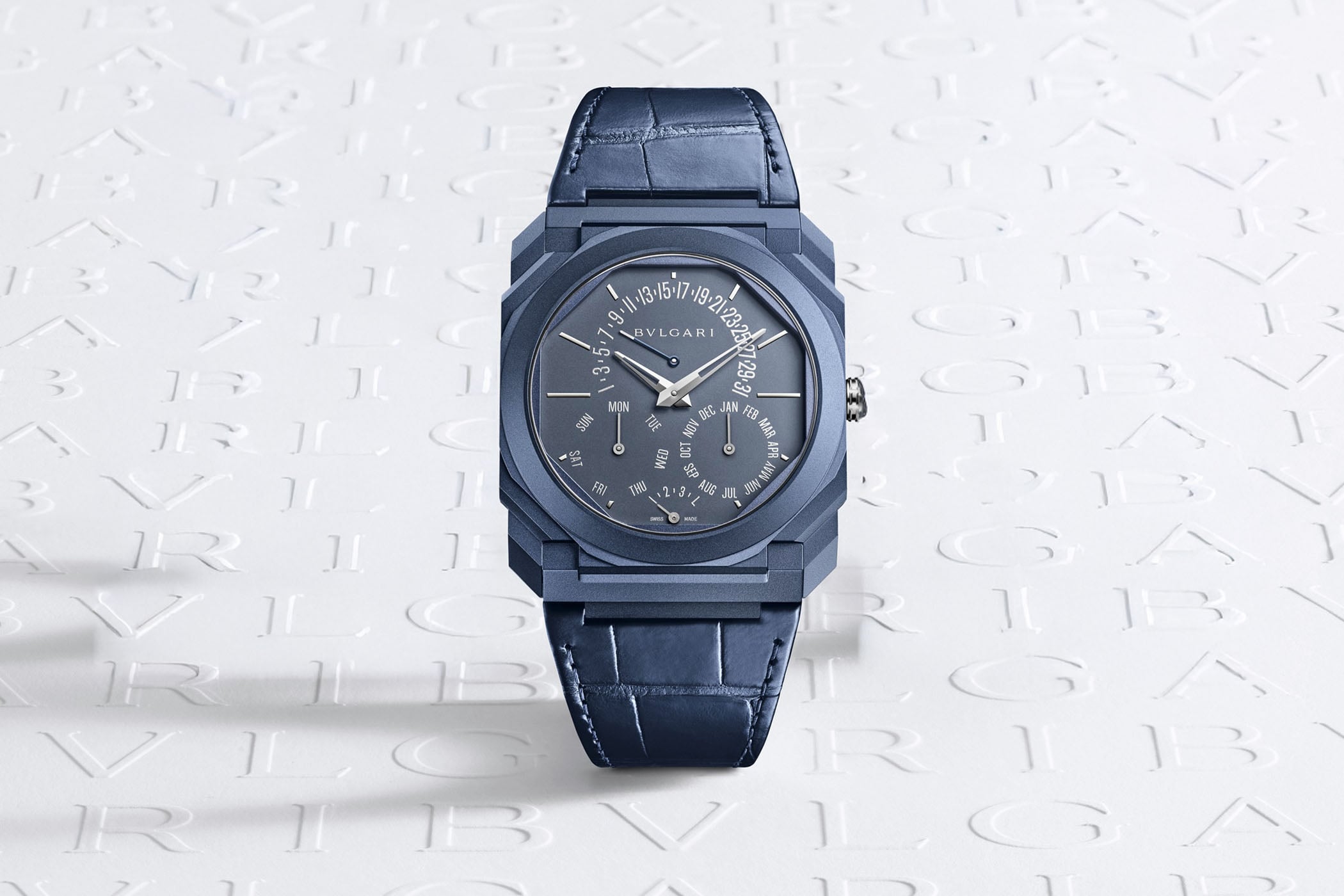
Bulgari's Octo Finissimo (2014) is the design counter-argument. Octagonal but layered (octagonal-on-circular case), sandblasted matt finish (no polished facets), and architecturally focused on thinness: Bulgari has held the world record for thinnest automatic (2.23mm) and tourbillon (1.95mm) on Octo platforms. The standard automatic is 5.15mm thick.
| Attribute | Audemars Piguet Royal Oak Jumbo Extra-Thin | Bulgari Octo Finissimo Automatic |
|---|---|---|
| Reference | 16202ST | 103298 |
| Case shape | Octagonal bezel on cushion case | Octagonal-on-circular case |
| Case material | Stainless steel | Sandblasted titanium |
| Case dimensions | 39mm × 8.1mm thin | 40mm × 5.15mm thin |
| Bracelet | Integrated steel three-link | Integrated titanium link |
| Bezel finish | Polished + brushed (8 visible screws) | Sandblasted matt (no visible screws) |
| Movement | Cal. 7121 (in-house) | Cal. BVL 138 (in-house) |
| Reserve | 55 hours | 60 hours |
| Beat rate | 28,800 vph (4 Hz) | 21,600 vph (3 Hz) |
| Water resistance | 50m | 30m |
| Retail price | ~€41,000 | ~€14,300 |
The Royal Oak's case finishing is its identity: alternating polished and brushed surfaces on every facet, hand-polished bevels, and the eight gold-plated bezel screws aligned for visual symmetry. The Octo Finissimo is a complete inversion: sandblasted matt across the entire case and bracelet, no polished facets, the screws hidden, and the visual signal is monochromatic minimalism. Same brief (octagonal sport), opposite execution.
The Royal Oak Jumbo is 8.1mm thin, but the Octo Finissimo Auto is 5.15mm: nearly 40% thinner. On the wrist, the Octo disappears under a shirt cuff in a way the Royal Oak cannot. Bulgari has built the entire Octo line around thinness records; the Royal Oak has built it around proportion fidelity to the 1972 original.
The Royal Oak is steel (the deliberate "steel watch at gold-watch price" Genta marketing) and trades on 50+ years of cultural reference. The Octo Finissimo is titanium (Bulgari's preferred case material) and trades on contemporary design and ultra-thin engineering. Buyer demographic is meaningfully different: collectors and design-buyers respectively.
If you want the integrated-bracelet sport with the deepest cultural reference: Royal Oak Jumbo 16202ST. Genta-original, the watch.
If you want a contemporary-designed ultra-thin alternative at a third the price: Octo Finissimo Automatic. Titanium, sandblasted, 5.15mm.
These are not direct competitors despite the octagonal-bezel similarity. Royal Oak buyers want heritage; Octo buyers want design and engineering. Both are correct answers to different questions.
Question, suggestion, or just want to say hi? Drop a note.
Comments 27