Watch brandsWatch wikiWatch videosVariousWatch calendarSaved articles
PopularRolexOmegaPatek PhilippeAudemars PiguetTudorGrand SeikoCartierSeikoIWCTAG HeuerBreitlingJaeger-LeCoultreA. Lange & SohneZenith
WristBuzzBrandsAudemars Piguet

Audemars
Piguet

The independent Swiss manufacture behind the Royal Oak, redefining luxury watchmaking since 1875.

Founded1875
HeadquartersLe Brassus, Switzerland
FoundersAudemars & Piguet
CategoryHaute Horlogerie
WristBuzz Articles900
Audemars Piguet watch

Photo: Hodinkee · 1h ago

1875Founded
150+Years of heritage
1972Royal Oak born
Le BrassusSwiss Made
900WristBuzz Articles

The Audemars Piguet Story

On December 17, 1875, two young watchmakers from the Vallee de Joux signed a partnership agreement that would become one of the most consequential in the history of Swiss horology. Jules-Louis Audemars, 24 years old, and Edward-Auguste Piguet, 22, were both from Le Brassus, a valley in the Jura mountains that had quietly produced some of the world's most complicated watches for generations. Unlike the grand Geneva houses that assembled movements bought from suppliers, Audemars and Piguet were themselves trained craftsmen, capable of conceiving, making, and finishing every component in-house. That founding principle of genuine manufacture independence has survived to the present day, making AP one of the very few watch companies still controlled by the founding families after 150 years.

For nearly a century, Audemars Piguet built its reputation on exceptional complications: ultra-thin pocket watches, minute repeaters of extraordinary clarity, perpetual calendars, and pocket watches of breathtaking miniaturisation. The brand supplied complications to other houses under private label, a common arrangement in the valley, but always maintained its own name on pieces that defined the limits of what was mechanically possible. By the mid-20th century the brand was respected by connoisseurs but largely unknown outside specialist circles, a condition that would change dramatically in 1972 with a single telephone call and a three-day design sprint.

The Royal Oak, launched at Baselworld 1972, was designed by Gerald Genta in a single night and presented as a deliberate provocation. A luxury watch in 316L steel, with an exposed octagonal bezel secured by visible screws, a tapisserie-patterned dial, and an integrated bracelet, priced at more than the equivalent gold watches from the same house. The watch industry considered it either a masterstroke or a catastrophe; initial sales were slow, but within a decade the Royal Oak had redefined what a sports watch could mean in the luxury context and triggered a wave of imitations from competitors who had initially dismissed it. Today the Royal Oak is among the most coveted references in the secondary market, with rare discontinued models commanding multiples of their original retail price.

Audemars Piguet has remained family-owned throughout its existence, a rarity in an industry where most historic names have been absorbed by conglomerates. The Audemars and Piguet families retain ownership and board-level involvement, a structure that allows long-term creative and technical decisions unconstrained by quarterly financial reporting. The Le Brassus manufacture, expanded significantly in the 2010s, combines traditional hand-finishing ateliers with modern machining centres, producing movements of exceptional quality in relatively limited quantities. This scarcity, both genuine and cultivated, sustains secondary market demand at levels that make Audemars Piguet one of the few watch brands whose watches consistently appreciate in value after purchase.

The brand's relationship with contemporary culture deepened through strategic partnerships rather than conventional advertising. Long-term associations with musicians, athletes, and cultural figures including Jay-Z, LeBron James, and Serena Williams brought the brand into conversations far beyond traditional watch media, positioning AP as a luxury object of desire rather than merely a horological instrument. The Code 11.59, introduced in 2019 as the first major new collection in decades, demonstrated the brand's willingness to develop outside the Royal Oak's shadow, though collector response was initially polarised. By the early 2020s, with waiting lists for steel Royal Oaks extending years, Audemars Piguet had become one of the three most powerful names in the watch industry.

Iconic Collections

Est. 1972
Royal Oak ↗
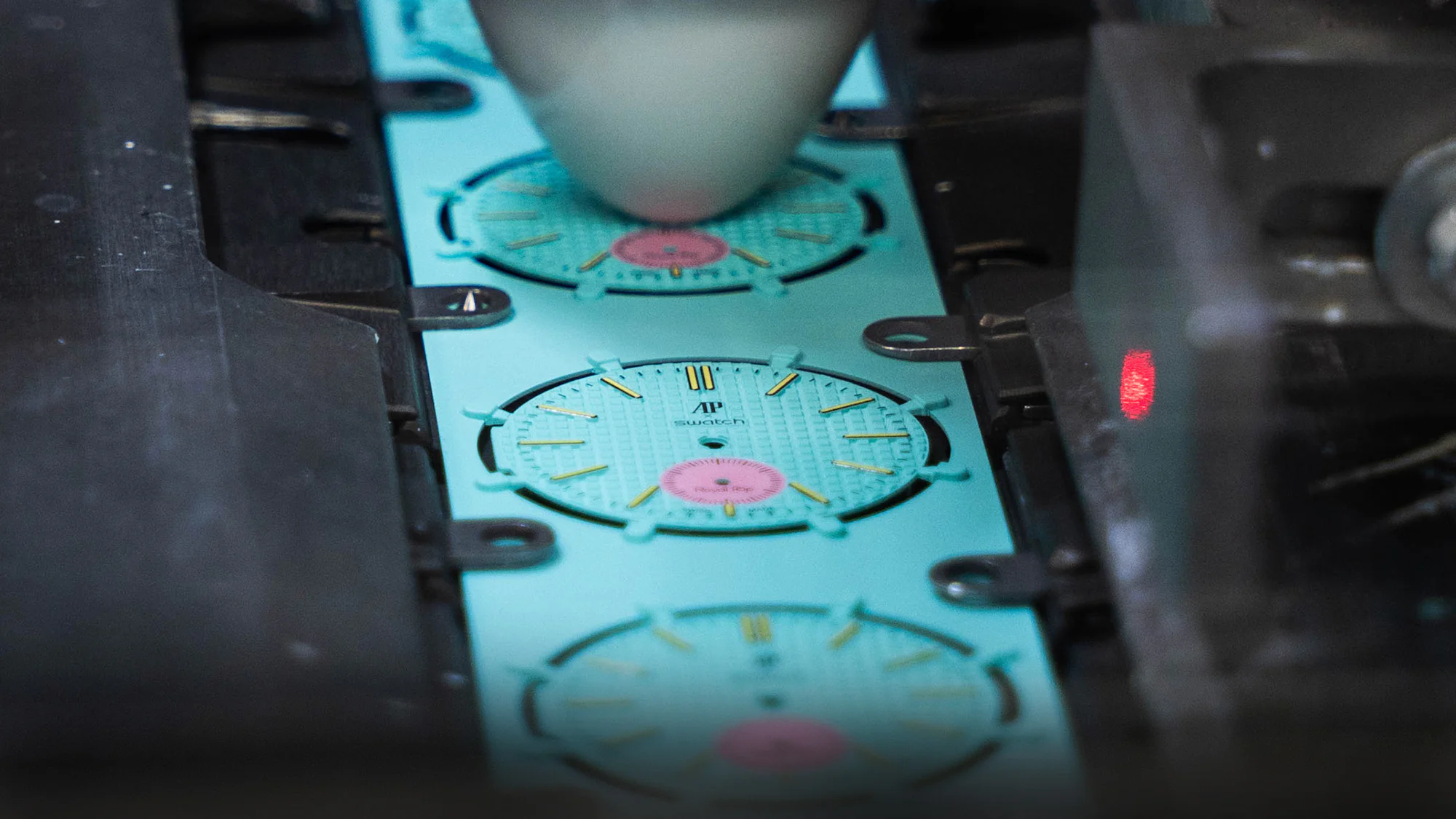
Gerald Genta's overnight masterpiece: an octagonal steel bezel with eight hexagonal screws, integrated bracelet, and Grande Tapisserie dial pattern. The watch that invented the concept of the luxury steel sports watch and remains the most recognised and sought-after AP reference today.
Full Royal Oak Guide
Est. 1993
Royal Oak Offshore ↗
Originally dismissed as "The Beast" by Genta himself, the oversized Offshore took the Royal Oak concept into extreme sport. Larger, bolder, and more assertive, it became the watch of choice for the 1990s and 2000s sporting elite and spawned hundreds of special editions, collaborations, and complications over three decades.
Full Royal Oak Offshore Guide
Est. 1858
Jules Audemars
The classical collection honouring the co-founder, home to the brand's most complicated haute horlogerie pieces: perpetual calendars, minute repeaters, tourbillons, and ultra-thin movements. The Jules Audemars represents the unbroken thread between the original manufacture philosophy of 1875 and the contemporary AP atelier.
Est. c. 1990s
Millenary
An oval-cased collection with an off-centre dial architecture that exposes the movement architecture through a partially skeletonised display. The Millenary occupies a distinctive aesthetic position between the sporting Royal Oak family and the classical Jules Audemars, appealing to collectors who want something outside the octagonal mainstream.
Est. 2019
Code 11.59 ↗
AP's most recent major collection, announced to coincide with the brand's 2019 anniversary. A round case with a multi-layered construction, double-curved sapphire crystal, and a new family of in-house movements. Polarising on release, Code 11.59 has gained traction as collectors have spent more time with the technical details and finishing quality.
Full Code 11.59 Guide
Various
Royal Oak Concept
The experimental arm of the Royal Oak family, exploring unconventional materials (forged carbon, titanium, ceramic), complications, and aesthetics that push beyond the production collection. Concept pieces often preview technical directions that eventually filter into mainstream references, making them historically significant beyond their collectibility.

Heritage Timeline

1875
Jules-Louis Audemars and Edward-Auguste Piguet establish their manufacture in Le Brassus, founding the company that would become Audemars Piguet on 17 December.
1882
The manufacture produces its first minute repeater movement, establishing a reputation for acoustic complications that remains central to the brand's identity 140 years later.
1892
AP creates what is believed to be one of the world's first minute-repeating wristwatches, adapting pocket watch complications to the wrist format decades before the wristwatch becomes standard.
1921
The Audemars and Piguet families form a joint company after the deaths of both founders, maintaining family control under a corporate structure that persists to the present day.
1946
AP introduces a calibre just 1.64mm thick, one of the thinnest mechanical movements produced at the time, establishing the brand's credentials in ultra-thin watchmaking that would define certain Jules Audemars references.
1972
Gerald Genta designs the Royal Oak in a single night for the Basel watch fair. The steel sports watch, priced higher than the brand's gold models, initially divides opinion but within a decade transforms luxury watchmaking.
1993
The Royal Oak Offshore is introduced, scaling up the Royal Oak design dramatically. Initially controversial, it becomes hugely popular through the late 1990s and 2000s as a symbol of athletic luxury.
2012
The Musee Atelier Audemars Piguet opens in Le Brassus, housing the brand's archive and providing public access to the watchmaking heritage of the Vallee de Joux alongside a contemporary exhibition building.
2020
AP opens the new Manufacture des Forges in Le Brassus, a state-of-the-art production facility that doubles manufacturing capacity while maintaining the artisanal finishing traditions established in 1875.

Latest Audemars Piguet News

Hodinkee
Auctions: Continuing Our Massive 2026 Geneva Spring Auctions Preview: Christie’s and Sotheby’s Round Things Out (Part 2)
Worn & Wound
The Gübelin Ellipse: The Often Forgotten Patek Philippe and Audemars Piguet Retailer’s Own Timepieces
Fratello
Fratello’s Top 5 Audemars Piguet Royal Oak “Jumbo” Alternatives In 2026
Fratello
Inside The Wonderful World Of Audemars Piguet During Watches And Wonders 2026
SJX Watches
Early Audemars Piguet Single-Button Chronograph Wristwatch Emerges at Christie’s Geneva
Monochrome
News – All Together Now: Audemars Piguet Launches the Atelier des Établisseurs
Revolution
The Audemars Piguet 150 Heritage Pocket Watch: The Universe at your Fingertips
SJX Watches
Patek Philippe Marks 50th Years of The Nautilus with Two Hands and a Pocket Watch
Revolution
Audemars Piguet at Watches and Wonders 2026: Atelier des Établisseurs
Hodinkee
Introducing: Audemars Piguet's New Atelier Des Établisseurs
Worn & Wound
Sinn Introduces the 544 and 544 RS Ahead of their First Watches & Wonders
Hodinkee
The Business of Watches Podcast: Audemars Piguet CEO Ilaria Resta Drives Double-Digit Sales Increase For Brand's 150th Anniversary Year
View all 900 articles

Learn More