Christian Rüefli-Flury founded Edox in 1884 in Biel/Bienne, Switzerland. The company name comes from the Greek edokimon, meaning 'tested,' a positioning the brand kept through its century-plus history. By the early 1900s Edox had registered its hourglass-shape trademark, which still anchors brand identity on dials and crowns today, and was producing pocket watches and early wristwatches sold across Europe.
Edox spent the mid-20th century as a mid-tier Swiss maker producing dress and sport watches with high-quality bought-in movements. The brand's pivot toward modern tool-watch positioning came in the 1960s and 1970s with the launch of dive and chronograph references, including early Hydro-Sub divers and Geoscope world-time references. Like much of mid-tier Swiss watchmaking, Edox was reshaped by the quartz crisis of the 1970s but survived as a smaller, focused independent maker.
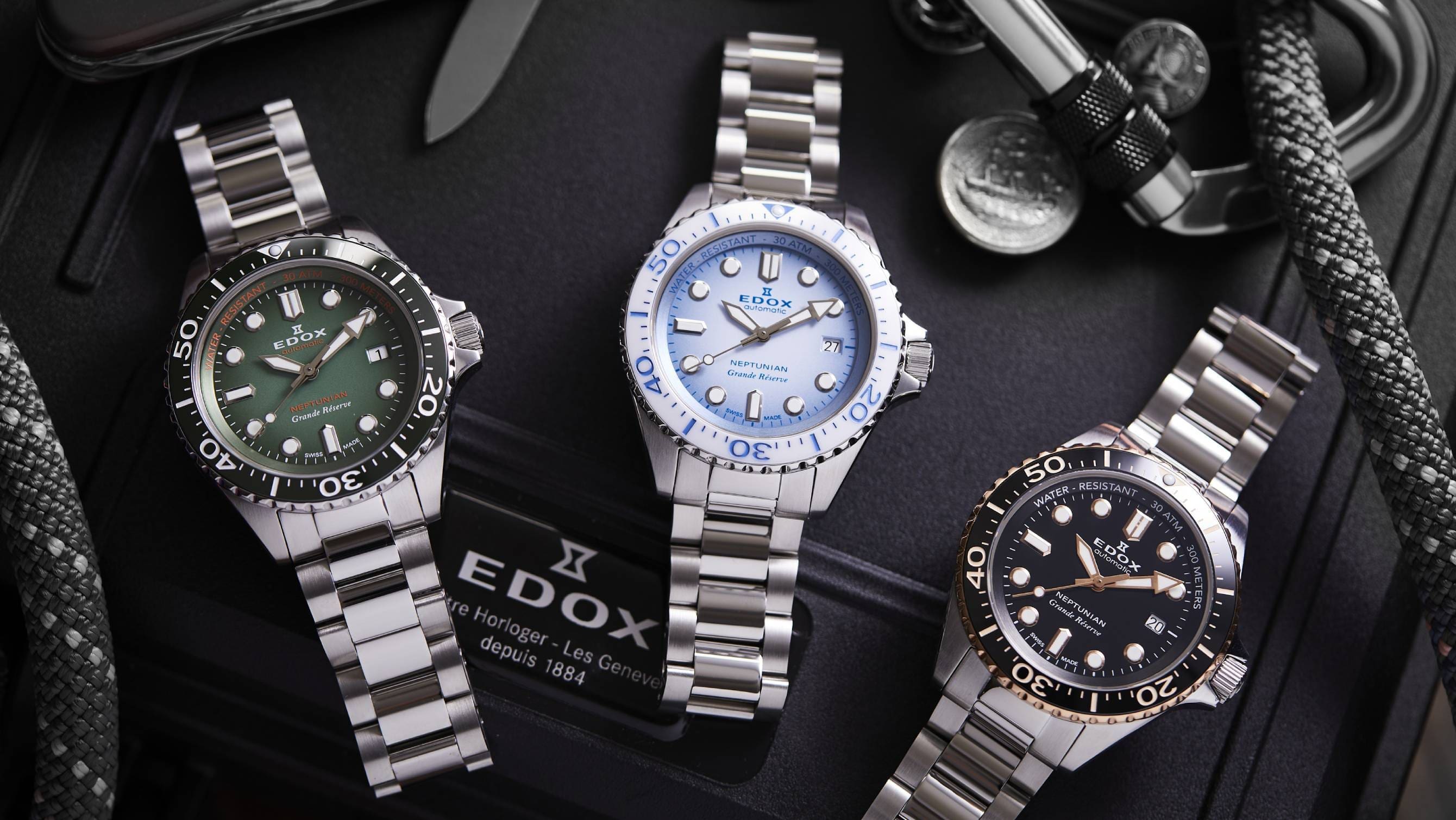
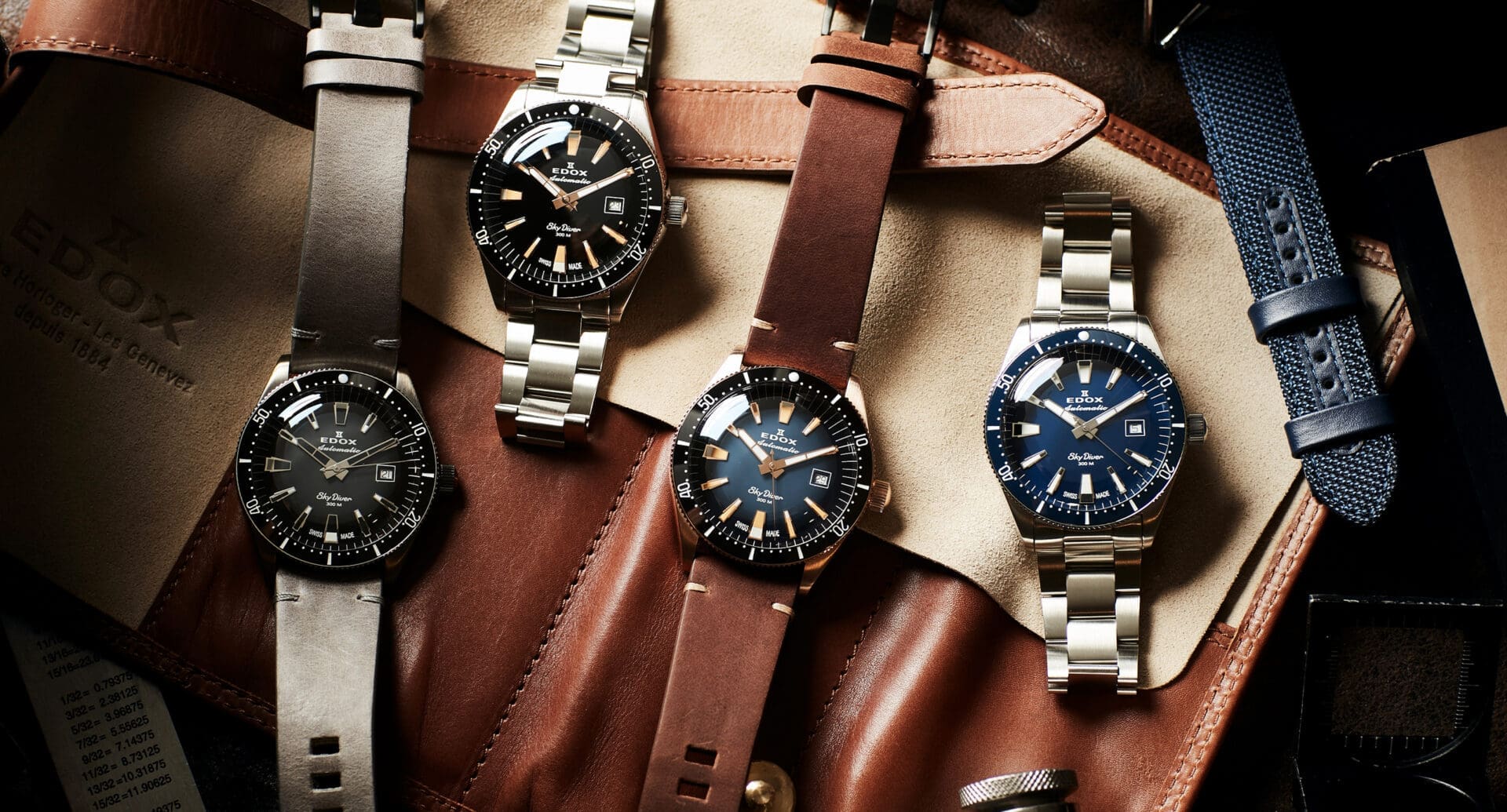
From the 2000s onward Edox repositioned firmly around sport-event partnerships. The brand became official timekeeper of Class-1 World Powerboat Championship, the Dakar Rally, the Sail GP series, and several offshore-sailing campaigns. Each partnership generated dedicated commercial references: the Chronoffshore-1 powerboat chronograph, the Chronorally Dakar editions, and the SkyDiver Neptunian dive line. Within the dive segment the CO-1 carbon-cased references and the Hydro-Sub 1,000 m diver established Edox at the upper end of mid-market Swiss sport watches.
Today Edox is headquartered in Les Genevez, in the Jura watchmaking valley, after relocating from Biel. Production is small-batch Swiss Made, using high-grade Sellita and ETA base movements. Retail runs from approximately CHF 900 for entry three-handers up to CHF 5,000+ for limited carbon-cased or partnership editions. Edox sits squarely in the mid-market Swiss sport-watch tier alongside makers like Oris and Sinn, with its sport-event branding as the differentiator.


Comments
No comments yet, be the first to weigh in.