
HYT was founded in Neuchâtel in 2012 by Vincent Perriard and a team that included physicist Lucien Vouillamoz, with the explicit ambition of building a wristwatch that displayed time through a fluid medium rather than mechanical hands. The technical challenge was significant: hours and minutes needed to be readable continuously through a coloured fluid moving inside a hand-blown glass capillary tube wrapped around the dial periphery, with the fluid driven by miniature bellows that themselves were powered by a conventional mechanical movement. After years of R&D the first reference, the H1, launched in 2012.
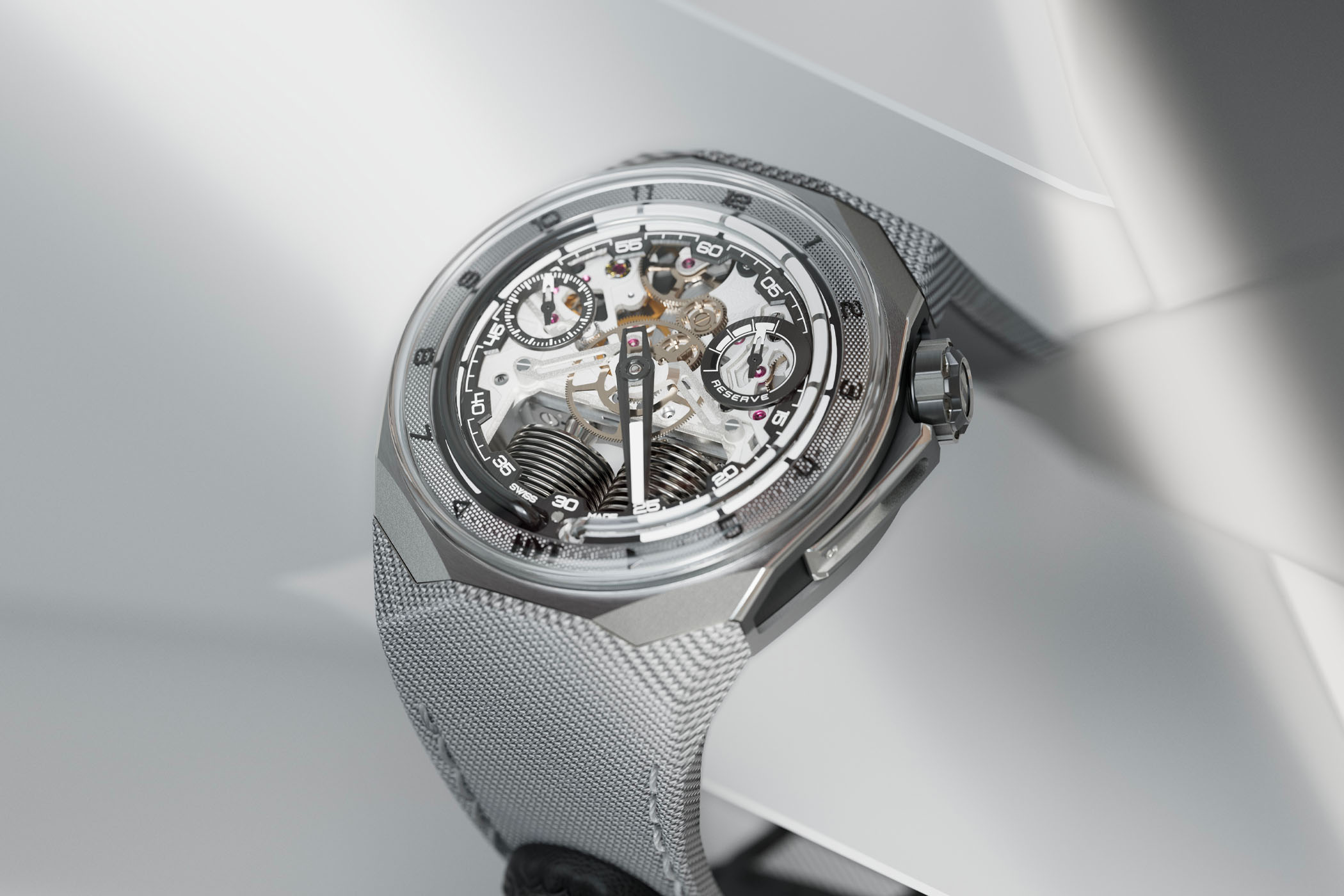
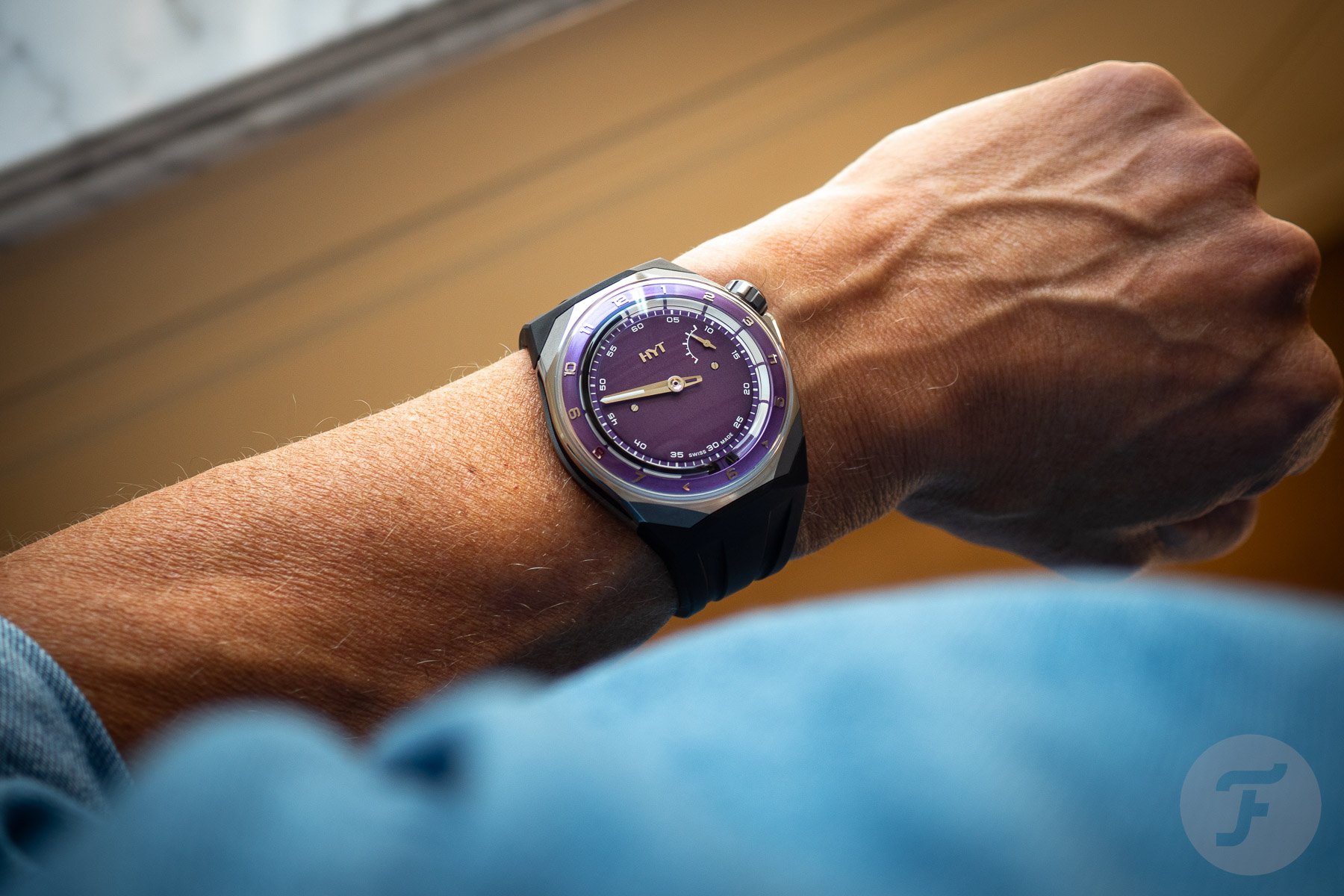
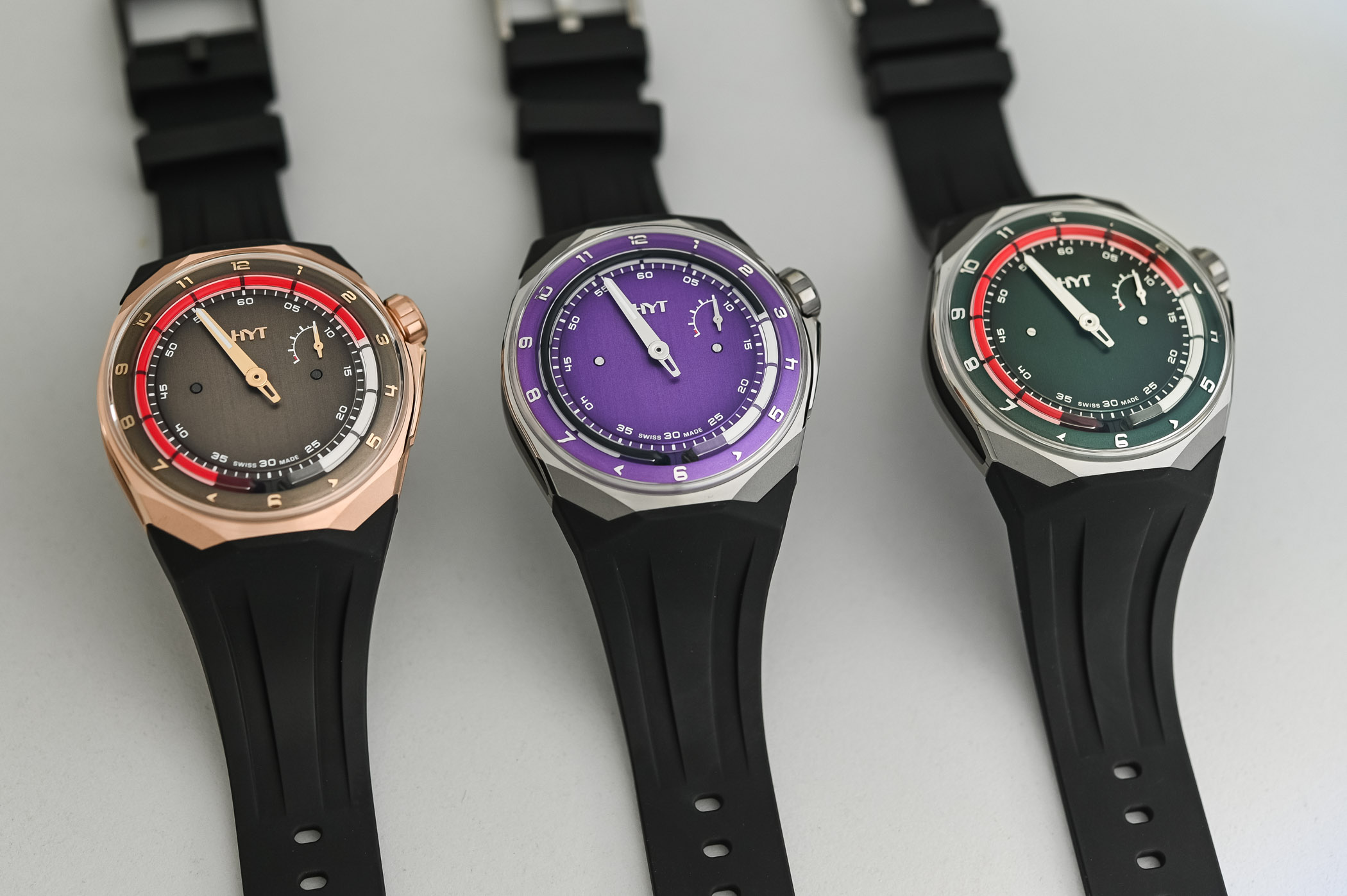
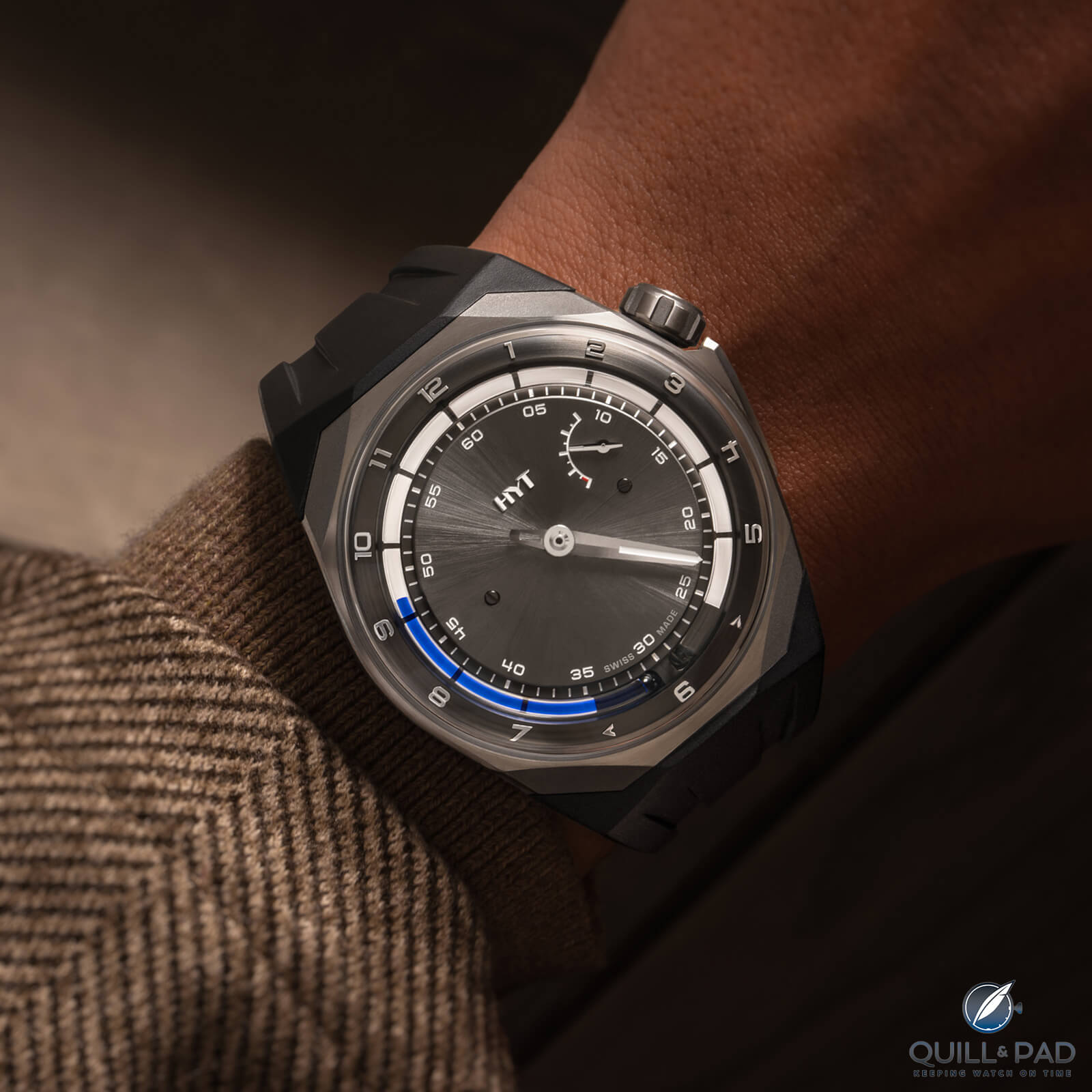
The HYT architecture is unique. A pair of flexible reservoirs / bellows at 6 o'clock are alternately compressed and released by the mechanical movement; the compression pushes a coloured aqueous fluid (typically green, but also blue, red, black, or other colours across references) into the capillary tube; a clear retrograde fluid follows, creating a meniscus visible against the hour scale around the dial perimeter. The user reads the hour where the meniscus sits on the bezel scale; minutes are shown by a conventional hand at the centre. At the end of a 12-hour cycle the bellows reverse and the meniscus returns to 6 to start the next cycle.
HYT collections evolved through H1, H2, H3, H4, H5, Skull, Hastroid, Soonow, and various complications including the H1.0 entry reference, H4 with light source illuminating the capillary, and the Skull variants in skull-shaped cases with the fluid filling the cranial dome. After a 2021 financial restructuring the brand relaunched in 2022 under new investor ownership with continued development of the hydromechanical platform. Annual production is small (estimated low hundreds of pieces) and HYT remains one of the most distinctive technical statements in modern Swiss independent watchmaking.






Comments
No comments yet, be the first to weigh in.