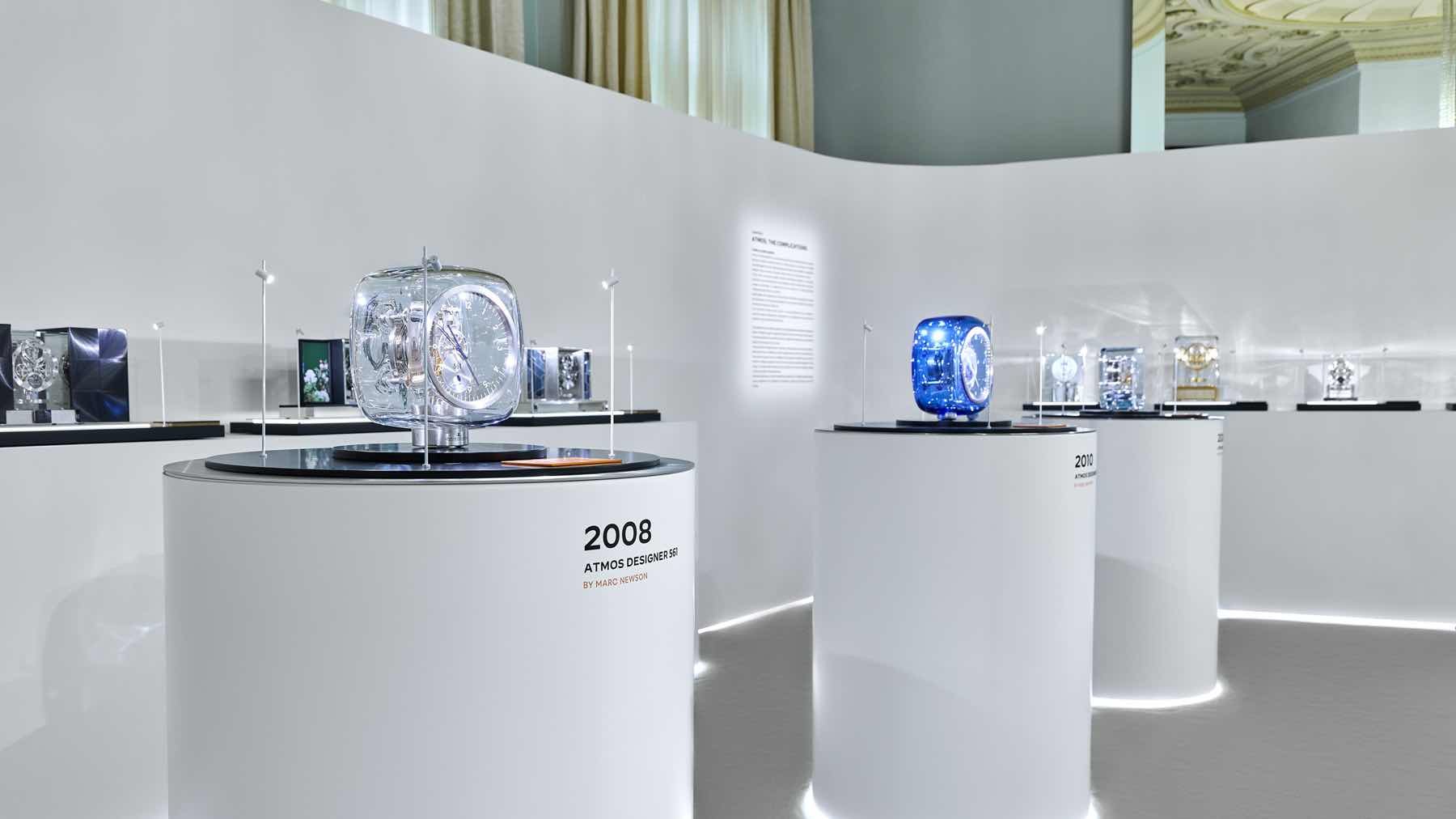
In 1928, Swiss engineer Jean-Léon Reutter developed a clock that ran on atmospheric pressure changes. His prototype used a mercury barometer mechanism: variations in air pressure caused mercury to rise and fall in a tube, which wound a clock spring. Reutter patented the principle and licensed it to Compagnie Générale de la Radio for commercial production from 1929 onwards. The mercury-based system was later replaced with a sealed metal bellow containing a chemical gas mixture (initially ethyl chloride, later a more stable hermetic mix), which expands and contracts in response to temperature changes rather than pressure changes.
In 1936, Jaeger-LeCoultre acquired the rights to Reutter's design and began manufacturing the Atmos at its Le Sentier facility. JLC Cal. 540 became the defining Atmos movement: a fully mechanical clock with a temperature-sensitive bellow at the bottom of the case, a long pendulum-like balance with a 2-minute oscillation period (one swing every 60 seconds, vs the typical 0.4-second oscillation of a wristwatch balance), and a winding mechanism that converts the bellow's expansion into mainspring tension. One degree of temperature variation provides approximately 48 hours of running energy; in normal home conditions with daily 1-2°C swings, the Atmos runs indefinitely without intervention.
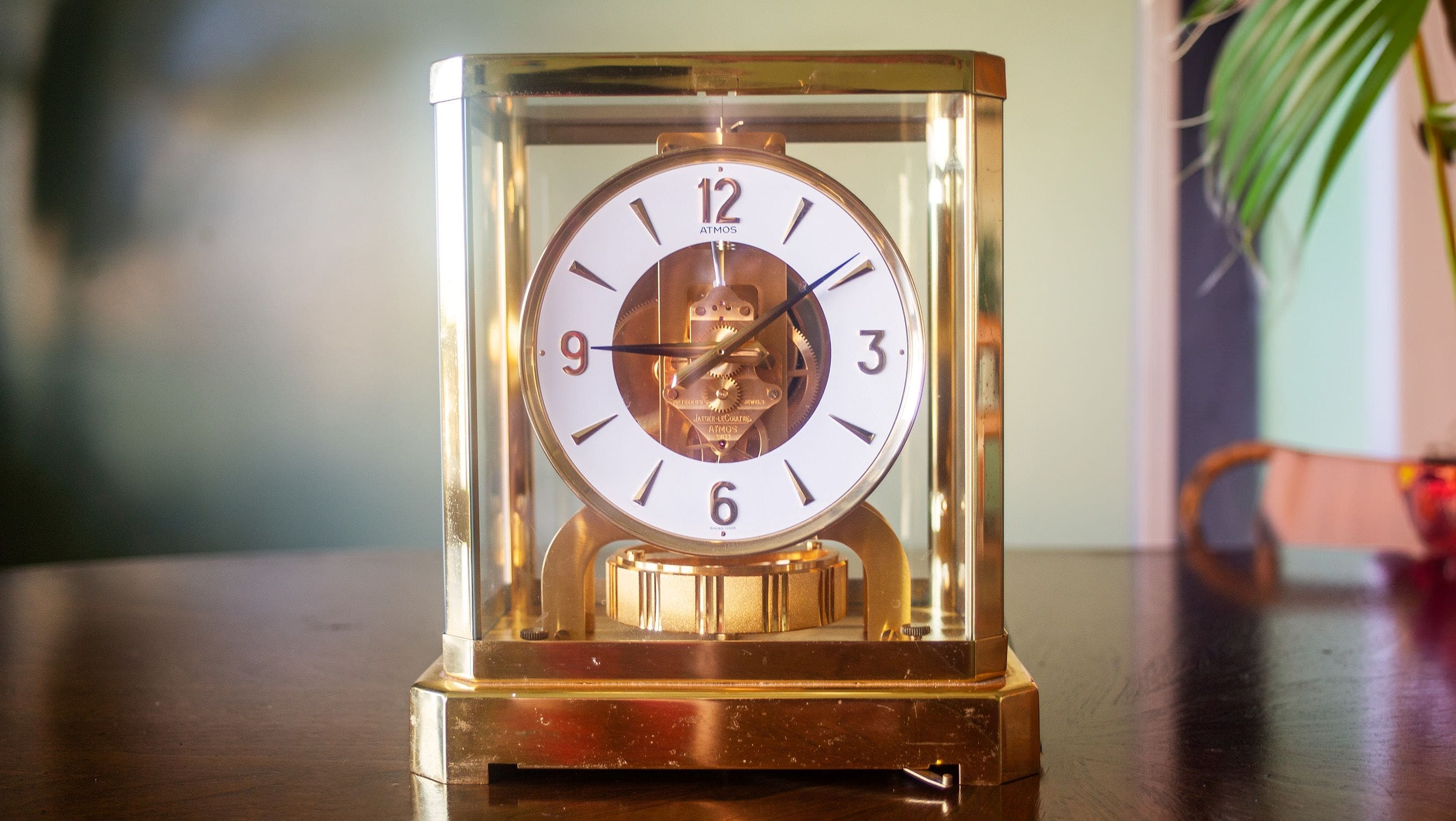
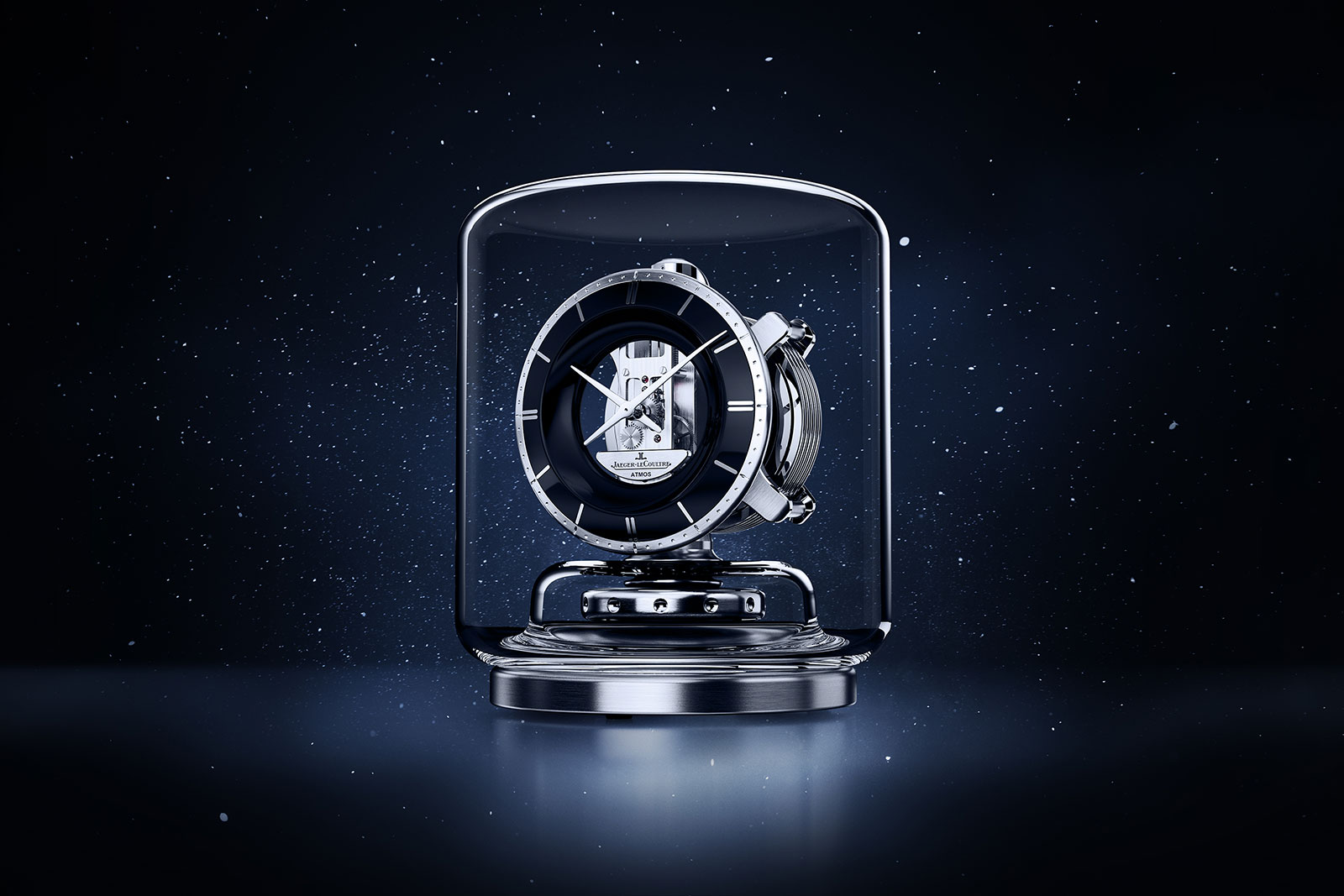
The Atmos became JLC's emblematic state-gift product through the 20th century. Swiss government delegations gave Atmos clocks to visiting heads of state through the 1950s and 60s; Atmos clocks were presented at the United Nations, in private collections of US presidents, in Pope Paul VI's residence, and at virtually every major Swiss diplomatic event. The classical Atmos Cal. 540 case is a transparent glass-and-brass cube approximately 22 × 22 × 14 cm, with the entire mechanism visible through the glass walls. The watch is shipped in a wooden travel case with shock-absorbing supports; in transit, the bellow is locked to prevent damage.
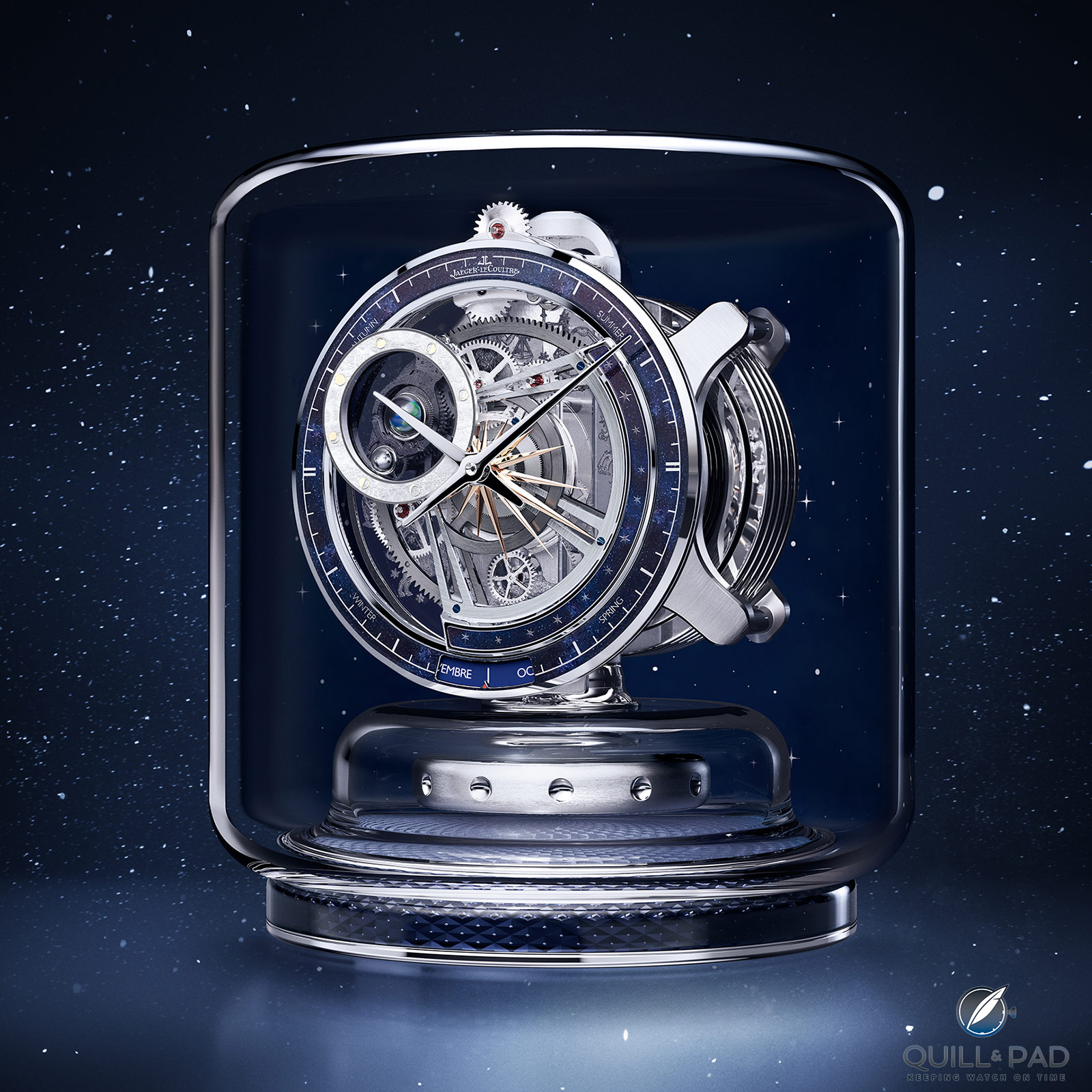
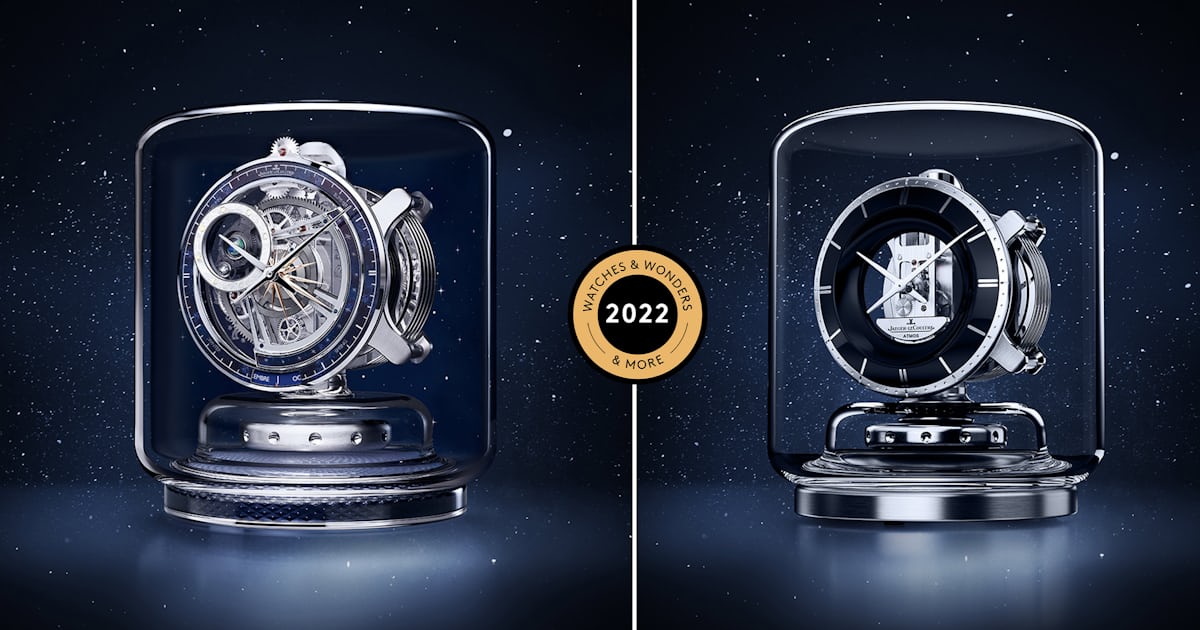
The current Atmos catalogue includes the Atmos Classique Cal. 540 (the standard glass-cube reference), Atmos Réédition Marquise (1936 design heritage reissue), Atmos Mystérieuse (with mysterious-time display, the hour hand appears to float without visible connection), Atmos Carillon (with chiming complication), and the Atmos Hybris Mechanica in the upper haute-horlogerie segment. Retail spans approximately CHF 9,000 (Atmos Classique brass) to CHF 80,000+ (Atmos Mystérieuse rose gold) to CHF 250,000+ (Atmos Hybris Mechanica). The Atmos has remained one of the most-recognised JLC products and a defining example of perpetual mechanical horology.


Comments
No comments yet, be the first to weigh in.