Maximilian Busser was managing director of Harry Winston Rare Timepieces from 1998, where he conceived the Opus series - an annual collaboration between Harry Winston and an independent watchmaker (F.P. Journe, Antoine Preziuso, Vianney Halter, Christophe Claret). The Opus series became one of the defining creative projects of 2000s haute horlogerie and established Busser's reputation as a curator and collaborator. In 2005 he left Harry Winston to found MB&F - Maximilian Busser and Friends, a new creative house structured around the same collaborative philosophy.
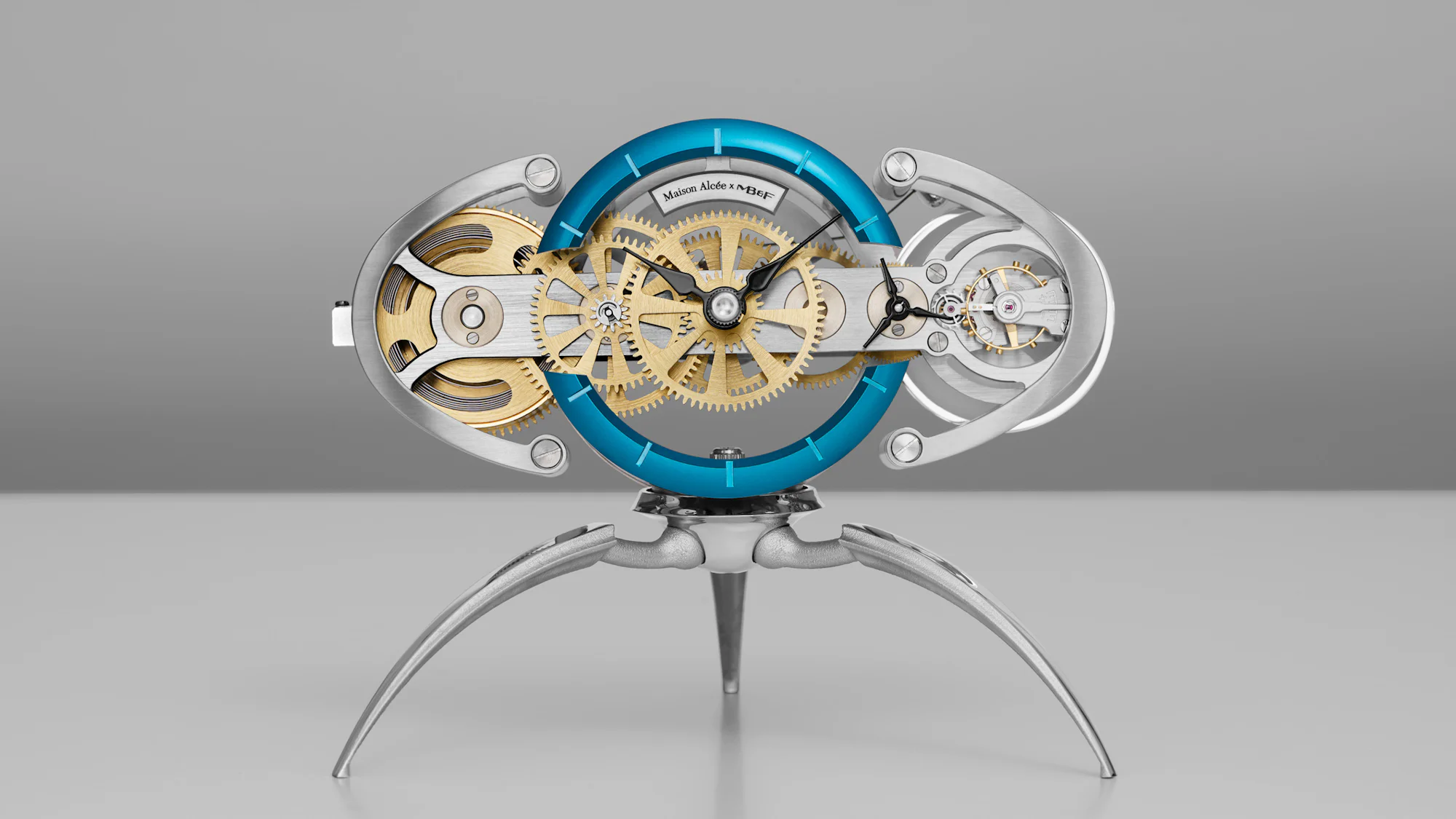
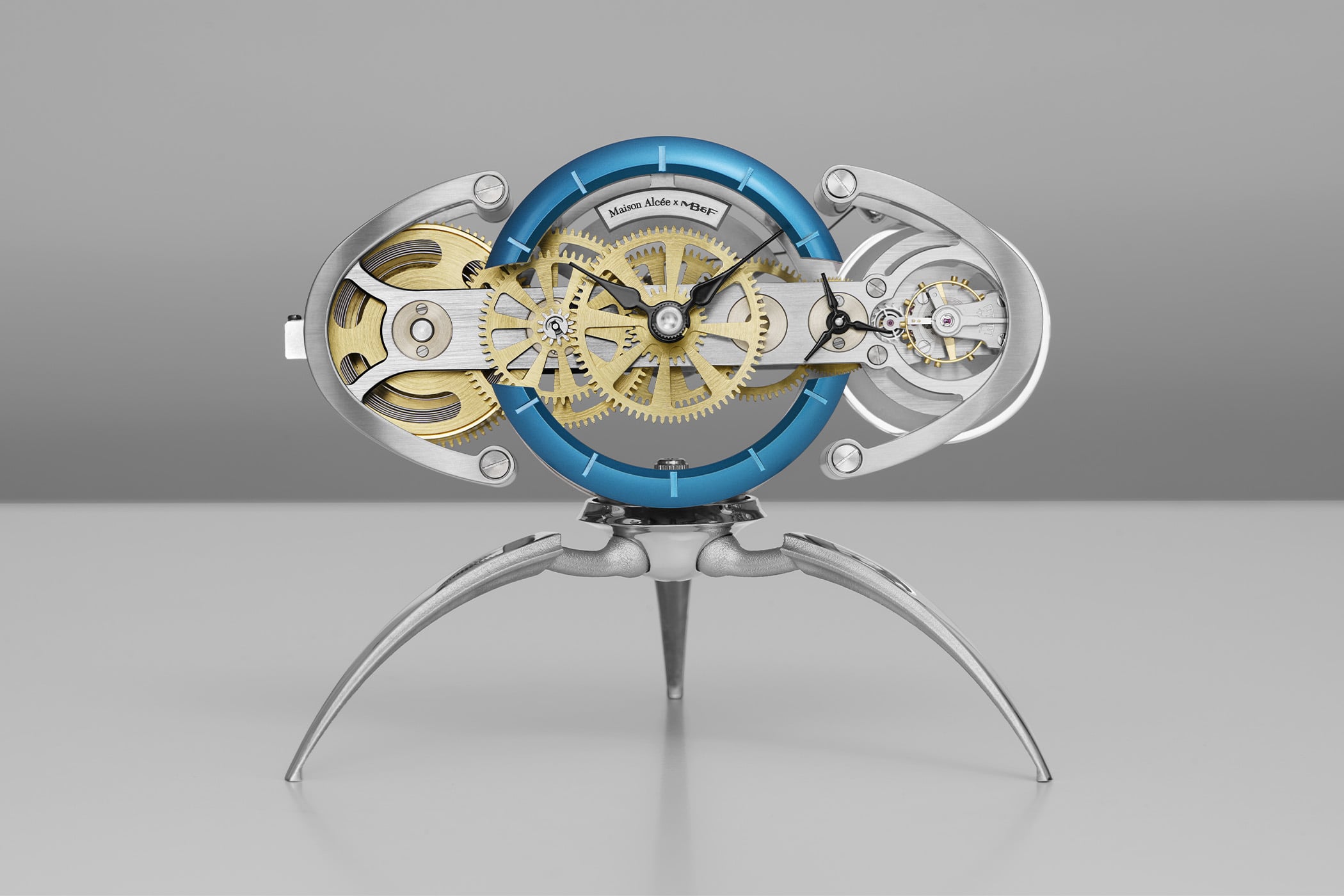
The MB&F model treats each watch as a collaboration between Busser, an invited independent watchmaker, and a network of component specialists. The first piece - HM1 (Horological Machine No. 1) in 2007 - set the programme's identity: treat the watch as a three-dimensional sculptural object rather than a flat circular dial. Subsequent Horological Machines (HM2-HM11) have used animal shapes (frog, spider, octopus), vehicle references (rocket, helicopter), and abstract geometric forms, with hours and minutes read off rotating discs, domes, or cones rather than conventional hands.
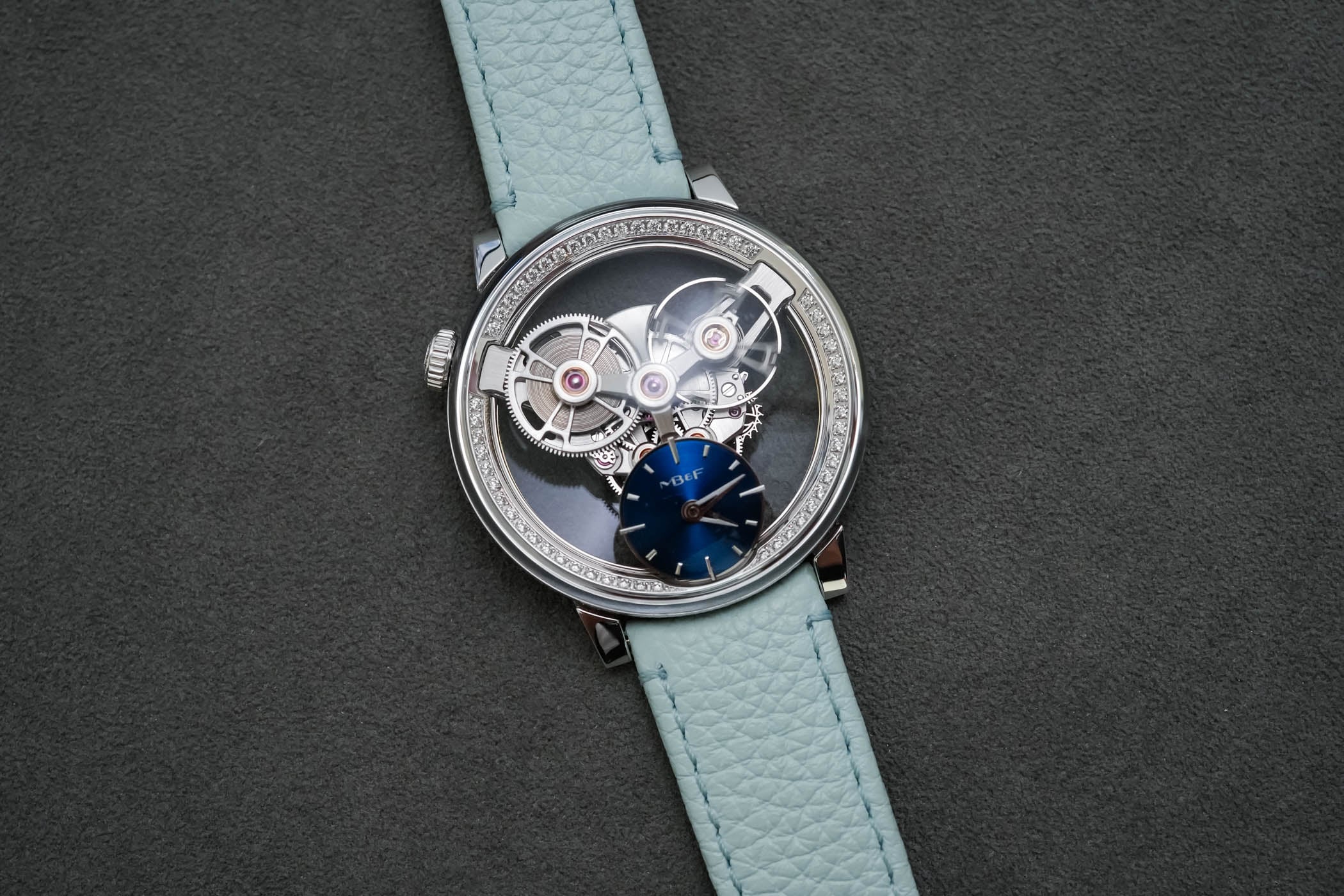
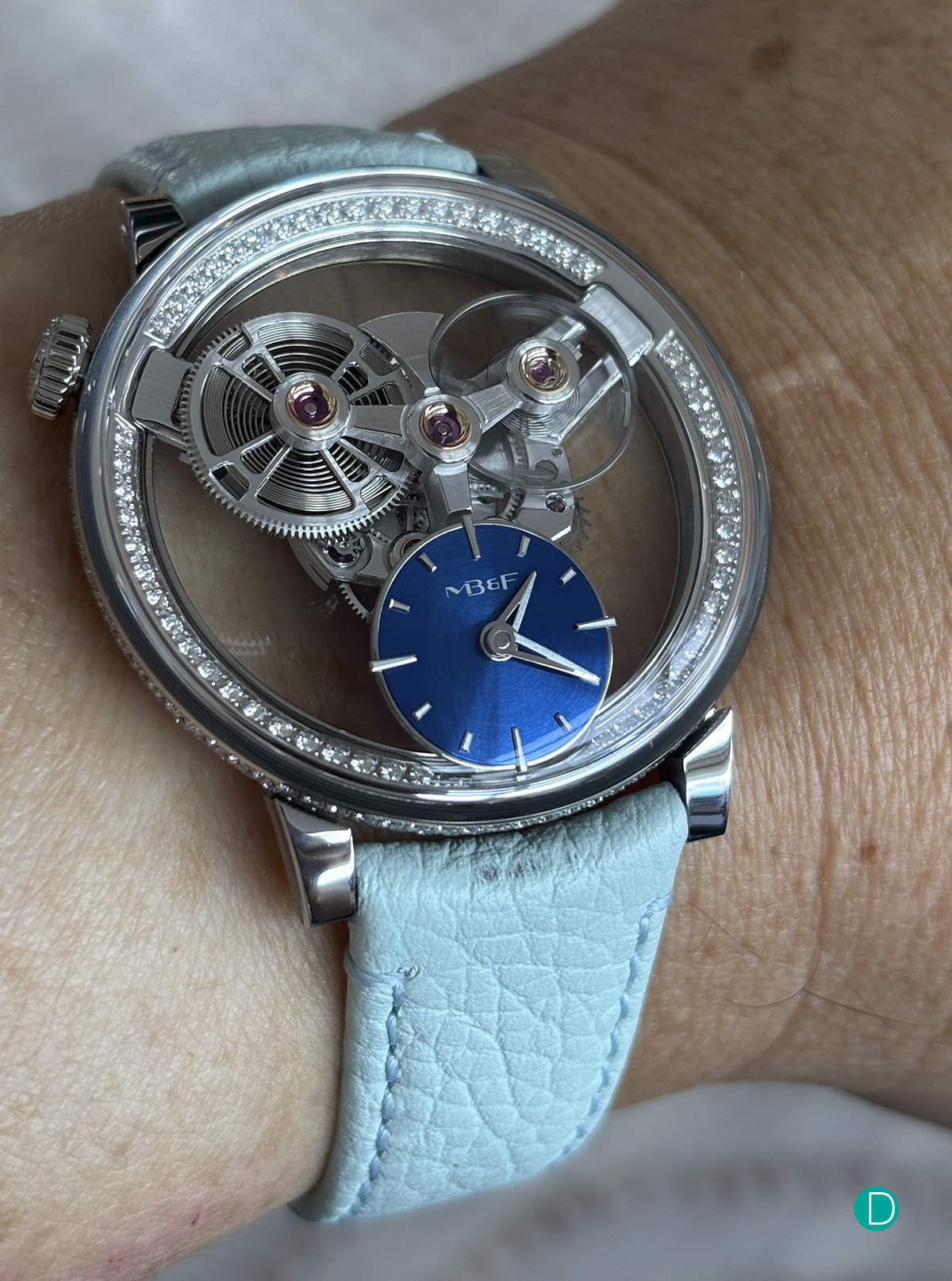
In 2011 MB&F launched the parallel Legacy Machines (LM) line, using conventional round 40-44mm cases but with radically reinterpreted movement architecture - typically with a large suspended balance wheel visible dial-side above the plate. LM1 (2011) and LM101 (2014) established this language; LM Perpetual (2015), LM Thunderdome (2019), and LM Split Escapement (2019) extended it to complications. MB&F remains independently owned, produces around 200-300 watches per year total, and operates from a Geneva workshop together with the MAD Gallery exhibition space.





Comments
No comments yet, be the first to weigh in.