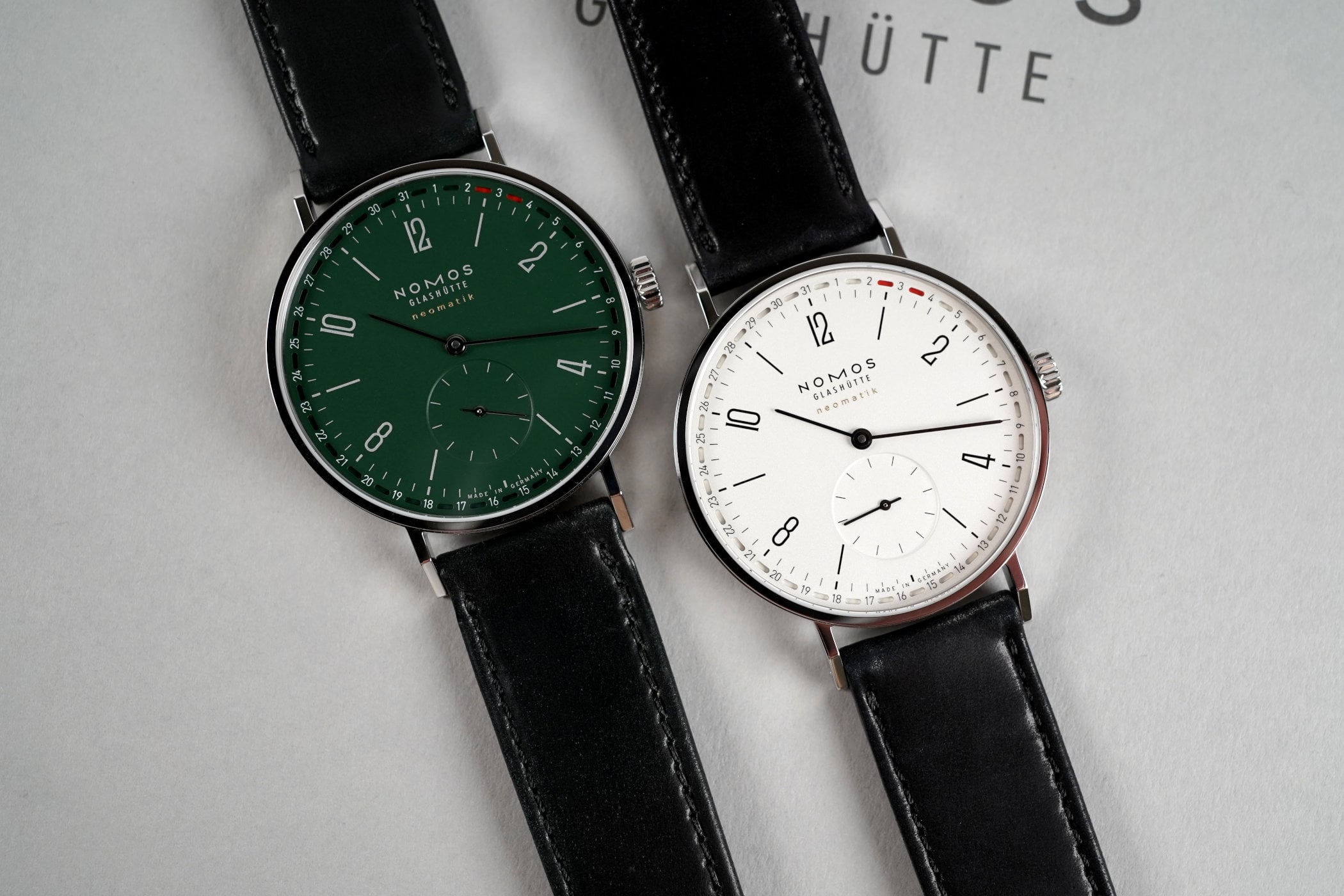
Nomos Glashütte's Tangente launched in 1992 as one of the four founding references of the post-reunification Glashütte watchmaking revival, alongside the Tetra, Orion, and Ludwig. The brand's designers and watchmakers were drawn from the East German watchmaking school in Glashütte, which had been preserved through 40 years of state-run watch production by VEB Glashütter Uhrenbetrieb (GUB). Nomos drew on the East German school's tradition combined with explicit Bauhaus design language.
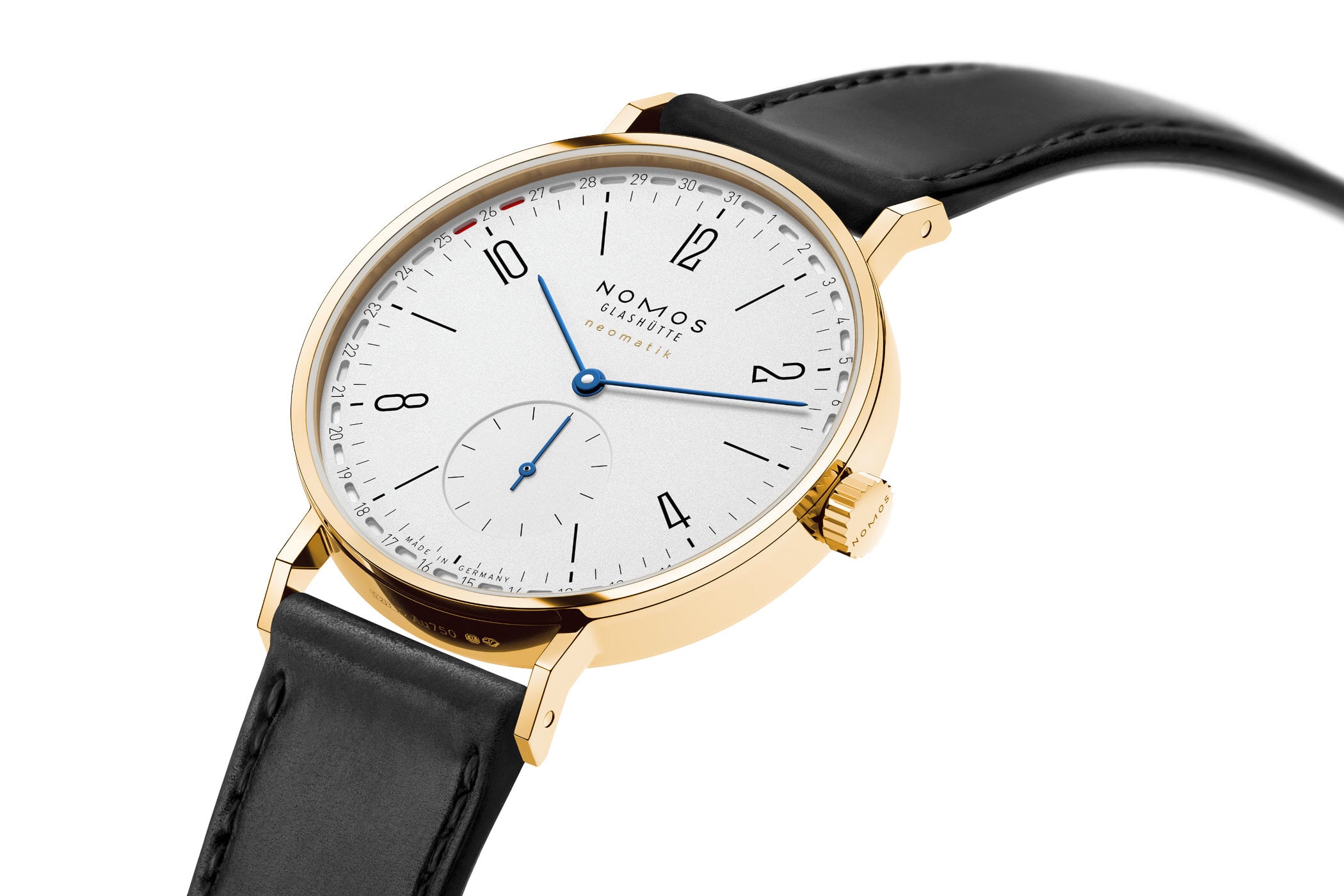
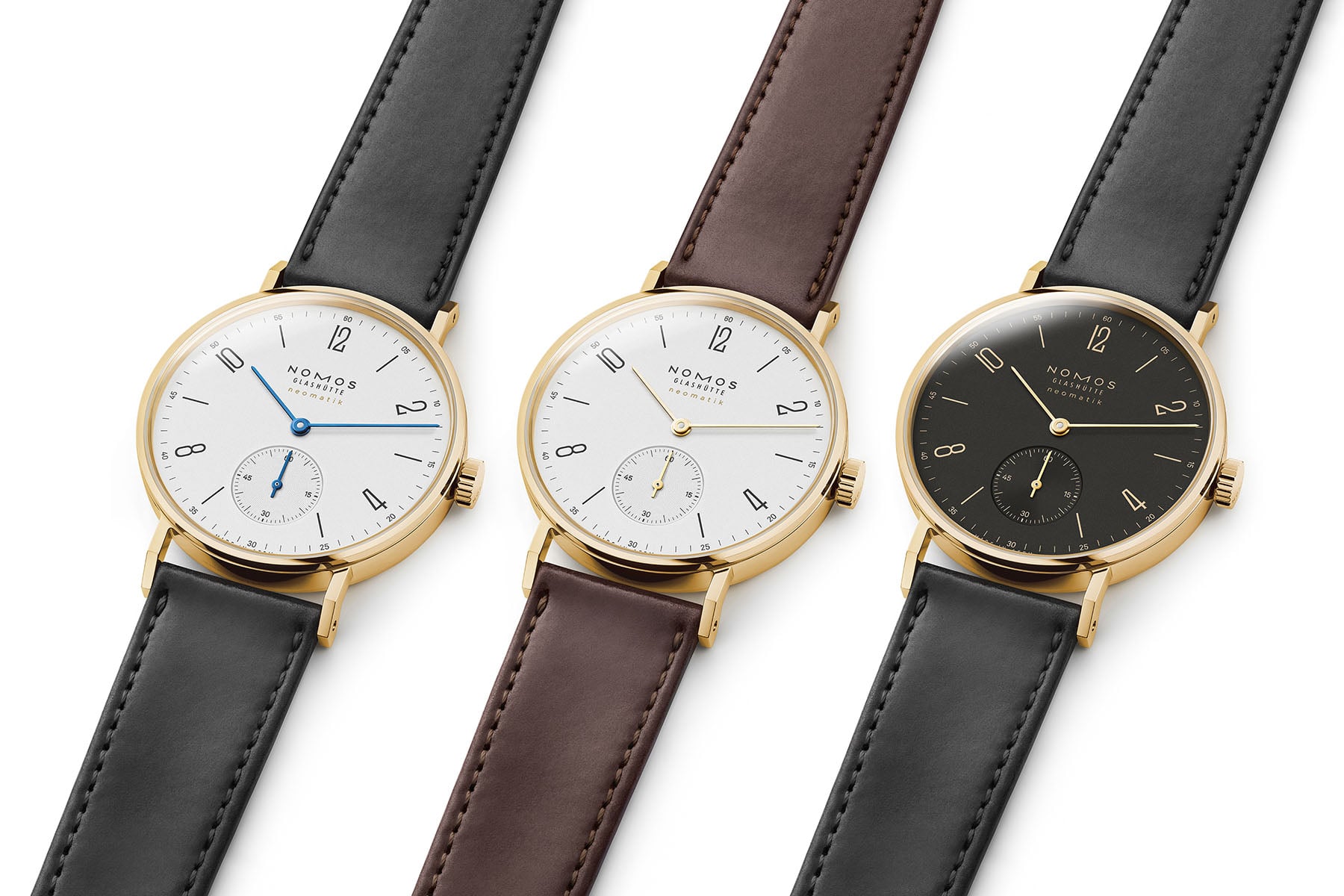
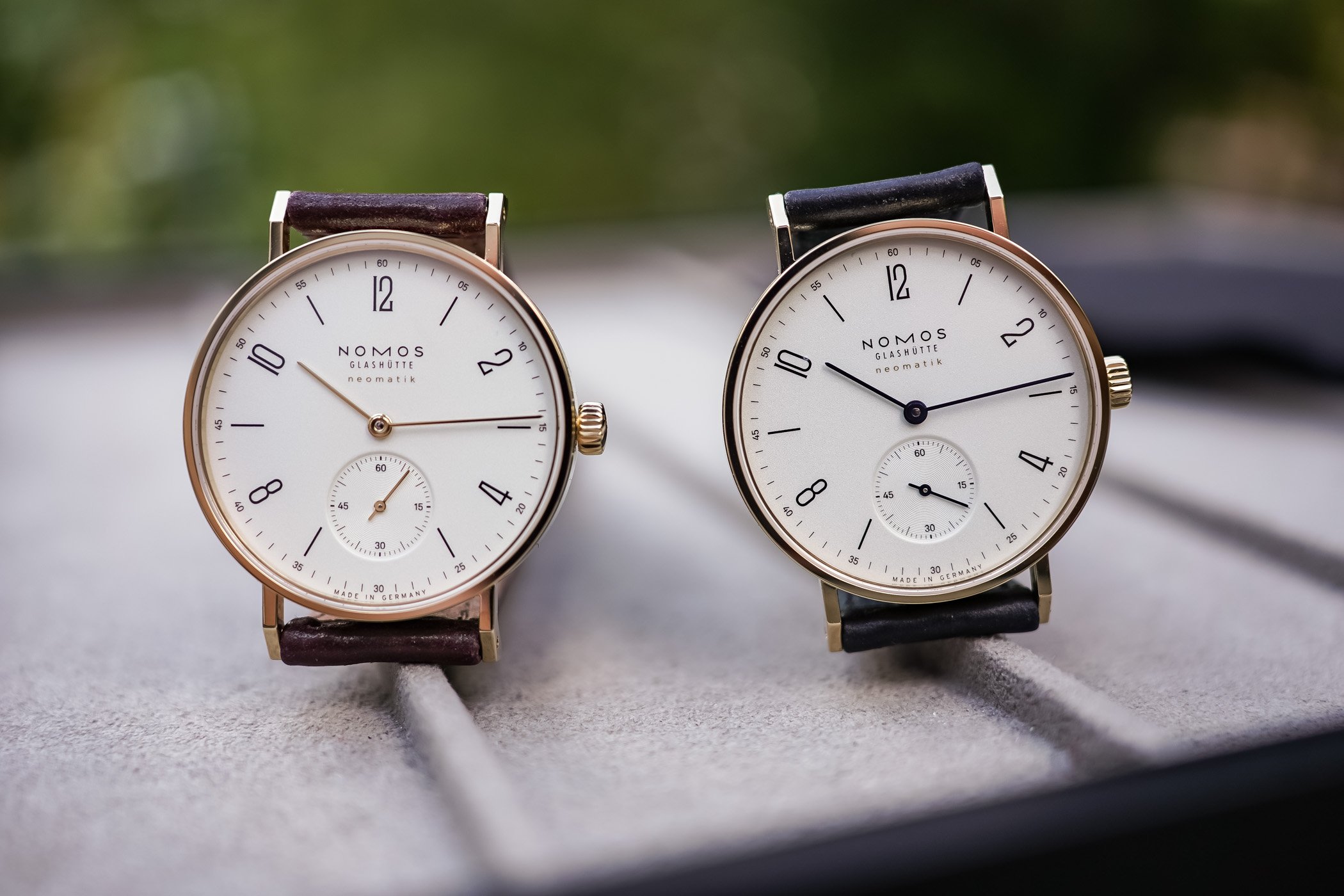
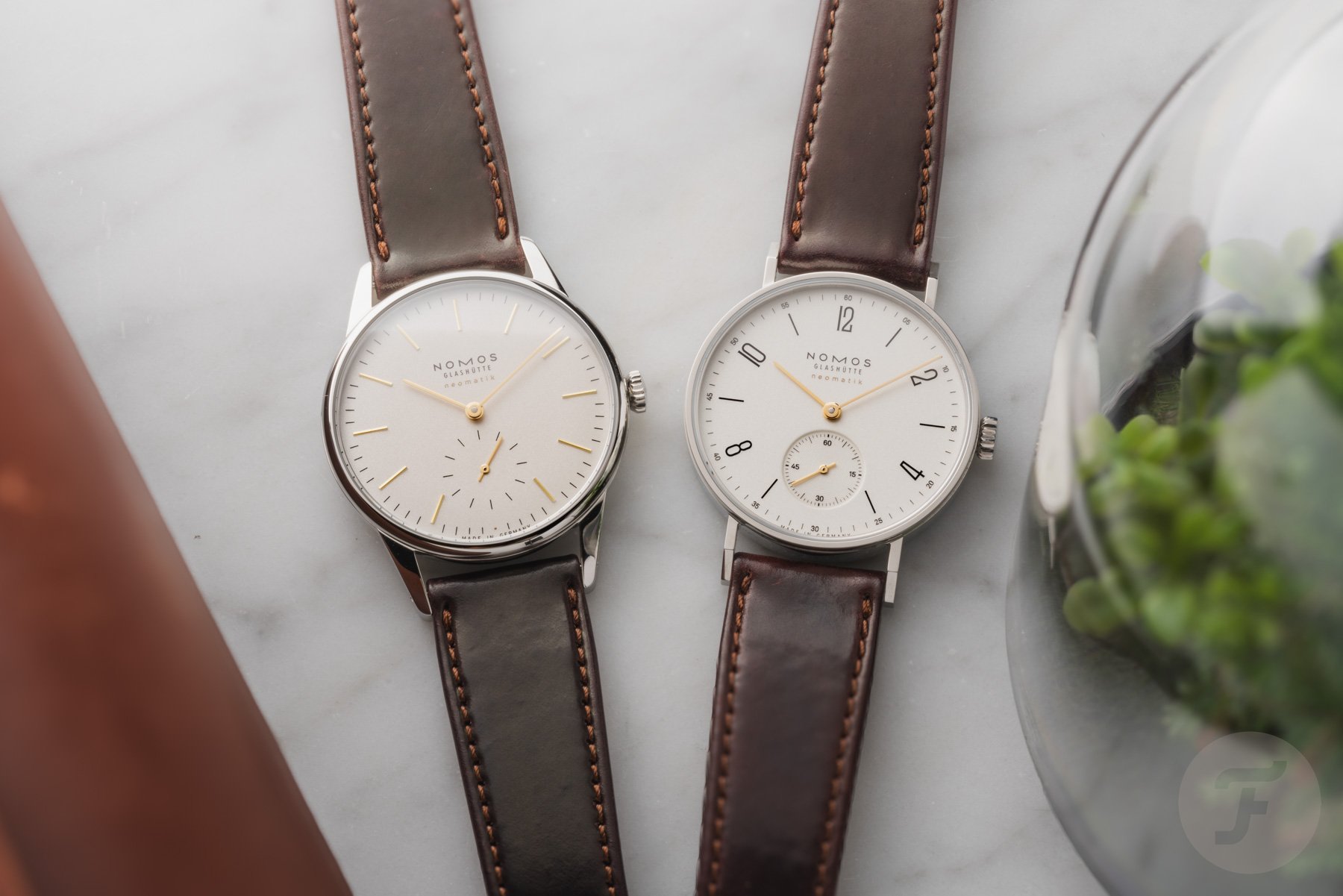
The Tangente codified the modern Bauhaus dress watch: round white silver-plated dial, black stick numerals at every hour position with reduced inner numerals at the cardinal points (3, 6, 9, 12), blued steel hour and minute hands, and a small-seconds sub-dial at 6 o'clock. The visual influence is direct: Max Bill's 1956 Junghans Wristwatch design and the geometry-first principles of the Bauhaus Dessau. The original 1992 Tangente used the Cal. Alpha hand-wound movement with three-quarter Glashütte plate.
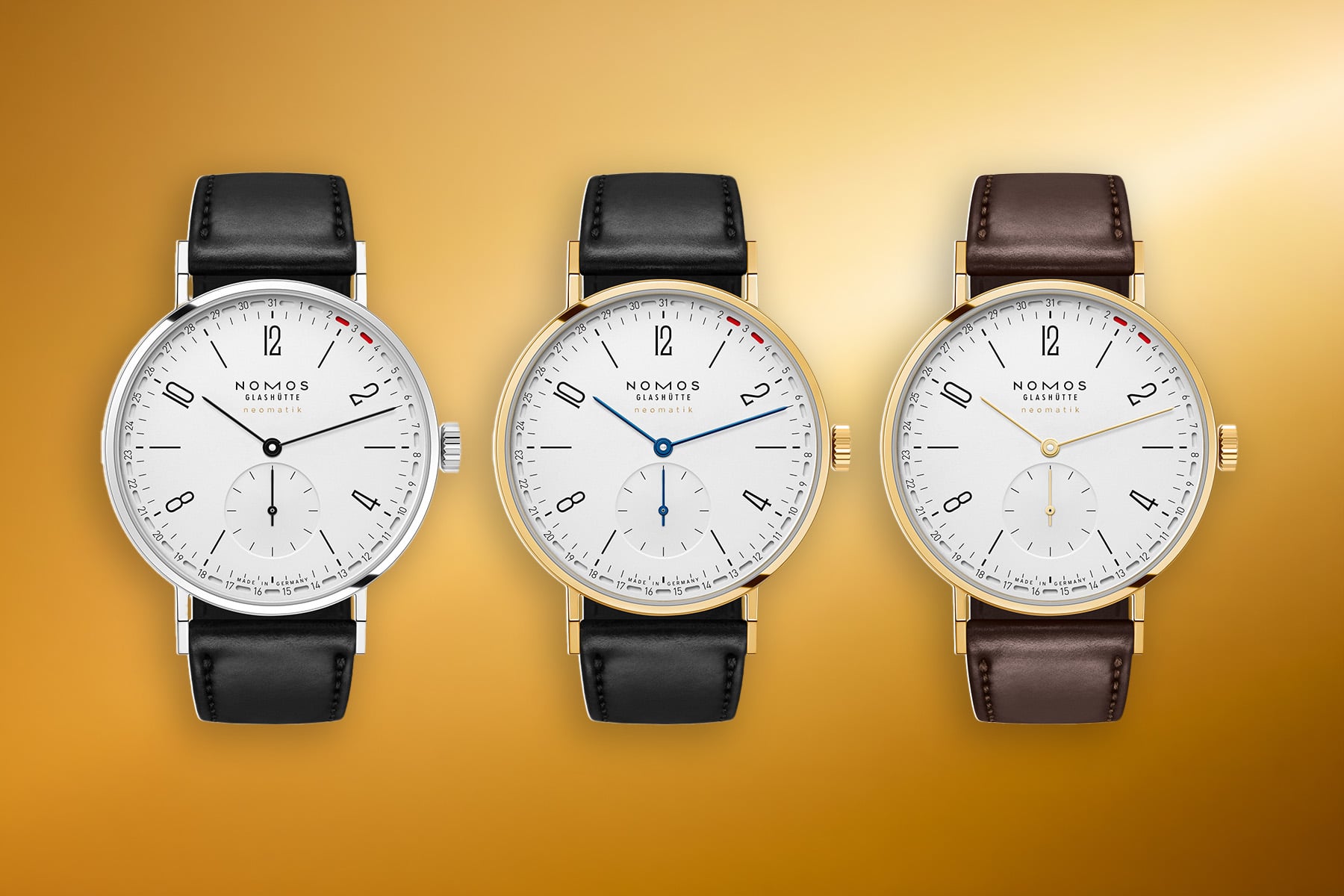
The line evolved through hand-wound, automatic, and complication variants while preserving the dial design language. The 2015 Cal. DUW 3001 was Nomos's first automatic in-house movement (3.2mm thick, designed for thinner cases). The 2018 Cal. DUW 6101 brought a date indication via a circular ring at the dial edge that integrates with the hours rather than disrupting the symmetry. The 2023 Tangente neomatik 38 Update uses Cal. DUW 6101 in a 37.5mm case, the most-recommended Tangente reference in current production.
Modern Tangente references span 33mm (small dressy / women's), 35mm (vintage proportion), 37.5mm (volume / contemporary), and 38.5mm (with date). All movements are made in-house in Glashütte with hand-finished bridges, gold chatons, and the three-quarter Glashütte plate. Retail spans ~€2,000 (entry hand-wound 35mm) to ~€3,560 (Tangente neomatik 38 Update) to ~€16,000+ (Tangente Sport Neomatik or Tangente Datum gold reference).





Comments
No comments yet, be the first to weigh in.