
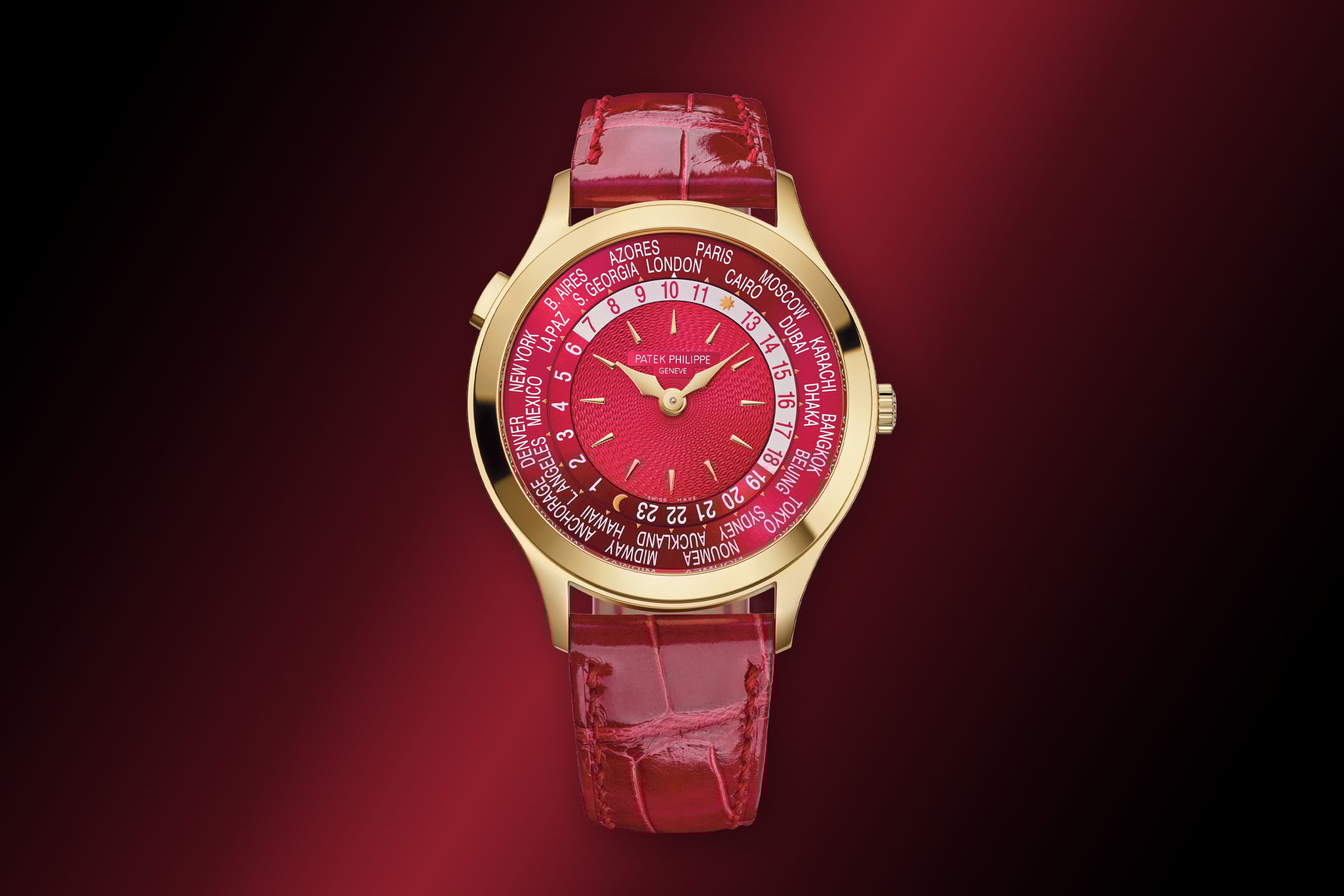
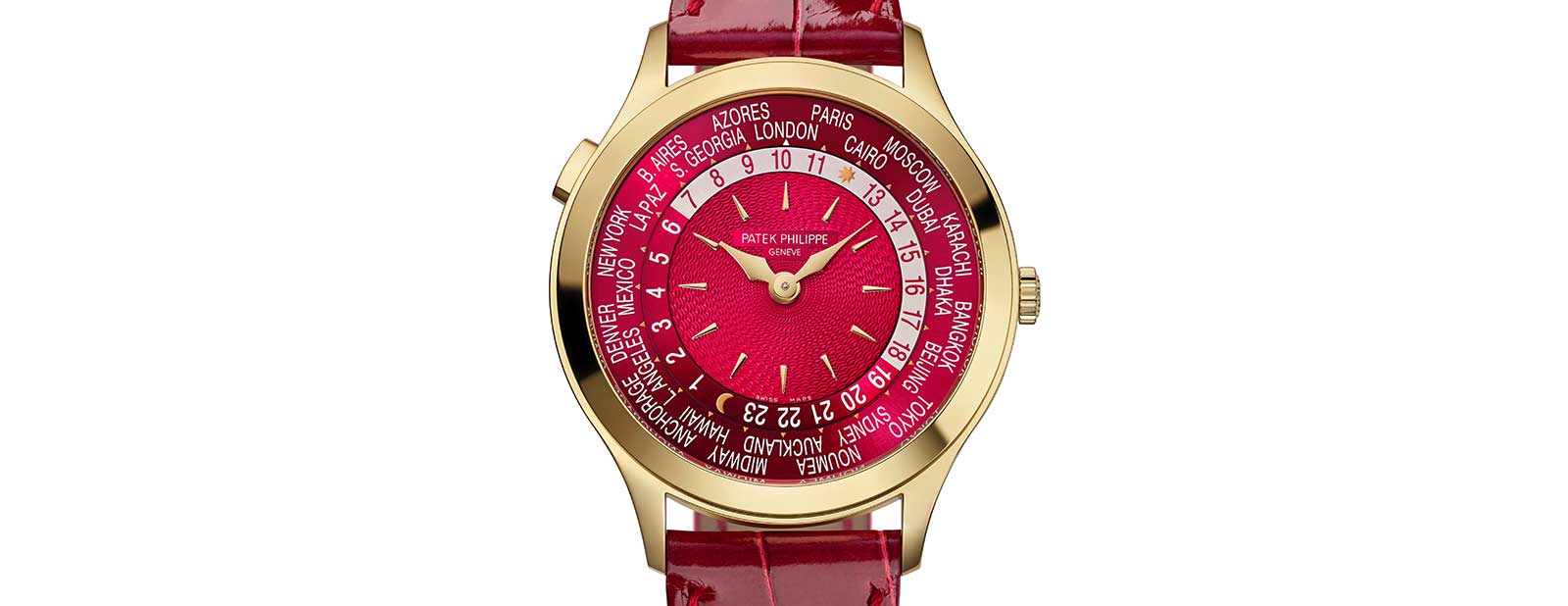
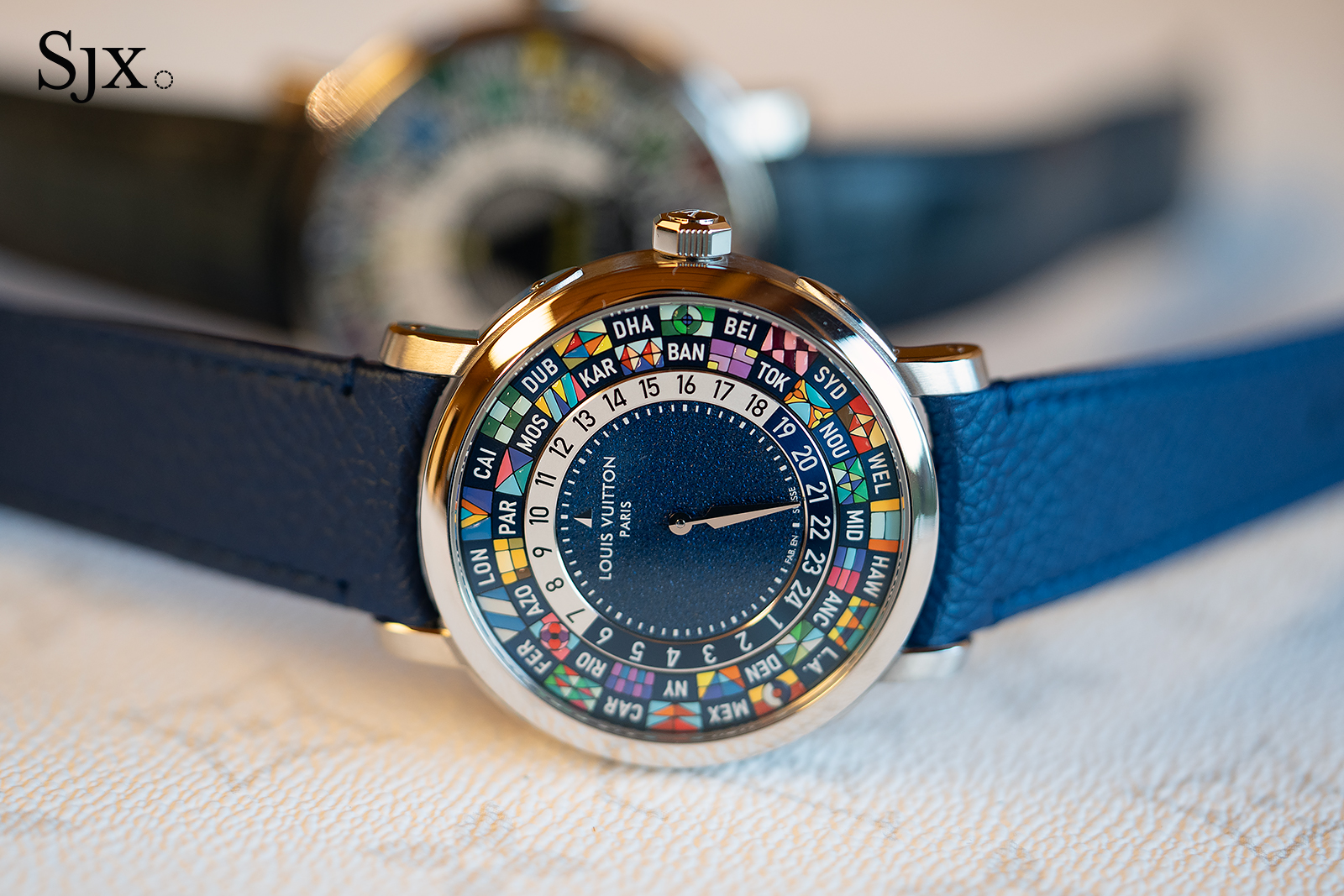
The Patek Philippe World Time traces its design to a 1937 patent by independent watchmaker Louis Cottier, who developed a single-crown 24-time-zone display he called Heures Universelles. The system displays the time in 24 cities simultaneously: a fixed 24-hour disc rotates behind the dial centre while a rotating ring at the dial edge carries the city names. Pressing a pusher at 10 o'clock advances both rings together, instantly synchronising the watch to a new local time.
Patek Philippe licensed Cottier's mechanism and produced its first World Time wristwatch references in 1937-1939. The early references included the Ref. 96HU, Ref. 542, and Ref. 1415, all hand-wound, all available in yellow or white gold. Original Cottier-era World Times trade above CHF 200,000 at auction. The most-celebrated examples include the 1939 Ref. 1415 'Heures Universelles' with cloisonné enamel dial; one example sold for CHF 8.97M at Phillips in 2019, an auction record for a Patek Philippe World Time.
After Cottier's death in 1966, the World Time complication went into hibernation in Patek's catalogue until 1999, when the brand revived it as the Ref. 5110 with the modern in-house Cal. 240 HU, an automatic micro-rotor movement. The Ref. 5110 (2000-2006) and its successor Ref. 5130 (2006-2016) re-established the line.
The current Ref. 5230 (2016) and Ref. 5330 (2024, with date-display) are the modern volume references. Cal. 240 HU automatic micro-rotor with 48-hour reserve, hand-finished, 22k gold rotor. Multiple dial configurations including hand-guilloché centre and laser-etched city ring. The Ref. 5930 World Time Chronograph (2016) combines the World Time with a chronograph in a 39.5mm case with the in-house Cal. CH 28-520 HU. Retail spans ~€55,000 (Ref. 5230) to ~€80,000 (Ref. 5930 chrono).


Comments
No comments yet, be the first to weigh in.