 Deployant
Hands-On Review: Parmigiani Bugatti Aerolithe Performance Flyback Chronograph
The 2017 Parmigiani Bugatti Aerolithe Performance Flyback Chronograph improves on the 2014 model with fine details, design enhancements and reduced price.
4,158 articles · 21 videos found · page 104 of 140
Deployant
The 2017 Parmigiani Bugatti Aerolithe Performance Flyback Chronograph improves on the 2014 model with fine details, design enhancements and reduced price.
 Deployant
Reproducing the vaunted watch from archives, the new Montblanc TimeWalker Rally Timer honours the manufacture's role in history & ushers a new collection
 Deployant
A. Lange and Sohne calls the calibre 121.3 of the new Lange 1 Moon Phase Day Night an improvement and we disagree. An understatement, it's a new calibre!
 Deployant
The Tissot PRS516 small triple seconds is the most fun you're going to have: A novel complication for an inexpensive price.
 Revolution
 Revolution
 Deployant
Full review of the HYT H4 Alinghi with the light module. Original high resolution photographs, commentary and analysis.
 Deployant
Montblanc Heritage Chronométrie Dual Time Vasco Da Gama Limited Edition 238
 Deployant
Hand on review of the first wristwatch from the Le Garde Temps - Naissance d'une Montre project. Featuring the work of Michel Boulanger under the guidance of Robert Greubel, Stephen Forsey and Philippe Dufour.
 Deployant
review of the blancpain nuit et jour night day for ladies women baselworld 2015 novelty hansd-on live
 Revolution
We wrote about the new generation HYT H3 when HYT introduced it to us before Baselworld 2015, a watch that takes the brand’s unique time telling fluid mechanism into a completely new design direction. A few days ago at Baselworld, I finally had a chance to have a closer look at this watch. However, having only […]
 Revolution
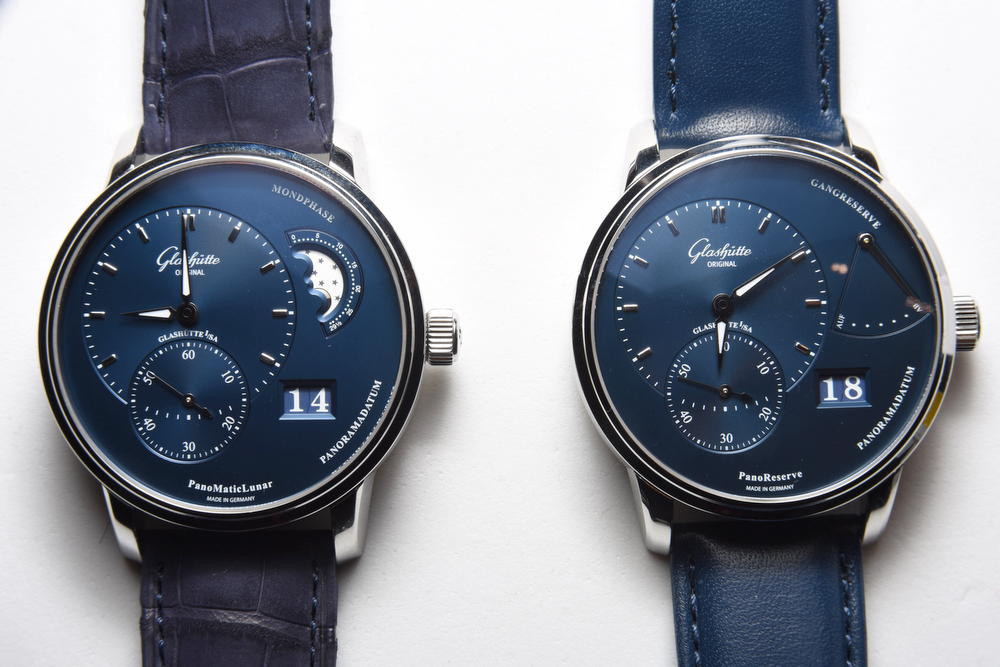
When news broke of the new dial colours that Glashütte Original were introducing for the PanoReserve and PanoMaticLunar, I was particularly excited. After-all, I had grown to know about and admire the brand through these two watches, and when I was first acquainted with them, I can honestly say that I fell in love immediately. What’s […]
 Deployant
Review of the Breguet Type XX Aeronavale
 Deployant
Jaeger LeCoultre Duomètre Sphérotourbillon Moon
 Deployant
When you gaze long into an abyss the abyss also gazes into you. The HYT skull unleashes the inner rebel in you, and slows down the pace of life.
 Revolution
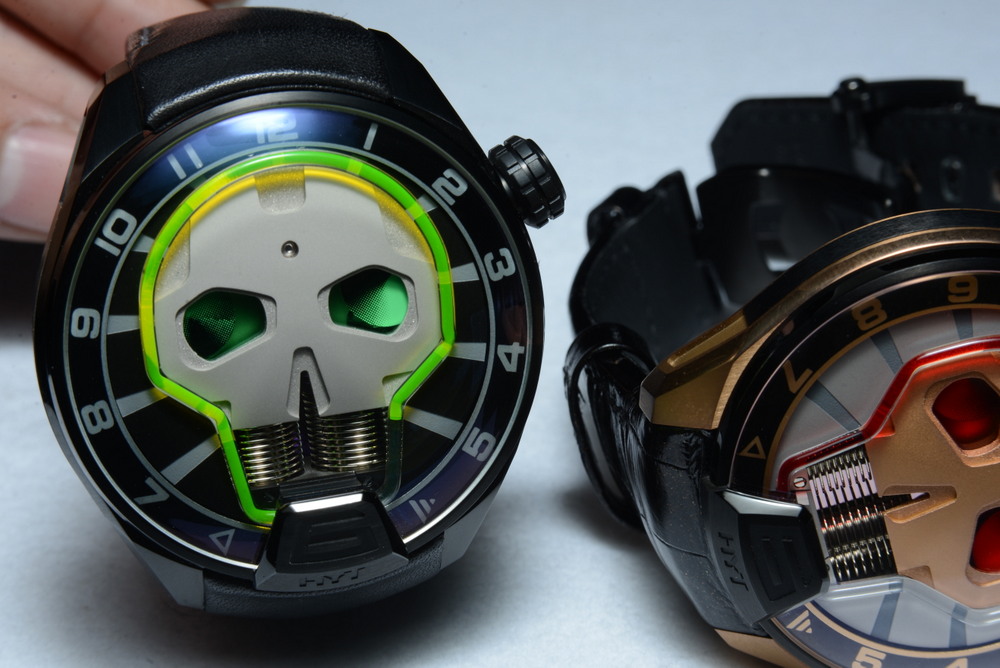
The HYT Skull that was announced recently was an unexpected development from Hydro Mechanical Watch making masters HYT, yet its appearance was somehow hinted at before with the H2. After all, visible through the case-back of the H2, the movement, arranged in a V shape did resemble a face, or more specifically, as some commentators […]
 Deployant
SINN U1-D Mission Dune Limited Edition 350 pieces The Hour Glass
 Deployant
Mankind has always been fascinated by the universe since the beginning of time. Great men, such as Galileo, Neil Armstrong, and Stephen Hawking, have immersed themselves into finding the answers pertaining to one of the greatest mysteries ever known to humans. While the MB&F; HM6 (also known as the Space Pirate) does not give us the answers to theseRead More
 Revolution
The Zenith Pilot Montre d’Aeronef Type 20 line has certainly proven to be one of the more astute introductions into the market by former CEO, Jean-Frédéric Dufour. As a way to connect to the brand’s past, it ticks all the right boxes, with a retro styling that remains true to the originals that Zenith used […]
 Revolution
With a reputation for being the “watchmaker’s watchmaker”, Jaeger-LeCoultre has certainly demonstrated a wide range of competencies in aspects of watchmaking ranging from movement innovations to the decorative arts. As a brand, it certainly stands alone in being able to fulfil any horological dream that one can care to conjure. Any encounter with the watches […]
 Revolution
Compared to a diver’s watch, which has rather strict definitions of what it is required to have before it can be classed as such, the pilot’s watch remains in a kind of no-man’s land. What constitutes a pilot’s watch then depends rather more on opinion than objective fact. The fluidity at which opinion changes as to […]
 Revolution
 Revolution
Surprise was what the Zenith El Primero Stratos Flyback Striking 10th chronograph elicited when it was first shown at BaselWorld in 2010. The mesmerizing effect of the large red hand moving faster than expected was, without doubt, what most watch lovers would define as their “Striking 10th moment”, when previous expectations on how a chronograph […]
 Revolution
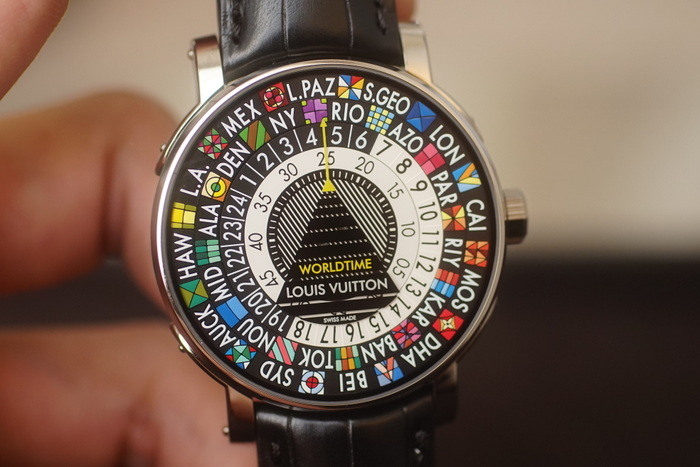
We take a look at the Escale Worldtime from Louis Vuitton, a marvellously beautiful Worldtimer with an ingenious mechanism that allows the forward and backing setting of the time and a hand-painted dial. Easily one of the stars of the collection for Louis Vuitton this year at Baselworld 2014. Look out for a more in-depth […]
 Revolution
Some watches have the ability to grab your heart and never let go, and the love becomes all the more intense when the watch reveals it’s magic only when you get closer. This was the curious experience I had with the Tudor FastRider Black Shield, that while having been in the market for close to a […]
 Revolution
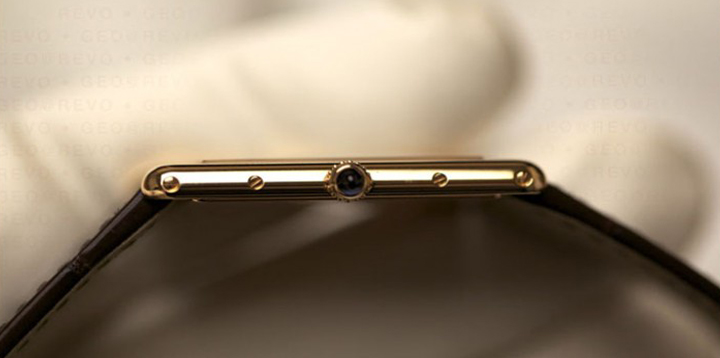
Name a watch brand that doesn’t have a tourbillon in its collection? They’re still out there, but their number seems to decrease every year. Even though many brands don’t make their tourbillons in-house, it does illustrate how technically complicated movements have become more and more a part of the general landscape in the watch world, […]
 Revolution
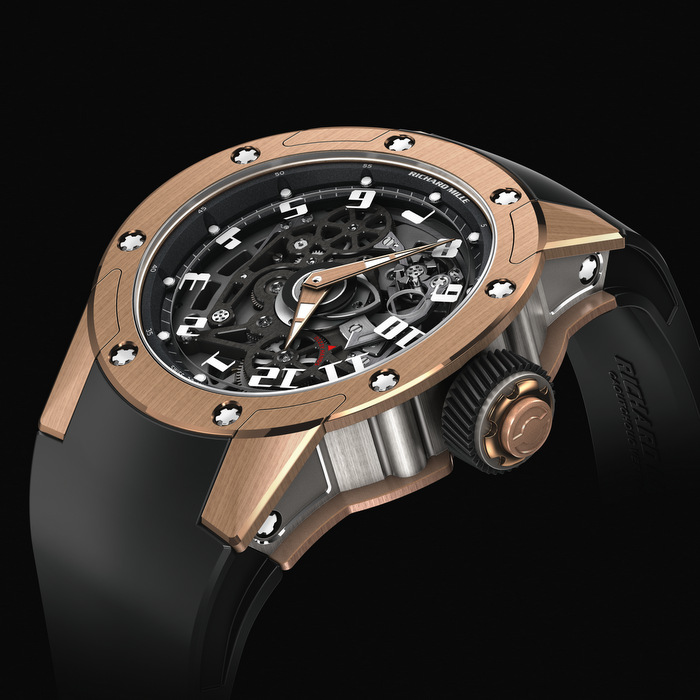
It takes a romantic to be utterly enamored with unique displays of time, and in the midst of what we have come to expect from Richard Mille, something totally different was to be found in their presentation this year at SIHH. It’s worthwhile though that we are all on the same page when we think […]
 Revolution
The A. Lange & Söhne Grand Complication is a watch that generated excitement and controversy almost immediately, and not without reason. First, there was the manner of its introduction –it was the company’s star debut at the 2013 SIHH, and yet almost no one was able to actually see it. Then there was the size […]
 Deployant
The long awaited HM5 by MB&F; is now revealed! These are one of the first photographs and commentary to reach the world…Max presented this watch to Singapore collectors on Dec 4, about 8pm, while the same is being presented across the world in the form of a press release about the same time. I managedRead More
 Deployant
In-depth, hands on review of the new Peren Hintz. An interesting and intriguing amalgamation of Swiss precision and Transylvanian mystery.
Question, suggestion, or just want to say hi? Drop a note.