Watch brandsWatch wikiWatch videosVariousWatch calendarSaved articles
PopularRolexOmegaPatek PhilippeAudemars PiguetTudorGrand SeikoCartierSeikoIWCTAG HeuerBreitlingJaeger-LeCoultreA. Lange & SohneZenith

Results for Lollipop Seconds Hand

4,871 articles · 1,710 videos found · page 13 of 220

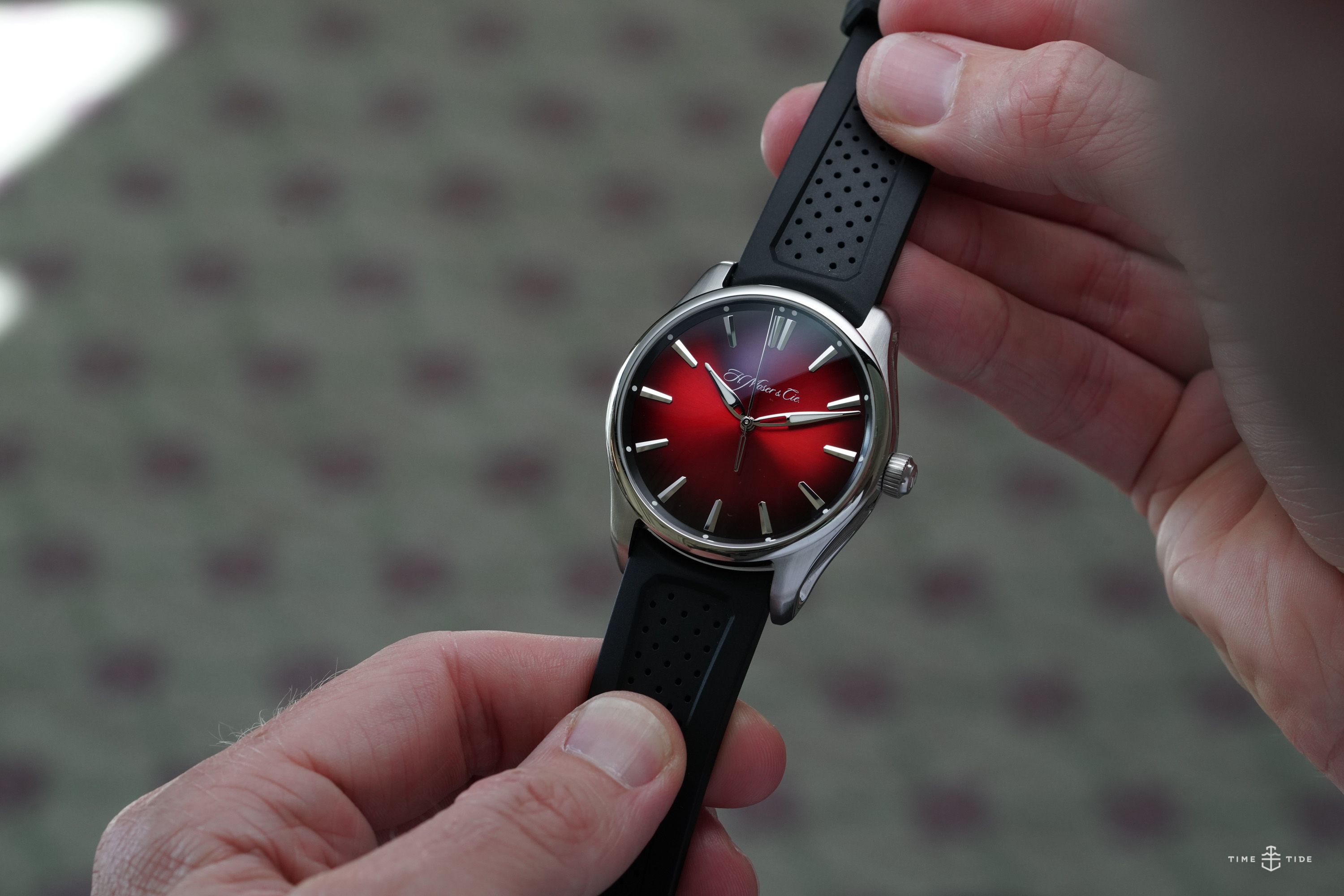
H. Moser & Cie. Introduces the Pioneer Centre Seconds Swiss Mad Red SJX Watches
H. Moser & Cie Introduces Jul 17, 2020

H. Moser & Cie. Introduces the Pioneer Centre Seconds Swiss Mad Red

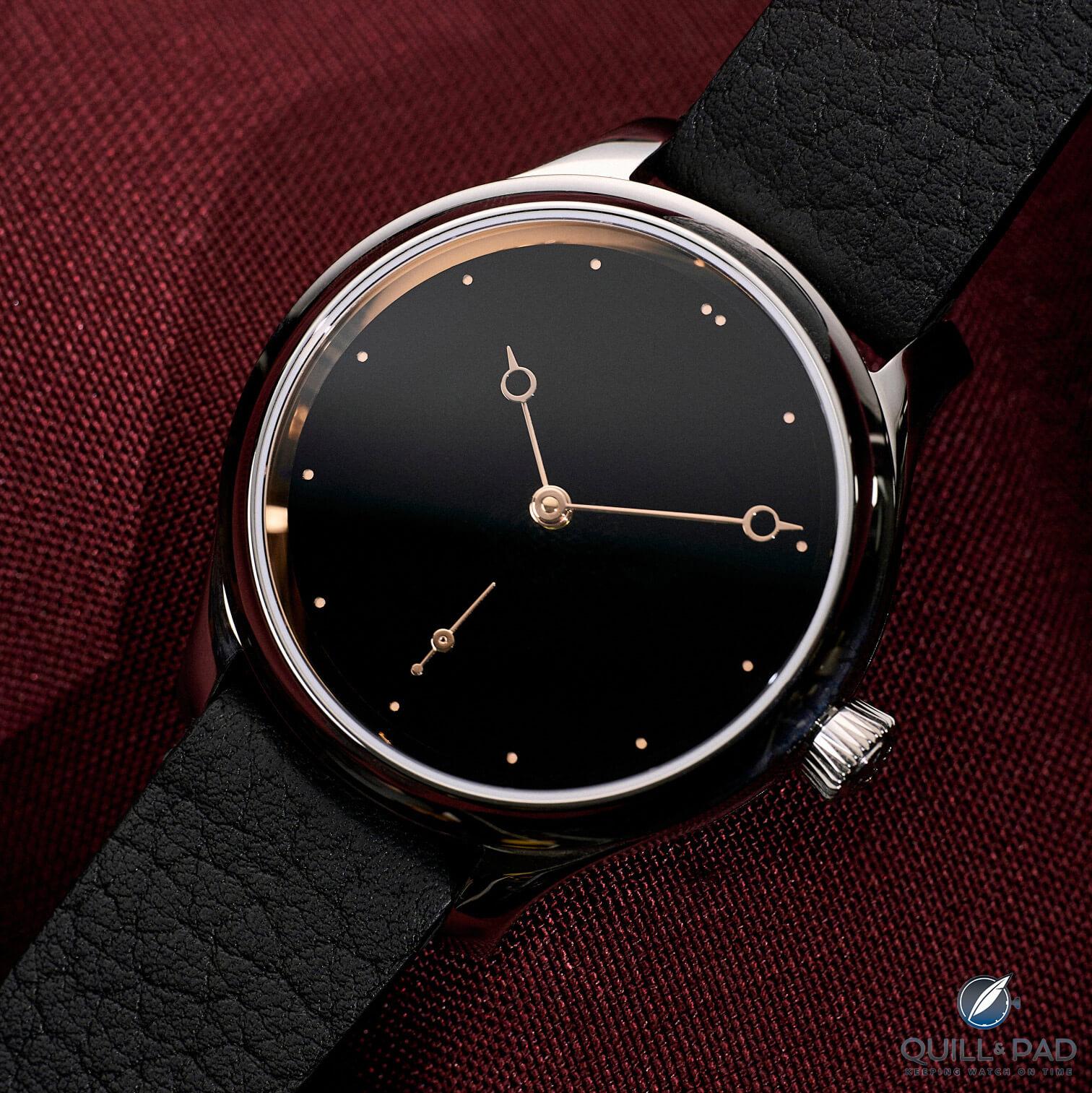
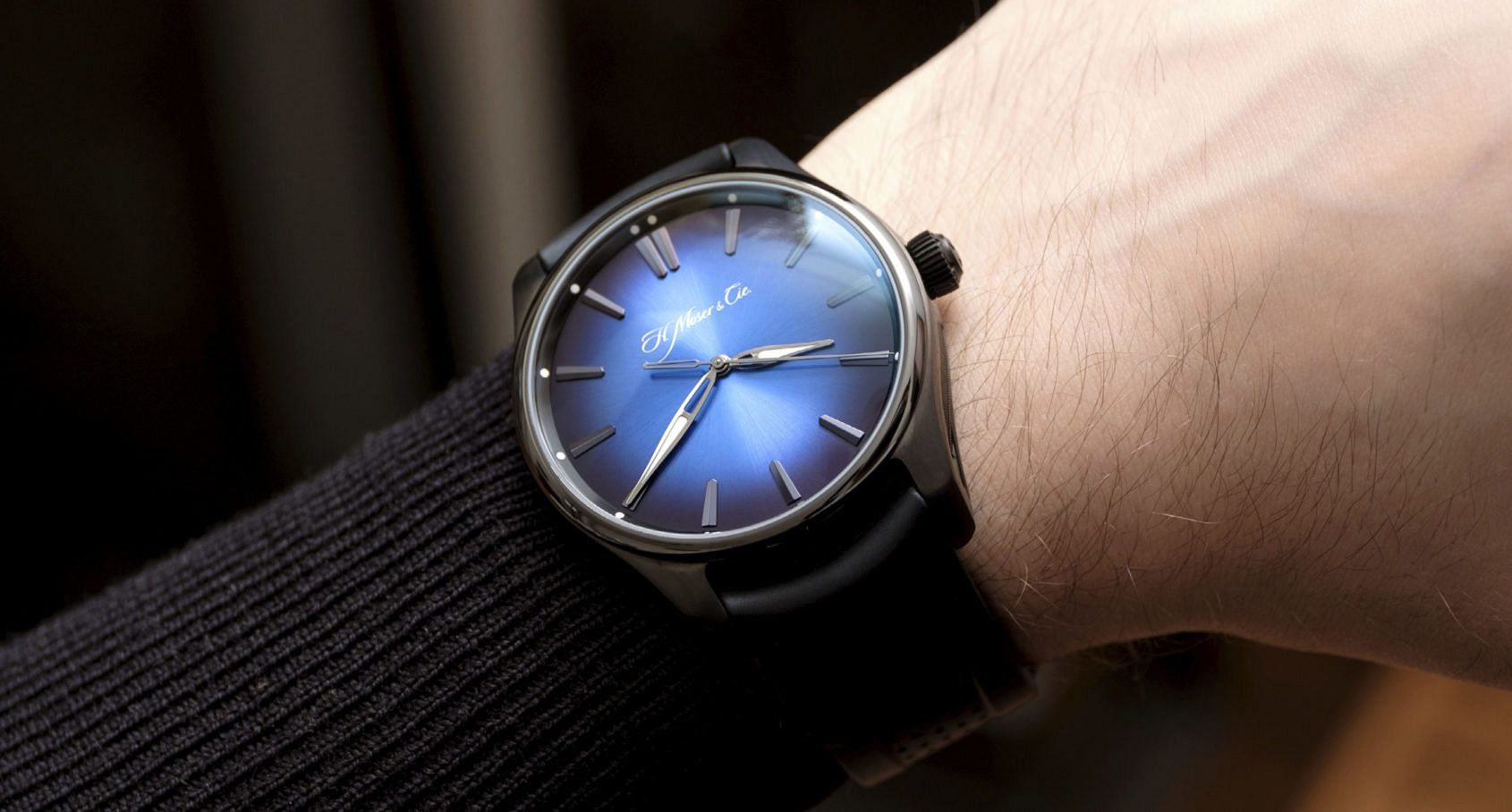
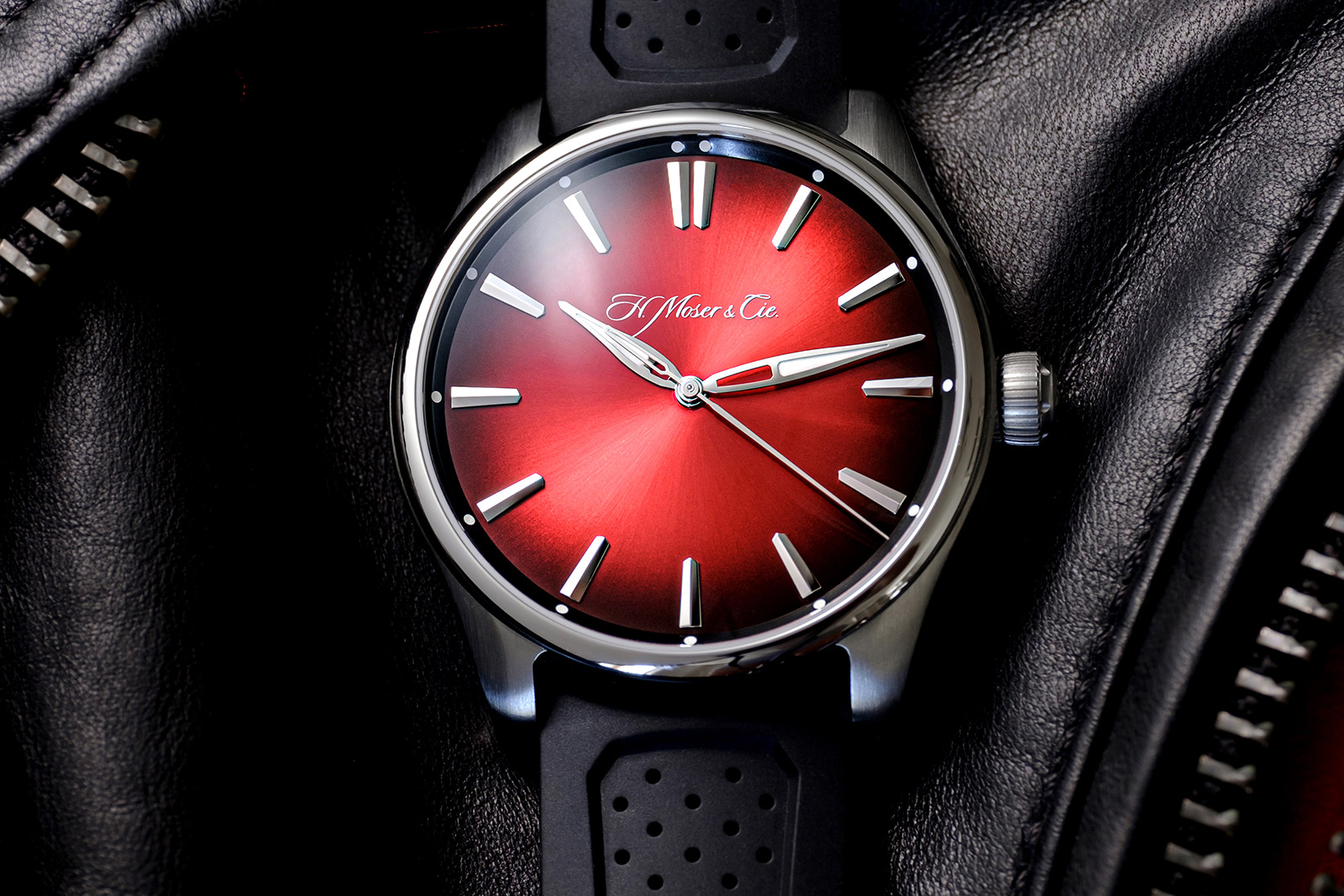
H. Moser & Cie. debuted its inaugural sporty watch in 2015 with the Pioneer Centre Seconds (and followed up recently with the even more sporty Streamliner). Now Pioneer Centre Seconds Swiss Mad Red with a red fumé dial joins the line up. Both the colour and name are inspired by the original Swiss Mad watch of 2017, which took its colours from the Swiss national flag. Initial thoughts As is typical of Moser’s fumé finish, the dial is immediately gripping. The graduated, smoked finish results in a colour that varies in shade depending on lighting and perspective, which adds a lot of visual appeal. Though graduated-colour dials were not invented by Moser, it has become synonymous with the brand. Moser has presented fumé dials in green and many shades of blue, but bold red finish is perhaps the most enticing to date. Although the Pioneer is technically a sports watch, the elegant styling of the dial does not translate well onto such the large, almost-43 mm case, which definitely wears and looks large on the wrist. I would have preferred a case of say, 38 mm, large enough to be a sports watch, while still complimenting the dial. Minimalism While the colour is striking, the watch itself is minimalist and no-frills in the usual Moser style, displaying only the time without any superfluous elements on the dial. Still, the dial manages to incorporate several details that add to the appeal, including faceted markers, open-worked hands, and luminous dots on the flange. De...

Patek Philippe Introduces the Ref. 5370P-011 Split-Seconds Chronograph SJX Watches
Patek Philippe Introduces Jul 14, 2020

Patek Philippe Introduces the Ref. 5370P-011 Split-Seconds Chronograph

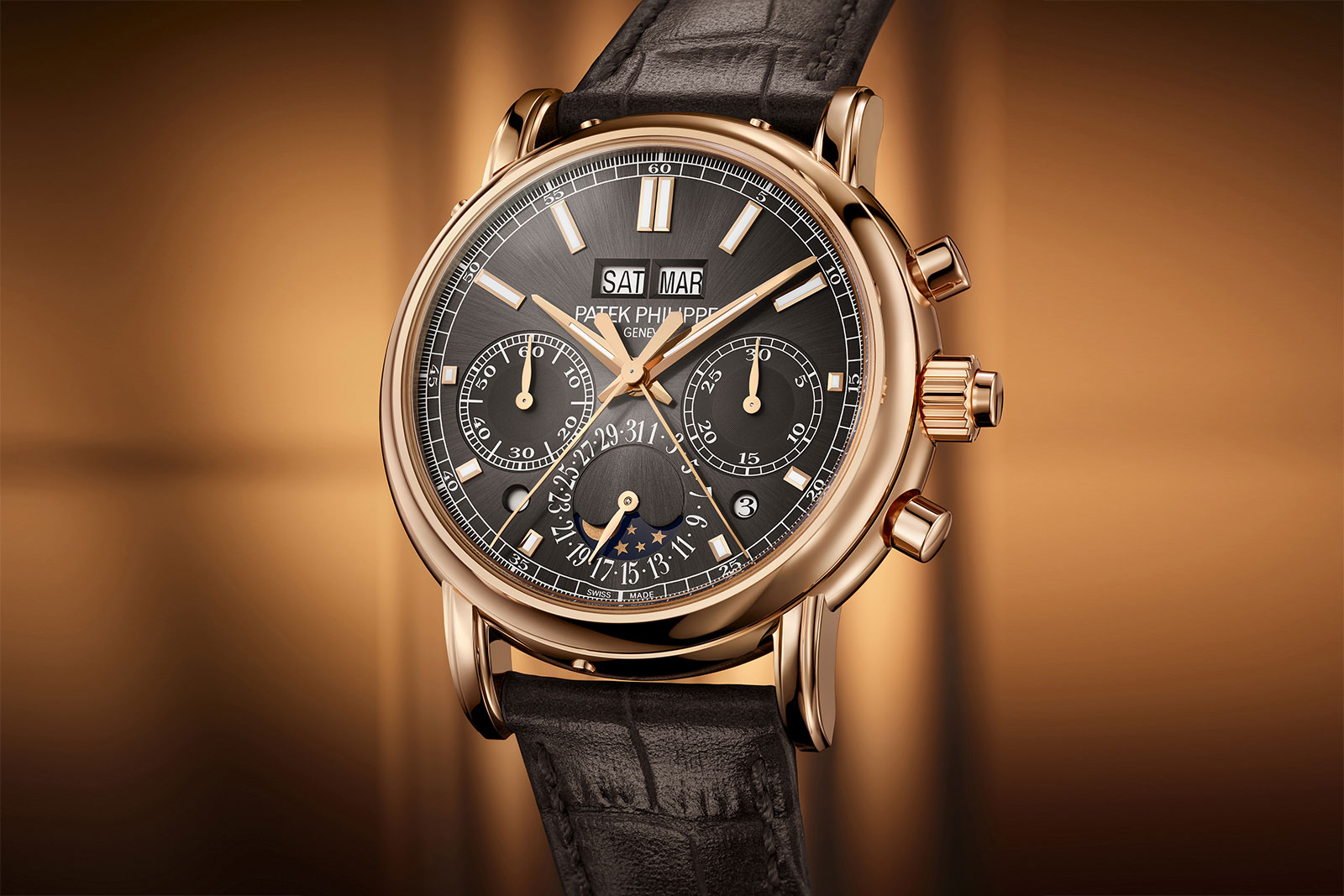
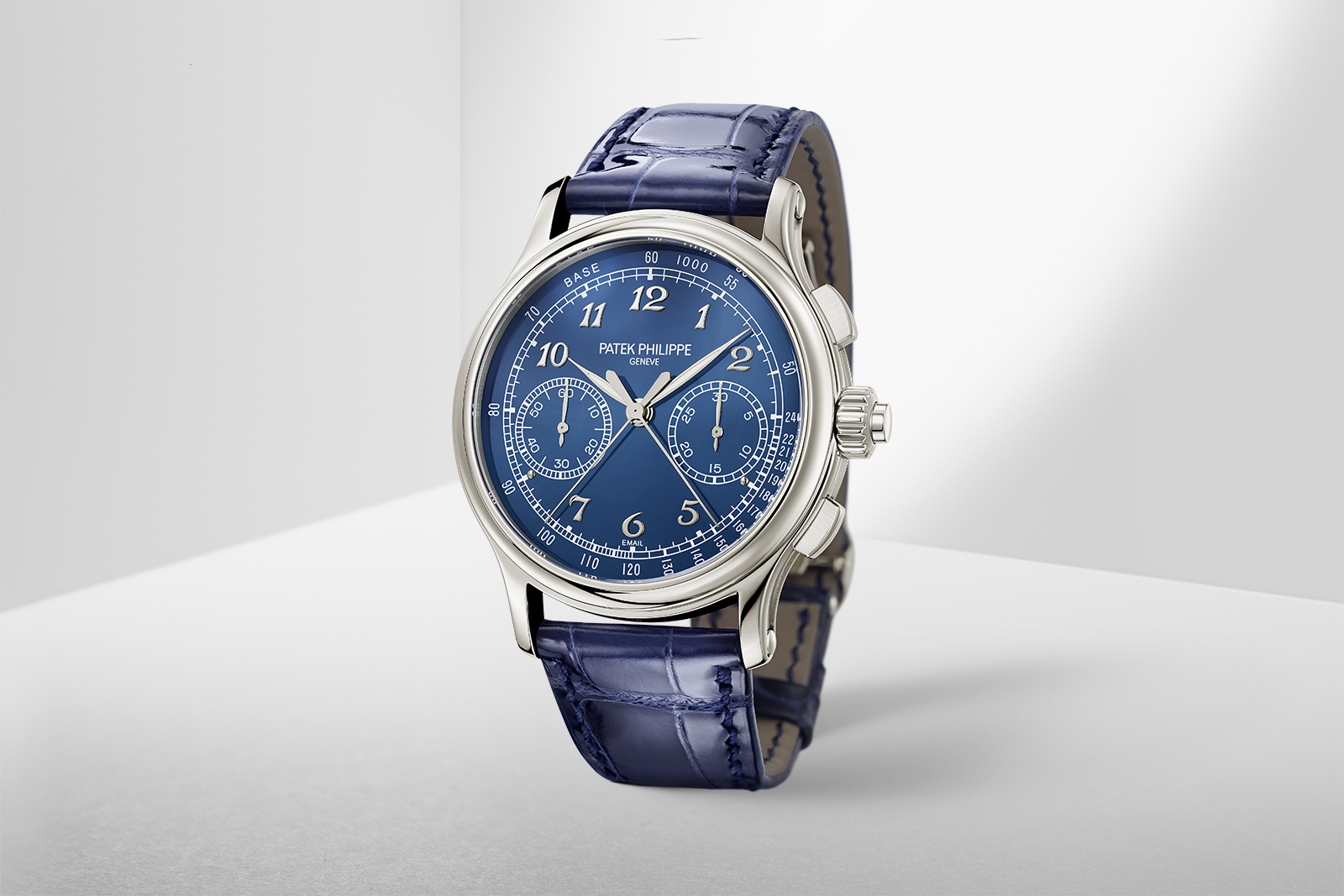
Unveiled in 2015, the ref. 5370P-001 was Patek Philippe’s second split-seconds chronograph powered by an in-house caliber, after the watches equipped the smaller, slimmer, and far more expensive CHR 27-525 movement. With a black grand feu enamel dial featuring Breguet numerals that gave it an eminently classical style, the ref. 5370P was a hit with fans of the brand. Now the black-dial ref. 5370P has been discontinued and replaced by the Split-Seconds Chronograph Ref. 5370P-011. The new model is identical – with the same CHR 29-535 PS inside a 41 mm platinum case – except for the dial, which is now grand feu enamel in a stunning blue. Initial thoughts Like many others, I am a huge fan of the 2015 original for its balanced, restrained design that is also eminently legible and clear. As a fan of Patek Philippe’s traditional designs, the watch was also appealing for the design lineage that can be traced to Patek Philippe watches of the mid-20th century. While the original is compelling for its vintage cues, the new version feels more modern with the blue enamel dial. As a colour that’s been in vogue for a couple of years, the new dial transforms the personality of the watch into one that is more contemporary. While this facelift will undoubtedly be popular because blue dials are the colour du jour, I still have a preference for the original as the black enamel dial was more understated and in keeping with the brand’s historical designs. Precious materials Being...

Atelier de Chronométrie Introduces the AdC #8 Split-Seconds Chronograph SJX Watches
Omega movements But now Jun 26, 2020

Atelier de Chronométrie Introduces the AdC #8 Split-Seconds Chronograph

Barcelona-based Atelier de Chronométrie made a name for itself with its beautifully crafted watches that capture the grace of 1940s timepieces. But all of its work so far has centred on time-only watches, all powered by heavily decorated vintage Omega movements. But now the AdC #8 Split-Seconds Chronograph takes things to a whole new level. Retaining the elegant feel of the brand’s earlier creations, the AdC #8 is powered by a reworked movement that started out as a Venus 185 but completely reworked by Atelier de Chronométrie, with a substantial number of parts made from scratch. Commissioned by an American collector, the AdC #8 is largely hand made, with everything hand finished to a superlative, artisanal standard, which is why it took took two years to complete. Initial thoughts I first found out about this watch late last year, and it sounded promising given Atelier de Chronométrie’s track record in design and movement finishing. Though I am going by photos, the finished product definitely lives up to expectations, and then some. Everything about it is just done extremely well, and while it costs a lot of money, the AdC #8 is compellingly and reasonably priced as such things go. Having closely examined Atelier de Chronométrie’s earlier watches, the AdC #8 will undoubtedly have the same feel – visually similar to a vintage watch but much more solid in the hand thanks to a more robust, modern case. A little under 40 mm in diameter, the AdC #8 has the proporti...

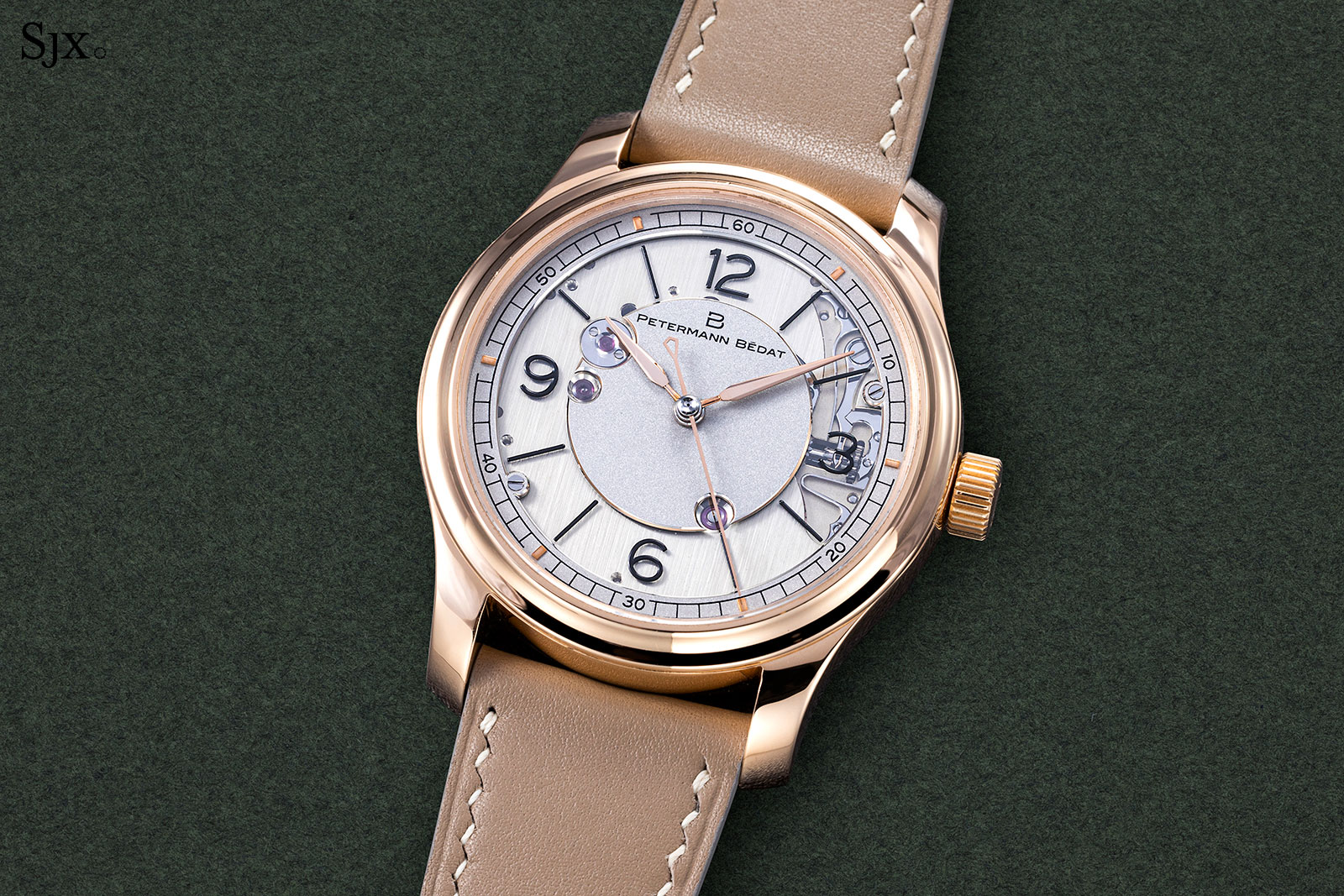
Petermann Bédat Introduces the 1967 Deadbeat Seconds SJX Watches
Petermann Bédat Jun 18, 2020

Petermann Bédat Introduces the 1967 Deadbeat Seconds

First revealed a year ago as a prototype with a dial that was a work in progress, the Petermann Bédat 1967 wristwatch with an unusual deadbeat seconds mechanism has just been launched in its final form. Mechanically identical to the prototype – it’s equipped a secondary escapement for the jumping seconds – the refined 1967 now has a partially-open dial that shows off the finely-finished keyless works. Initial thoughts The prototype 1967 deadbeat seconds was let down by an uninspiring faux-classical dial, which was a shame, because the movement was executed to an impressively high level. Fortunately, Messrs Petermann and Bedat embarked on a total redesign of the dial. Independent watchmakers don’t often make drastic changes to designs in response to criticism, but the two did so, and the result is a success. The new 1967 is a handsome watch that manages to look modern while evoking classical dial design. In fact, the new dial is essentially a “sector” dial with a sapphire chapter ring, a novel combination that has not been done before. And it is matched with Petermann Bédat’s take on classical lance-shaped hands, which complete the contemporary feel. The new 1967 in rose gold. Photo – Petermann Bédat Dial aside, the rest of the watch is largely identical to the prototype. The movement was already excellent and will be almost unchanged in the production versions, although Mr Petermann says that the engraved lettering on the three-quarter plate will be im...

Harry Winston Introduces Project Z14 Retrograde Seconds SJX Watches
Jun 4, 2020

Harry Winston Introduces Project Z14 Retrograde Seconds

Project Z is Harry Winston’s distinct approach to the luxury-sports. Named after Zalium, a zirconium-aluminium alloy that’s strong, light and resistant to corrosion, Project Z usually combines the exotic alloy with an open-worked dial. The new Project Z14 sticks to the established formula, but in a first for the line, features a retrograde seconds. Initial thoughts At a glance, the Project Z14 would not be remiss among the previous Project Z watches, looking futuristic and avant-garde just like its siblings. Notably, it shares the same sculpted, brushed case and a multi-layered dial accented with the signature Harry Winston shade of blue. The oversized crown guard with triple fluting is inspired by the arch above the doorway to Harry Winston’s flagship store on New York’s 5th Avenue The enhanced sense of depth and structure is what sets the Project Z14 apart from its predecessors. A small tweak that makes for this significant difference is the chamfered bezel, replacing the flat and smooth found on the past offerings. Providing more angles and facets to a case that is already architectural in style, the chamfered bezel blends in perfectly with the various bevels on the case and lugs. With such a modern design, it is no surprise that the case is large – 42.2 mm in diameter and 10.7 mm tall – and suited to contemporary tastes. The openwork dial The visual depth is compounded by the attractive, open-worked dial that boasts a multitude of details. The grid-motif...

In-Depth: The Life Behind the Deadbeat Seconds SJX Watches
May 17, 2020

In-Depth: The Life Behind the Deadbeat Seconds

Watchmaking combines technical achievement and aesthetic expression, and sometimes the two are inextricably linked. In a handful of instances, the technical achievement transforms the artistic value, as in the jumping seconds. The complication is perhaps the most abrupt expression of time. Is there any value in having a mechanical jumping seconds? In exploring that, we first have to understand how the seconds as a unit of time came to be. Time in antiquity In today’s world where no one bats an eyelid when a satellite is sent into orbit, time and space are perceived to be intimately linked as one. Before Einstein hit upon the theory of relativity, the link between space and time was nebulous, but the definition of time was well established. For the ancient Egyptians, daytime was based on the apparent movement of the Sun, and the night sky was segmented into smaller divisions based on the position and motion of stars. Over the subsequent millennia, the Sumerians and Babylonians further refined the time measurement to better account for stellar motion. The Babylonians, inspired by the Egyptians, approximated the movement of the Sun’s apparent revolution into 360 divisions, due to the number of days required for the Sun to trace its path on the ecliptic and their predilection for a base-60 (or sexagesimal) system. This is also the origin of 360 degrees required for a complete revolution, which was explained by Malcolm Correll in the volume 15 of scientific journal The Phy...

Vacheron Constantin Introduces the Grand Complication Split-Seconds Chronograph “Tempo” SJX Watches
Vacheron Constantin Introduces Apr 24, 2020

Vacheron Constantin Introduces the Grand Complication Split-Seconds Chronograph “Tempo”

Three years after the debut of Les Cabinotiers Celestia Astronomical Grand Complication boasting 23 complications, Vacheron Constantin has topped its own achievement at Watches & Wonders 2020 by launching Les Cabinotiers Grand Complication Split-Seconds Chronograph “Tempo”. Without going into the minefield of what counts as a complication; the new Grand Complication incorporates 24 complications, if each function counts as one – with everything displayed on a massive, two-faced case. A reversible giant In addition to showing the time, the Grand Complication includes a minute repeater, tourbillon, perpetual calendar, split-seconds chronograph as well as a number of astronomical indications including equation of time, sunrise and sunset times, plus a retrograde moon phase. The reverse face Unsurprisingly, the case is enormous – 50 mm wide and 21 mm high. But it is intriguingly designed – perfectly symmetrical in profile, the case allows the watch to be worn with either side facing up thanks to a quick-release strap. Swapping faces is a matter of unlatching the strap, flipping the watch over, and reinstalling the strap. Time, chronograph and perpetual calendar on the front; tourbillon, running Equation of Time, retrograde moon phase and times for sunrise and sunset on the back Mechanical layer cake Inside is the cal. 2756, which is derived from the cal. 2755, a movement first found in the Traditionnelle Calibre 2755 grand complication that has since been iterated ...

Cartier Introduces the Santos-Dumont XL Hand-Wound (with Live Photos) SJX Watches
Cartier Introduces Mar 19, 2020

Cartier Introduces the Santos-Dumont XL Hand-Wound (with Live Photos)

Conceived by Louis Cartier for Brazilian aviation pioneer Alberto Santos-Dumont – who needed a timepiece he could read while flying – the Santos-Dumont wristwatch has the double distinction of being the first wristwatch designed from the ground up for men, as well as being the first-ever pilot’s wristwatch. Now the 116-year old design has just received its latest update with the unveiling of the hand-wound Santos-Dumont XL. [Update March 23, 2020: Read the review with more photos.] Though the Brazilian pilot got his wristwatch in 1904, it took until 1911 for the design to be sold commercially. For most of the century since, the Santos-Dumont has been part of the Cartier line-up in one way or another, often in gold but occasionally in platinum (one outlier was a special edition in titanium with a skeleton movement). The most recent facelift happened in 2005, which saw the unveiling of a version without a bezel. The new Santos-Dumont XL in all three versions Last year, the latest generation of the Santos-Dumont was unveiled, marking a return to the iconic Santos bezel with screws. For the first time ever, the Santos-Dumont was available in steel as well as two-tone steel and gold, along with the traditional all-gold case. However, the new Santos-Dumont didn’t quite receive unanimous acclaim because it was quartz movement. But now Cartier has finally unveiled what was long expected, the mechanical Santos-Dumont XL. Measuring 46.6 by 33.9 mm and just 7.5 mm in height...

“Watch & Act!” Auction Item – Lot 1: U2 bass player Adam Clayton’s H. Moser & Cie Pioneer Centre Seconds Limited Edition #1 of 3, with funky blue dial Time+Tide
H. Moser & Cie Pioneer Centre Jan 21, 2020

“Watch & Act!” Auction Item – Lot 1: U2 bass player Adam Clayton’s H. Moser & Cie Pioneer Centre Seconds Limited Edition #1 of 3, with funky blue dial

The personal watch of Adam Clayton, bass player of U2, this Pioneer Centre Seconds is one of only three Pioneer models in existence without a brand name on the dial. It has not been polished and is literally ‘off Adam’s wrist to the auction’ – light scratches and wear marks remain. Adam has been photographed … ContinuedThe post “Watch & Act!” Auction Item – Lot 1: U2 bass player Adam Clayton’s H. Moser & Cie Pioneer Centre Seconds Limited Edition #1 of 3, with funky blue dial appeared first on Time+Tide Watches.

H. Moser & Cie. Introduces the Heritage Centre Seconds Funky Blue SJX Watches
H. Moser & Cie Introduces Dec 2, 2019

H. Moser & Cie. Introduces the Heritage Centre Seconds Funky Blue

A year ago, H. Moser & Cie. debuted the Heritage Pilot’s Watch, a retro, aviation-inspired watch with grey fumé dial for Swiss retailer Bucherer that was then a one-off unlike anything else in the brand’s line-up. Now the watch has officially joined the collection as the Heritage Centre Seconds Funky Blue, positioned as an entry-level model priced under US$14,000. The watch has a familiar design, for good reason: it’s modelled on early pilot’s watches from the 1920s that were produced by a host of brands including Longines and Zenith, and also Heinrich Moser, the predecessor of H. Moser & Cie. At the same time, according to Moser chief executive Edouard Meylan, the Heritage watch takes some inspiration from early 20th century wristwatches that were converted pocket watches with wire lugs soldered on for wear on the wrist. While the Heritage measures 42mm in diameter like a majority of Moser’s watches, it is just 11.1mm high, making it one of the brand’s slimmest models. Its stainless-steel case features an onion-shaped crown and thin lugs to mimic wire lugs. The case is largely polished, punctuated with fine, vertical fluting on its flanks, a detail taken from another watch in the Moser line-up, the Pioneer. The dial is a dark, metallic blue finished with sunburst brushing and the brand’s signature fumé treatment that gradually darkens towards the edges. But the most distinctive feature are the large Arabic numerals – modelled on the painted radium ...

INTRODUCING: The H. Moser & Cie. Heritage Centre Seconds Funky Blue Time+Tide
H. Moser & Cie Heritage Centre Nov 28, 2019

INTRODUCING: The H. Moser & Cie. Heritage Centre Seconds Funky Blue

The watchmaking mavericks at H. Moser & Cie. must be working overtime at their headquarters in Schaffhausen, because they keep dropping hit after hit in 2019. Their most recent creation is this - the H. Moser & Cie. Heritage Centre Seconds Funky Blue. Taking inspiration from both the horological creations of Moser’s founder, Heinrich Moser, … ContinuedThe post INTRODUCING: The H. Moser & Cie. Heritage Centre Seconds Funky Blue appeared first on Time+Tide Watches.

Farer Introduces the Chronograph Hand-Wound SJX Watches
Farer Introduces Oct 23, 2019

Farer Introduces the Chronograph Hand-Wound

Following on the launch of its automatic chronograph a year ago, London-based Farer recently released a new collection of hand-wound chronographs, which are fairly unusual in this price category where automatic chronographs dominate. This time around, it’s more than just a new line as the watches are the official timers of the 2019 Bernina Gran Turismo, a classic car race across the Bernina Pass in the Swiss Alps. Three standard models and one limited edition make up the new Chronograph Hand-Wound line, though the limited edition quickly sold out, and all carry the brand’s DNA with distinctive, retro designs and bold colours. Though the individual models share the same house style, each is detailed differently, right down to the size of the hour numerals, something Farer does for all its mode lines. All models share the same, cushion-shaped stainless steel case measuring 41mm by 12.9mm (and 43mm lug-to-lug). It’s rated to 100m and fitted with a domed sapphire crystal. For contrast, the front and sides are brushed with a polished steel exhibition back, and the pushers are also polished. The knurled crown is steel but topped with a bronze insert embossed with Farer’s logo, a standard feature on all hand-wound Farer watches; other models have a solid bronze crown. Let’s take a closer look at what differentiates the Bernina, Cresta and Moritz chronographs. Bernina Named after the Bernina Gran Turismo – a hillclimbing race around St Moritz for classic cars  – ...

Rolex Unicorns Part I – Ref. 4113 Split-Seconds Chronograph SJX Watches
Zenith Daytonas Oct 10, 2019

Rolex Unicorns Part I – Ref. 4113 Split-Seconds Chronograph

If I had a million dollars, or maybe two, to buy a Rolex chronograph, I could perhaps buy one of the five unique “Zenith” Daytonas in platinum, a Datocompax “Jean-Claude Killy” (as Davide Munari did), a “Paul Newman” Daytona (not), or a ref. 4113 split-seconds. Of the many ways to spend that much money on a Rolex chronograph – and not any other complication – the ref. 4113 is the most unusual, interesting and horologically complex. At the same time, the ref. 4113 was also a dead-end for Rolex, because it never furthered development of the split-second chronograph and instead relied on standard chronographs for all its auto-racing activities. Produced in 1942 in a run of just 12 watches – with case numbers “051’313” to “051’324” -the ref. 4113 is the only split-seconds, or rattrapante, chronograph ever made by Rolex. Phillips will soon sell ref. 4113 with case number “051’318” – the watch pictured here – at its upcoming November watch auction. Ref. 4113 with case number “051’318” The Valjoux 55 inside The racing connection Though formal documentation as to its origins no longer exist or are unknown, the story behind the ref. 4113 is by now familiar thanks to research over the years as examples emerged at auction. In 1991, a pair of these emerged at Christie’s, at its Geneva and London salerooms respectively. The first, with case number was “051’313”, was sold in May 1991 at Christie’s in Geneva for 82,500 Swiss fr...

VIDEO: Holding the last watch that walked on the moon in your hand (and quietly freaking out) Time+Tide
Oct 8, 2018

VIDEO: Holding the last watch that walked on the moon in your hand (and quietly freaking out)

Nothing hints at the story of a watch more than its imperfections. A thick scratch across the crystal. Could that have been a motorbike accident? A near miss with a switchblade? A ding in the otherwise smooth shoulder of the lugs. Something mundane like an errant car door, or seatbelt buckle on a plane? A … ContinuedThe post VIDEO: Holding the last watch that walked on the moon in your hand (and quietly freaking out) appeared first on Time+Tide Watches.

VIDEO: Made to be seen – the Moser Pioneer Centre Seconds in Cosmic Green Time+Tide
Jul 8, 2018

VIDEO: Made to be seen – the Moser Pioneer Centre Seconds in Cosmic Green

Regular readers will be unsurprised to learn that we’re card-carrying fans of Moser’s Pioneer line here in the T+T office. Not only does it offer a dressed-down, somewhat less aristocratic option to the Moser family, but it also adds the joy of a steel case. Because while gold is very nice indeed, sometimes you’re happy … ContinuedThe post VIDEO: Made to be seen – the Moser Pioneer Centre Seconds in Cosmic Green appeared first on Time+Tide Watches.