Deployant
Flashback: Watchscapes of the Parmigiani PF110: as seen in the Ionica
The in-house caliber PF110 in the Parmigiani Ionica was developed by Michel Parmigiani, and features a 8 day handwound movement in a tonneau form shape.
452 articles · 16 videos found · page 15 of 16
Deployant
The in-house caliber PF110 in the Parmigiani Ionica was developed by Michel Parmigiani, and features a 8 day handwound movement in a tonneau form shape.
Time+Tide
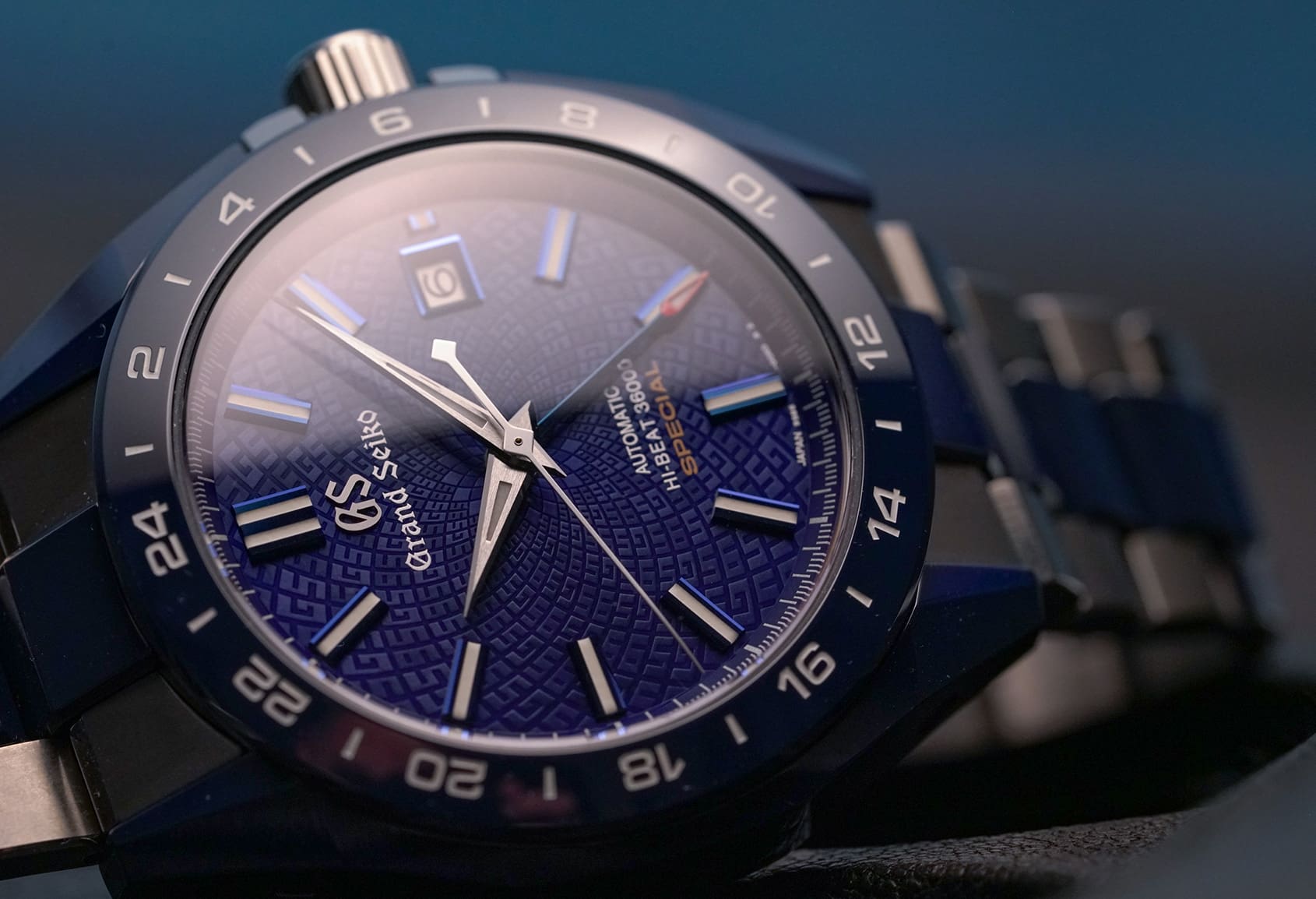
In the wonderful world of Grand Seiko, if it’s not using a quartz crystal – and, yes, that includes the Spring Drive – then inside is a Caliber 9S movement. Introduced in 1998, the Caliber 9S is the staple of all mechanical Grand Seikos and forms the base for everything from humble three-handers to hi-beats … ContinuedThe post HANDS-ON: The Grand Seiko Blue Ceramic Hi-Beat GMT “Special” Limited Edition appeared first on Time+Tide Watches.
Deployant
This new SBGJ229G Ceramic Hi-Beat limited edition speaks of both the past and the future and does so in the spirit of the 9S caliber that it celebrates.
Oris’ manual-winding 10-day power-reserve movement now comes with a universally appealing GMT function in the Caliber 114.
Deployant
Today, we look at the Lang and Heyne Johann. This is one of Marco Lang’s earlier works with a simple three handed movement. The Johann uses Caliber I, which is the first caliber created by this brand. The Johann is available in six variants, and the one we had our extended hands-on session and whichRead More
Tudor embarks on a new phase of development by launching a trio of elegant Black Bay watches, one of which houses its first manufacture automatic chronograph caliber.
Time+Tide
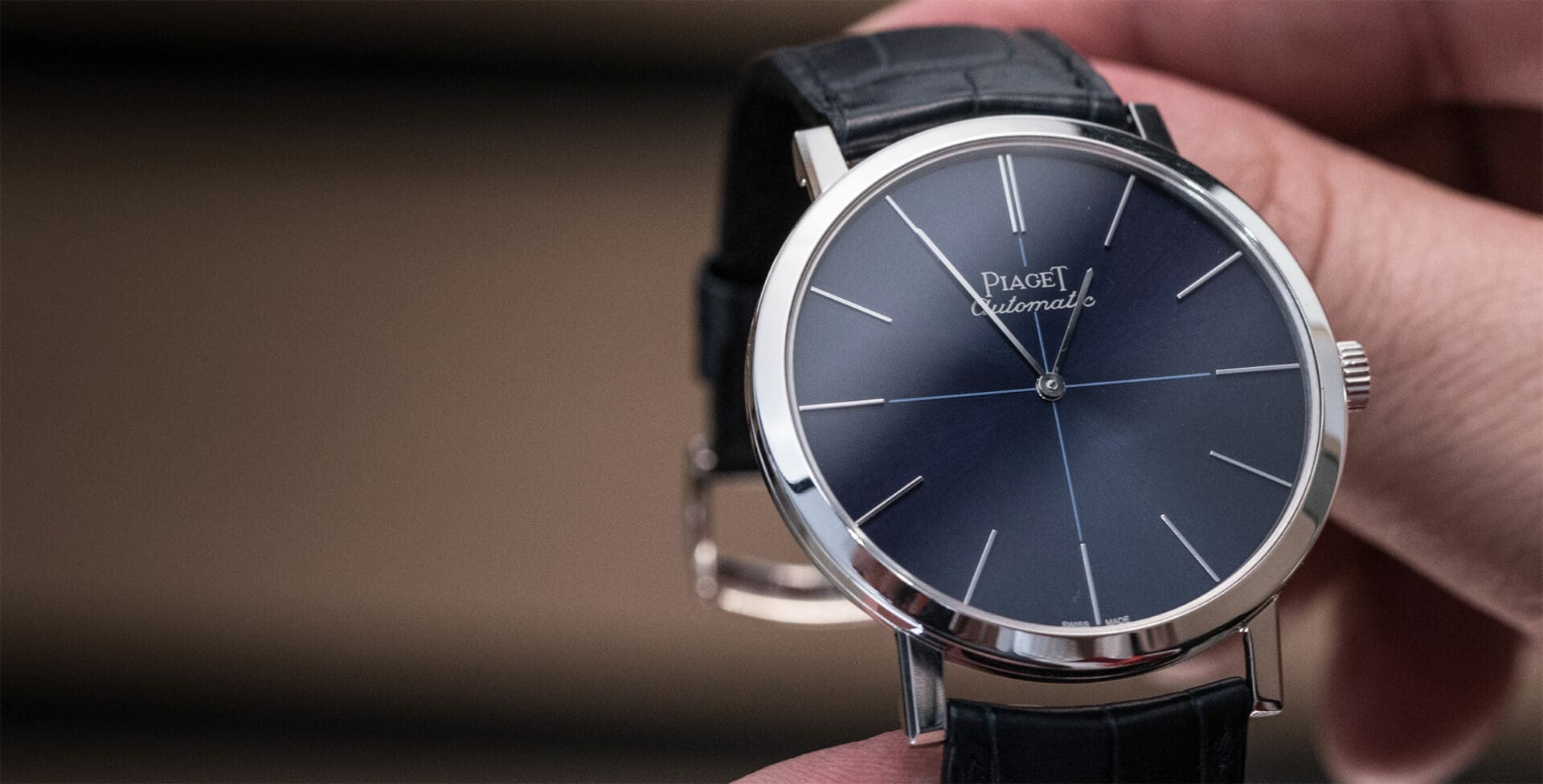
Though Piaget has made a lot of noise in the past 12 months with the sporty steel Polo S, the undeniable heart of the collection is the ultra-slim and ultra-sexy Altiplano. Born in 1957 and named for the flat South American high plains, the Altiplano and the legendary caliber 9P that powered it, have become … ContinuedThe post HANDS-ON: 6 decades on and still going strong – the Piaget Altiplano 60th anniversary appeared first on Time+Tide Watches.
Deployant
In conversation with Dieter Pachner VP Sales Glashütte Original chronographs caliber 37 GO watches
Revolution
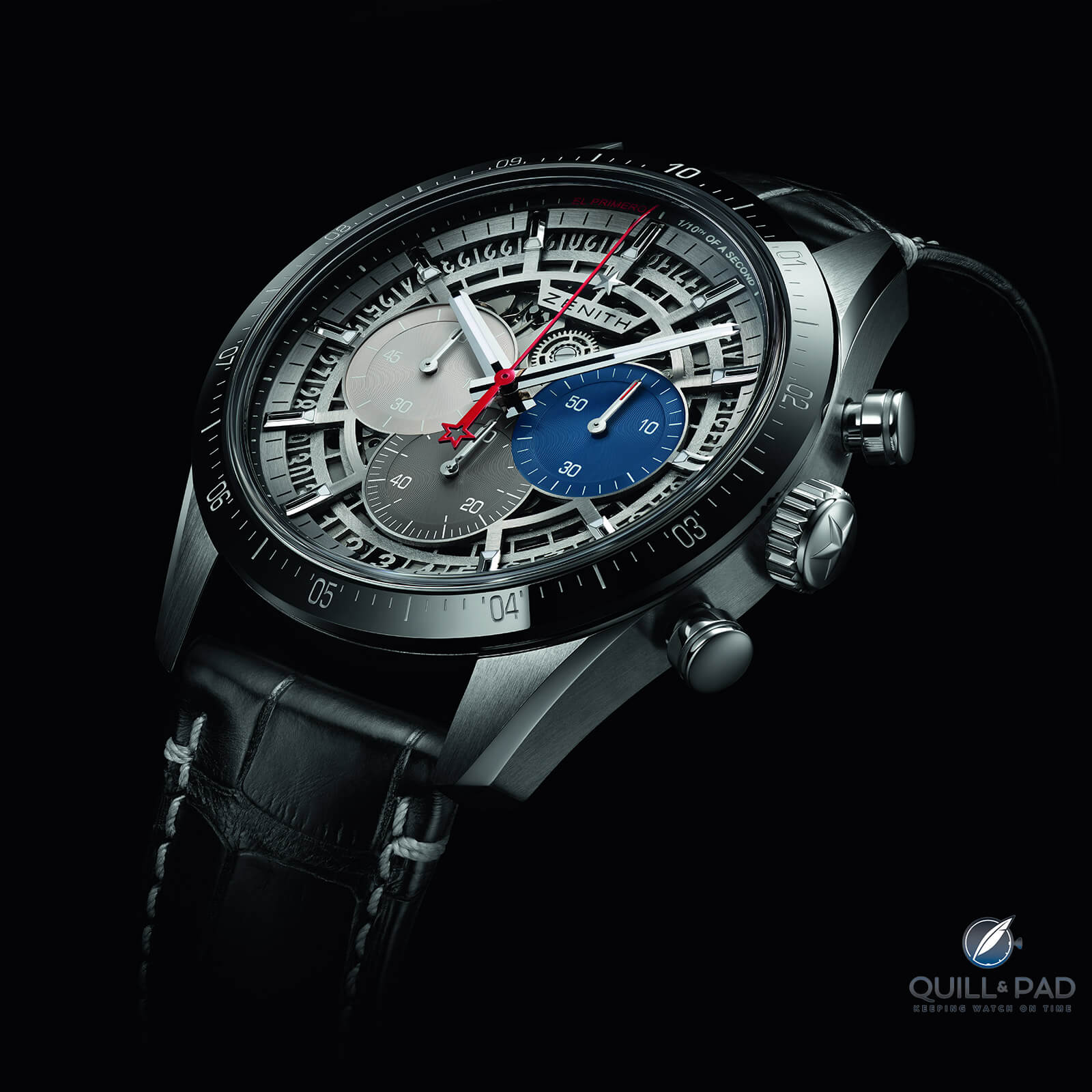
Zenith launches a new range of eye-catching models known as the El Primero Sport. They feature 45mm steel cases housing the famous El Primero 400 B high-speed automatic chronograph caliber. Let’s take a look. The case offers front and back sapphire crystals and 200-meter water resistance. The transparent caseback provides a view of the El […]
Revolution
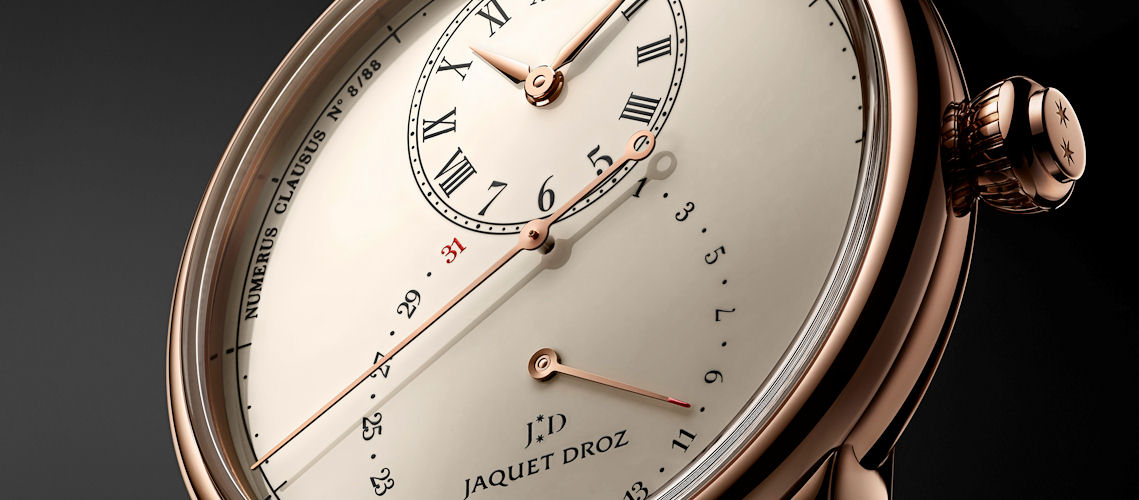
Deadbeat seconds are popular this year, and the Jaquet Droz Grande Seconde Deadbeat is an especially compelling example. Behind that beautiful dial, there’ s a new, patented caliber. The new Grande Seconde Deadbeat incorporates several subtle design elements. The Grande Seconde timepieces already featured, well, Grande Secondes. To place even greater emphasis on the seconds […]
Revolution
Bulgari marks its 40th anniversary this year, and the celebration will kick off at Baselworld with the addition of sapphire blue dials for two of the brand’s signature pieces, the Bulgari Bulgari and Octo, each of which is powered by the in-house caliber BVL 191 Solotempo. The Bulgari Bulgari watch dates to 1977, and it […]
Revolution
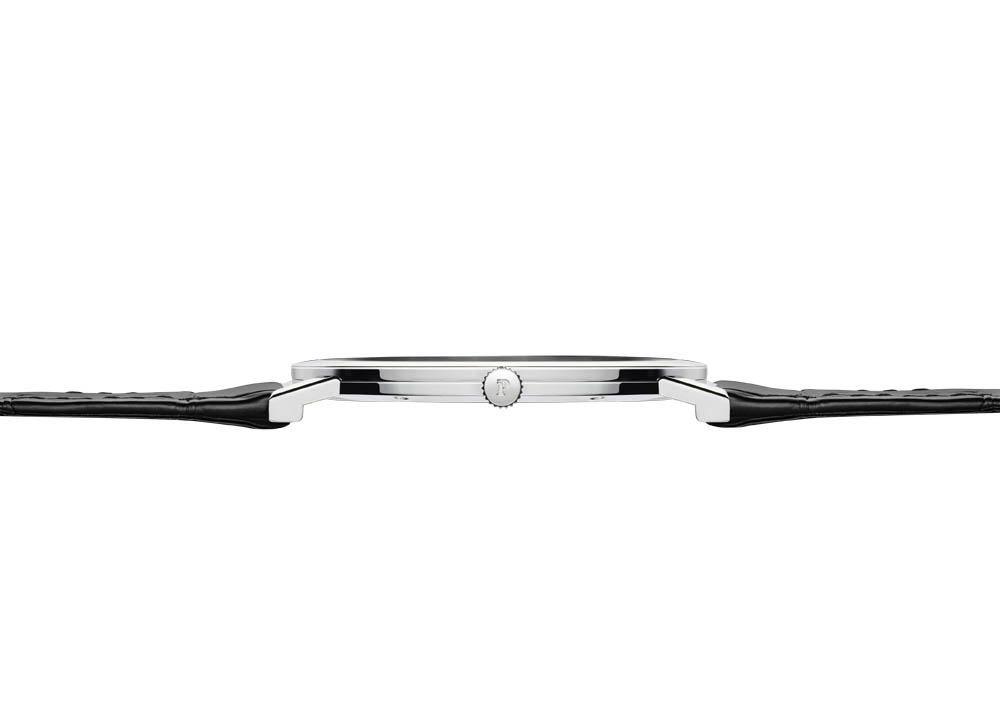
Basel Fair, 1957; Piaget stunned the world with the introduction of Caliber 9P. The importance of this movement for Piaget cannot be stressed enough. With a diameter of 20.5mm and a thickness of just 2mm it is not only one of the “founding fathers” of Piaget’s ultra-thin tradition, but it also provided Piaget’s designers the […]
Revolution
Audemars Piguet has its Gerald Genta designed Royal Oak. A steel watch/steel bracelet model with automatic caliber which is highly praised by the watch incrowd. Patek Philippe has its counterpart, the Nautilus, also designed by Gerald Genta and sharing that same concept of a steel case / steel bracelet and automatic movement. Similarly, since 1978, […]
Revolution
Gold & Color is the title of Piaget’s new exhibition in their Time Gallery. Two words that summarize a large portion of Piaget’s rich history. When Piaget wrote watchmaking history by introducing the 2mm thin manual wind caliber 9P in 1957, it was not about technical prowess, but much more about opening up a world […]
Revolution
The “baguette” isn’t some fancy way of calling french bread loaves, to the mechanically inclined, it is the namesake of the oblong shape of baguette movements. Though the concept was first introduced in 1929 care of Jaeger-LeCoulture caliber 101, it was Corum who recently brought the movement back into popular consciousness thanks to a patent […]
WristBuzz
No crown, no hands, an oil-filled dial and a founder from industrial design. Ressence started in Antwerp in 2010 and just released its first fully in-house calibre. The whole story.
WristBuzz
Six new Compax references, a proper in-house Calibre UG-200 chronograph, and the panda + reverse-panda "Nina / Evil Nina" pairing everyone actually wanted. 39.5mm, column wheel, vertical clutch, 72-hour reserve. From CHF 15,500.
Hodinkee
What We Know Today, Grand Seiko introduces nine new variants to the three-hander, time-and-date models in its Evolution 9 collection. If you're feeling overwhelmed by that already, don't worry. Yes, there's quite a bit of nuance to unpack here among all these references, but not all nine are really new watches, per se. Many of them are existing models, just slightly modified. If you've read the title of this article, you'll already know that the biggest updates to these Evolution 9 models are things that collectors have long clamored for— tapered bracelets and clasps with tool-free microadjustment. Yes, for those who weren't able to achieve a perfect fit with previous Evolution 9 models, they will be able to now and can adjust accordingly, especially in hotter months with more wrist swelling. The clasp design comes from the original Evolution UFA SLGB003 model introduced last year, but now has spread to the rest of the collection, in both steel and titanium versions, and both 37mm and 40mm. Gone are the 5-day Spring Drive 9RA2 calibers used in the collection, replaced entirely with the U.F.A caliber 9RB2. This means that for those who found the 37mm U.F.A models too small, the more classic 40mm versions now get the ultra-accurate caliber that features an annual rated accuracy of +/- 20 seconds (timing per month is quoted at +/- 3 seconds). This is a big deal, and I think it suggests that Grand Seiko could be making a move to replace all of its Spring Drive calibers down ...
WristBuzz
The prism-display jump-hour gets a blacked-out treatment and some much-needed low-light legibility
Hodinkee
What We Know Just in time for the hot and humid summer ahead, Doxa has just unveiled a new generation of its distinctive, cushion-cased dive-watch-slash-chronograph with the new Sub 200 T.Graph II. The best part? It's no longer a limited edition, but rather a permanent offering for the brand. Oh, and thankfully, it's priced less than that previous 300-piece LE. At a quick glance, nothing seems to have changed on Doxa's tribute to its 1969 design, and you'd be sort of correct. The dial layout, with two subdials at 3 and 9 o'clock, along with an oversized arrowhead chronograph seconds hand, remains the same in this new generation. But the main changes here are sure to make almost everyone happy: a slight reduction in diameter and case thickness. While the previous Sub 200 T.Graph measured at 43mm in diameter with a thickness of 15.15mm, the steel case on the Sub 200 T.Graph II measures 42mm in diameter and 14.6mm in thickness. Rather than the new old stock Valjoux 7734 chronograph caliber that the limited edition housed, this new T.Graph II uses a contemporary automatic Sellita SW510 chronograph caliber, with a slightly higher 56-hour power reserve and a much higher beat rate of 28,800 VpH. New to the Sub 200 T.Graph II is also another dial color, Caribbean (Doxa's name for blue), which is a familiar livery within the brand's other models but never before offered on a T.Graph. The dark, slightly dusty navy dial joins the three other colorways found in the original design: ...
Worn & Wound
Typically, not a lot happens in the world of third-party mechanical watch movements. The ETA2824 reigned supreme for decades until Swatch Group stopped openly supplying them, giving way primarily to Sellita, Soprod, and La Joux Perret on the Swiss side, and Miyota and Seiko on the Japanese side. For the most part, the catalogs of those brands stayed relatively unchanged for many years, but now, it appears that there’s a bit of an arms race happening. The days of 42-hour power reserves are over, and brands are now vying for features and specifications once limited to more expensive calibers; to that end, there have been a series of interesting events/releases. First, the COSC announced the creation of the “Excellence Chronometer” standard with a -2/+4 accuracy standard among other considerations. Sellita launched the SW200-2 Power + movements with 65-hour reserves, new gear trains, and other improvements. The CEO of La Joux Perret spoke about the upcoming G-200 caliber, which will feature a 72-hour reserve and antimagnetic properties, on the Hodinkee podcast. And this week, a very exciting new automatic was announced by a surprising source: Ronda. The R150 launched in 2016 Ronda is a well-known Swiss manufacturer that was founded in 1946. Over their 80 years of existence, they have specialized in many things, from component manufacturing to ebauchés and full mechanical movements to, beginning in the 1970s, quartz calibers, which is what they are best known for today....
WristBuzz
The iconic square case gets a La Fabrique du Temps heart and a V12 engine metaphor you can actually watch turning
WatchAdvice
Grand Seiko’s Spring Drive U.F.A has an astonishing ±20 seconds per year accuracy. Wrapped in a new slimmer Evolution 9 case and finished with a dial inspired by winter in Shinshu, it’s a masterclass in subtle innovation and timeless elegance. What We Love The Calibre 9RB2 delivers an incredible +/- 20 seconds per year, redefining what is possible from a mainspring-powered mechanical movement The new 37mm case size makes the timepiece highly wearable for a wide range of wrist sizes. The beautifully textured dial captures Grand Seiko’s unique blend of craftsmanship and storytelling. What We Don’t While very comfortable, the standard three-link bracelet feels a little too plain for a release of this calibre. For a groundbreaking caliber, the caseback view feels a little subdued. For such a significant release, the design feels a little too in line with previous Evolution 9 models. Overall Rating: 9.25 / 10 Value for Money: 9.5/10 Wearability: 9.5/10 Design: 9/10 Build Quality: 9/10 This article was originally published as Hands On With The New Grand Seiko Spring Drive U.F.A. Grand Seiko was first established in 1960 as a sister brand to Seiko, created to combat the Swiss watchmakers and their high-end luxury timepieces. While Seiko made affordable everyday timepieces, It was Grand Seiko’s role to create unique, innovative pieces that would cater to the luxury and high-end watchmaking market. Among the many different innovations and stunning dial aesthetics, on...
Fratello
Vintage Seiko chronographs have a way of pulling you in. They’re mechanically ambitious, unapologetically ’70s, and just rough enough around the edges to feel honest. Spend enough time around references powered by the 6138 and 6139 calibers, and you’ll understand why so many collectors fall hard for them. My journey started in 2019 while stationed […] Visit Finding My Seiko UFO 6138: A Collector’s Lesson In Humility, Patience, And Rediscovery to read the full article.
Teddy Baldassarre
While it’s more widely known for its jewelry these days, Piaget, founded in the small Swiss village of La Cote-aux-Fées by Georges Piaget in 1874, has been a watchmaker from the beginning. Its original trade, in fact, was making movements, and the company began making complete watches in In the 20th century. Before getting into the Piaget Polo, it's worth it to get into the brand's history in thin watchmaking. Since 1957, when Piaget created the historic 2mm-thick Caliber 9P, the company has been world renowned for the elegant thinness of its watches and movements. The world’s thinnest self-winding mechanical movement, Caliber 12P, followed Caliber 9P just three years later, in 1960, and Piaget has building upon these foundations ever since. Its most recent triumph in this area was the Altiplano Ultimate Concept, which debuted in 2018 as a prototype and hit the market in 2020; the entire watch, case and movement, is just 2mm thick, matching the wafer thinness of the original Caliber 9P. Along with Bulgari, another watchmaker known more for its jewelry, Piaget continues to embody the ne plus ultra of what ultra-thin watchmaking can accomplish. [toc-section heading="The Integrated Bracelet Era Begins"] However, while “thin and elegant” remains the calling card of the Piaget watch brand overall, the market was looking for something a little different - a little bolder, perhaps - in the 1970s. Audemars Piguet had introduced its groundbreaking Royal Oak “Jumbo...
Worn & Wound
Dubai Watch Week is upon us, and TAG Heuer is using it as a launching pad for for a new version of what is objectively one of the most impressive watches they’ve ever made. The Monaco Split-Seconds Chronograph Air 1 builds on the Monaco Split-Seconds that was introduced at Watches & Wonders in 2024. That one, you’ll recall, had a movement fashioned largely from titanium and weighed in at just 85 grams. The retail price at the time was a head scratching CHF 135,000, but it was also an incredibly impressive caliber and feat of engineering. Rattrapante chronographs like this are indeed quite rare, and certainly one with a caliber made of titanium is unheard of and adds additional layers of complexity to whole endeavor. The new Air 1 version of the watch is still 85 grams, but it achieves that weight even with new solid gold components in the case. The design of the case, still in the iconic Monaco square, has been substantially reworked and inspired by design and manufacturing processes that are part of the Formula 1 landscape. The case has effectively been hollowed out, with intricately skeletonized case flanks designed to maximize the weight to performance ratio. TAG Heuer achieves this through a process they refer to as Selective Laser Melting (SLM). This is an additive manufacturing process that is typically applied in aerospace, medical, and automotive manufacturing, and like other forms of 3-D printing it’s essentially a cheat code in achieving otherwise impossi...
Teddy Baldassarre
The Seiko Prospex SRPE93, the most recent version of the legendary Seiko Turtle dive watch, hit the market relatively recently, in 2021, but its lineage can be traced all the way back to the 1970s. What makes this defiantly retro-looking tool watch such a favorite of enthusiasts even today? There’s a lot more to it than the very accessible price point, as we’ll explore here in this in-depth examination - or, a look under the shell, if you will - of the SRPE93 “Turtle.” Seiko, the world’s oldest and most established Japanese watchmaking brand, was one of the pioneers of the dive-watch genre and it has long stood apart from its Swiss contemporaries in this field (i.e. Rolex, Blancpain, and others) for its use of bold and unconventional designs. One of its most off-the-wall and yet most enduringly popular designs is the original "Turtle” - aka, Ref. 6306 and 6309 - which made its debut in 1976. The former reference was made exclusively for the Japanese market (and thus, vintage examples are much rarer and more valuable), and the latter was sold to international customers. The reptilian nickname derived from the watches’ cushion-shaped cases with softly rounded lugs, which brought to mind the silhouette of a turtle when viewed from above. The reference numbers for the watches essentially matched those of their automatic movements - Caliber 6306A, which included hacking seconds and Caliber 6309A, which did not. The Turtle’s unusual look and rugged ...
SJX Watches
Omega’s latest Aqua Terra is a competent women’s watch with a brand-new calibre that is both compact and proficient. Equipped with the new cal. 8750/8751, the Aqua Terra 150M 30 mm launches with a healthy mix of metal variations and dials across 12 models that will surely expand in time. Initial Thoughts Despite scarce coverage in watch media, watches made for, and marketed to women are very important to the industry. And, women have rewarded brands that put in the effort with enormous success. The Lady-Datejust, for instance, is often rumored to be Rolex’s highest volume model. While Omega offered an Aqua Terra 30 mm in the past, the Constellation has arguably the brand’s champion in the segment for the last few years. The new Aqua Terra 30 mm might look similar to its predecessor, but it stands out for the new cal. 8750/8751 that is a Master Chronometer-certified movement. Building a movement that can consistently meet Master Chronometer standards, while being small and thin, is an achievement on its own. All else being equal, larger movements perform better than smaller ones; the difference is significant enough that the ISO 3159 chronometer standard that form the COSC testing standards has less stringent requirements for movements 20 mm and under. Options Omega’s watches are often, and fairly, criticized for being unnecessarily thick, but that isn’t the case here, thanks in part to the new caliber. All steel and two-tone models are 10.6 mm tall (10.7 mm for...
WatchAdvice
Grand Seiko’s Spring Drive U.F.A (SLGB003) sets a new benchmark in mechanical watchmaking with an astonishing ±20 seconds per year accuracy. Wrapped in a new slimmer Evolution 9 case and finished with a dial inspired by winter in Shinshu, it’s a masterclass in subtle innovation and timeless elegance. What We Love The Calibre 9RB2 delivers an incredible +/- 20 seconds per year, redefining what is possible from a mainspring-powered mechanical movement The new 37mm case size makes the timepiece highly wearable for a wide range of wrist sizes. The beautifully textured dial captures Grand Seiko’s unique blend of craftsmanship and storytelling. What We Don’t While very comfortable, the standard three-link bracelet feels a little too plain for a release of this calibre. For a groundbreaking caliber, the caseback view feels a little subdued. For such a significant release, the design feels a little too in line with previous Evolution 9 models. Overall Rating: 9.25 / 10 Value for Money: 9.5/10 Wearability: 9.5/10 Design: 9/10 Build Quality: 9/10 Grand Seiko was first established in 1960 as a sister brand to Seiko, created to combat the Swiss watchmakers and their high-end luxury timepieces. While Seiko made affordable everyday timepieces, It was Grand Seiko’s role to create unique, innovative pieces that would cater to the luxury and high-end watchmaking market. Among the many different innovations and stunning dial aesthetics, one key aspect that truly makes Grand S...
SJX Watches
Urban Jürgensen’s entry-level model is now the time-only UJ-2. The brand’s new design language includes nods to the past without being repetitive. Compared to the limited-edition UJ-1 tourbillon, the UJ-2 is a simpler and (relatively) more accessible watch, with a calibre inside that can serve as a base for complications in the future. Initial thoughts The UJ-2 shows no obvious direct influence from past watches and marks the beginning of Urban Jürgensen’s new approach. The styling is reminiscent of Breguet’s work, but the fine details are traceable to Jürgensen’s own creations. Inside, a new movement bears Voutilainen’s unmistakable touch. The gilded, grained caliber appears plain at first glance, but it is of high quality and strikingly original in many respects. Among the four versions of the UJ-2, one in particular catches the eye. The rose-gold model in particular, with its bright silvered dial recalls George Daniels’s Millennium series, thanks to the off-center dial and gold dial rings. The small seconds sub dial is rather large, with its diameter almost spanning the watch face diameter. Along with its lopsided placement, it makes for an interesting sight. The dial as a whole looks classical, but with a slight minimalist touch - same as in the UJ-1. The movement inside looks to be the base for models to come. In a growing trend of using new materials, longer power reserves and high frequencies, the UJ-1 caliber remains quintessentially traditional,...
Question, suggestion, or just want to say hi? Drop a note.