 SJX Watches
Explained: Grande Sonnerie Click Wheels
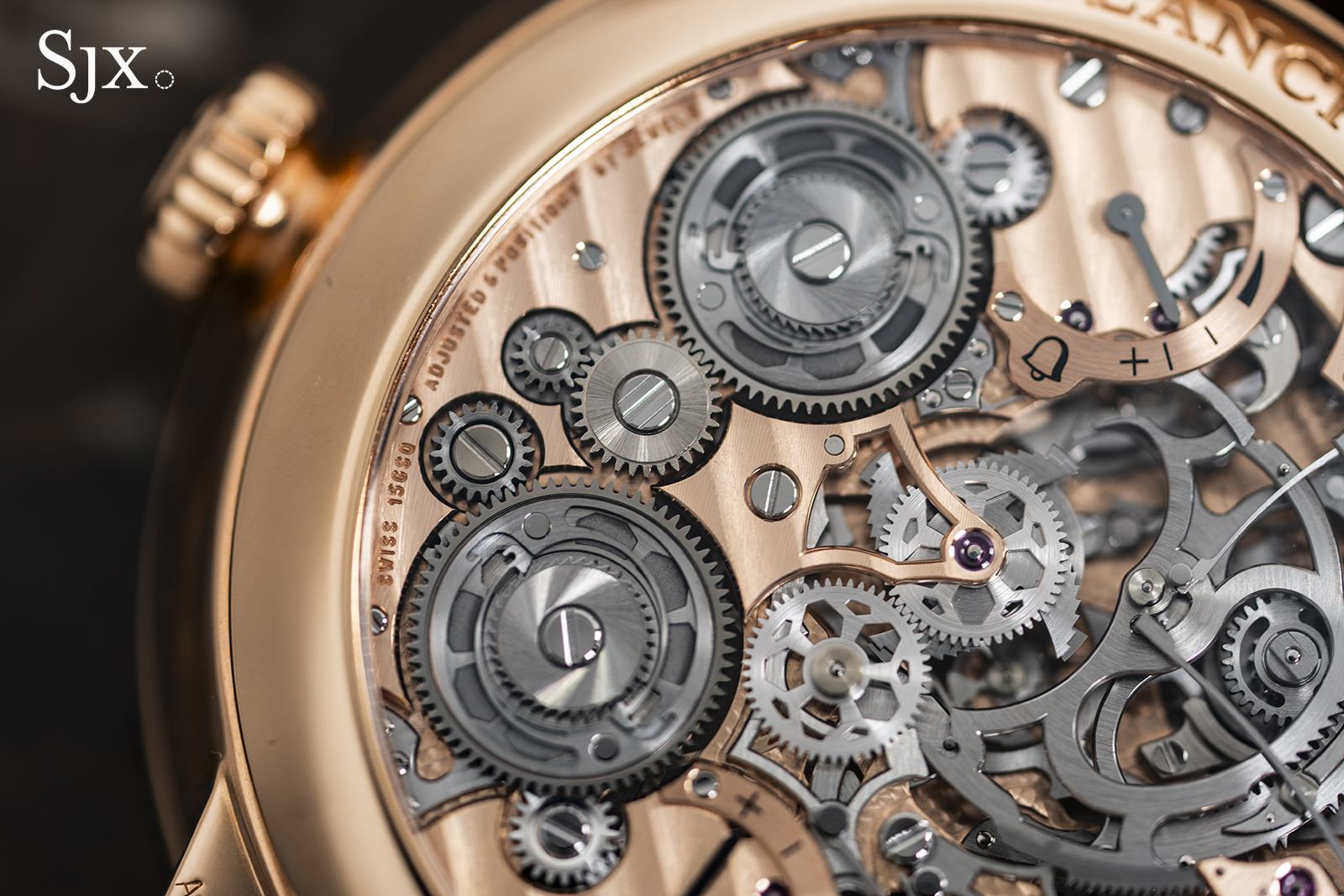
A visual staple of grande sonnerie watches is a pair of large, highly finished and intriguing-looking click wheels. Continuing our exploration of various horological energy systems — including winding efficiency and the fusee and chain — we examine the linkage of ratchets, clicks and wide-toothed gears that comprise the winding works of some of the industry’s best chiming watches. A Patek Philippe grande sonnerie movement from 1915. One crown for two barrels The grande sonnerie is rightfully considered the pinnacle of chiming complications. With the ability to automatically sound the hours and quarters, a grande sonnerie requires heaps of power to keep it going over the course of a day. As a result, most grande sonnerie movements rely on a second mainspring barrel that is isolated from the timekeeping going train. The requirement for independent barrels stems from the different rates at which the barrels unwind. The striking works require a faster-turning barrel that’s only active for short periods, while the going train feeds from a slow and steady barrel. Audemars Piguet Grande Sonnerie pocket watch crafted by Philippe Dufour. As the barrels discharge unevenly, it makes sense that they cannot be wound in sync. Winding both mainsprings in sync would typically over-strain one of them since their winding states are rarely the same at any given time. Although the two barrels themselves are separated, they often share the same winding train. Now a signature of Vallée...
![Happenings: Join Us For This Month's Hodinkee Happy Hour [RSVP Here]](https://hodinkee.imgix.net/uploads/images/73ccca0a-39f0-4d33-b6d7-ded308570be7/hhh-hero-1.jpg?ixlib=rails-1.1.0&fm=jpg&q=55&auto=format&usm=12&w=2000)