Teddy Baldassarre
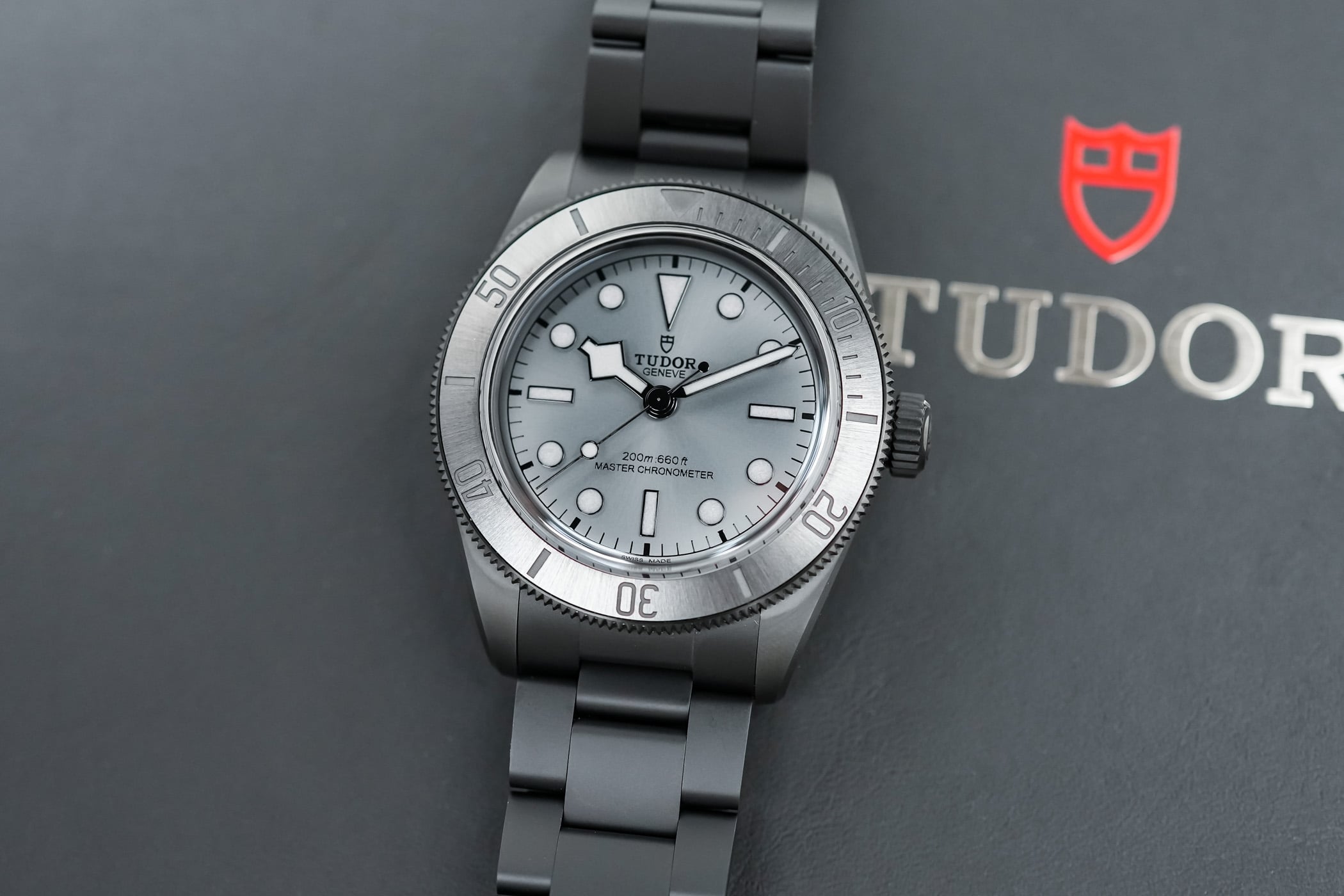
Tudor's Black Bay 58 Black and 58 GMT Get Big Updates for 2026
METAS certification and new five-link bracelet options come to two of the most popular Black Bays.More
1,403 articles · 14 videos found · page 32 of 48
Teddy Baldassarre
METAS certification and new five-link bracelet options come to two of the most popular Black Bays.More
Monochrome
If there was the Black Bay Ceramic “One” (Only Watch) in 2019, the story of the Black Bay in Ceramic really started in 2021 with a watch that was then the first METAS-certified Tudor. On the occasion of Watches and Wonders 2026, we now get a full ceramic rendition of the model, fitted for the […]
Monochrome
Brands are fully aware that mechanically minded car enthusiasts tend to appreciate mechanical watches, leading to countless sponsorship gestures and collaborations. After a 14-year hiatus, Cartier is set to delight petrolheads with the return of its automotive-inspired Roadster. Renowned as the master of shaped watches, Cartier’s curvaceous, streamlined Roadster has been refined by a team […]
Fratello
Vacheron Constantin’s Les Cabinotiers workshop is its skunkworks division devoted to the most exclusive single-piece editions. Each watch is a special commission by connoisseurs seeking one-of-a-kind timepieces to express their unique artistic vision. Les Cabinotiers dates to the 18th century, when master watchmakers, known as cabinotiers, worked in the brighter top floors of Genevan workshops. […] Visit Introducing: The Vacheron Constantin Les Cabinotiers Minute Repeater Tourbillon Skeleton to read the full article.
Monochrome
At the start of the year, an illustrious historic name returned to the world of watchmaking: Henri Grandjean. Once renowned for its highly precise chronometers and intricate pocket watches, Henri Grandjean was a master watchmaker from Le Locle, Switzerland. His work is on display in some of the best watchmaking museums around the world, including […]
SJX Watches
Alongside the launch of the Omega Constellation Observatory, we were among the first members of the public granted access to the Swatch Group’s Laboratoire de Précision (LP), a new independent chronometer testing institute with facilities in Omega’s native Biel/Bienne and Villeret. The new organisation does not redefine chronometer norms, but it has developed a new acoustic certification process that is more automated and provides client brands with a richer performance data set - a unique capability that has implications beyond mere certification. Laboratoire de Précision. Image – Omega Initial thoughts The debut of the Constellation Observatory, the first watch certified by LP and the first-ever two-handed Master Chronometer, was greeted with a mixed feedback from both collectors and the press. Some found the choice to launch a chronometer without a seconds hand heretical, viewing it as a gimmick to promote LP’s new testing process. The Omega Constellation Observatory is the first watch to complete chronometer certification at LP. Regardless of how one feels about the two-handed aspect of the watch - I found the design balanced and appealing, even if the concept is a bit quirky - the launch placed a renewed focus on the way official chronometers are tested and certified. Many were confused by the claimed novelty of acoustic testing, given the universal presence of Witschi machines on watchmakers’ benches. Indeed, the method is not new. What is new is t...
SJX Watches
Since “Jacob and Jeweller” made its first foray into fine watchmaking two decades ago, Jacob & Co. has positioned itself as a master of maximalism in all its forms, both bejewelled and technical, with some of the brands’s most audacious creations free of gem-setting entirely. The story of Jacob & Co.’s rise as an independent watchmaker features a celebrated cast of constructors. While other brands focused on vertical integration, Jacob & Co. opted to become a patron of promising complication specialists and independent watchmakers, funding their visions while challenging them with its own. Now, 20 years on, Jacob & Co. has evolved into a major player in the ultra-high end watchmaking segment, and is one of the fastest growing brands in an otherwise downbeat market; according to the brand, its 2025 watch sales were close to CHF300 million at retail. The brand’s obvious success is due to both its astute commercial instincts, founder Jacob Arabo’s inimitable personality, and also its ability to bring technically demanding movements to market and iterate on them with remarkable regularity. The gongs of a minute repeating Astronomia, one of the line’s many flankers. Few brands have managed to build credibility in both jewellry and watchmaking simultaneously. On the occasion of the brand’s 40th anniversary, it’s worth looking at how Jacob & Co. has succeeded where others have failed. Chapter 1: The Quenttin Jacob & Co.’s first 20 years were somewhat quiet on...
Hodinkee
Federico Ziviani on why Gerald Charles is producing pricey Swiss-made watches based on designs from the latter end of the master designer's career.
Monochrome
GoS occupies a very special space on the independent watchmaking scene. The Swedish atelier is one of the very few to truly master Damascus steel, not just as a decorative element, but as a material explored from forging to finishing. From early creations to the original Vinternätter (Winter Nights) of 2013, and later evolutions and […]
SJX Watches
At long last, Omega has unveiled the spiritual successor to the beloved ‘Pie Pan’ Constellation, complete with its signature domed dial, observatory medallion, and ‘dog leg’ lugs, the Constellation Observatory. First teased on the wrist of actor Delroy Lindo at the Academy Awards, the Observatory debuts in an expansive range of case materials and dial treatments. The collection also marks the commercial debut of Swatch Group’s Laboratoire de Précision, which has developed a new chronometer testing process capable of certifying two-handed watches. As a result, the Observatory carries the unexpected distinction of being the first Master Chronometer that displays only the hours and minutes. The Observatory in 18k Sedna gold, the brand’s trade name for its proprietary rose gold alloy. Initial thoughts The Observatory embodies Omega’s strengths, capitalising on the brand’s historical pedigree and proprietary materials and technologies, including its own durable alloys and the co-axial escapement. The Observatory in steel. On the other hand, the Observatory suffers somewhat on account of its thickness, relying on a movement platform developed at a time when the trend toward large watches appeared to have no end in sight. That said, the case design does a decent job of reducing the perceived thickness, and it looks and feels thinner than many other watches that share its dimensions on paper. It also demonstrates the immense capabilities of the broader Swatch Grou...
Two Broke Watch Snobs
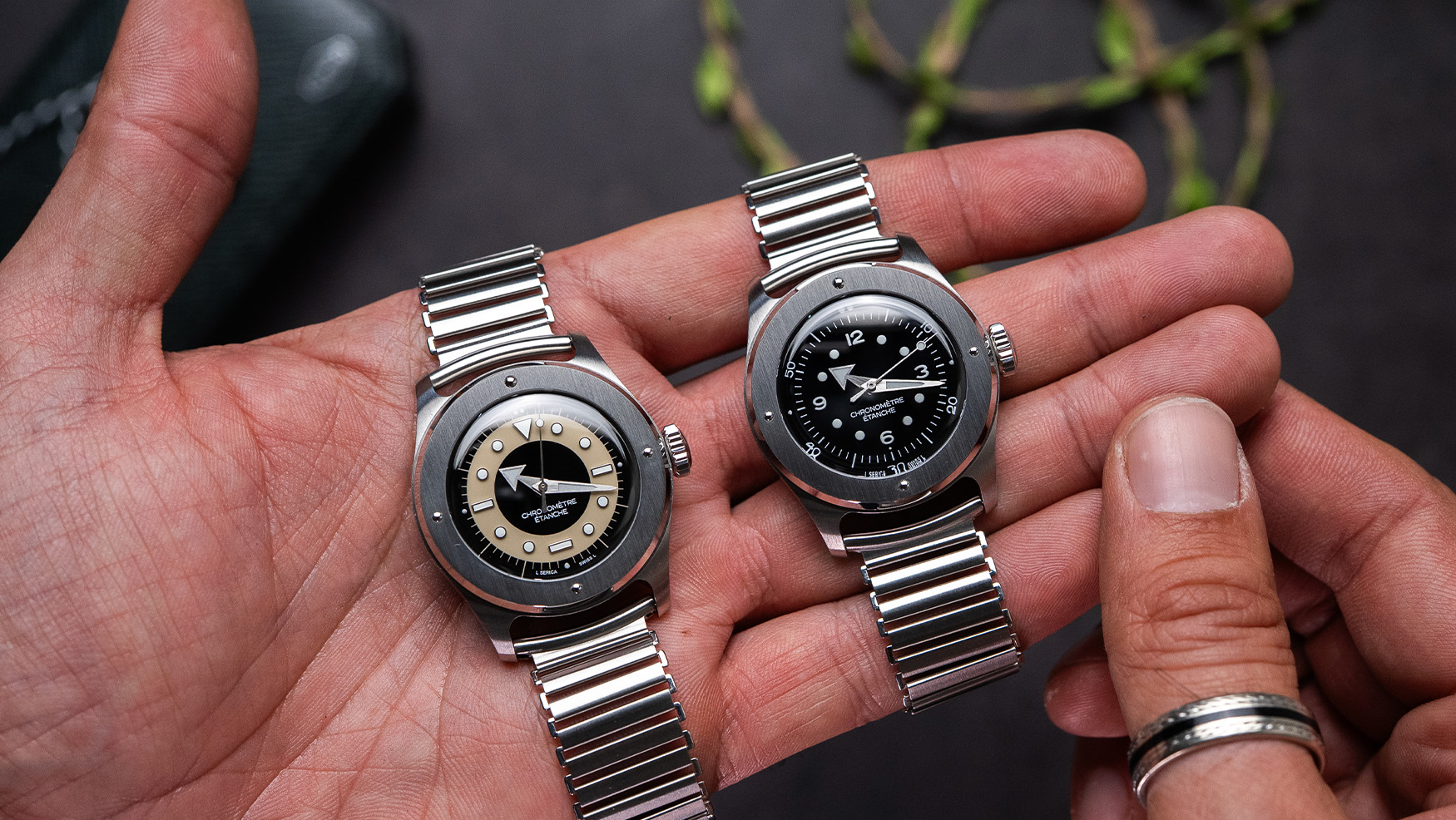
The Serica 5330 is the brand's first date-equipped dive watch-a 39mm, COSC-certified chronometer with a new dial and ceramic bezel.
Fratello
Another Friday, another list. This week, we follow up on last week’s list of the top five Rolex GMT-Master II alternatives with the best alternatives to the Rolex Explorer II. It’s a logical step since the two models offer much of the same functionality. But they are inherently different watches in terms of presence and […] Visit Fratello’s Top 5 Rolex Explorer II Alternatives In 2026 to read the full article.
SJX Watches
Interesting news just out of Contrôle Officiel Suisse des Chronomètres (COSC), the venerable Swiss chronometer testing body, which has just announced a major revamp to its testing to honour the COSC’s standard’s 50th anniversary. Excellence Chronometer, COSC’s new and improved certification program, goes beyond the ISO 3159 norm that has defined its tests for decades. Instead of just testing movements, Excellence Chronometer will require completed, cased watches to run within -2/+4 seconds a day, as well as pass wear simulation and magnetism tests. Initial thoughts While COSC remains the primary chronometer testing body in Switzerland, thanks largely to Rolex, its protocols have been due for an update for some time now. With the rise of alternative and in-house precision testing programs, the standard chronometer certification can sometimes feel left behind. Rolex’s own Superlative Chronometer certification first requires a COSC certificate, but then makes sure the watches run at -2/+2 seconds per day after further in-house testing. The METAS Chronometer program also requires the standard COSC certificate, but guarantees a regulation of 0/+5 seconds per day and a great resistance to magnetic fields. Seeing that COSC slowly updates and imposes more stringent criteria is a good sign, but it may still not be good enough. With the rise of advanced internal certification programs, it looks like some brands submit their models to COSC testing just to make sure they can...
SJX Watches
Having celebrated its 150th anniversary in 2025, Audemars Piguet (AP) has kicked off 2026 with a slate of new models, including one of the most complicated watches in its history. But it was a simpler watch that that generated the most buzz at the glamorous launch event in the Swiss alps: the Neo Frame Jumping Hour, which is both a new watch and the beginning of a new collection that replaces the [Re]master series. The Neo Frame is a regular production wristwatch in 18k rose gold inspired by the Pre-model 1271, a historical AP reference from 1929. Though rooted in the Art Deco era, the Neo Frame is an eminently modern watch with a novel case and dial construction and the brand’s latest-generation automatic movement. Initial thoughts The name Audemars Piguet is nearly synonymous with that of its signature product, the Royal Oak. While many brands would probably trade their entire catalogues to have a single hit like the Royal Oak, AP has sought to diversify its product line up with the introduction of collections like the Code 11.59 and the short-lived [Re]master series. Despite these efforts, the Royal Oak family remains AP’s commercial engine, making the introduction of a new collection, anchored by a rectangular jumping hours watch, especially notable. The jumping hours complication seems to be enjoying renewed interest among collectors, which makes release of the Neo Frame feel timely. But up close and on the wrist, it doesn’t look or feel like anything else on t...
Worn & Wound
Longines is a storied and well-respected Swiss watch manufacture that formed in 1832 and has continued uninterrupted to this day. From the first wrist chronometer in 1911, to groundbreaking flyback chronographs in the 1930s, to the world’s first hi-beat wrist chronometer in 1959, Longines holds their own in the watchmaking world. My favorite period for watches is the 1950s through the 1970s and Longines was one of the top accessible brands during that time. In 1954 Longines began a marketing strategy of product families, launching the Conquest line of watches. In 1957 they introduced the Flagship line, adding to what would become a large group of watch families, many of which are still made today. Other lines that came later include the Admiral, the Ultra-Chron and the Grand Prize. The Grand Prize line was named in honor of the multitude of watchmaking awards and honors that Longines had accumulated over the decades. It was a relatively short-lived family, produced from about 1958 to 1964 according to my research. I have found that the majority of Longines watches produced during these decades were all fairly equal in quality and craftsmanship, with most of the differences in the families being design related. The Conquests were rugged and sporty, on par with the early non-diver Omega Seamaster watches. The Flagship series were dress watches, while the Admiral line was a mixture of both. The Grand Prize family were pretty much all thin, elegant everyday type dressier w...
SJX Watches
Ahead of its much anticipated Watches & Wonders return, Audemars Piguet (AP) has reached deep into its archives for what in past years would have been a [RE]Master model. But now AP has renamed its vintage reissues, and it is the Neo Frame Jumping Hour that takes inspiration from a similar guichet model from 1929. This perfectly timed launch comes at a time of renewed interest in the digital display format. Initial thoughts Each time an established brand launches a completely new collection, the public response can be either positive (think Rolex Land-Dweller) or underwhelming. AP has come face-to-face with this in the past with the Code 11.59, which was bold but not well received initially (though much of the early criticism can be chalked up to cynicism). That experience hasn’t stopped the brand from continuing to diversify its portfolio away from the Royal Oak, and the latest effort capitalises on the growing interest in guichet watches. In doing so, AP reimagines an obscure piece from its own past, adding strong touches of modern design to create something with a more distinctive visual identity than one might expect from a simple jumping hours watch. Though the Neo Frame nomenclature might take a while to enter the vernacular, the guichet design feels like it’s coming to market at the right time. Ironically, the sleek profile of the Neo Frame’s case looks much like a sports smart band - albeit much glossier. Specifically, the way the polished black face connec...
Fratello
Mention Pan Am to watch fans, and the first association that comes to mind is the iconic Rolex GMT-Master. It has become one of the watch world’s most popular stories, always reflected in the classic travel watch with its red and blue “Pepsi” bezel. But apart from a watch created for Pan Am pilots to […] Visit Hands-On With The Christopher Ward C60 Clipper GMT to read the full article.
Time+Tide
The Perception Millésime 漩 (Xuán) features a stunning natural pietersite dial, which is fully hand-cut and polished by master craftsmen.The post Atelier Wen releases a new chapter in the Perception Millésime series, with a unique pietersite dial appeared first on Time+Tide Watches.
Fratello
This was the first time I had ever seen one of Qian GuoBiao’s watches in real life. I’d never seen one at watch shows, quickly behind glass, or even in a passing moment at a collector event. I’ve long admired Master Qian’s watches through my laptop screen, but this encounter with his Split-Seconds Chronograph was […] Visit Hands-On With Qian GuoBiao’s Split-Seconds Chronograph to read the full article.
Monochrome
Simple solutions to complex problems could well be Dr Ludwig Oechslin’s overriding philosophy. Former curator of the Musée international d’horlogerie in La Chaux-de-Fonds, Oechslin studied archaeology as an undergraduate and obtained a PhD in Philosophy – with a scholarship to study theoretical physics and astronomy – and became a Swiss master watchmaker in 1983. Bringing […]
Hodinkee
The new limited-edition G-SHOCK MRG-B2000KT pays tribute to the ancient craft of Japanese swordmaking with the help of a master metalsmith.
Monochrome
Independent Finnish master watchmaker Kari Voutilainen is regarded as one of the best in his field. Working from his atelier in Motiers, which he founded in 2002, Voutilainen is known for his high-end watches with in-house movements and hand-guilloché dials. His latest watch, the 216TMZ Worldtime, features a movement with a direct-impulse double escapement, first […]
Teddy Baldassarre
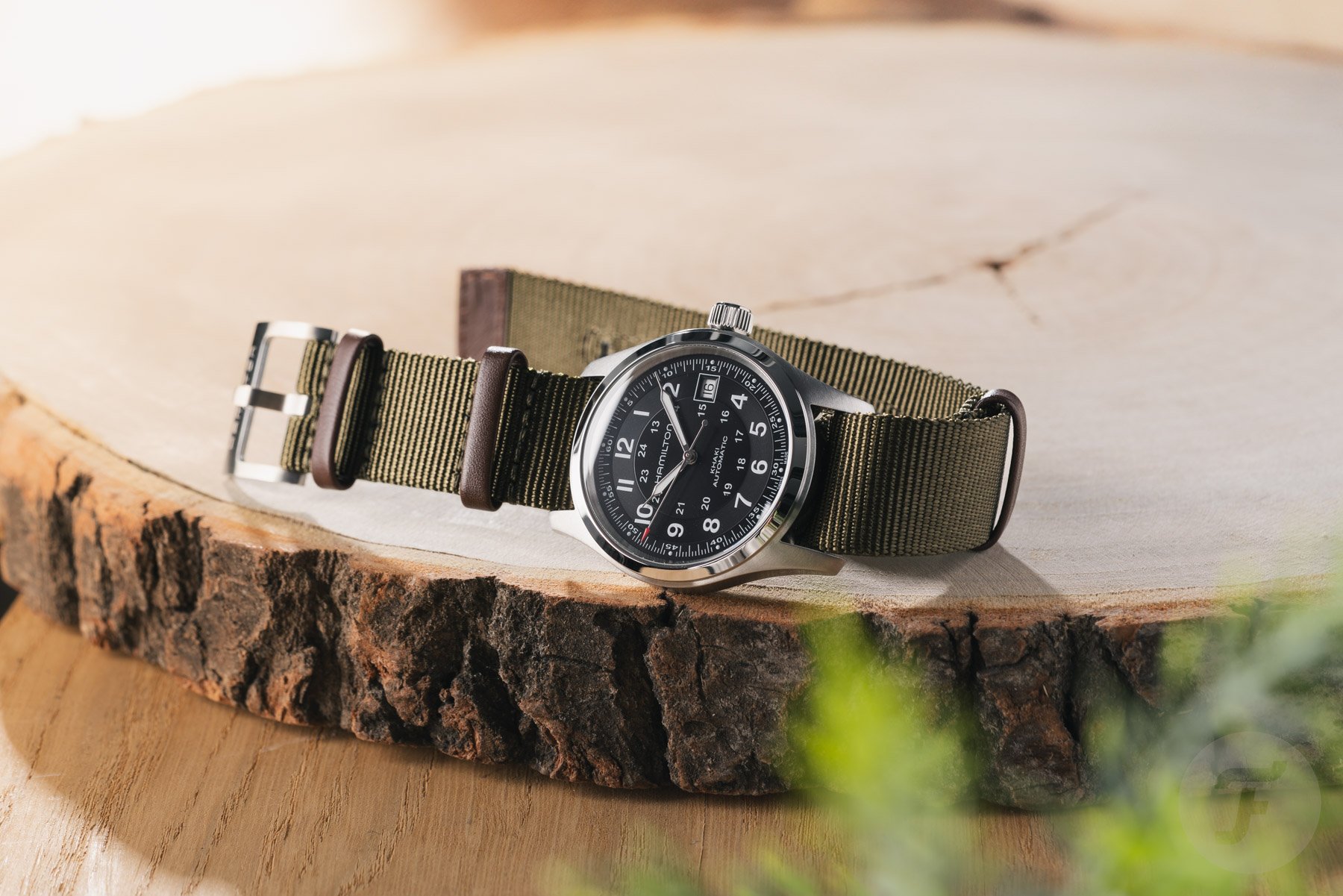
When the editorial team here at Teddy was tasked with picking some of our favorite complicated watches of 2025, there was an important distinction that had to be drawn. Of course, this was the fine line between our favorite watches that absolutely nail or master a specific complication rather than just the“most complicated” watches or watches with the most complications. This year we saw one of the best world timers for the money, a novel take on the moon-phase, and Audemars Piguet’s final Research & Development watch. So without further ado, here are our picks for our favorite complicated watches of 2025. [toc-section heading="Hamilton Khaki Field Automatic Power Reserve 40mm"] Sometimes we overlook the power reserve indicator as a complication in a watch - but indeed it is and Hamilton outfitted one of its most popular watches with a power reserve indicator on the dial thus setting the new Khaki Field Power Reserve to take its place among our favorite complicates watches of 2025. You will recognize this watch for bearing so many of the hallmarks of the Khaki Field Mechanical but with the added gas-tank indicator style gauge at the nine o’clock portion of the dial. It’s 40mm in diameter and a touch under 12mm in case height and boasts a new movement under the hood by way of the H23 manual winding caliber with 80 hours of power reserve and a slipping spring that allows for winding to exceed the manual maximum in a “quirk” that also serves to aid the watch...
SJX Watches
The 30th anniversary of the Chopard L.U.C. manufacture was one anniversary among many this year, but it will likely be remembered thanks to the Grand Strike, the most complicated watch in Chopard’s history and its first grande sonnerie. Building on the successful Full Strike minute repeater architecture and making full use of the brand’s patented sapphire gongs, the Grand Strike is a chronometer-certified two-train clock watch with a push-button minute repeater. In this context, the presence of the tourbillon is almost a footnote. Initial thoughts I can count on one hand the number of brands that have created their own grande sonnerie wristwatch. It’s one of the few things in watchmaking that’s proven challenging enough to still be rare, even in the days of computer-aided design (CAD) and advanced manufacturing technology like wire erosion. For this reason, the grande sonnerie has a towering cultural presence among watchmakers and collectors, looming above all other complications. For Chopard, the Grand Strike represents the culmination of 30 years of the L.U.C. manufacture, the brand’s haute horlogerie division. The first impression of the Grand Strike is one of extraordinary depth. There’s not much of a dial, save for the minutes scale etched on the inside of the sapphire crystal, and the small concentric sub-dials for the dual power reserve displays. This depth shrinks the watch visually, and it feels dense and compact despite its rather large 43 mm size and...
SJX Watches
De Bethune plans to bring hairspring production in house, aiming to become one of the very few firms able to process alloy wire into a finished balance hairspring. This requires De Bethune’s new hairspring workshop to master wire drawing, rolling, cutting, heat treatment, and assembly. The rationale? “Externally produced hairsprings meet standards based on averages that do not enable fine adjustment of the dimensions to suit a particular balance wheel or its specific positioning in a calibre,” according to De Bethune. De Bethune’s “flat end curve” mated to a hairspring sourced from a supplier. Initial thoughts As De Bethune explains it, making its own hairsprings will allow the brand to tailor its hairspring to a specific balance or movement. Since its founding in 2002, De Bethune has presented itself as being on the cutting edge of chronometry, debuting a new balance design every year from 2004 to 2010. The brand was also quick to embrace silicon, and even briefly attempted a kilohertz magnetic oscillator system, Résonique. A new year, a new balance. Sometimes two new balances. Given De Bethune’s focus on chronometry, making its own hairsprings seems like a natural next step. However, there is a reason so few brands make their own hairsprings: the process is a difficult and demanding one that benefits greatly from economies of scale. For example, H. Moser & Cie. makes less than 4,000 watches per year, however, its sister company Precision Engineering claims...
Monochrome
Regarded as one of the grails in watchmaking, and an extremely challenging one to master as well, the Perpetual Calendar is a complication that always grabs headlines, it seems. This year, we’ve seen an abundance of them, from seasoned Maisons to high-end indies, and everything in between. With so much to choose from, pinpointing the […]
SJX Watches
Earlier this week, Breguet rounded off its grandiose 250th anniversary with the unexpected launch of the Expérimentale 1 chronometer in Paris. Showcasing modern Breguet’s most impressive innovation to date - a magnetic constant-force escapement - the watch left many scratching their heads simply because the novel invention defies easy explanation. Here we explain the actual functioning of this remarkable invention, and why it represents such a significant step forward in terms of chronometry and escapement technology. The origins of the concept Before turning to the decidedly modern and futuristic Expérimentale 1, we must first take a short trip to the past and consider how the idea of using magnets in mechanical escapements first came to life. For that we must turn to the late 1930s, when Cecil Frank Clifford, Fellow of the British Horological Institute (BHI), started experimenting with oscillators maintained by magnetic rails or escape wheels. He was granted a British patent in 1954 for a variety of magnetised escape wheels paired with elastic vibrating magnetic blades. The device would operate silently and Clifford envisioned it being used for naval underwater torpedoes, so the lack of ticking would be harder to pick up by sonars. Iterations of Clifford magnetic escapements. His designs were rudimentary. The principle was that the escape wheel would be braked by a vibrating pair of magnetised blades (in several possible configurations), while simultaneously ...
Teddy Baldassarre
It’s easy to see Rolex exclusively as a sport watch brand, if even a luxury oriented one, thanks to collections that have helped to define their respective genres, such as the Submariner, the GMT-Master, the Explorer, and the Daytona. While they undoubtedly are just that, Rolex has another dimension to be discovered in more formal territory, and it’s a side we probably don’t see as often as we should, at least if their latest 1908 collection is anything to go by. Following the discontinuation of the Cellini collection in 2023, Rolex revealed its replacement in the 1908, sporting a familiar yet novel design language, and an entirely new movement in the caliber 7140. It was an immediate breath of fresh air, and a rare truly new release from the brand. [toc-section heading="Some Rolex Design History"] Rolex has more than a century’s worth of design language to draw upon, and it would do exactly that with the design of the 1908. From the shape of the case, to the details of the bezel, and even the design of the hour numerals, the 1908 feels like a love letter to the history of Rolex. As a result, it’s a design that doesn’t feel entirely formal in nature, landing in a more versatile space than you might imagine, especially in the right spec. This is a watch that feels appropriate in a wide range of uses, from dressed to the nines in a suit and tie, all the way down to t-shirt and jeans affairs, this is a truly dynamic platform. From the first oyster style cases ...
SJX Watches
Breguet concludes its 250th anniversary with the brand’s most forward-thinking watch, the Expérimentale 1 that boasts a magnetic, true constant force escapement. Equipped with a frictionless escape wheel and pallet lever driven by magnetic forces, the movement runs at 72,000 beats per hour, or 10 Hz – arguably making the Expérimentale 1 the ultimate Breguet chronometer. Impressively innovative with its use of silicon, magnets, and clever teeth geometry, the limited edition watch also marks the start of the Expérimentale line, a collection that will serve as a platform to debut new complications, technology, and designs. Initial thoughts While some might have been expecting an updated Sympathique, Breguet instead surprised with perhaps the most advanced wrist-borne mechanical chronometer in modern watchmaking. Taking cues from Abraham-Louis Breguet’s own “constant force” escapements, Breguet today harnessed the power of permanent magnets and unique teeth geometry to built a genuinely friction-less, constant torque escapement. In fact, the new escapement appears to be the only truly frictionless and constant force escapement on the market today. Magnets have been employed in escapements in the past, but this approach was historically unreliable. Breguet appears to have discovered the right formula for a magnetic escapement. Several functioning prototypes were on show at the launch event. Moreover, Breguet chief executive Gregory Kissling explained that the ma...
SJX Watches
Omega marks the 20th anniversary of the Seamaster Planet Ocean with a full redesign, introducing a sharper, faceted case and a slimmer profile that addresses long-standing concerns about about the model’s thickness. The fourth generation design retains the headline 600 m water resistance and METAS-certified movement, but adopts a more contemporary silhouette that differentiates it from earlier generations. The anniversary launch spans three colourways - black, blue, and the signature orange - with the latter now priced in line with the Rolex Submariner. While the refresh enhances everyday wearability, it also moves the Planet Ocean slightly away from the recognisable aesthetic that has defined the collection since its 2005 debut. Initial thoughts The Seamaster Planet Ocean is a watch that carries a lot of nostalgia for me personally. The first generation model, launched in 2005, was the first mechanical watch I purchased for myself in my student days and while my watch, powered by the slim cal. 2500C, has seen the inside of the Omega service centre more times than I would have liked, it still has a place in my regular rotation, especially when the weather turns warm. The appeal of the Planet Ocean is its fresh interpretation of historical Omega motifs; it features details like the broad arrow hands without attempting to be a vintage remake. The collection was refreshed in 2011 and again in 2016, but it seemed to get chunkier with each new iteration, to the dismay of ...
Question, suggestion, or just want to say hi? Drop a note.