Watch brandsWatch wikiWatch videosVariousWatch calendarSaved articles
PopularRolexOmegaPatek PhilippeAudemars PiguetTudorGrand SeikoCartierSeikoIWCTAG HeuerBreitlingJaeger-LeCoultreA. Lange & SohneZenith

Results for Code 11.59

4,574 articles · 428 videos found · page 50 of 167

Related pages

Icon · Guide
Code 11.59 Audemars Piguet

AP's 2019 round watch family. Octagonal midcase, round bezel, double-curved sapphire.

Seiko Alpinist Guide Teddy Baldassarre
Seiko Feb 4, 2023

Seiko Alpinist Guide

History First introduced in 1961, the Seiko Alpinist was a significant milestone in the Japanese brand's history It was the first ‘Sports Watch’ for Seiko. Like all great watch designs, it was created with a purpose in mind. The Alpinist was geared up to take on the great outdoors with Japanese mountain climbers. It needed to be rugged and legible. In this story, we will aim to share the full Seiko Alpinist lineup (going back some!). And then finally, although we think you will be sold within the first paragraph or two - why you should consider one! Let’s get into it.  In 1961 we saw the first Alpinist, the Laurel. It is, in collecting circles, the holy grail Alpinist! Produced in black and cream dials, it was categorized by the now iconic arrow markers at 12, 3, 6, and 9. Later in 1963 saw the introduction of the Alpinist Champion 850, this Alpinist reference was instantly recognizable by its bold central lines which extended to the hour markers. A year later in 1964, it was time for the gold variation, the “85899” (interestingly it did not boast the central hour markings like the previous reference). Many, many years later in 1995, we were presented with the Red Alpinist, with the now legendary red writing at 6 o’clock and Arabic numerals at 12, 2, 4, 6, 8, and 10. The early 2000s saw the introduction of the Alpinist 8f56 which used the same inner bezel compass as the 1995 Prospex, and there was even a limited edition of 500 pieces in a blue dial made for SS...

Omega Seamaster Aqua Terra Buyer's Guide Teddy Baldassarre
Omega Feb 1, 2023

Omega Seamaster Aqua Terra Buyer's Guide

Seven key talking points on the most elegantly understated watch from the Seamaster family  Considering adding an Omega Seamaster Aqua Terra to your watch collection? Here is a rundown of what you should know about the watch from its design history to its movement to its role in sports and pop culture. The Aqua Terra sports a design that calls back the dressy design of the original 1948 Seamaster. The Omega Seamaster as most of us know it nowadays traces its existence to 1957, which was the year that the Seamaster 300, Omega’s first truly purpose-built “professional” dive watch, made its debut alongside the Speedmaster (whatever happened to that model, anyway?) and the recently revived Railmaster. But the first Seamaster was in fact launched in 1948 as a dressy gents’ watch that just happened to boast the same water-resistant structure that Omega had developed in the wartime years prior for the military watches it provided to the British Royal Air Force and other Allied units. The Seamaster Aqua Terra, usually abbreviated simply Aqua Terra, hit the market in 2003 and has served ever since as a more elegantly understated sibling of the sporty, more robustly built Seamaster Diver and Planet Ocean models. Like the 1948 Seamaster, Aqua Terra models eschew the rotating divers’ bezel and other tool-watch accouterments for a more streamlined style. The dials are characterized by simple wedge-shaped hour markers inspired by the silhouette of a sailboat, a triangular ho...

TAG Heuer Aquaracer Guide Teddy Baldassarre
TAG Heuer Jan 25, 2023

TAG Heuer Aquaracer Guide

TAG Heuer, which was founded as Heuer Watchmaking by Edouard Heuer in 1860, built much of its modern reputation as an innovator in chronograph watches for automobile racing. Its most iconic models, the Heuer Carrera and Heuer Monaco, both debuted in the 1960s and remain inextricably linked with motorsports. By the end of the 1970s, however, the company was exploring a new realm of sport-oriented timepieces that would be at the forefront of its transition from the family-owned Heuer firm to the modern era that began in 1985 when it was acquired by Luxembourg-based high-tech manufacturer Techniques d’Avant-Garde (TAG). The watches from this pivotal period would form the foundation of today’s TAG Heuer Aquaracer collection, which continues to grow and evolve today.   Aquaracer Ancestors: Ref. 844 and Beyond (1978-1998)   In 1978, Heuer launched the now-legendary Ref. 844 (above left, next to the 2021 Revival edition), the forerunner of its 1000 and 2000 series of divers’ tool watches that paved the way for the Aquaracer collection. Ref. 844 - the brainchild of company scion Jack Heuer, who also created the Carrera, the Monaco, and numerous other enduring models - featured a 42mm steel case, water-resistant to 200 meters and containing mostly quartz and a few mechanical movements. The dial was distinguished by an inner 24-hour scale of red numerals and large geometric hour markers reminiscent of those on the Rolex Submariner, a model Jack Heuer has readily acknowle...

Zenith Defy Watch Guide Teddy Baldassarre
Zenith Jan 21, 2023

Zenith Defy Watch Guide

Swiss watch manufacture Zenith traces its roots to 1865, when it was founded in the village of Le Locle by precocious 22-year-old watchmaker Georges Favre-Jacot. As one of the first watchmaking maisons to integrate all aspects of the watchmaking process under one roof, from case manufacturing to movement production to final casing and assembly, Zenith has long prided itself on its quest for timekeeping precision. The company has earned a record number of chronometry prizes over the years, and its most influential contribution to watchmaking history is its El Primero chronograph caliber, released in 1969. (Learn more about El Primero here.) In that same pivotal year, Zenith also released an avant-garde wristwatch series called Defy, whose bold, edgy design proved to be ahead of its time, and found its expression in the now-legendary Ref. A3642.  The Original Defy (1969) That watch was nicknamed the “coffre-fort,” a French term translating to “bank vault” or “safe,” a reference to its robustly angular, octagonal case, 14-sided bezel, and high-for-the-time water resistance of 300 meters, secured by its crown, caseback, and mineral crystal, all of which screwed securely into the case. Its “ladder-style” bracelet from legendary chainmaker Gay Frères also made the original reference notable. The Defy was positioned as Zenith’s toughest watch, featured in an advertisement in which six of the watches were strapped to the spokes of a motorcycle in a speed test a...

Zenith El Primero Guide Teddy Baldassarre
Zenith Jan 20, 2023

Zenith El Primero Guide

The Zenith El Primero, found today in watches throughout Zenith’s collection, from the Chronomaster to the Defy to the Pilot, is arguably the watch world’s most famous movement - more widely known, in fact, than some of the watch models to whom it has given life during its half-century-plus of existence. The reasons for its renown are several, from the technical revolution it represented at its origin to the legendary role it played in the post-Quartz Crisis revival of the mechanical watch. Here we examine what made the El Primero so special in the first place and introduce you to some modern watches that demonstrate how it is still evolving and improving in the 21st century. A FOUNDATION OF PRECISION Watchmaker Georges Favre-Jacot was a mere 22 years of age when he founded the atelier that would become Zenith in Le Locle, Switzerland in 1865. Favre-Jacot, a contemporary of Swiss modern architecture pioneer le Corbusier, took his own pioneering approach to making watches, becoming one of the first to bring the various horological disciplines under one roof as opposed to the more common établissage system that most watchmakers used at the time, which had different parts made in different small workshops before being delivered to another workshop for assembly into a finished watch, Georges Favre-Jacot & co. became Zenith in 1911, the company taking its new name from a top-of-the-line movement it created that won a Grand Prix for precision at the 1900 Paris World’s F...

Hamilton Khaki Field Collection: A Comprehensive Buying Guide for 2024 Teddy Baldassarre
Hamilton Jan 16, 2023

Hamilton Khaki Field Collection: A Comprehensive Buying Guide for 2024

When it comes to being a vital thread in the American historical tapestry, few watch companies can compare with Hamilton. Founded in Lancaster, Pennsylvania in 1892, during an era in which the United States was a world leader in timepiece production, the Hamilton Watch Company has played a role in building and growing the young nation since its earliest days. And though the company has for several decades been making its watches in Switzerland rather than the United States, its American heritage, and its particular association with the American military, is evident in several of its modern-day collections, perhaps most plainly in the Hamilton Khaki Field collection, which channels the martial aesthetics of the 1940s in a stye that few other modern timepiece families can match.  From Railroads to Battlefields In 1912, as railroads began spanning and connecting the sprawling reaches of the country, it was Hamilton that produced the uncommonly sturdy and precise pocket watches that railroad conductors used to keep the trains on time and on schedule; in those days before an established international system of time zones, a poorly running watch could initiate a disaster on the rails. Just two years later, as the United States entered the First World War that was besieging Europe, Hamilton shifted its focus from being the acknowledged “Railroad Timekeeper of America” to building compact timekeepers that American G.I.s could wear and depend upon in the trenches and battlefie...

Watches, Stories, & Gear: Boots with Commando Soul, In-Depth Leica Lens Guide, Steven Soderbergh’s Annual EOY List, & More Worn & Wound
Jan 14, 2023

Watches, Stories, & Gear: Boots with Commando Soul, In-Depth Leica Lens Guide, Steven Soderbergh’s Annual EOY List, & More

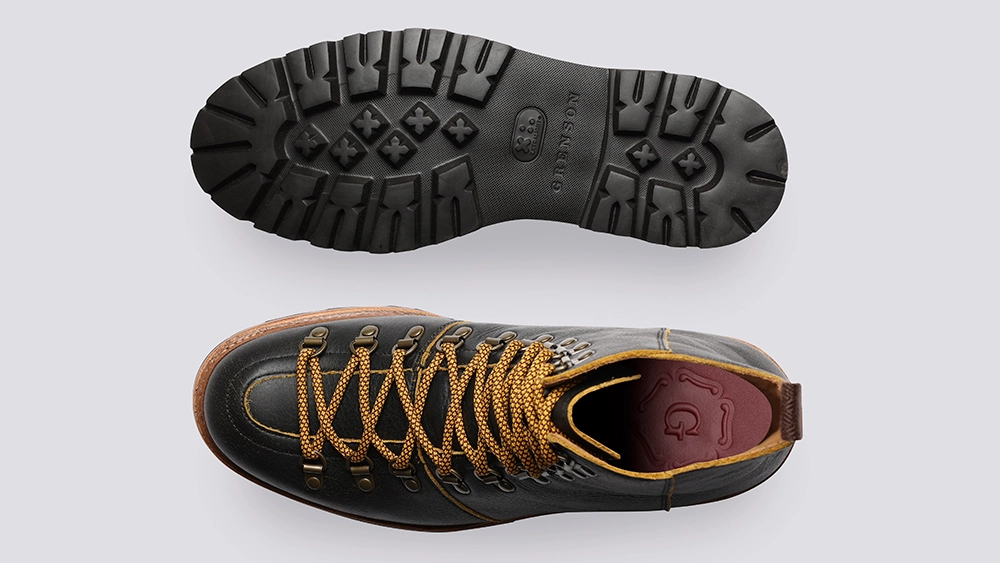
“Watches, Stories, and Gear” is a roundup of our favorite content, watch or otherwise, from around the internet. Here, we support other creators, explore interesting content that inspires us, and put a spotlight on causes we believe in. Oh, and any gear we happen to be digging on this week. We love gear. Share your story ideas or interesting finds with us by emailing tcalara@wornandwound.com Header Image Via: Robb Report / Grenson Boots With Commando Soul Via Robb Report / Grenson Boots are very much a part of our everyday gear around the office. We’re no strangers to throwing on and lacing up rugged works of art from brands like Red Wing, Grant Stone, and Blundstone, even if the closest outdoorsy thing we do on a regular basis is to climb the set of stairs that lead into the office. Turns out, the rubber soles on some of these boots actually have a purpose and history that dates back to WWII. Via Robb Report / Grenson Are you wearing a pair of boots right now? Stop reading and check out the soles of your boots. If you see chunky rubber blocks framing several star-shaped medallions lined down the middle, then you my friend are rocking a boot with a commando sole. Developed for the military, this specific rubber soul served its purpose by giving soldiers more traction, cushion, and stability out in the battlefield. When the war finally ended, British shoemakers translated this style into casual boots providing practical features to regular folks who want to get about ...

Grand Seiko Spring Drive Guide Teddy Baldassarre
Grand Seiko Jan 13, 2023

Grand Seiko Spring Drive Guide

Japan’s Grand Seiko has become, in a relatively short span of time, one of the world’s most prestigious and collectible high-luxury watchmakers, competing for connoisseur attention and dollars with well-established maisons from Switzerland and Germany. And while its success is definitely a 21st century phenomenon, Grand Seiko is not really a “new brand” in the strictest sense. The first Grand Seiko watch (below) debuted all the way back in 1960, part of the much larger product portfolio of Japanese watchmaking giant Seiko, which was founded in 1881 and achieved its worldwide fame by embracing the mass market with timepieces at accessible prices with wide distribution. The Grand Seiko, by contrast, was positioned as the megabrand’s exclusive “King of Watches,” with standards of accuracy, beauty, durability, and legibility that could meet or surpass its Swiss competitors. Until 2010, it was also Japan’s best-kept horological secret, not exported to markets outside the country. Seven years after its international expansion, having cultivated a loyal and avid audience worldwide, an entirely new and distinct customer base apart from mainline Seiko’s, Grand Seiko firmly established itself as an independent brand - albeit one still intrinsically tied to its parent company through shared history and technology. Among those technologies is an innovative type of watch movement that was perfected right before the turn of the 21st Century and remains the exclusiv...

Junghans Max Bill Guide Teddy Baldassarre
Junghans Jan 8, 2023

Junghans Max Bill Guide

Watches with a sparse, minimalist aesthetic have a faithful following in the modern era, and a number of watchmakers, both Swiss and German, offer timepieces born of those design principles, which are most directly descended from Germany’s hugely influential Bauhaus school of design in the early 20th Century. The Junghans Max Bill series, however, is one of the undisputed trailblazers of the Bauhaus style of watch design, tracing its origins all the way back to 1861 and boasting a time-tested design from one of the movement’s leading legends, Max Bill himself. Here we offer a brief history of the Junghans Max Bill watch collection, some insight into its namesake, and an overview of the modern collection, one of the few to contain mechanical, automatic, quartz, and radio-controlled solar movements as well as an array of sizes and materials. HOROLOGY IN THE BLACK FOREST Junghans Uhren GmbH was founded in 1861 in Schramberg, in Germany’s eastern Black Forest, by Erhard Junghans and his brother-in-law Jakob Zeller-Tobler. Initially a producer of clock parts, the company began making its own complete clocks and pocket watches in 1866 and by 1903 had become the largest watch and clock manufacturer in the world, employing 3,000 people. In 1927, Junghans began making wristwatches as well as clocks and supplied both over the subsequent decades to clients in the German military as well as the commercial market. A watershed moment for the company arrived in the 1950s with the...

Are Bulova Watches Good Buys? Here are 10 Watches that will Convince Y Teddy Baldassarre
Bulova Dec 23, 2022

Are Bulova Watches Good Buys? Here are 10 Watches that will Convince Y

Founded by Bohemian immigrant Joseph Bulova in 1875, originally with both its corporate headquarters and its manufacturing based in New York City, Bulova Watch Company is one of the most important historical watch brands in the United States. Many an American watch enthusiast has a story about the Bulova watch they inherited from a parent or grandparent, or about how their first watch was a Bulova before building up the financial wherewithal to delve into pricier Swiss luxury brands. Many of these enthusiasts may well be unaware of the many milestones that Bulova has contributed throughout its history - not just to American watchmaking to watchmaking in general - and how those milestones live on today in some of the brand’s most notable timepieces. Here we spotlight 10 important Bulova watches available now and the stories behind them; most are available in our online shop, many below MSRP. A Watch That Helped Win Wars: Bulova Hack Watch During World War II, Bulova took its patriotic duties as one of the few American-based watch companies quite seriously: many of its male employees joined the armed forces while female employees took over much of the watchmaking work at the factory. Bulova also devoted 25 percent of its advertising to the promotion of war bonds and stamps, a service for which it was awarded a distinguished service certificate by the U.S. government. Most notably, in the early 1940s, the company contracted with the United States government to produce i...