 SJX Watches
Hands-On: TAG Heuer Monza Flyback Chronometer
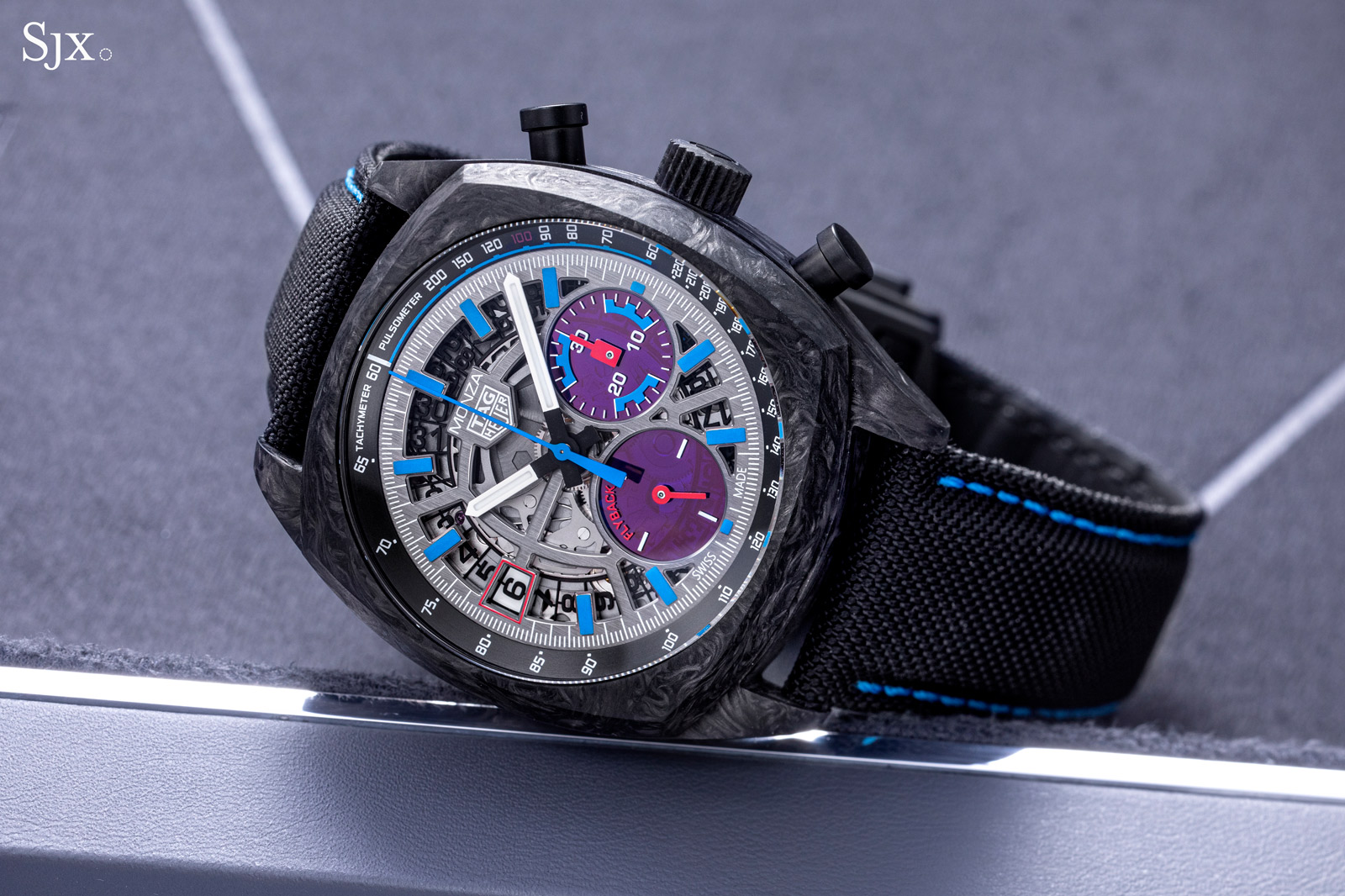
LVMH Watch Week, the year’s first significant watch fair, just kicked off in Singapore. In some ways a warmup for Watches & Wonders in March – the biggest watch fair of the year – the LVMH Watch Week is where the watchmakers owned by the French group show off their wares. Amongst them is TAG Heuer, which has revived one of its less-known racing chronographs from the 1970s but in a thoroughly modern style. The Monza Flyback Chronometer is a flyback chronograph featuring an open-worked dial and a 42 mm carbon composite case. Initial thoughts Perhaps the most aggressively modern chronograph in TAG Heuer’s current line-up, the new Monza liberally reinterprets the 1970s original. While the vintage Monza is not famous as the Carrera or Monaco, it is interesting in several respects, including the fact that it was the first serially-produced Heuer to sport a black-coated case. The carbon case and open-worked, asymmetrical dial show another face of TAG Heuer, but one that still fits with its motorsports-chronograph heritage. Certainly a TAG Heuer that is different, the Monza has clearly been conceived to cater to contemporary tastes, which is a good thing given that TAG Heuer already has an ample offering of faithful vintage remakes. But the new Monza comes with a caveat, a steep price. Coming in at US$13,500, the Monza costs double the Autavia Flyback Chronograph that has the same movement but a no-frills steel case. Even considering the carbon composite case and fanc...