Hodinkee
Introducing: The Grand Seiko SBGX359 And SBGX361 - The Brand's Smallest 9F Quartz Watches
A brand new movement supports a downsized spin on a classic GS design.
3,334 articles · 17 videos found · page 55 of 112
Hodinkee
A brand new movement supports a downsized spin on a classic GS design.
SJX Watches
The Classic Tech Art is the latest, bespoke time-only piece from independent watchmaking duo Molnar Fabry, and a fine example of the pair’s modus operandi. Starting off from a Vaucher cal. 5401 ébauche, the watchmakers applied extensive finishing to both seen and unseen surfaces within the movement. While this exact configuration is unique, similar designs can be commissioned from the Slovakia-based creators. Initial thoughts Molnar Fabry’s calling card is open-worked movements and the Class Tech Art doesn’t disappoint in that respect. While the case back side of the movement is richly engraved but structurally unaltered, the tastefully open-worked dial reveals the usually hidden assemblies that make the Vaucher calibre tick. The duo behind Molnar Fabry operates outside the influence of many Swiss watchmaking traditions. As a result, the brand’s house style of finishing is somewhat unorthodox. Mixes of metals are on show, along with a rich blend of textures and shapes. The style might not be to everyone’s tastes, but Molnar Fabry’s work feels refreshingly original in today’s market. The two watchmakers shift the focus from proprietary movements and high-tech specs to true hand finishing. That said, the Classic Tech Art exemplifies a more streamlined vision of the brand’s design language, opting away from the excessively ornate cases the brand has produced in the past. This may point towards them going more mainstream - at least to the extent that a b...
SJX Watches
One of Louis Vuitton’s most distinctive complications, the Escale Worldtime was recently revised and upgraded, giving it improved legibility and an in-house movement. The nips and tucks have given the watch a sleeker, more refined aesthetic, while making the technicolour dial more readable. It’s still far from a “tool” watch, but the second-generation Escale Worldtime has all of the charm of the original that’s now grounded in solid, credible watchmaking. Initial thoughts I’m biased because I am a fan of the original Worldtime, right from when it was launched in 2014. The original was decidedly impractical, way too expensive, but an imaginatively different take on the classic Louis Cottier world time. The new model has all of the appeal of the original, but with a superior execution in substance and form. The new version has smoothed out all of the rough edges of the original, quite literally in some respects. The case is now finer, with more refined lines and a gently domed crystal, for instance. Functionality has improved substantially with a hand for the minutes and a jumping hours display. And the movement is now a latest-generation calibre, part of a family of industrial-haute horlogerie movements developed by LFT that is an achievement on its own. The LFT VO12.01 movement features a 22k pink gold rotor with a guilloche rim The Escale Worldtime costs over US$90,000, or about 10% more than the Patek Philippe World Time ref. 5330G in white gold. The Escale, ...
Two Broke Watch Snobs
Astor and Banks introduces an affordable field watch that rethinks design with layered dials, bold lume, and a modern automatic movement.
Time+Tide
In a first for the brand, Alpina has placed a solar-powered movement inside its toughest adventure-ready watch.The post Alpina harnesses the power of the Sun in the new Alpiner Extreme Solarmetre appeared first on Time+Tide Watches.
SJX Watches
Nestled in the Jura Mountains, La Chaux-de-Fonds has been a cradle of Swiss watchmaking ever since its watchmaking school, the Technicum, opened in 1865. For aspiring watchmakers, the climax of their training was traditionally the creation of a montre école – or what’s known as a school watch. This is the story of Hugues Bürki, a Technicum alumnus, who built what would become a record-breaking school watch, and who would later make horological history as a movement engineer. Hugues Bürki. Image – author The Technicum The watchmaking school of La Chaux-de-Fonds was founded in 1865. In its early days, the school occupied rooms inside the modestly named ‘Technicum’, a local vocational-technical school. By 1885, the school’s own building had been inaugurated, yet the name Technicum stuck. In 1933, in the wake of the global economic crisis, the nearby watchmaking schools in La Chaux-de-Fonds and Le Locle were merged to form the Technicum Neuchâtelois. The Technicum in the 1960s. Image – author It demands attention that both divisions of the Technicum Neuchâtelois had a particularly strong focus on high-precision chronometry at the time compared to other watchmaking schools in Switzerland, which specialised in other domains, such as the construction of complications and traditional finishing techniques. In fact, some of the innovations in chronometry we associate with brands like Longines can actually trace their roots to the Technicum Neuchâtelois, including...
SJX Watches
Audemars Piguet (AP) debuts a trio of new perpetuals calendars, led by the first open-worked version of brand’s cutting edge perpetual calendar launched last year with the skeleton cal. 7139 inside the Code 11.59 and Royal Oak. And rounding out the trio is the first all-ceramic Royal Oak Perpetual Calendar powered by the cal. 7138. Initial Thoughts The open-worked version of AP’s latest-generation perpetual calendar movement arguably does most justice to a clever movement that is one of the most notable such movements on the market. While there was little visual difference between solid-dial versions of AP’s new perpetual calendars and the preceding versions, the open-worked examples are less similar, at least up close, as the perpetual calendar works are so clearly different. The new open-work dial givers owners a look at what is going on under the hood as they adjust the calendar, which I see as a significant value add given the unusual and innovative mechanics. While AP could have been more daring, the last year’s crop of Royal Oak Perpetuals were good looking watches. The new pair, in both Code 11.59 and Royal Oak formats, look nearly identical from an arms length to their predecessors. The open-worked models are mostly monochrome, the Code 11:59 is rhodium-plated white gold with a black ceramic mid-case while the Royal Oak is titanium with polished Palladium 500 bulk-metallic glass (BMG) accents and rose gold dial furniture. Neither break new ground for the b...
Two Broke Watch Snobs
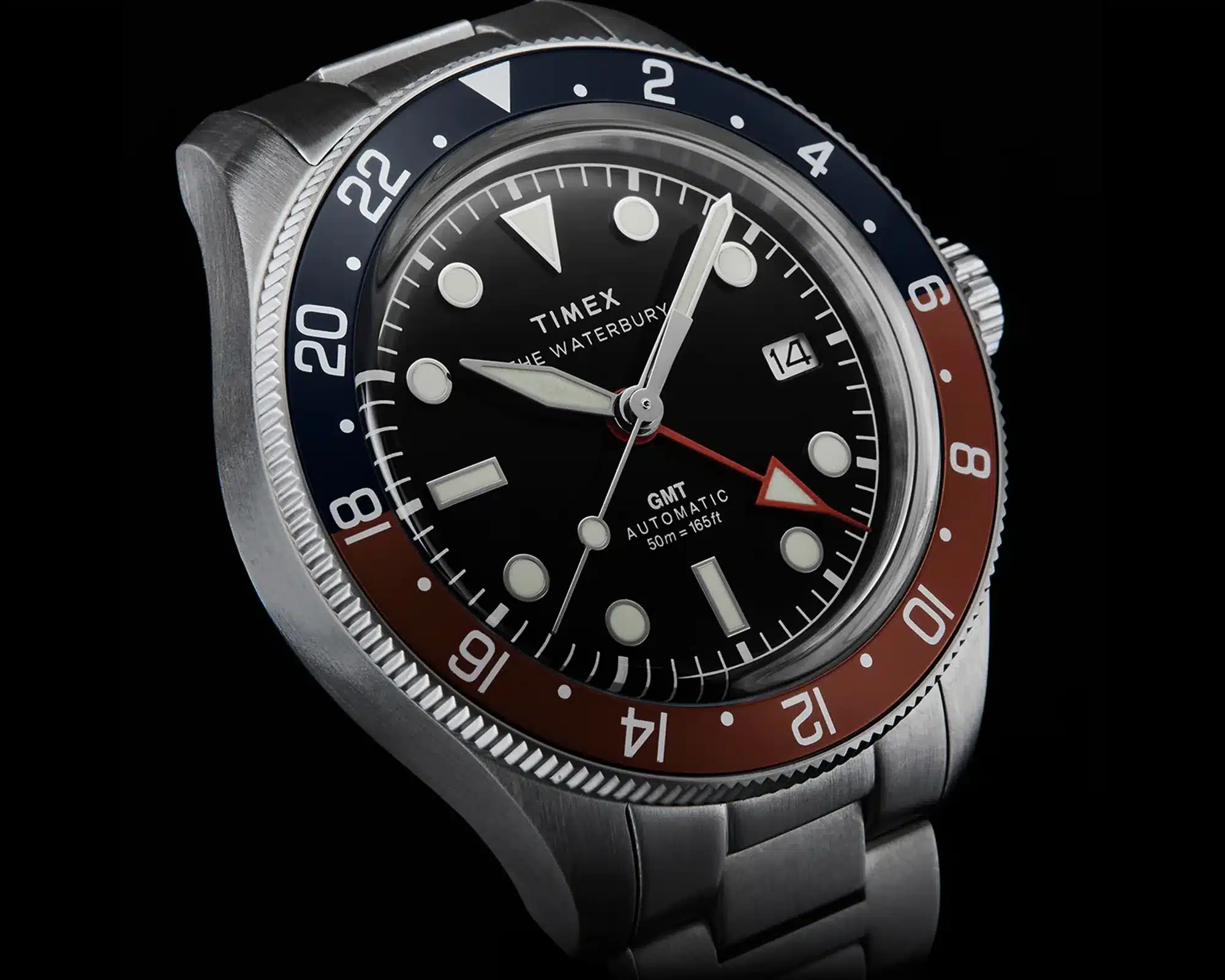
Timex refreshes its Deepwater Reef Titanium 200 with a new dial while keeping the same core specs and automatic movement.
Hodinkee
With a new case, and new movement, it’s a new(ish) look for Audemars Piguet for 2026. But if you look back far enough, you’ll find the brand’s inspiration, and imagine what might be coming.
Hodinkee
Combining the base of the brand's RD#4 "Universelle" movement with new innovations and an added calendar calculator, capped by traditional handcrafts, the brand presents one of the most surprising things they've done in a long time.
Teddy Baldassarre
Fundamentally, mechanical and quartz movements do the same thing: they both tell thetime. But the ways in which they both do it couldn’t be more different. Not to get into acomparison guide here, but in a nutshell: a mechanical watch is powered by a mainspringthat’s either wound by hand or automatically through wrist movement. Energy is releasedthrough a complex system of gears, an escapement, and a balance wheel that beats steadily back and forth. There’s no battery, just centuries-old engineering refined to an art form. These watches aren’t the most accurate, but accuracy isn’t really the point. Craftsmanship, tradition, and the emotional connection are. Quartz watches, on the other hand, are powered by a battery and use an electrical current to make a quartz crystal vibrate at 32,768 times per second. That vibration is incredibly stable, which is why quartz watches are vastly more accurate and require far less maintenance. They’re practical, reliable, and often more durable for everyday use, as well as being notably more affordable. Neither system is inherently “better,” though. Mechanical watches speak to passion and heritage, while quartz prioritizes precision and convenience. Ultimately, it’s less about the movement inside and more about what you want your watch to represent on your wrist. [toc-section heading="Next-Level Accuracy"] Some watches measure accuracy in seconds per day, others by seconds per month. Butthere also exists a small group of t...
In 2025, Grand Seiko released one of its most important watches of all time, the SLGB003. The UFA, also known as the Ultra Fine Accuracy, came equipped with a new caliber, the Spring Drive 9RB2. On the accuracy point, this was a breakthrough that measured precision not by the day, or even the month, but by the year. In
Monochrome
After the successful sale of our fourth Montre de Souscription, we are launching our fifth MdS edition. This time, the collaboration is with Angelus, with a timepiece based on a monopoussoir chronograph with a superb movement. The new Montre de Souscription 5 ticks all the boxes of what we love most at MONOCHROME: vintage inspiration, […]
Monochrome
Created in 2015, the Slim d’Hermès is a watch that combines a certain rigour with elegance, slenderness and the usual design touch of the brand, in particular its typography. First released in a time-only version powered by a micro-rotor movement, it is defined by its clean lines and angular, airy lugs that give the Slim […]
SJX Watches
Having already launched it in yellow gold and then white gold, Piaget has logically followed up with the Polo 79 Two-Tone. While very much predictable, the Polo 79 Two-Tone is arguably the best looking of the trio with its retro combination of metals that are yellow and white gold, and not steel. The new Polo 79 is otherwise identical to its predecessors, right down to the cal. 1200P movement and “slotted” construction of the case and bracelet. Initial thoughts The Polo 79 Two-Tone isn’t a surprise but it’s a good looking watch that has more appeal than its single-colour counterparts. The combination of yellow and white gold feels distinctly 1980s and true to the spirit of the watch. Though not imaginative, the Polo 79 is solidly executed in any of its forms. The case and bracelet are done well, while the cal. 1200P is a tried-and-tested workhorse that is also impressively thin; it’s a little industrial but acceptable overall. The cal. 1200P The fact that the two-tone model is two colours of gold, rather than steel and gold, is a nice touch. But that means it is expensive, even more expensive than the single-tone versions that are already pricey. This costs US$91,000, while the yellow gold model is US$77,000. The price premium doesn’t really make sense since it’s essentially the same thing in terms of gold value and finishing (though it is arguable that white gold costs a little more than yellow). The Polo 79 line-up Polo glamour The two-tone Polo is hardly a...
Worn & Wound
There’s a “don’t change it if it ain’t broke” mentality in Swiss watchmaking. Progress is slow, and it often seems that there’s a general distrust of change. An example of this is in the mechanical movements that power most of our watches. Chances are, you have at least one watch with an ETA 2824 or a movement based on the 2824 in your collection. If you’re like me, you have several. For Swiss-made watches of a certain price point, they are the standard. They are “workhorses” that, while not the most feature-rich, offer reliability and serviceability. And part of the reason for that is that the design has been around, largely unchanged, since the 1970s (the 2824-2, which is the current standard, was released in the 80s). That is, until 2013, when ETA launched 80-hour movements based on the 2824-2. First debuted in a Tissot as the Powermatic 80, ETA nearly doubled the 2824’s power reserve by slowing the escapement’s frequency from 28,800bph to 21,600bph, introducing synthetic components, and increasing the mainspring’s capacity. The biggest update to the 2824 format in a generation (though they no longer use that numbering), as ETA is part of Swatch, these movements gave the group’s catalog of brands under Omega an unexpected edge in the market, but were not available to third-party brands, thus limiting their overall impact. The ETA 2824 featured in a Sinn 556i In 2003, Sellita began supplying movements to third parties as a response to Swatch’s...
Hodinkee
This auditory masterpiece from the Geneva‑based watchmaker is not only an exquisite example of the sonic haute horological state-of-the-art, but is also the most complicated watch ever created in the 30‑year journey of Chopard’s movement manufacture.
Monochrome
We knew this one was coming… Since TAG Heuer unveiled the Monaco Split-Seconds Chronograph in 2024, it felt inevitable that the brand’s advanced rattrapante chronograph movement would make it into the Carrera line. Now, that moment has arrived. The new TAG Heuer Carrera Split-Seconds Chronograph brings the rattrapante complication to the Carrera lineup, wrapped in […]
Monochrome
Louis Vuitton is back with round three of its Tambour Convergene, a classic montre à guichet that displays the dragging hours and minutes through two arched windows. A delightfully compact watch powered by LV’s in-house automatic movement, the 37mm Tambour Convergence takes advantage of the wide rose gold dial plate to showcase its dexterity in […]
Monochrome
Celebrating its original vocation as a Roman goldsmith and creator of fabulous high jewellery pieces glowing with brightly coloured gemstones, Bulgari kicks off LVMH Watch Week with a dazzling Tubogas Manchette in yellow gold. Fitted with Bulgari’s recently unveiled Lady Solotempo BVS 100 automatic movement, the gorgeous cuff marries the brand’s iconic Tubogas design to […]
WatchAdvice
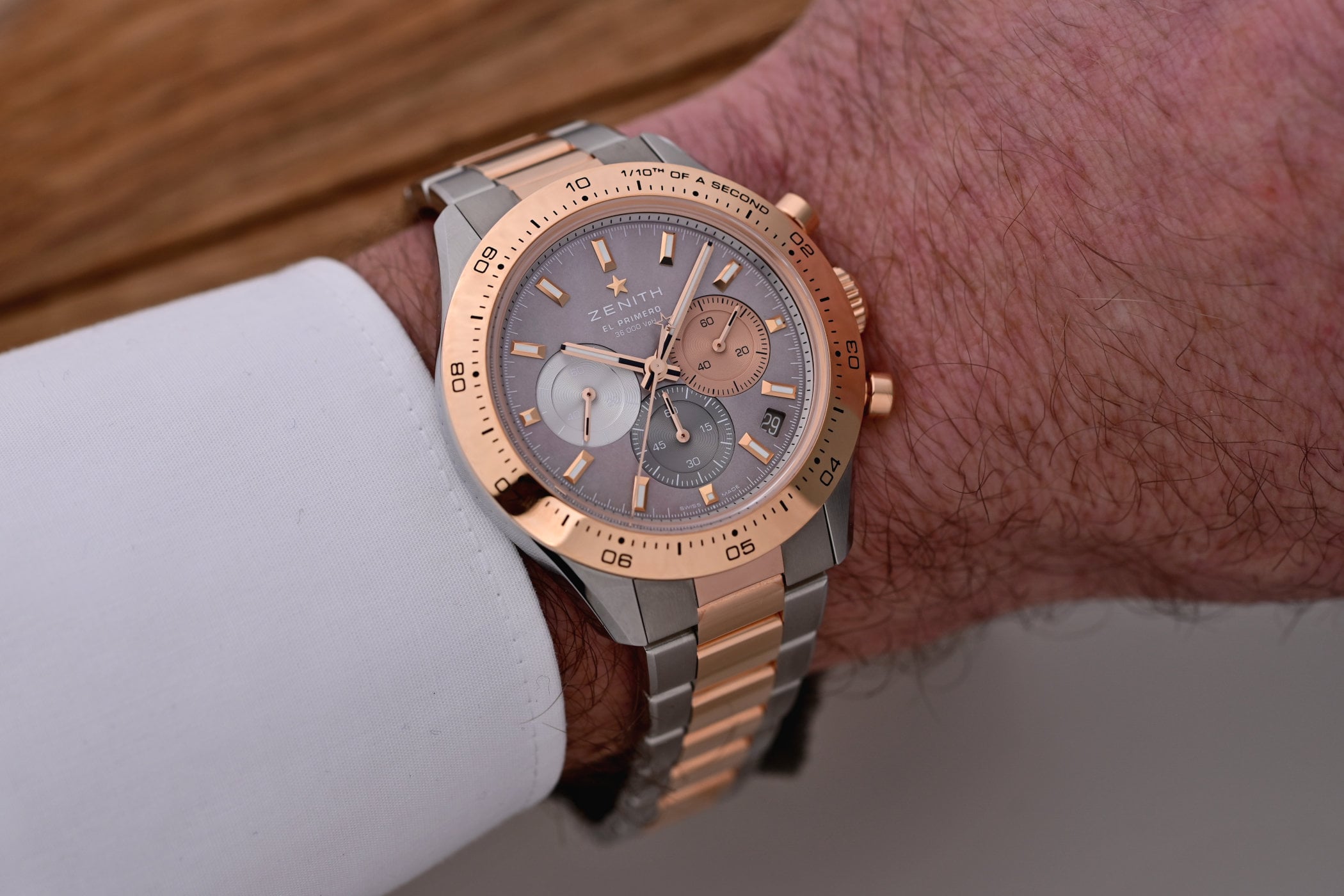
A new take on the classic ceramic DEFY Skyline Skeleton. Black ceramic meets a gold-toned, high-frequency movement for a watch that’s as technically impressive as it is visually striking. Modern, architectural, and unmistakably Zenith! What We Love Full black ceramic case and bracelet combined with the gold dial make it aesthetically appealing! The constant 1/10th of a second sub-counter showcases the complexity of the movement underneath. Quick strap change allows for easy change between a ceramic bracelet or rubber strap for daily versatility. What We Don’t Would’ve liked to see the minute track, but more subdued. In white, it can make the dial seem even busier. While the 1/10th of a second chronograph is great for aesthetics and show of technicality, it doesn’t serve a real purpose. Even though it’s a skeletonised dial, most of the El Primero 3620 SK movement is still closed off. Overall Rating: 8.7/10 Value for money: 8.5/10 Wearability: 9/10 Design: 8.5/10 Build quality: 8.5/10 The world of ceramic watches isn’t what it used to be a decade ago. Advances in materials and manufacturing mean that ceramic timepieces are no longer niche or fragile experiments, but a genuine part of watchmaking. While crafting bold colours in ceramic can present its own challenge, the more classic tones like black, white, or blue are becoming far more achievable, allowing brands to explore the world of ceramic not as a limited edition or one-offs, but as a refined material for e...
SJX Watches
Since taking over Tiffany & Co. in 2020, LVMH has gradually revamped the American jeweller, starting with its retail stores and jewellery. The reboot of its watchmaking division has proceeded more slowly, and with jewelled ladies’ watches first. Now Tiffany & Co. has finally turned to men’s watches with the Tiffany Timer, a chronograph powered by the Zenith El Primero 400 movement. With a dial lacquered in Tiffany’s trademark blue, the Tiffany Timer is easily recognisable. And on the back, the movement gets a hand-engraved, solid gold “Bird on a Rock” on the rotor. The Tiffany Timer is a promising start, but the jeweller clearly still has a long way to go to compete with its rivals, or even luxury marques like Louis Vuitton and Chanel. Initial thoughts The Tiffany Timer has a few things in its favour, but isn’t quite good enough. The design is classical and appealing, though a little generic. Granted, the dial might seem a bit much, but for a small-run edition it makes sense. The baguette diamond indices on the Tiffany Blue dial are a nice touch, as is the “Bird on the Rock” on the rotor; both add a touch of luxe to the watch. The El Primero adds horological credibility, but only up to a degree. The El Primero is a historical movement with many strengths, but the El Primero isn’t quite high-end enough for a watch of this price. It would make more sense in an affordable, steel version of the Tiffany Timer that is presumably in the works. All in all the Tif...
SJX Watches
TAG Heuer is growing its signature line of chronographs literally and figuratively with the Carrera Chronograph “Glassbox” 41 mm. Stylistically similar to its 39 mm counterpart, the new Carrera features a larger “Glassbox” case but is otherwise almost identical, right down to the pump pushers and TH20 automatic movement, though enthusiasts will like the fact that the date display has been eliminated. Initial thoughts The “Glassbox” case is a good starting point, being distinctive but not as unconventional as the Monaco. The Carrera is retro-inspired but of an entirely modern construction, with its bowl-shaped dial, raised flange, and domed crystal. One of my favourite characteristics of the Carrera is the model’s pump-style pushers that give it a distinctive profile. Large and welcoming, the pushers provide the impression of a chronograph built to be used. And the 41 mm has the upside of doing away with the date. While the larger case is arguably not as well suited to the retro case design, it is a good fit for the TH20 that’s a relatively thick calibre. So while bigger, the 41 mm model is better proportioned in some ways. Commercially, the logic of the 41 mm is clear as well, since larger watches do well in many of the markets where TAG Heuer is historically strong, like the United States and Australia. Notably, the 41 mm includes a similarly scaled up version of the versatile seven-link stainless steel bracelet found on the smaller model. It echoes a “b...
Hodinkee
Less material, more craft, and an even thinner movement than the previous Extra Plat.
SJX Watches
Louis Vuitton revives its emblematic Escale Worldtime complication with significant technical upgrades and metiers d’art craftsmanship. Powered by a new family of mid-sized movement from La Fabrique du Temps, the collection comprises two models distinguished by their decorative treatments: the standard Worldtime features a hand-painted flag disc reproducing the brand’s iconic trunk motifs, while the Worldtime Flying Tourbillon elevates the execution with an arduously made champlevé grand feu enamel city ring requiring 40 firings to achieve its kaleidoscopic palette. This reimagining of the worldtime complication draws directly from Louis Vuitton’s heritage of hand-painted personalised monograms on historical trunks - a visual language no other watchmaker can authentically claim - translating the brand’s trunk-making legacy into haute horlogerie. Initial thoughts Last year, Louis Vuitton launched a new line of high-end movements built and decorated to the standards of industrial-haute horlogerie automatics from the likes of Vacheron Constantin or Patek Philippe. These movements debuted in the Tambour Taiko Spin Time, a complication requiring a small-diameter movement - 23 mm in that case. Though finely made, these movements were arguably too small for a ~40 mm watch, as seen with the otherwise excellent Monterey re-issue. Demonstrating the impressive capacity of La Fabrique du Temps (LFT), Louis Vuitton has filled that void in its movement portfolio with a li...
SJX Watches
The resurrected Daniel Roth is keeping up the pace with new launches. At LVMH Watch Week 2026, the brand has finally unveiled an all-new model, one that is not based on a historical watch: the Extra Plat Rose Gold Skeleton. Though mechanically similar to last year’s Extra Plat, the skeleton version features a new movement boasting solid gold bridges that are hand finished, resulting in a movement that is visibly high quality in its execution. While the case is the familiar double-ellipse form that’s the Daniel Roth signature, the skeletonised movement is a new calibre with a modern style that gives this a fresh feel compared to the brand’s recent models that are firmly grounded in the 1990s Daniel Roth aesthetic. Initial thoughts The Extra Plat Rose Gold Skeleton is a good looking watch that’s instantly recognisable as a Daniel Roth, but importantly it will never be confused with a Daniel Roth watch from the 1990s like its siblings in the catalogue that are essentially remakes. This makes it the first genuinely new model in today’s Daniel Roth line-up. The Extra Plat Skeleton marks a new direction for today’s Daniel Roth, but ironically it calls to mind a skeleton model made by Daniel Roth when it was run by Bulgari. That’s not a bad thing; that particular Bulgari-Daniel Roth was one of the best watches produced by the brand during that period. Beyond its novelty, the watch is intrinsically appealing because it is clearly made to high standards. This is appar...
Time+Tide
British designer Oliver Gallaugher's Deep Space makes a full orbit, re-emerging in a new shade of blue with a new Swiss movement.The post Oliver Gallaugher downsizes the starry-dialled Deep Space, introducing a new all-blue dial finish appeared first on Time+Tide Watches.
Time+Tide
Sporting an Italian-made movement and hand-engraved guilloché dial, this upscale offering from Venezianico celebrates Italian craftsmanship.The post Venezianico’s new Rendentore Utopia II limited edition is a horological expression of Italian pride appeared first on Time+Tide Watches.
Fratello
Sometimes, execution is a decisive factor in turning a simple concept into an awe-inspiring one. Armin Strom has mastered that art perfectly with its Tribute 2 series. Creating a watch powered by a caliber with a 100-hour power reserve is a simple goal on paper. With the Tribute line, Armin Strom has shown how to […] Visit Hands-On With The New Armin Strom Tribute 2 Aurum Edition to read the full article.
SJX Watches
British designer Oliver Gallaugher (O.G) has unveiled the Deep Space Blue, a compact follow-up to the debut Deep Space launched two years ago. The refined sizing is thanks to a new movement that’s both smaller and better-equipped than the out-going Unitas 6498-based platform. The 35-piece limited edition features a blued-hued dial with the same stellar theme of the original. To top it off, each dial features a unique pattern of engraved stars, making each individually numbered watch distinct from the next. Initial thoughts Oliver Gallaugher’s original Deep Space, launched in 2023, delivered an interesting and well-executed dial in a watch that wasn’t unnecessarily expensive. I appreciate that O.G has not moved aggressively upmarket with the sequel, as seems to be the trend for independents. Instead, the Deep Space Blue is slightly smaller and slightly nicer, while being only slightly more expensive, resulting in an improved value proposition. The revised dial is largely identical to that of the first generation Deep Space, aside from its blue colour and smaller size. The intersteller theme is conveyed clearly by the design, and no two will be alike; each dial will have unique and recognisable star pattern. The design looks as good in blue as in its original grey, which makes one wonder what it might look like in black or even burgundy. The brand did redesign the hands for the new edition, which were previously flat, matte, and bimetallic. The hands are now polished a...
Question, suggestion, or just want to say hi? Drop a note.