Farer Introduces Two New Moonphase References Featuring Eisenkiesel Quartz and Eastern Arabic Numerals
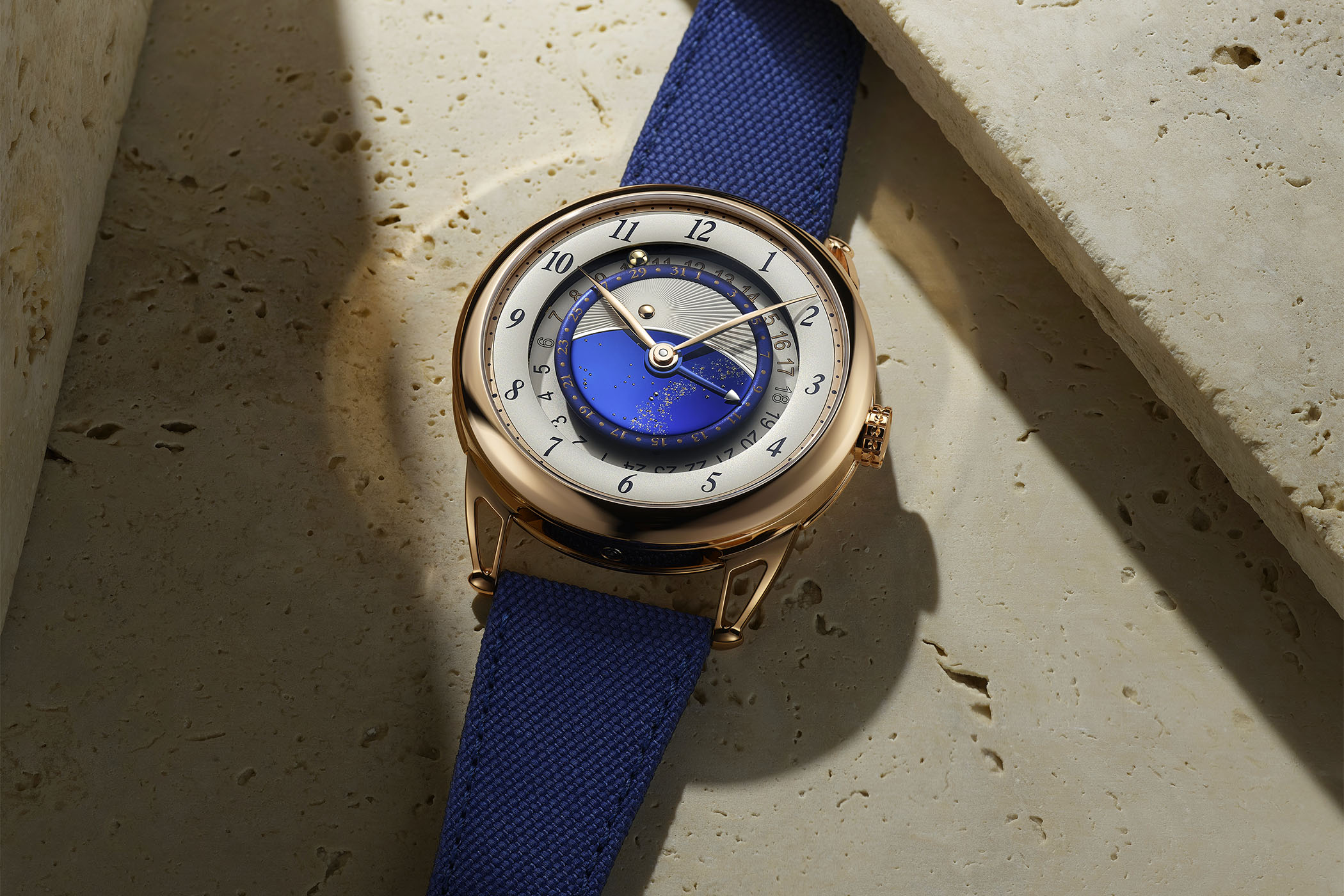
Ah, the moon. Romantic, mysterious, and the subject of many Creative Writing 101 poems, our closest celestial body has also wormed its way onto many a watch face over the years. Moonphase watches evoke a sense of sophistication and elegance, and tend to decorate watchmakers’ dressier lines, despite their somewhat subversive practicality. Farer’s moonphase collection is no exception; first launched in 2023, it took one of watchmaking’s oldest complications and applied it to the British brand’s own design ethos. Here in 2025, we have two new references to pad out that lineup: The Stratton and Burbidge Eastern Arabic Editions. Taking the same basic design of the rest of the line, the new Moonphase models are wrapped in a 38.5mm cushion case with curved sides that wear a “grain twist” texture. The case scallops in the 43.8mm between the lugs to make the strap sit flush, and a rounded crown with a solid bronze cap finishes the vintage-adjacent case look. Inside, both Moonphase models are powered by a Sellita SW288-1 M Elabore Grade movement, with blued screws and a Farer-embossed bridge. The Sellita movement allows for a 45-hour power reserve, and hour, minute, seconds, date, and of course, moonphase functions. Where the models differ is in their case material and dial design. The Stratton Edition-named for Frederick Stratton, a WWI veteran, mathematician, and astronomer who would eventually serve as Director of the Solar Physics Observatory, among many other ...
 Deployant