Watch brandsWatch wikiWatch videosVariousWatch calendarSaved articles
PopularRolexOmegaPatek PhilippeAudemars PiguetTudorGrand SeikoCartierSeikoIWCTAG HeuerBreitlingJaeger-LeCoultreA. Lange & SohneZenith

Results for Patek Philippe Nautilus History

2,979 articles · 372 videos found · page 56 of 112

View Patek Philippe brand page
Best Mickey Mouse Watches: History and Highlights Teddy Baldassarre
Dec 22, 2025

Best Mickey Mouse Watches: History and Highlights

Mickey Mouse is one of the world’s most iconic and recognizable characters and the smiling face of Disney Entertainment, whose vast universe of properties today encompasses everything from Cinderella to Spider-Man to Star Wars. The world first discovered Mickey way back in 1928, in the groundbreaking  black-and-white cartoon Steamboat Willie. It was one of the very first cartoon films with synchronized sound and a milestone achievement for Mickey’s co-creator, Walt Disney, who had founded his eponymous animation studio with his brother Roy O. Disney five years earlier, in 1923. Today, that studio is a worldwide force in entertainment and Mickey Mouse’s image can be found on just about every type of merchandise you can imagine - including wristwatches from a surprisingly diverse range of producers and at a wide range of price points. Nearly a century after first appearing on a watch’s dial, Mickey Mouse continues to claim a small but enduringly popular niche in the world of horology. Here is a brief overview of Mickey Mouse watches from the 1930s to Disney’s centennial year of 2023. [toc-section heading="Ingersoll-Waterbury and the First Mickey Mouse Watch"]   Photo Credit: Secondhand Horology Mickey’s instant popularity with audiences was such that it was only five years after his debut that the character found himself on the dial of a wristwatch. The circumstances behind the creation of the first Mickey Mouse watch, produced by the American watchmaker Inge...

Watches of the Navy SEALs: A History of Service Teddy Baldassarre
Nov 8, 2025

Watches of the Navy SEALs: A History of Service

Before getting into the watches of the Navy SEALs, it's worth establishing some context about these modern-day Spartans. Officially established in 1962, the Navy SEALs, one of the U.S. military’s most elite special operations units, has its origins in World War II, with the formation of organized maritime commando teams for covert reconnaissance of landing beaches and the mounting of coastal defenses. At first designated as Amphibious Scouts and Raiders, and later as Underwater Demolitions Teams (UDTs), the graduates of the Joint Expeditionary Base in Little Creek, Virginia served admirably in the European and Pacific Theater in the years following the 1942 attack on Pearl Harbor. In the Korean War that began in 1950, an expanded force of UDT operatives played a key role, turning their covert and demolition expertise to tunnels, bridges, and other coastal targets, as well as mine sweeping and infiltration.  With another Southeast Asian conflict heating up in Vietnam, President John F. Kennedy urged Congress to allocate more of the military budget to strengthen America’s capabilities in much-needed “unconventional warfare.” The result was the evolution of the UDTs and other special forces into guerrilla and anti-guerilla units that would be able to operate on “Sea, Air, and Land” - the Navy SEALs. SEAL team members, the first generation drawn from the ranks of the UDTs, were trained not only in amphibious activities but skills like hand-to-hand combat and hig...

A History and Guide to Field Watches Worn & Wound
Oct 26, 2025

A History and Guide to Field Watches

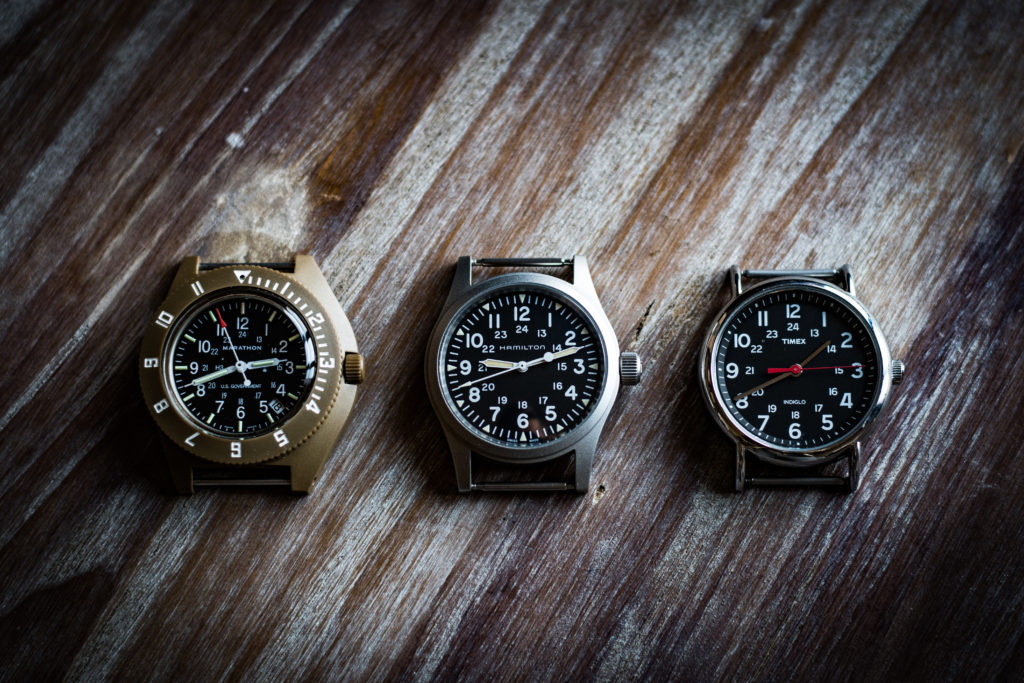
Enthusiasts are constantly searching for the perfect GADA watch; that is, a “go-anywhere, do-anything” watch. One ready for everything from a beach holiday to the office to weekend DIY projects and everything in between. Enter the field watch. Designed for the rigors of war, it now serves as the perfect go-anywhere companion. Constantly evolving throughout the 19th century, the entrenched warfare of the Crimean War and First World War forcibly altered the tactics of Europe’s armies. The ability to sync artillery and multiple infantry units across a front was of the utmost importance. As the (perhaps apocryphal) story goes, the pocket watch traditionally worn proved inconvenient for those at the front. A new class of watches, titled “Campaign,” “Wristlet,” and “Service” watches by various manufacturers, arrived to meet the needs of Europe’s armies. Enthusiasts are constantly searching for the perfect GADA watch; that is, a “go-anywhere, do-anything” watch. One ready for everything from a beach holiday to the office to weekend DIY projects and everything in between. Enter the field watch. Designed for the rigors of war, it now serves as the perfect go-anywhere companion. Constantly evolving throughout the 19th century, the entrenched warfare of the Crimean War and First World War forcibly altered the tactics of Europe’s armies. The ability to sync artillery and multiple infantry units across a front was of the utmost importance. As the (perhaps apoc...

A History and Guide to GMT Watches Worn & Wound
Rolex GMT Master Oct 22, 2025

A History and Guide to GMT Watches

The GMT watch is a bonafide product of the jet age. Though examples of dual-time watches go back to the 19th century, it was the advent of jet-powered commercial aircraft in the 1950s that drove the introduction of this icon of modern watchmaking. Perhaps the best-known example is the Rolex GMT Master, the watch that gave the genre its name. Introduced in 1955 in collaboration with the “World’s Most Experienced Airline,” Rolex designed the watch for Pan-American World Airways pilots that would allow them to have a reference for Greenwich Mean Time (also referred to as UTC or Zulu Time) while maintaining the ability to track local time. This collaboration also resulted in the most recognizable colorway for dual-time watches, Pan-Am’s blue and red colorway.   The GMT watch is a bonafide product of the jet age. Though examples of dual-time watches go back to the 19th century, it was the advent of jet-powered commercial aircraft in the 1950s that drove the introduction of this icon of modern watchmaking. Perhaps the best-known example is the Rolex GMT Master, the watch that gave the genre its name. Introduced in 1955 in collaboration with the “World’s Most Experienced Airline,” Rolex designed the watch for Pan-American World Airways pilots that would allow them to have a reference for Greenwich Mean Time (also referred to as UTC or Zulu Time) while maintaining the ability to track local time. This collaboration also resulted in the most recognizable colorway f...

A History and Guide to Bulova Worn & Wound
Bulova Joseph Bulova was just Oct 19, 2025

A History and Guide to Bulova

Joseph Bulova was just twenty-four when he founded a company that would revolutionize American watchmaking. Immigrating to the United States from Bohemia in 1870, he founded the J. Bulova Company in 1875 on New York City’s Maiden Lane, specializing in jewelry and watch and clock repair. The business grew, and by 1911 the Bulova Company began producing table clocks and pocket watches. The next year, Joseph Bulova opened a Biel, Switzerland plant for the mass production of watches. The J. Bulova Company was reincorporated as the Bulova Watch Company in 1923, symbolizing its shift into watch production. Joseph Bulova was just twenty-four when he founded a company that would revolutionize American watchmaking. Immigrating to the United States from Bohemia in 1870, he founded the J. Bulova Company in 1875 on New York City’s Maiden Lane, specializing in jewelry and watch and clock repair. The business grew, and by 1911 the Bulova Company began producing table clocks and pocket watches. The next year, Joseph Bulova opened a Biel, Switzerland plant for the mass production of watches. The J. Bulova Company was reincorporated as the Bulova Watch Company in 1923, symbolizing its shift into watch production. The post A History and Guide to Bulova appeared first on Worn & Wound.

The NATO Strap: A History And 10 Best NATO-Strap Watches Teddy Baldassarre
Sep 30, 2025

The NATO Strap: A History And 10 Best NATO-Strap Watches

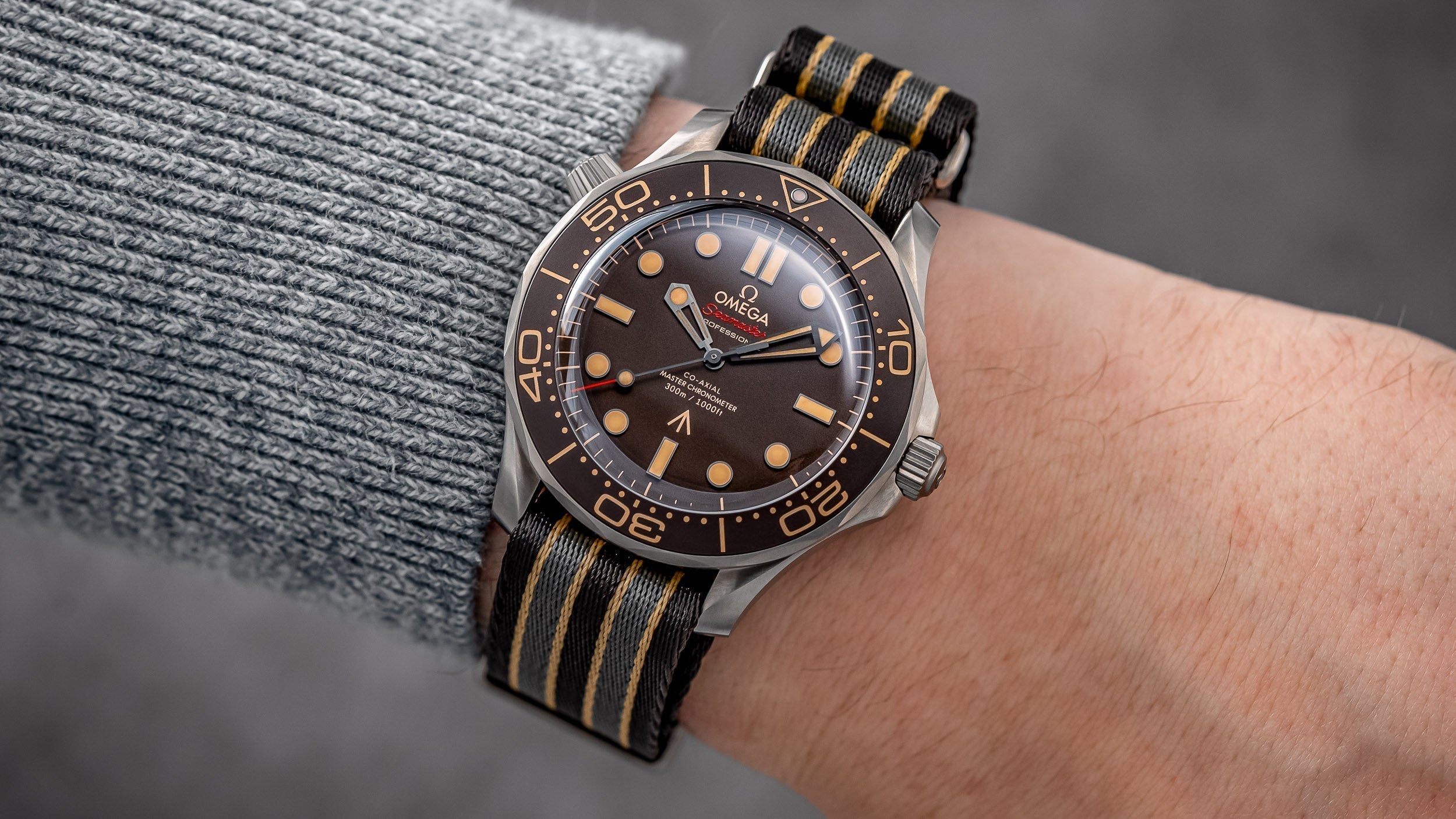
Once a style that appealed mainly to a small but diehard niche, watches with NATO straps have moved from their original realm of military utility to become a popular option in the mainstream world of watches, even at some of the highest echelons of sporty luxury. If you're considering adding a NATO strap to your collection, or are simply curious where they came from and what your choices are on the market today, we tackle all your questions below.  Why Is It Called a NATO Strap? One would assume, from the strap’s plainly utilitarian, military look, that the name is derived directly from an association with the North Atlantic Treaty organization (NATO), the intergovernmental alliance of 30 European and North American nations for mutual military defense. However, this is not exactly the case.  Essentially, a so-called NATO strap is any one-piece strap, made of nylon or some other fabric, that loops under the watch’s case and through its spring bars to hold it securely in place on the wrist. Like all inventions that originated for a military purpose, its design emphasized utility, practicality, and secure use on the field of battle: such a strap construction would hold the watch in place, albeit dangling precariously, even if one of the spring bars were broken. Armed forces in both the United States and Great Britain used these types of fabric straps as early as the mid-20th Century (predating the formation of NATO in 1949); at one point, they were referred to in shorth...

A History and Guide to Oris Worn & Wound
Oris Nestled Sep 28, 2025

A History and Guide to Oris

Nestled in a small valley in the Jura Mountains, Hölstein is a typical Swiss town that has endured for centuries. At its center, a pastel pink factory has seen many of them. Its story began in 1904 when Paul Cattin and Georges Christian purchased the closed Lohner & Co watch factory. Searching for a name, they settled on a nearby brook - Oris. It turned out to be a winning formula. By 1911, Oris was the largest employer in Hölstein with 300 workers and two additional factories in Holderbank and Como. They introduced staff housing to cope with the influx of talent. Just fourteen years later they opened two additional factories, paving the way for future growth. Nestled in a small valley in the Jura Mountains, Hölstein is a typical Swiss town that has endured for centuries. At its center, a pastel pink factory has seen many of them. Its story began in 1904 when Paul Cattin and Georges Christian purchased the closed Lohner & Co watch factory. Searching for a name, they settled on a nearby brook - Oris. It turned out to be a winning formula. By 1911, Oris was the largest employer in Hölstein with 300 workers and two additional factories in Holderbank and Como. They introduced staff housing to cope with the influx of talent. Just fourteen years later they opened two additional factories, paving the way for future growth. The post A History and Guide to Oris appeared first on Worn & Wound.