Introducing: The Patek Philippe 6301P Grande Et Petite Sonnerie, With Jumping Seconds
The first-ever stand-alone grande et petite sonnerie from Patek.
4,129 articles · 600 videos found · page 98 of 158
The first-ever stand-alone grande et petite sonnerie from Patek.
Quill & Pad
The GPHG foundation’s rules for the Jewellery category state that the watches must demonstrate exceptional mastery of the art of jewelry and gem setting. This is an especially difficult category to judge from still photos as you really need to touch and manipulate the jewelry and see the gems reflecting from different angles. Our panelists settle on two favorites as top contenders despite the fact that they haven't had a chance to handle these treasures.
Hodinkee
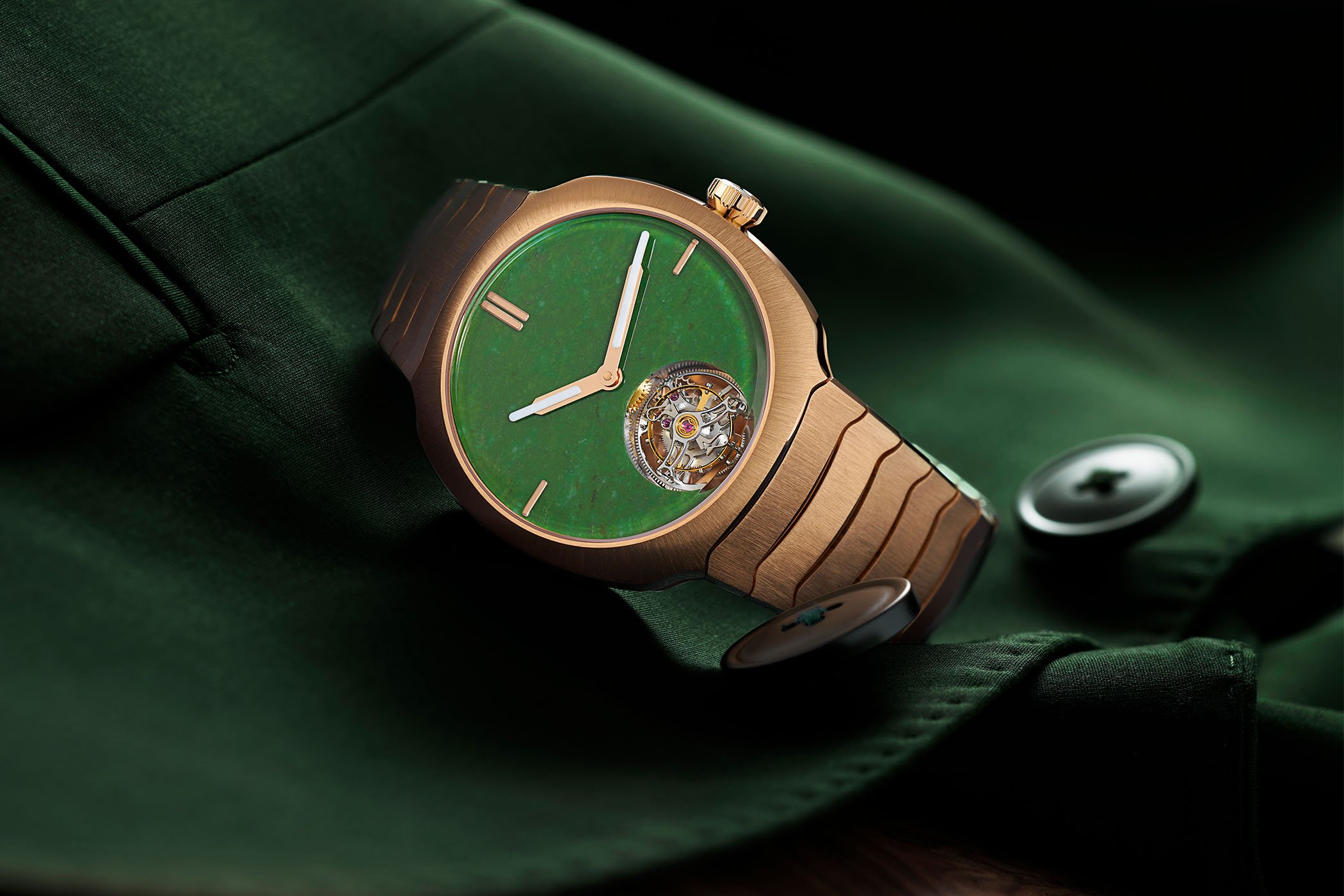
A new green fumé to brighten your day.
Quill & Pad
The Mechanical Exception category features men’s or ladies’ watches with a special mechanism such as an innovative or sophisticated display, an automaton, a belt-driven movement, a striking or other acoustic function, or any other original and/or exceptional horological concept. And we surely have an intriguing set of finalists in the Mechanical Exception category this year: everything from a tumbling triple-axis tourbillon to an electronically controlled hybrid timepiece to a paper-thin mechanical watch and an automaton minutely replicating a 16-cylinder engine. And even more!
Hodinkee
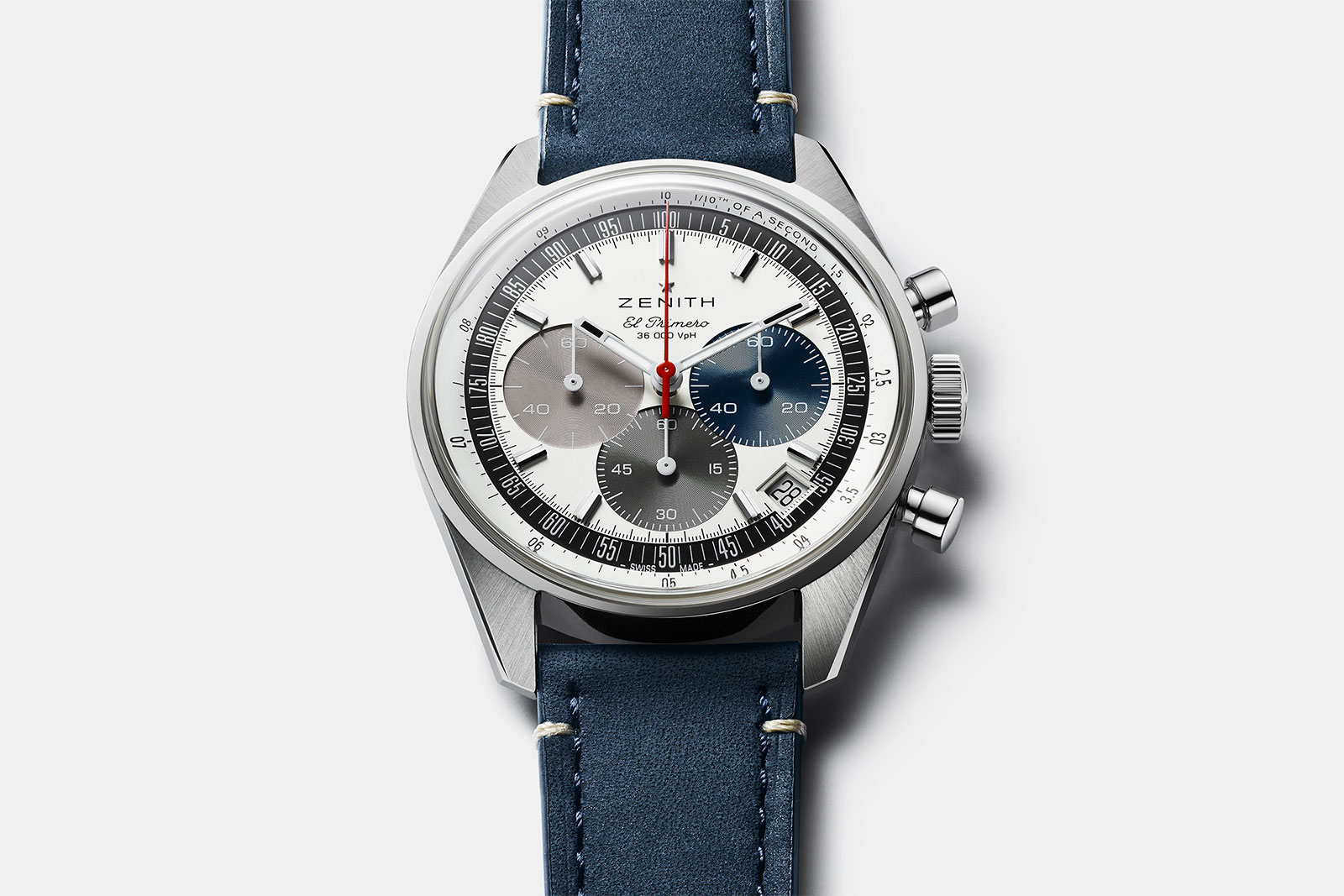
A modern reinterpretation of a classic Heuer design.
Video
Hodinkee
A green dial and bezel for a tough diver's chrono.
Hodinkee
The full bronze option.
Hodinkee
Meet the new lead ship in the armada of Carrera chronographs.
SJX Watches
Last year’s debut of the Code 11.59 by Audemars Piguet was widely panned, with with most of the criticism centred on the dial that was widely regarded to be flat. That left the highlight of the new model to go unnoticed – a new case made up of an intriguing blend of geometric forms and intricate edges. Just after launching warmly-received variants with smoked dials (following last year’s Bolshoi edition in smoked-finish enamel), Audemars Piguet has taken the covers off the Code 11.59 Selfwinding Flying Tourbillon Chronograph, which follows the aesthetic direction set by the record-setting Code 11.59 Tourbillon Openworked “Only Watch”. Initial thoughts Audemars Piguet did well in combining two classical complications – a flyback chronograph and flying tourbillon – in a surprisingly contemporary and slightly sporty watch, which owes its looks to the complementary movement and case design. The skeletonised movement echoes the clean, angular lines of the case and open-worked lugs. A newly-developed movement – and one seemingly designed from ground-up as a skeleton – the cal. 2952 is thoughtfully constructed with a neatly symmetrical layout. As important is the high-contrast finish that emphasises the skeletonisation, achieved with rhodium-plated bridges against a matte-black base plate. The styling of the watch addresses the key shortcoming of the original Code 11.59 – the plain dial – and allows the Code 11.59 to come into its own with a cohesive des...
Revolution
Revolution and custom watch brand UNDONE collaborate to release this cool limited-edition watch, and, even better, a part of the sales proceeds will go towards causes supported by the DGR.
Video
Hodinkee
After almost three decades, a bracelet at last.
Hodinkee
Code 11.59 continues to evolve, with one of the most complex watches in the collection yet.
Hodinkee
New, blue, and limited to 100, too.
Hodinkee
Cermet time again.
Hodinkee
Chugga chugga choo choo!
Video
Another world record set by the reigning king of ultra-thin watchmaking.
Hodinkee
A trio of lightweight additions to Bulgari's collection of contemporary sport watches.
Manually wound magic.
Revolution
Revolution is proud to re-issue the Hanhart 417 Chronographin quick-patinating bronze CuSn8, inspired by the brassing seen in vintage 417 Chronographs
Less practical. More fun.
Video
SJX Watches
In 1816, Louis Moinet accomplished a first in watchmaking: a timepiece that could precisely track elapsed time. Measuring periodicity on demand had been accomplished before, but the French watchmaker’s invention gave it the functionality and exactness that we expect today. In assessing prototypes, we often tend to forgive their shortcomings and rosily reminisce, rewriting flaws as charms. Moinet’s timepiece, however, was a prescient opus. The layout of the dial had the now-familiar large central hand and elapsed time in subdials. Two pushers controlled the start, stop and reset functions, the power reserve lasted over 30 hours, and the mainspring could be wound while the timing mechanism was engaged to allow for longer timing runs. Most impressive, though, was its precision. Louis Moinet’s compteur de tierces of 1816. Image – Louis Moinet Named the compteur de tierces, or “timer of thirds”, Moinet’s invention ran at 216,000 beats per hour, measuring time down to one-sixtieth of a second. To allow for this ambitious exactitude to be utilised, the central chronograph hand completed revolutions once per second – such that the user could easily see which sixtieth of a second the period in question ended on - and the watch had an extra sub-dial for tracking elapsed seconds in addition to those for the minutes and hours. Whys and wherefores An impressive story, except that it’s missing something. Why did Moinet build it? And what did he use it to measure? A...
Hodinkee
A new dial for one of the core references from CFB.
Hodinkee
Just in time for summer, a new sport watch and resort wear collection.
Hodinkee
The heir to an estimable legacy makes its yellow-gold debut.
Hodinkee
It's golden hour in this week's round-up of vintage watches from around the web.
Video
Question, suggestion, or just want to say hi? Drop a note.