
Walter Storz founded the company in Pforzheim in 1927; the brand name Stowa is contracted from STOrz WAlter. The firm initially produced standard German wristwatches but became historically important during the Second World War as one of the five companies authorised by the Reichsluftfahrtministerium (RLM) to produce B-Uhr (Beobachtungs-Uhr, observation watch) navigational wristwatches for Luftwaffe pilots. Alongside IWC, A. Lange & Söhne, Wempe, and Lacher (later Laco), Stowa produced both the Type-A (12-hour scale) and Type-B (minutes-outer) B-Uhr in 55mm cases with onion crowns wearable over flight gloves.
After the war Stowa operated through the West German economic miracle as a regular mid-market watchmaker, producing Antea dress watches (the brand's original 1937 Bauhaus-influenced design) alongside Flieger reissues and the Marine collection inspired by the brand's marine chronometer heritage. The firm passed through several ownership transitions before being acquired in 1996 by Jörg Schauer, the German watchmaker behind the Schauer brand of independent mechanical watches. Schauer relocated production to Engelsbrand in the Black Forest and refocused the brand around its B-Uhr heritage.
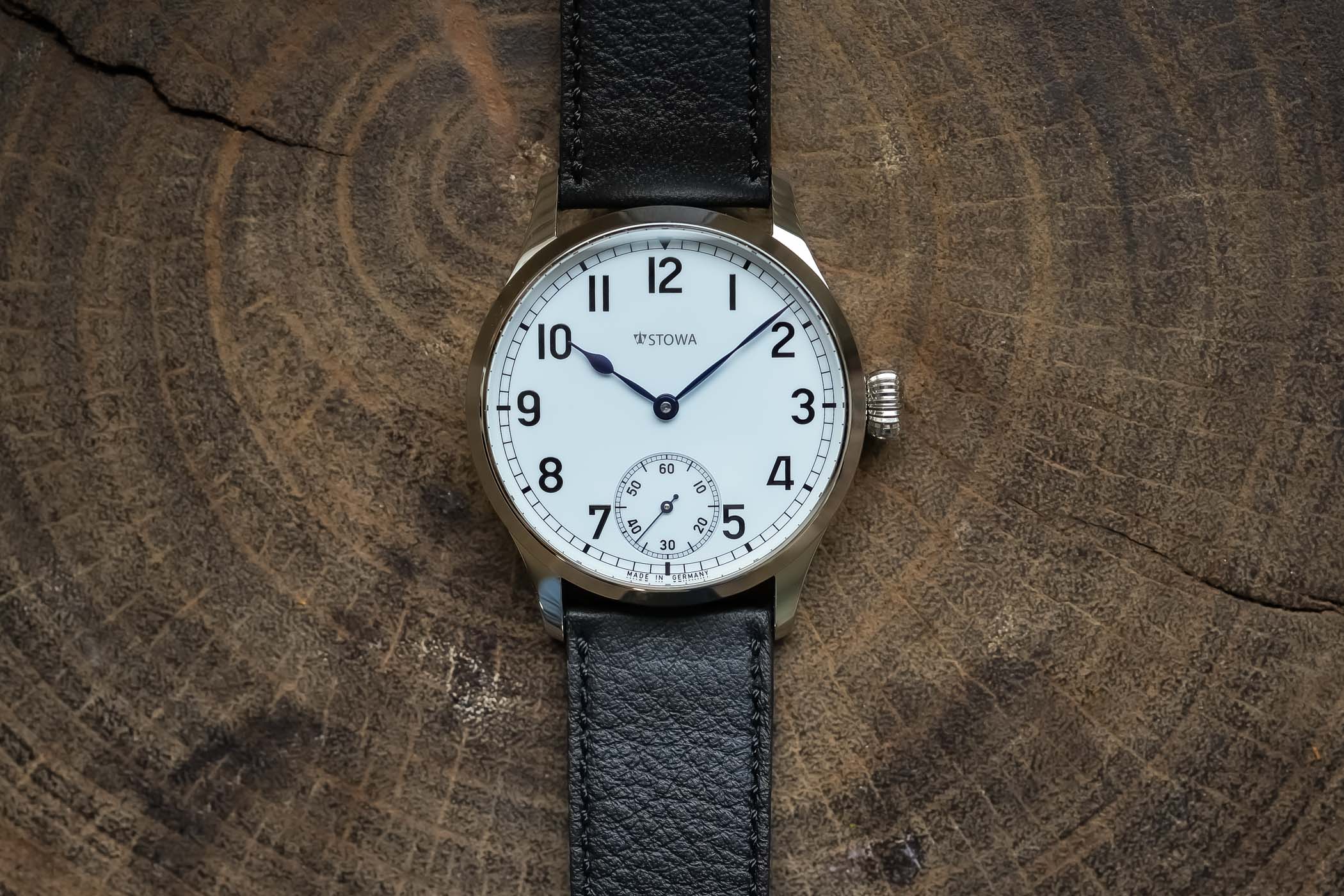
Today Stowa produces about 2,000-3,000 watches per year, sold direct from the Engelsbrand workshop and through a small network of dealers. The catalogue spans the Flieger Klassik (modern reissue of the WWII Type-A and Type-B), Flieger Bronze, Marine (railroad-grade dress chronometers), Antea (Bauhaus-influenced minimalist dress), and Prodiver (modern dive watches). Movements are largely ETA 2824-2, Sellita SW200, and modified Soprod / La Joux-Perret calibres, with prices spanning EUR 800-2,500 for the bulk of the catalogue.




Comments
No comments yet, be the first to weigh in.