Hodinkee
Introducing: The IWC Portugieser Perpetual Calendar 'Boutique Edition'
A classic IWC complication packaged in a robust Armor Gold case.
Hodinkee
A classic IWC complication packaged in a robust Armor Gold case.
Hodinkee
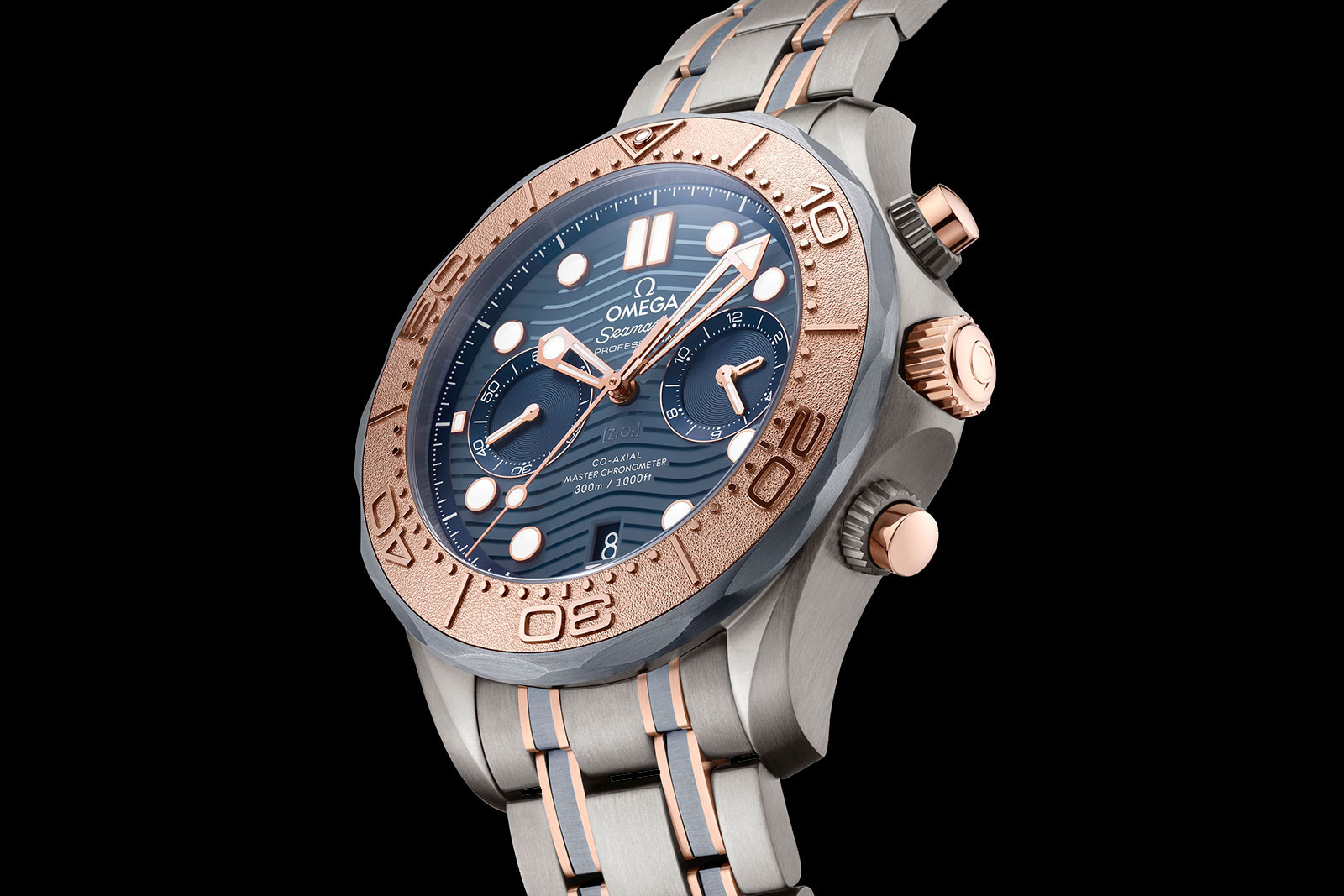
Ahoy, matey! A trio of sports chronographs are pulling into port!
A complicated Portugieser is the new home for IWC's caliber 89900.
Monsieur Breguet meets Herr Kurt Klaus.
SJX Watches
Characterised by a wide, sober dial with Arabic numerals and small seconds at six o’clock, the quintessential IWC Portugieser wristwatch has almost always been an extra-large, hand-wound timepiece, starting with the original ref. 325 of 1939. But for Watches & Wonders 2020, IWC has introduced a smaller take on the classic with the Portugieser Automatic 40. Available in four references, three in steel and one in pink gold, the new Portugieser Automatic is 40.4 mm wide and 12.4 mm high, making it quite a bit smaller and slimmer than the popular Portugieser 7-days ref. 5007. Notably, the latest Portugieser isn’t the first compact, self-winding variant of the model. In fact, it harks back to the little-known and uncommon Portuguese ref. 3531 of 1998 that was 35 mm and automatic. But in terms of design, the Portugieser Automatic 40 looks very much like a contemporary model. In fact, with the railway minute track and small seconds at six, it’s almost a dead-ringer for the Portugieser Hand-Wound Eight Days ref. 5102. Inside is the relatively new cal. 82200, which first made an appearance in the Da Vinci Automatic Edition “150 Years” in 2018. Offering a 60-hour power reserve, the movement is equipped with the latest-generation Pellaton winding system, which replaces the push-pull winding pawls that are found in the entry-level automatic cal. 32000. In addition, the automatic wheel, pawls and cam are made of wear-resistant ceramic. Key facts and price IWC Portugiese...
SJX Watches
Now 15 years old, the IWC Portugieser Perpetual Calendar was almost always a 44.2 mm watch powered by a 7-day automatic movement (though IWC installed the same movement in the smaller, 42.3 mm ref. 5022 for several years). For Watches & Wonders 2020, IWC debuts the all-new Portugieser Perpetual Calendar 42 that’s simpler and far more affordable. Instead of the long-standing 7-day calibre, the Perpetual Calendar 42 is powered by a simpler but nevertheless robust movement with a more conventional 60-hour power reserve. The new calibre is also thinner, resulting in a case just 13.8 mm high, versus 14. 9 mm before. And as the model name implies, the Perpetual Calendar 42 has a 42.4 mm case, which is available in pink gold, or stainless steel – a first for the regular collection. Until now, with the exception of a 2014 limited edition, IWC has only ever offered the Portugieser Perpetual Calendar with a gold or platinum case. All of that means making the perpetual calendar is significantly more affordable – the steel version costs half of the 7-day model in 18k gold. An unusual perpetual While the dial retains the traditional perpetual calendar configuration with three sub-dials for the calendar – making it cleaner and more legible the the 7-day version – it also includes a central seconds hand, which is extremely uncommon on a perpetual calendar watch. Functionally, the perpetual calendar is similar but simplified as compared to the 7-day iteration. As with all IWC...
SJX Watches
Piaget first introduced the Altiplano Ultimate Concept in 2018 as an exercise in pushing the limits of mechanical watchmaking – the thinnest mechanical wristwatch ever, at 2 mm in its entirety. Now the experimental creation has become reality at Watches & Wonders 2020, available as a wholly-customisable, special-order timepiece that’s still just 2 mm high – but accompanied by a staggering retail price. No stranger to ultra-thin watches – the brand debuted its first extra-thin movement, the 9P, in 1957 – Piaget already claimed the title of thinnest-mechanical-watch-on-the-market in 2013 with the 3.65 mm-high Altiplano 900P. Most of the tricks relied on to create that record-setting movement have been repeated in the new Altiplano Ultimate Concept and its cal. 900P-UC, but in more extreme form, with the new watch boasting five additional patents for features relating to the extra thinness. A sliver of cobalt alloy Notably, the case and main plate of the Altiplano Ultimate Concept are one and the same, a single piece machined out of cobalt-based alloy for strength – gold is too soft and might bend if strapped too tightly on the wrist. As in the 900P, the case functions as the main plate of the 900P-UC, revamping a layer from the movement and reducing the overall thickness of the watch. But despite being a single piece, the case and main plate can be specified with different finishes for contrast. For instance, the cobalt-alloy case can retain its natural colour wi...
SJX Watches
Continuing with the musical theme that begun last year with Les Cabinotiers ‘”La Musique Du Temps”, an assortment of one-off, chiming watches, Vacheron Constantin unveils Les Cabinotiers “The Singing Birds” at Watches & Wonders 2020, the first time-only watches of the line that showcase the brand’s dexterity in traditional decorative crafts. The “Singing Birds” watches interpret the overmatching musical motif artistically with songbirds, rather than literally with striking watches as most of last year’s watches were. Available in four different unique executions, the watches feature dials that combine an engine-turned time display with champleve enamelling, each depicting a different bird – hummingbird, blue jay, blue tit, and robin. From left: Blue Tit, Blue Jay, Hummingbird, and Robin But the watch is more than brightly-feathered aesthetics, it also features a wandering hours display. Though the complication originated 17th century clocks, it remains relatively rare, with the most famous modern-day examples being the Audemars Piguet Star Wheel and Urwerk. Vacheron Constantin has only ever utilised the wandering hours on limited edition or unique timepieces, like the Métiers d’Art Savoirs Enluminés of 2016. The current hour is displayed across an arc marked out in minutes – as the hour “wanders”, it simultaneously indicates the minutes. It takes an hour for the number to cover the arc, and as it disappears on the far right, the next hour...
The Privé Collection Asymétrique debuts with an openworked in-house movement, caliber 9623 MC
One of the most chic Cartier Tank watches ever made is back.
Revolution
The new Cartier Tank Asymétrique is a celebration of French individualist spirit from a company that knows a thing or two about doing things its own way.
SJX Watches
Cartier has made it an annual tradition to revive one of its iconic case shapes as part of the compact and focused Cartier Privé line, having started with the Tank Cintrée in 2018, followed by the Tonneau last year. Now at Watches & Wonders 2020, the jeweller has recreated one of its most divergent Tank models with the Cartier Privé Tank Asymétrique, in the classic time-only format as well as a contemporary skeleton version. The Tank Asymetrique Skeleton Introduced in 1936, the Asymétrique was not conceived as a Tank wristwatch at the time of its launch, and was known as the Parallélogramme or Losange after its case shape. It deviated from a conventional rectangular case literally, with the case brancards offset in opposite directions, transforming the rectangle into a diamond, while the dial was rotated by 30 degrees to the right. A distinctive feature of the dial on the vintage Parallélogramme watches were the alternating Arabic numeral and baton hour markers, probably conceived to improve legibility of the skewed dial. In the modern day, the Asymétrique was incorporated into the Tank wristwatch line-up when it was reproduced as a limited edition. That happened first in 1996 with a limited edition with a small case size, with 300 examples in yellow gold and another 100 in platinum, both having the same dial style as the vintage originals. (And in 1999 a tiny run of watches was made to commemorate the handover of Macau to China.) The CPCP Tank Asymetrique of ...
SJX Watches
Hot on the heels of the Santos-Dumont XL hand-wind, Cartier has dropped four limited edition variants of the same at Watches & Wonders 2020, each dedicated to one of Alberto Santos-Dumont’s most significant aircraft. Within just a decade, the pioneering Franco-Brazilian aviator designed and piloted diverse methods of conquering the skies, from balloons and dirigibles to heavier-than-air aircraft. The four flying machines commemorated by the new limited edition Santos-Dumont watches each represent a different milestone in his career, starting with his first balloon, the Brésil of 1898, to his greatest feat, the La Demoiselle plane of 1908. Increasing in edition size as the price decreases with the preciousness of the case, all four editions are mechanical, powered by the ultra-thin 430 MC found in the Santos-Dumont XL, which is actually a Piaget 430P. Though they share the same movement, the editions are not all the same size. The first three are in the large Santos-Dumont case, with dimensions of 43.5 mm by 31.4 mm, perfectly appropriate for a modern-day dress watch, offering just the right balance between elegance and presence. The last and most expensive edition, on the other hand, is platinum and XL size, meaning it is 46.6 mm by 33.9 mm. Santos-Dumont XL in platinum (extreme left), and the trio of large-size editions Santos-Dumont “Le Brésil” Limited to 100 pieces, “Le Bresil” is named after Santos-Dumont’s first flying machine, a hot-air balloon not...
SJX Watches
As it does every couple of years, or decades, Cartier reintroduces one of its iconic wristwatches, this time the Pasha de Cartier. Launched in 1985 and a big hit in the decade after, the Pasha was Cartier’s original round-case bestseller, long before the Ballon Bleu. Three decades on, the new Pasha makes its debut once again at Watches & Wonders 2020 as a full-fledged collection with models for both men and women, from time-only to skeleton tourbillon, as well as diamond-set versions. Variants of the new Pasha 41 mm for men Mysterious origins Despite having a round case – Cartier is most famous for its shaped watches like the Tank and Santos – the Pasha is amongst the most historically-important Cartier timepieces, apparently. Legend has it that Cartier first created a water-resistant watch in 1934 for the fabulously wealthy Pasha of Marrakesh, Thami El Glaoui, who wanted a watch he could wear while swimming. The result was one of the first-ever luxury-sports watches. While the Parisian jeweller no doubt made a watch to fulfil the Pasha’s request, it was most likely a rectangular Tank Etanche, rather than anything resembling today’s Pasha watch. Inspired by that tale, the modern-day Pasha was born in 1985, penned by the hand of Gerald Genta, the prolific designer whose heyday in the 1970s and 1980s saw him create a string of hits, ranging from the Audemars Piguet Royal Oak to the Bulgari Bulgari. Genta’s creations were often avant-garde in their day, and his...
Hodinkee
A familiar design now moves a bit differently.
Deployant
How do you put the 'dress' in a watch? In this time of quarantine, we ponder over this age old question to bring you our insights.
Time+Tide
Remember the moral of The Emperor’s New Clothes? When something is universally praised, you become unwilling to speak out, even if something is gravely wrong on a fundamental level. That’s how I feel about the Cartier Tank. I know this is wildly sacrilegious. The Cartier Tank is, after all, one of the most iconic watches … ContinuedThe post NOT ON MY WATCH: The one “truly strange and unnerving” detail that ruins the Cartier Tank for this writer appeared first on Time+Tide Watches.
SJX Watches
French watchmaker Cyril Brivet-Naudot made his debut two years ago with the Eccentricity, a time-only watch that’s fascinating and impressive on many fronts. Not only is it almost entirely made by hand, the Eccentricity is intriguing in design and mechanics – from the overall architecture to details like the key-winding mechanism and regulator-style time display with a twist, and above all, the proprietary escapement. Just 29 years old, Mr Brivet-Naudot began working on the Eccentricity after graduating from the École Polytechnique Fédérale de Lausanne (EPFL), one of Switzerland’s best technical universities. Prior to that, he earned a diploma in watchmaking from the Lycée Edgar Faure in Morteau, a small town in eastern France that borders Switzerland. The school has gained a reputation for producing imaginative watchmakers, many pursuing a similar style that’s inspired by 19th century pocket watch movements, including Theo Auffret, a peer of Mr Brivet-Naudot. The result of three years of development, the Eccentricity is very much in the same vein as the watches produced by Mr Brivet-Naudot’s fellow graduates. It artfully combines a 19th century aesthetic sensibility with exotic features, including a novel, free-eccentric escapement, for which the watch was named. And it is built by hand: with the exception of the mainspring, hairspring, jewels and crystals, every component of the watch was made from scratch by Mr Brivet-Naudot, without the aid of CNC machine...
SJX Watches
Though Cartier has a huge range of watch case styles, many are iterations from a handful of original designs that were usually created in the early 20th century. Only a handful stick closely to the design of the vintage originals, most notably the Tank Cintree and Crash, and now the new Santos-Dumont XL, newly launched at Watches & Wonders 2020. Originally (re)launched in last year in two sizes – both with quartz movements only – the Santos-Dumont is now available with a hand-wind, mechanical movement in a larger, but not too large, case. The elegant design that channels the spirit of the vintage original remains, with only the dimensions and movement changed. And the new hand-wind Santos Dumont XL is also well priced enough that it would be a value proposition in more ordinary times. Not only is the new model available in steel, which was absent before, the 18k gold version is almost 30% cheaper than the equivalent from the earlier generation. The Santos-Dumont XL in steel And in two-tone steel and 18k pink gold, which is a very 1980s look Since 1904… The watch gets its name from Alberto Santos-Dumont, a Brazilian inventor and aviator who spent his adult life in Paris. A minor celebrity in France for exploits in planes and airships, Santos-Dumont was a larger than life character: in the family history recently published by Francesca Cartier Brickell, The Cartiers: The Untold Story of the Family Behind the Jewelry Empire, Santos-Dumont is described as travelling betw...
Deployant
IWC Schaffhausen has unveiled the Portugieser Hand-Wound Monopusher Edition “Laureus Sport for Good”. With this special edition, the Swiss luxury watch manufacturer continues its support of the social sports projects run by its partner, Laureus Sport for Good.
Quill & Pad
The Naked Watchmaker (TNW), aka Peter Speake-Marin, does a series of deconstructions of a broad selection of modern Breguet watches and movements, starting with the Classique 5177, a relatively simple (for Breguet) three-hand dress watch with date. Here Ian shares a few details that The Naked Watchmaker didn't reveal.
Quill & Pad
Piaget is one of Martin Green's favorite brands ever; he ranks it on par with Patek Philippe and Vacheron Constantin. Apart from an exciting history, Piaget has also been at the forefront of Martin's favorite 'complication,' the ultra-slim watch. Check out the latest versions of Piaget's svelte Altiplano here!
Wash your hands, relax, and enjoy this week's roundup of watches from around the web.
Quill & Pad
As much as they may glitter, the diamonds are not the most critical thing in a diamond-set watch: the setting is. Creating a diamond-set watch is not at all as easy as many think, but when done right the result can be spectacular – as is the case with the Patek Philippe Diamond Ribbon Joaillerie.
Question, suggestion, or just want to say hi? Drop a note.