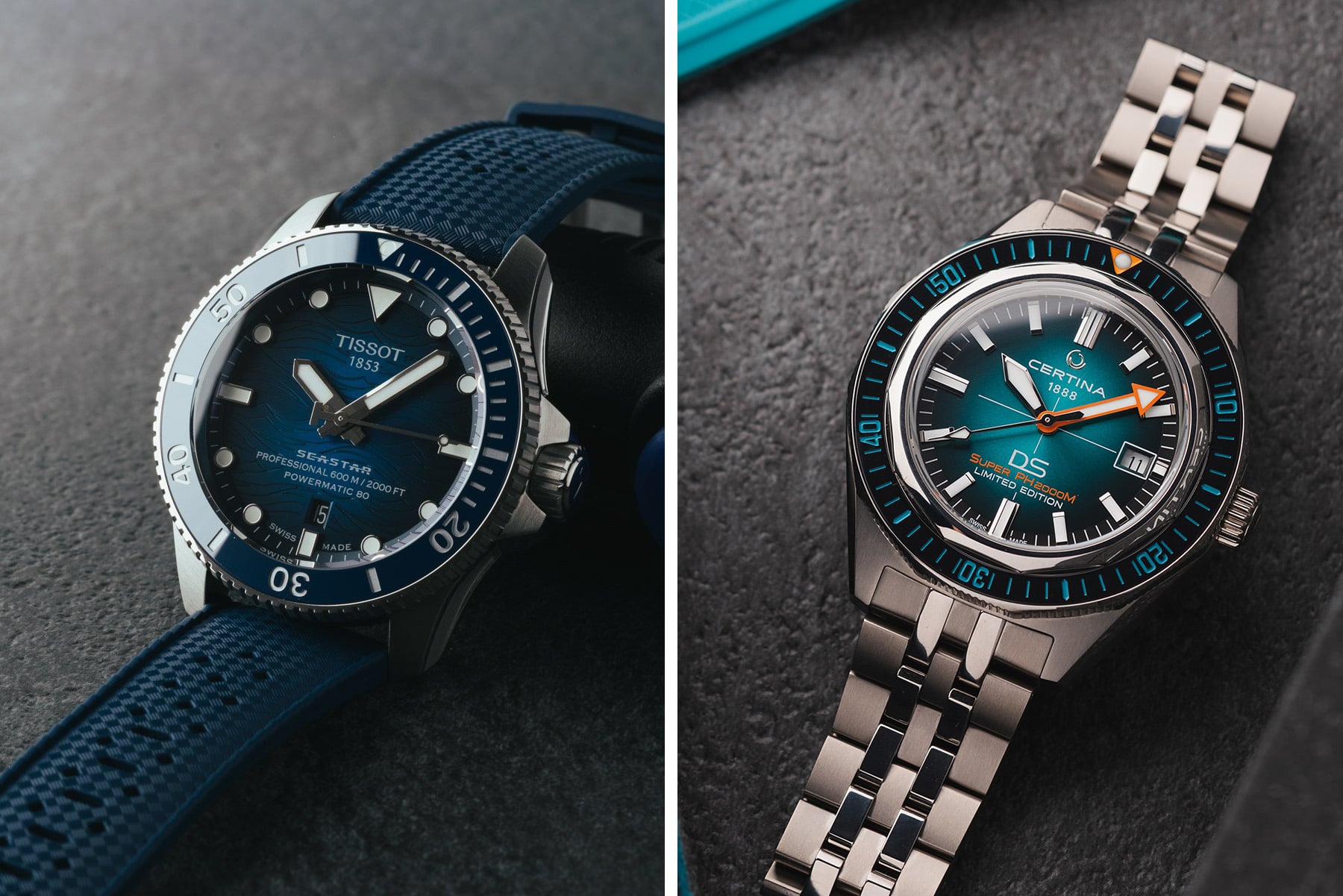
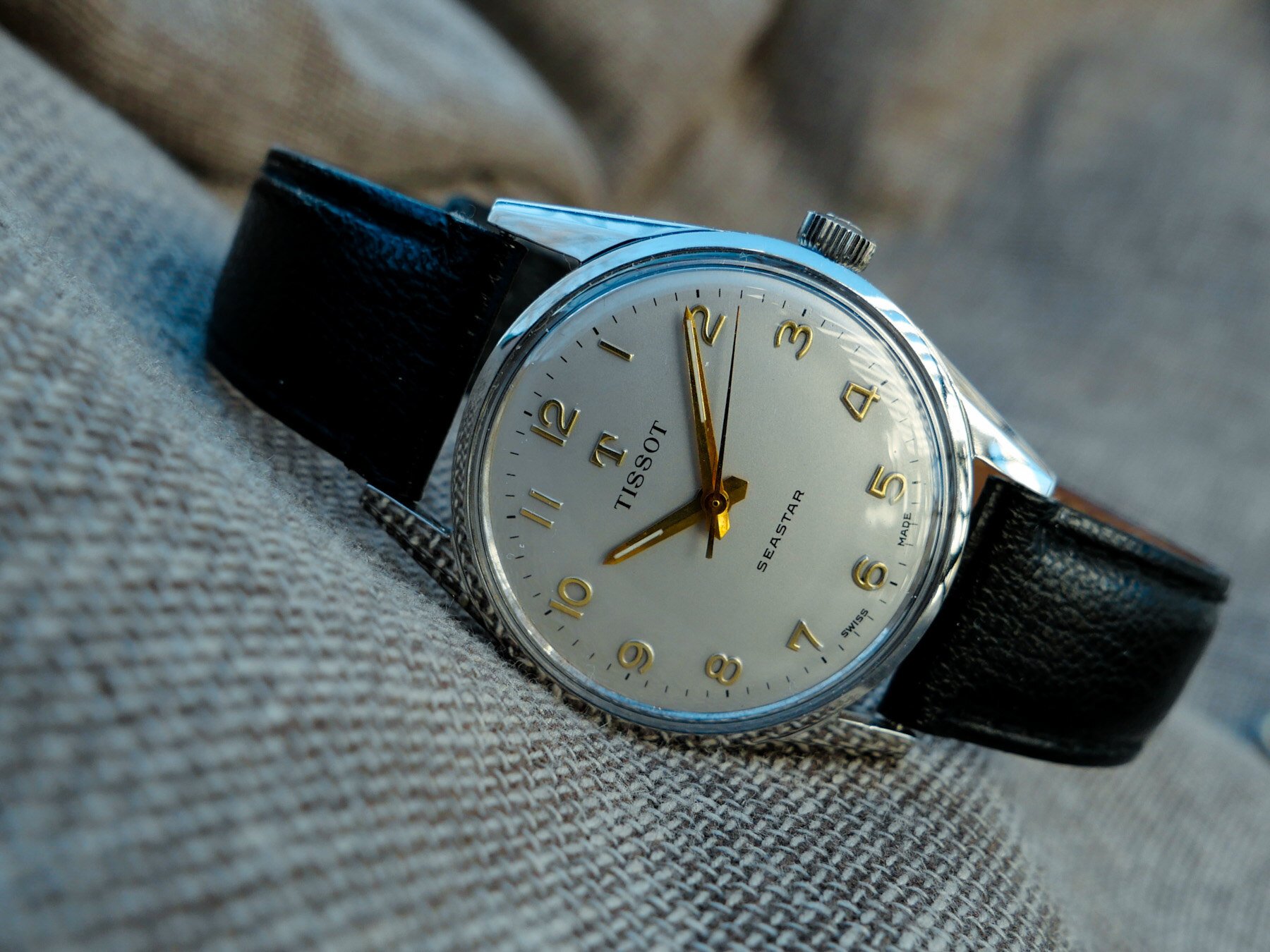
Tissot launched the original Seastar in 1956 as a thin, water-resistant wristwatch positioned between dress and sport. The reference was deliberately understated: 35mm steel case, Cal. 27.4-21A automatic, 30m water resistance. Through the late 1950s and early 1960s the Seastar evolved into more sport-oriented configurations with the addition of a rotating bezel and improved gasket sealing; the Seastar Visodate (1957) added the day-window display.
The 1960s and 70s saw the Seastar take its more recognisable cushion-case dive-watch form: 42mm steel cushion case, rotating bezel, 200m water resistance, ETA-base automatic movements. The Tissot Seastar was sold widely in European and North American markets as a value-priced Swiss alternative to the Submariner and Fifty Fathoms, with retail prices typically a fraction of those references.
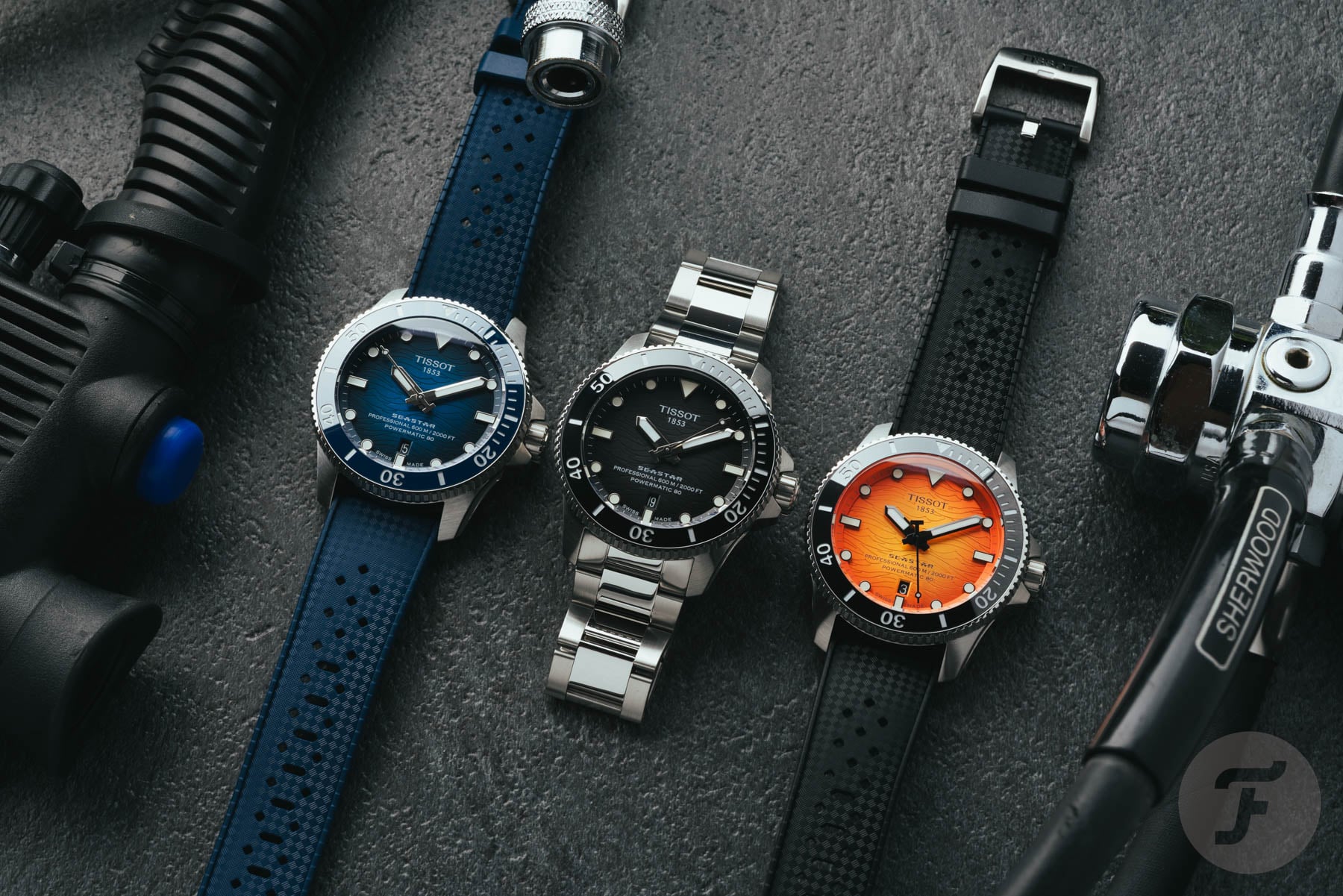
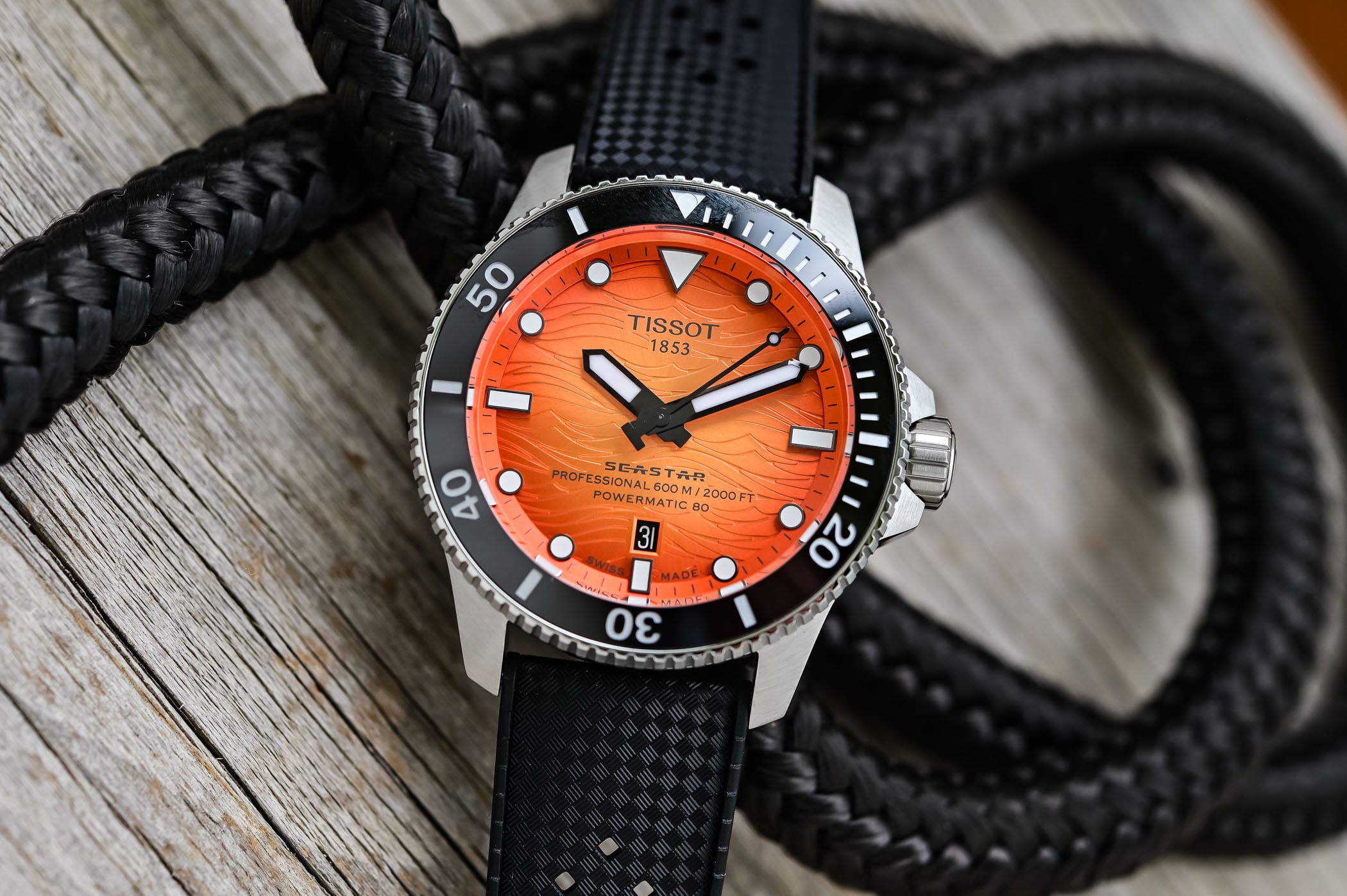
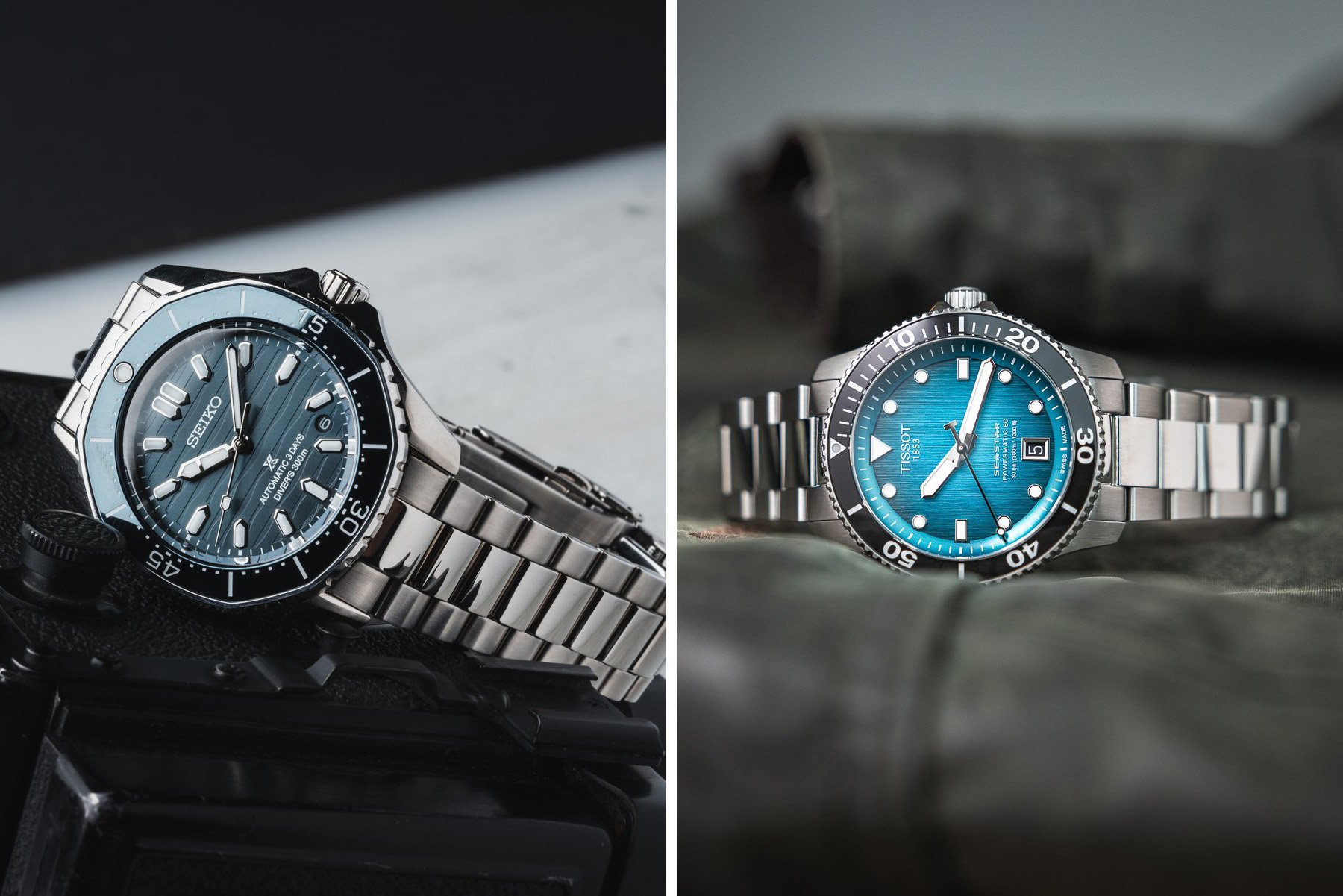
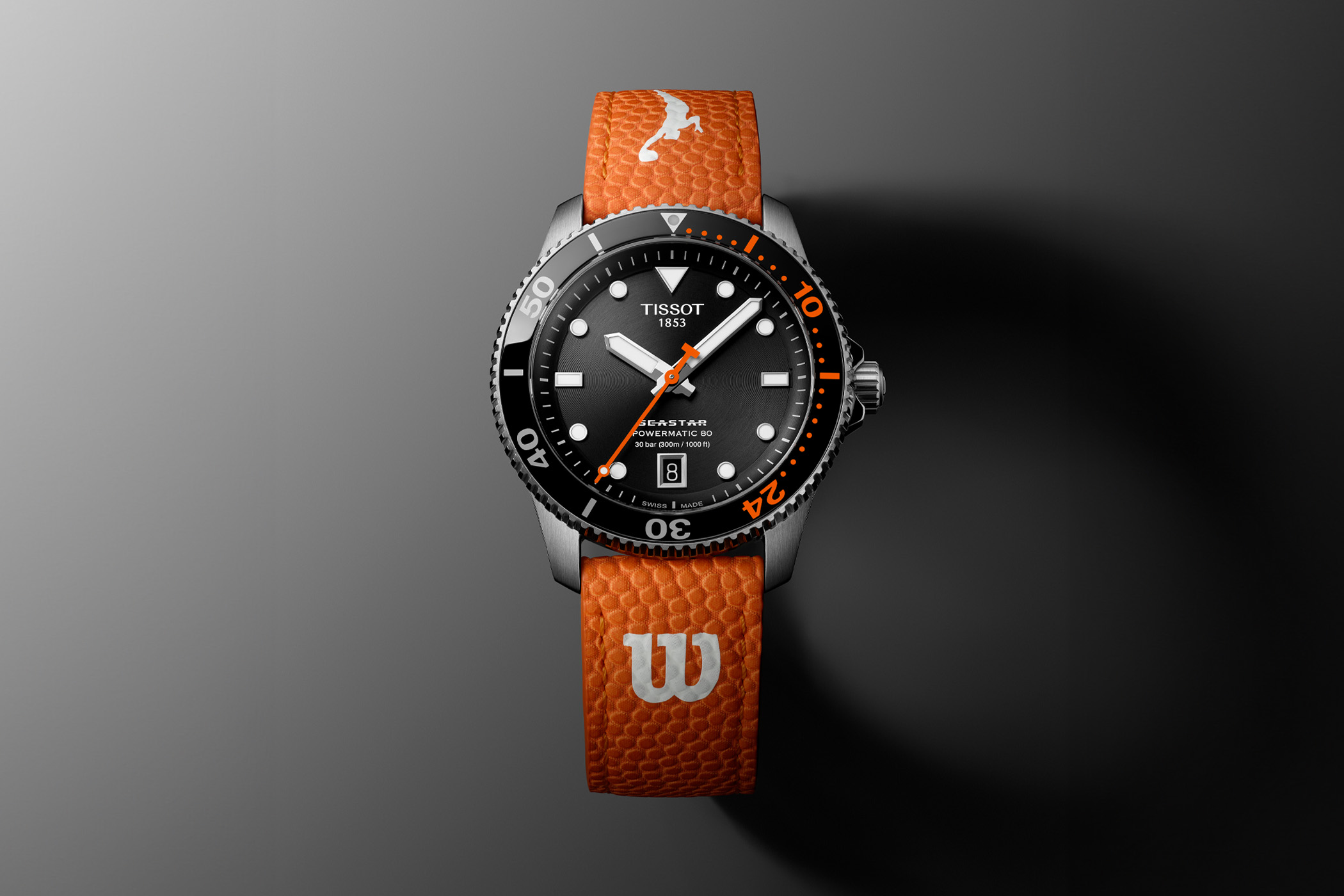
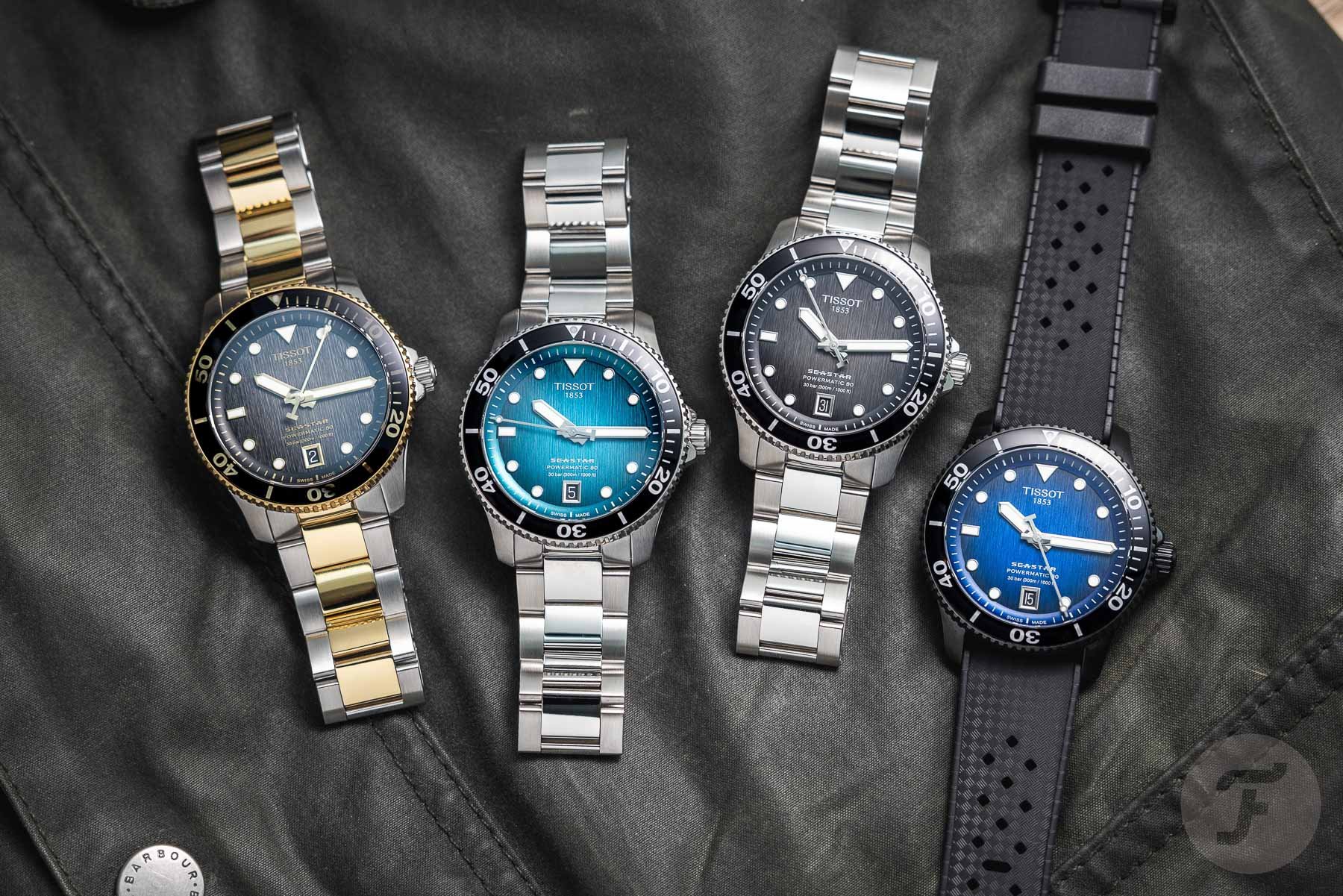
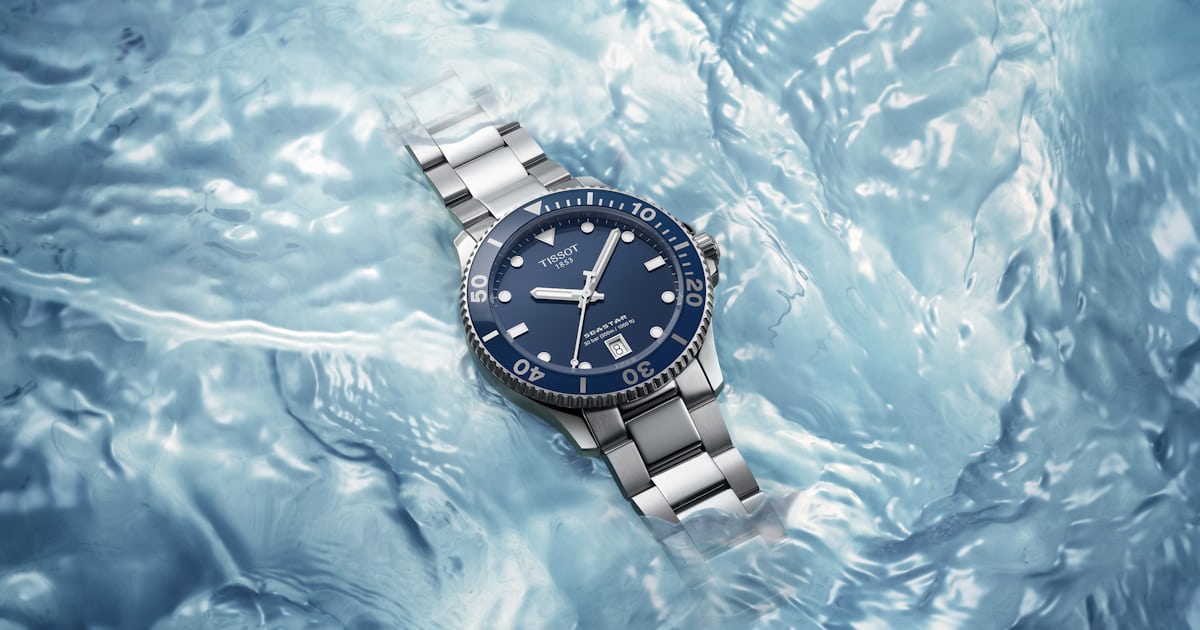
The current Seastar generation centres on three sub-lines. The Seastar 1000 Powermatic 80 40mm (ref. T120.407) is the most-sold modern Tissot diver: 40mm steel case, ceramic dive bezel, Cal. Powermatic 80 (ETA C07.611-base) automatic with 80-hour power reserve, sapphire crystal, 300m water resistance. The Seastar 2000 Professional 46mm is the heavier-spec professional diver with 1,000m / 100 bar water resistance, helium escape valve, and a more robust case construction. A range of quartz Seastar variants covers the entry-level segment.
Tissot Seastar retail spans approximately USD 350 (quartz Seastar 1000 entry) to USD 875 (Powermatic 80 1000 40mm) to USD 1,200+ (Seastar 2000 Professional). The line is one of the bestselling Swiss-made automatic dive watches in the world, and the Powermatic 80 reference in particular is consistently named among the best value-per-spec automatic dive watches under USD 1,000. Annual production is high (estimated low six figures across all variants), and the Seastar serves as Tissot's primary entry point for new collectors into Swiss automatic ownership.


Comments
No comments yet, be the first to weigh in.