
Ulysse Nardin established the manufacture in 1846 in Le Locle. By the 1860s, the firm was winning international precision chronometry competitions, and by 1878 Ulysse Nardin had become the favoured supplier of marine chronometers to the world's navies. The manufacture's pocket-watch-style chronometers were used aboard ships of 50 national navies including the US Navy, Imperial Russian Navy, Imperial Japanese Navy, and numerous European fleets. Observation chronometers from Neuchâtel or Geneva in the period 1860-1920 routinely carried Ulysse Nardin dials.
The quartz crisis decimated the brand. In 1983, Rolf Schnyder acquired Ulysse Nardin and paired with horological philosopher Dr Ludwig Oechslin to reinvent the brand as a pure haute horlogerie independent. The resulting Trilogy of Time series of astronomical wristwatches, culminating in the 1992 Tellurium Johannes Kepler, re-established Ulysse Nardin as a technical force. The 2001 Freak took that further: a watch with a flying carousel movement rotating around a central pivot, no conventional hands or dial, and pioneering use of silicon components in escapement wheels.
In 2014 the Kering Group acquired Ulysse Nardin, providing capital for industrial expansion without compromising the independent identity. Modern Ulysse Nardin produces the Marine collection (direct heritage successors to the historic chronometers), Diver collection (the X Nemo Point at 200m), Freak X (approachable silicon avant-garde), Executive and Classico (dress), and Blast (skeletonised sport line). The manufacture continues to pioneer silicon component production in-house.
![The New Ulysse Nardin Freak [X] Becomes The Most Wearable Freak Yet](https://revolutionwatch.com/wp-content/uploads/2026/06/01-Ulysse-Nardin-Freak-X.jpg)
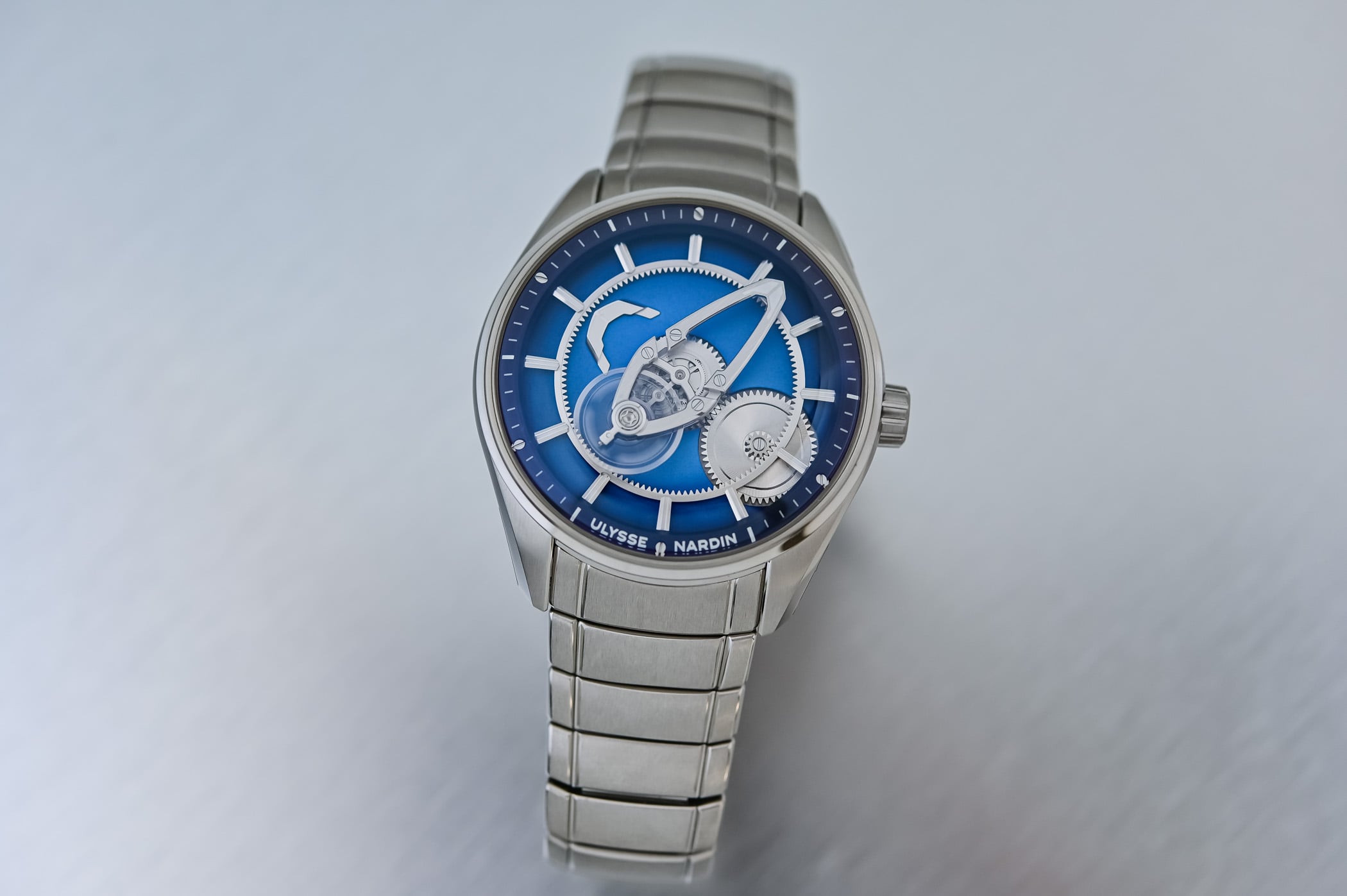
![The Evolution Of A Freak: Introducing The “Crowned” Ulysse Nardin Freak [X]](https://www.fratellowatches.com/cdn-cgi/image/anim=false/wp-content/uploads/2026/06/FREAK-X_ULYSSE-NARDIN_2323-500-Lifestyle-COVER.jpg)


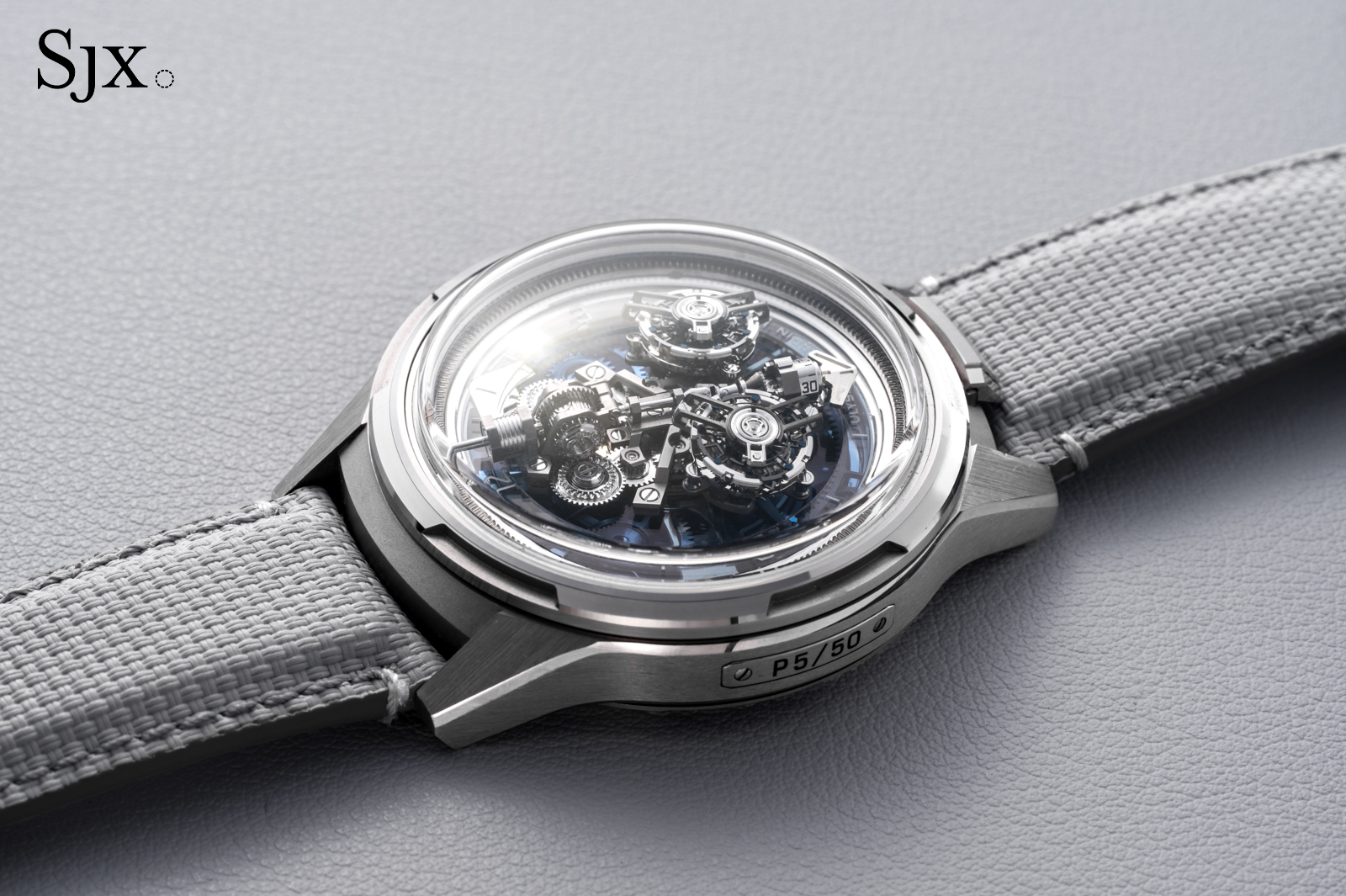
![New: Ulysse Nardin [Super] Freak](https://deployant.com/wp-content/uploads/2026/05/SUPER-FREAK_ULYSSE-NARDIN_2520-500LE-3A-BLUE_3A-5-1200x1500.png)