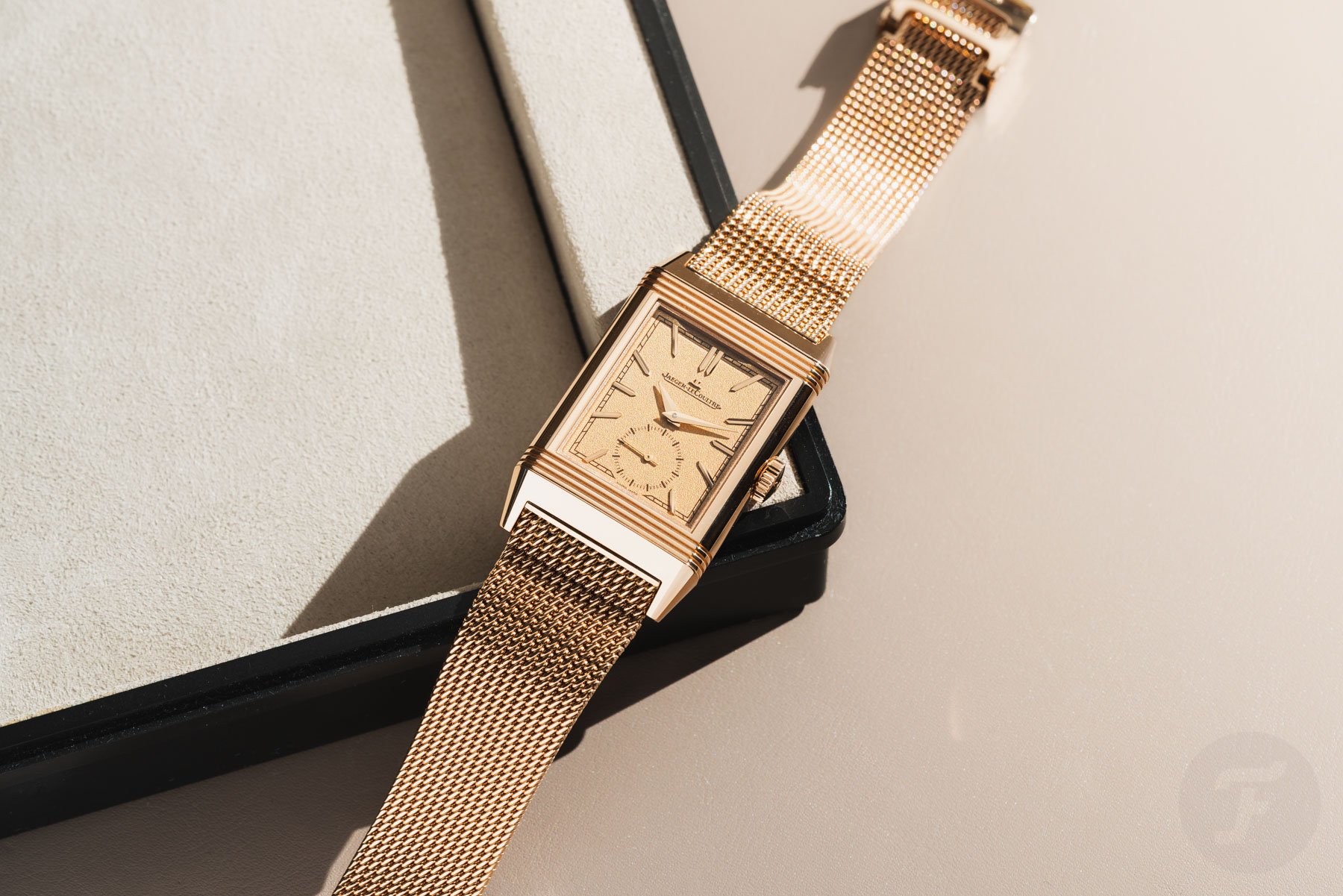
Louis Cartier (1875-1942), grandson of the firm's founder Louis-François Cartier, ran the Cartier Paris atelier through the early 20th century. He had previously designed the 1904 Santos wristwatch for aviator Alberto Santos-Dumont (one of the first genuine men's wristwatches). In 1917, with WWI ongoing, Louis Cartier sketched a new wristwatch design inspired by the Renault FT-17 light tank that he had observed at the Western Front: the tank's top-down silhouette featured a central rectangular hull flanked by parallel tracks; the design transformed into a rectangular dial flanked by two vertical "brancards" (lugs).
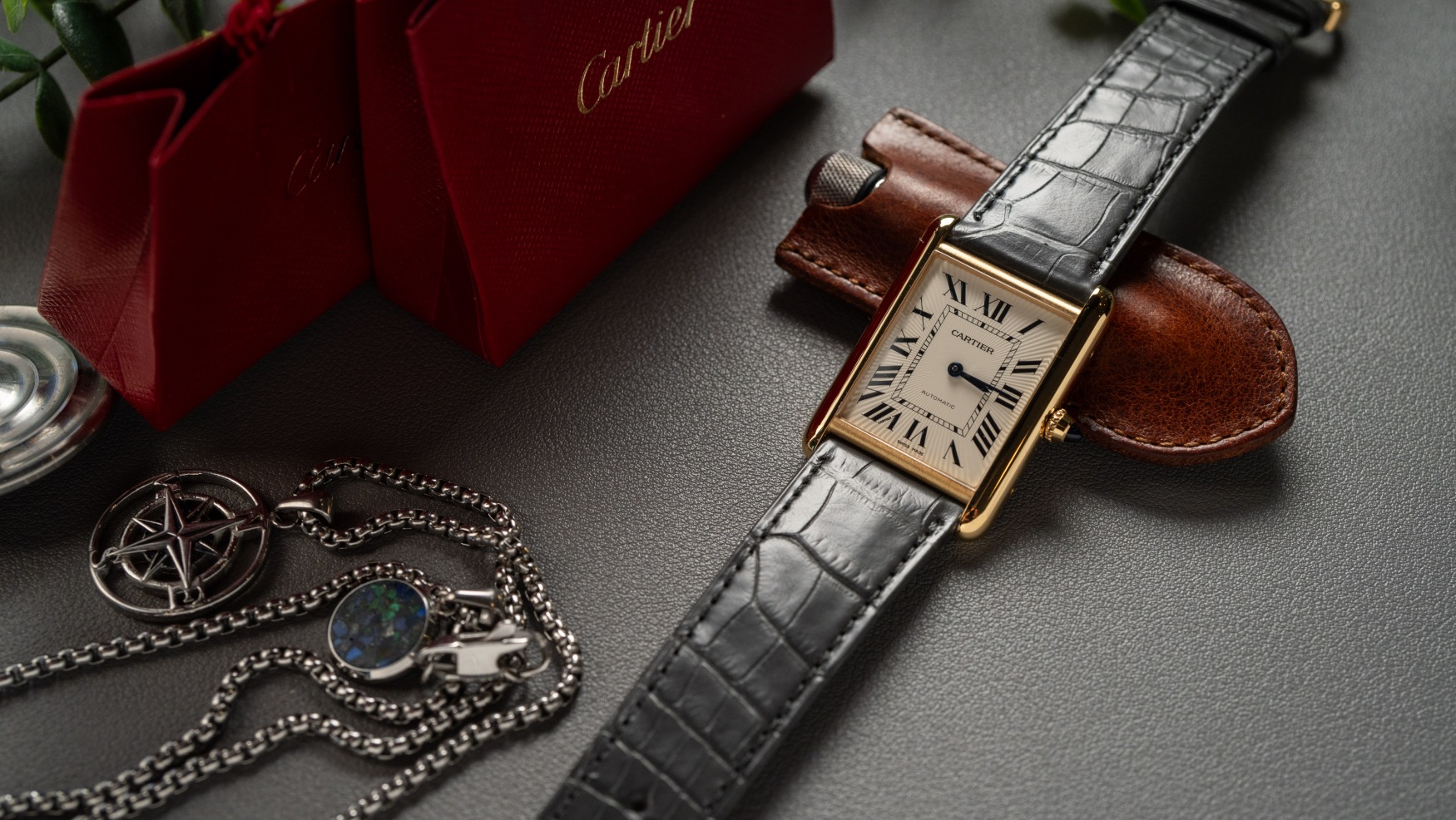
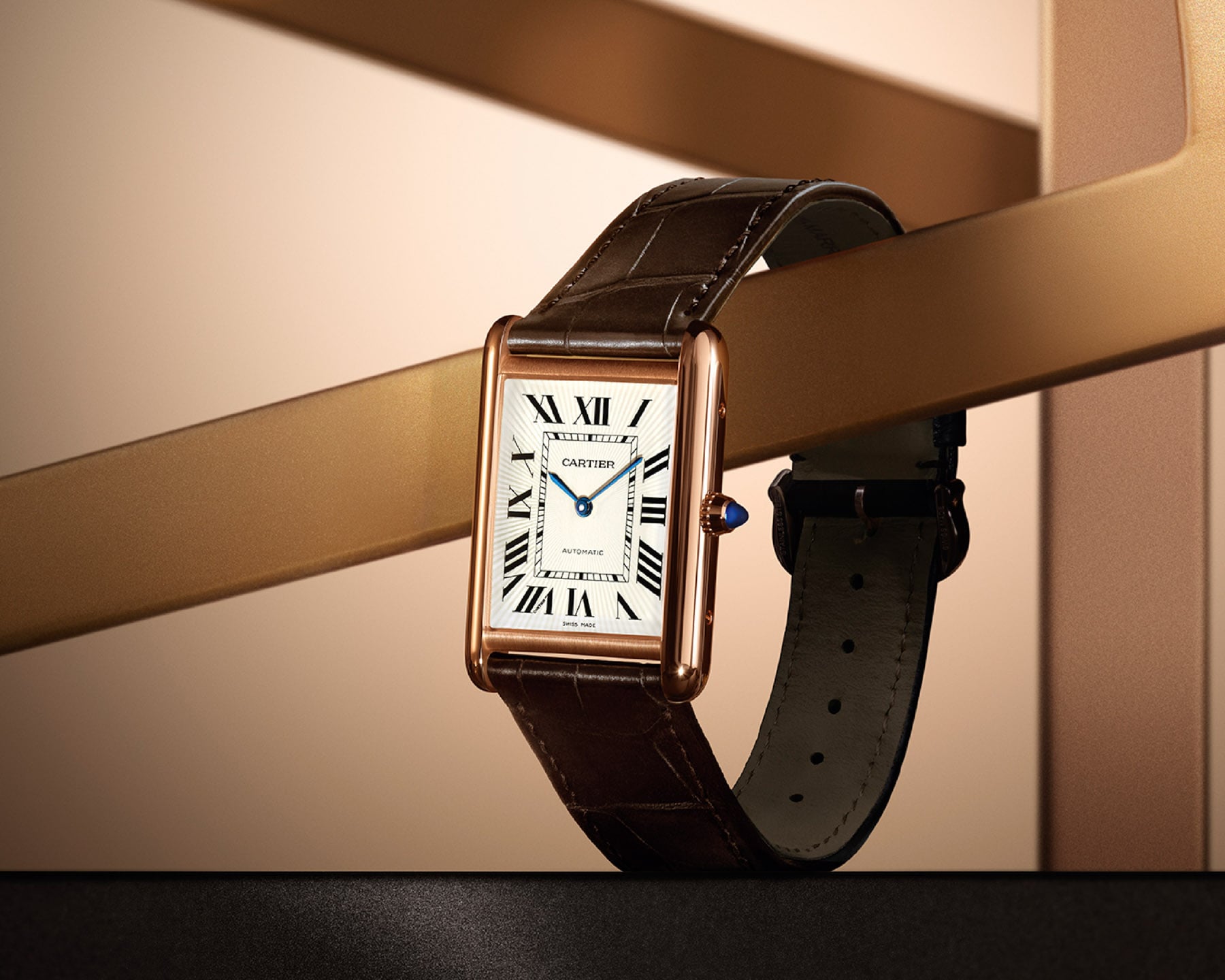
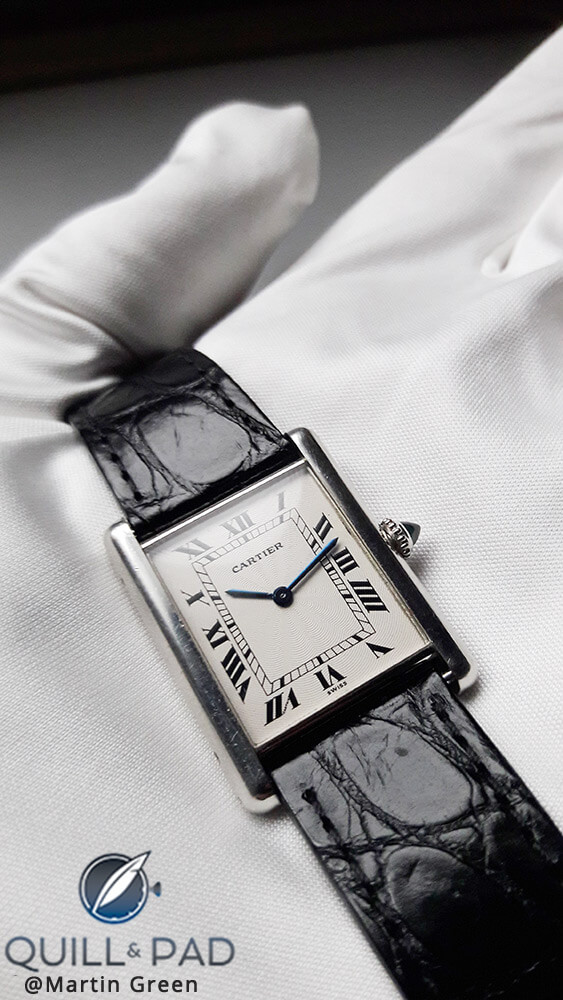
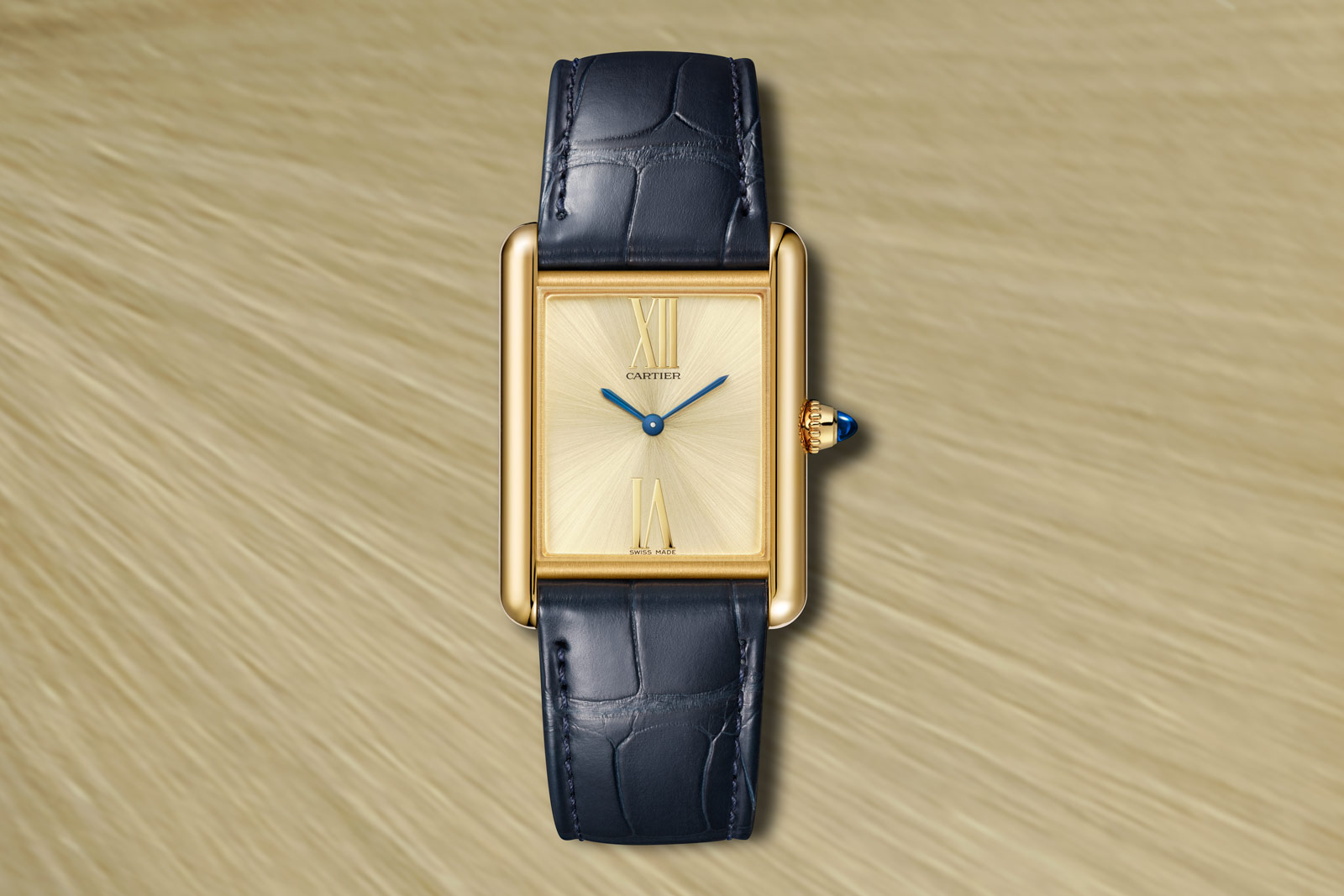
The first Tank prototype was presented to American General John Pershing as a gift in 1918, commemorating the Allied victory and recognising American military assistance. Commercial production began in 1919 with the original Tank Normale: rectangular gold case, white dial, applied gold Roman numerals (with IIII, not IV), Breguet-style hands, blue cabochon-sapphire crown. The construction was distinctly different from contemporary trench watches (round, military, utility-coded); the Tank read as aristocratic dress, not battlefield equipment.
"He drew it on the train back from the front. The tracks of the tank became the brancards of the watch. A hundred years later it has become the most-worn wristwatch in haute horlogerie."- Cartier historian on the Tank's 1917 origin
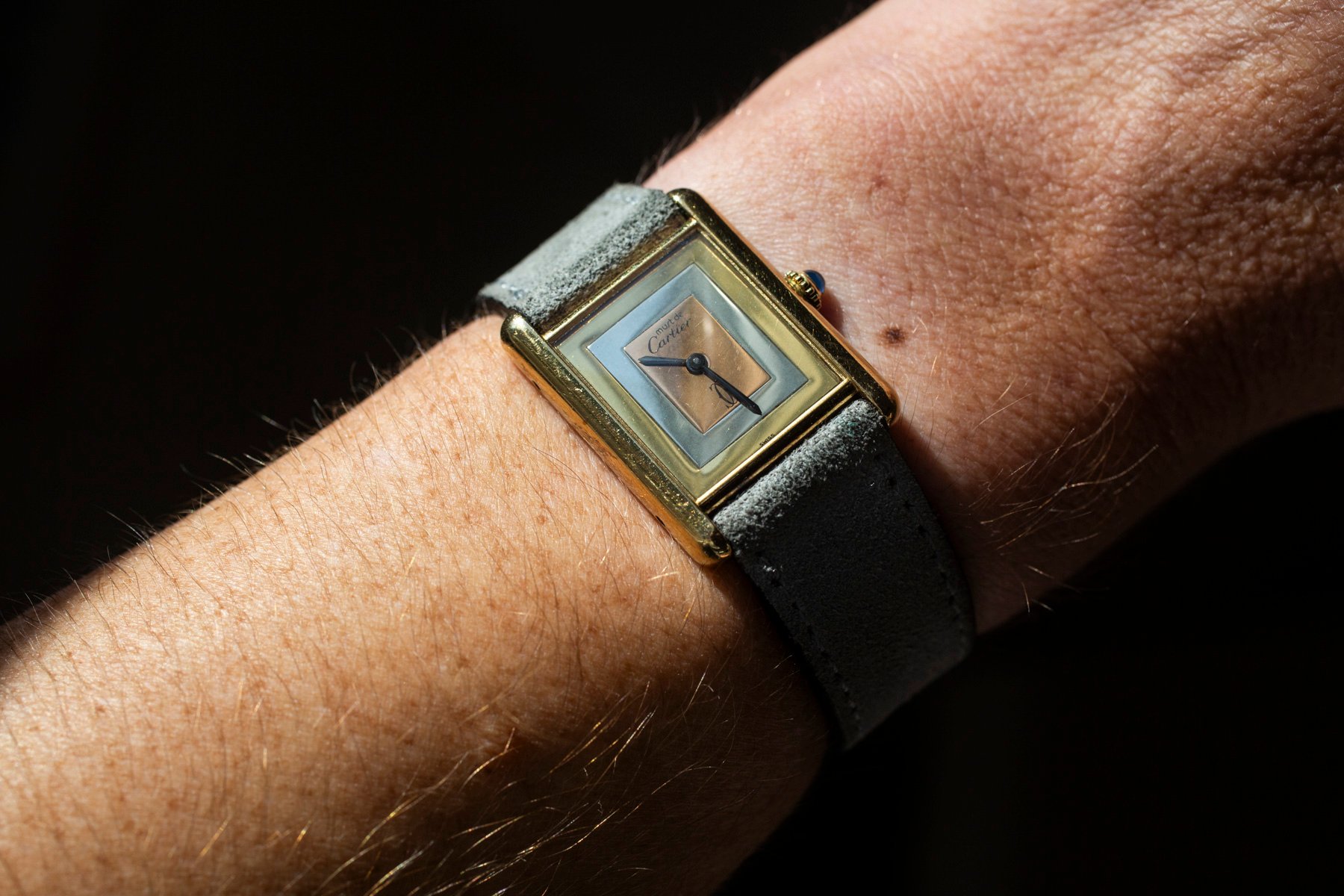
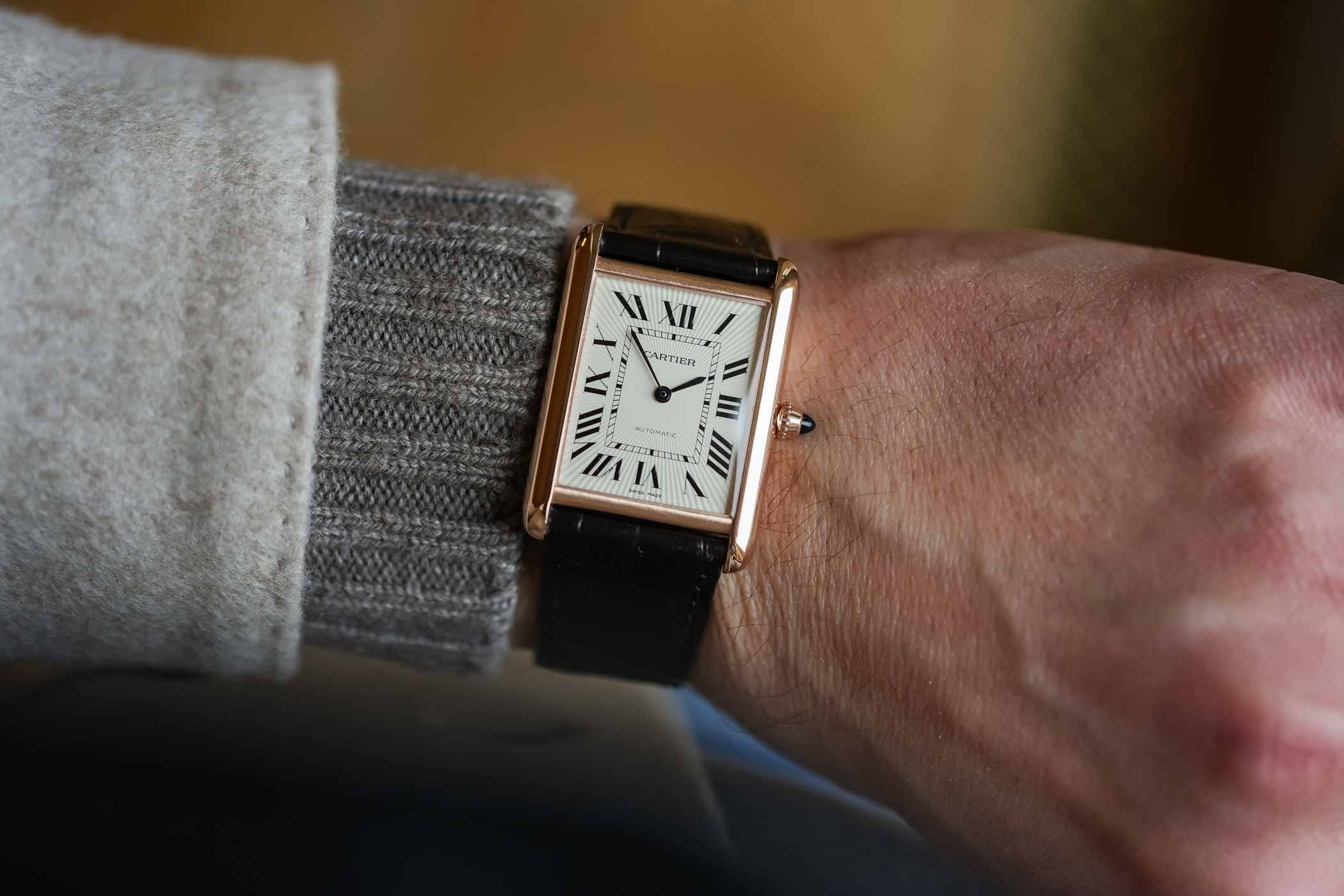
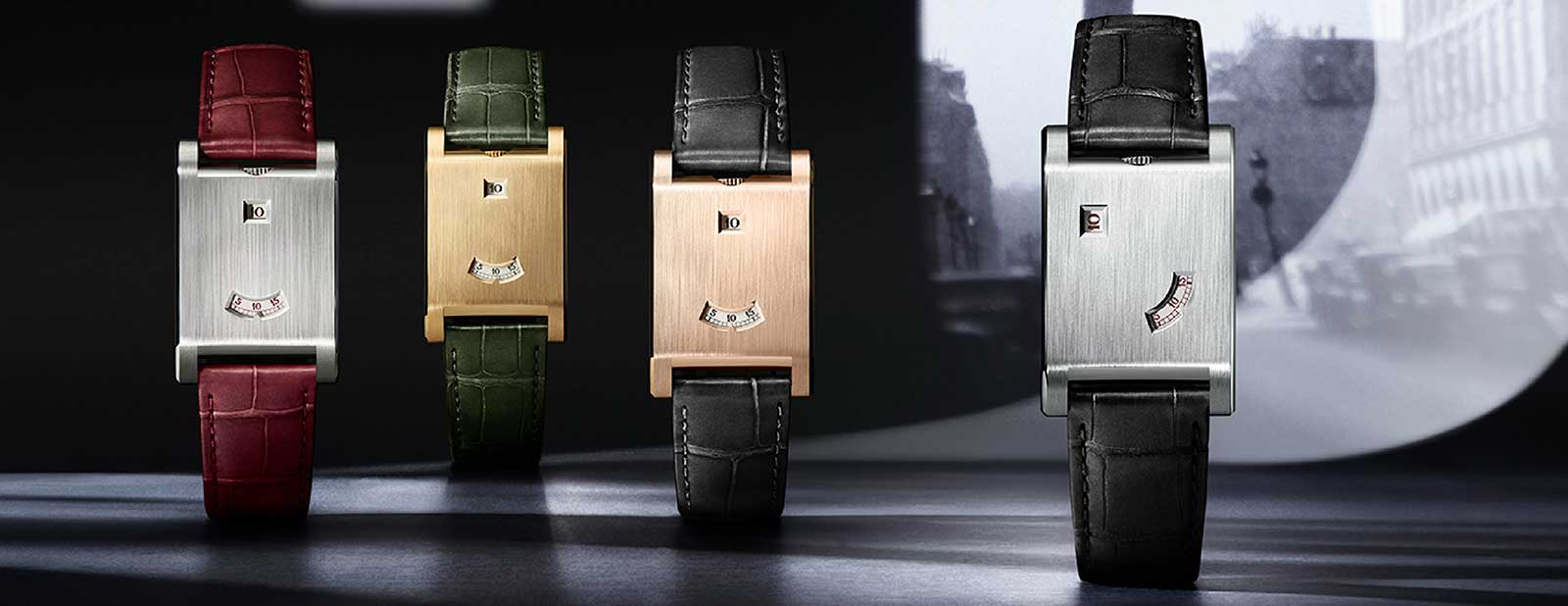
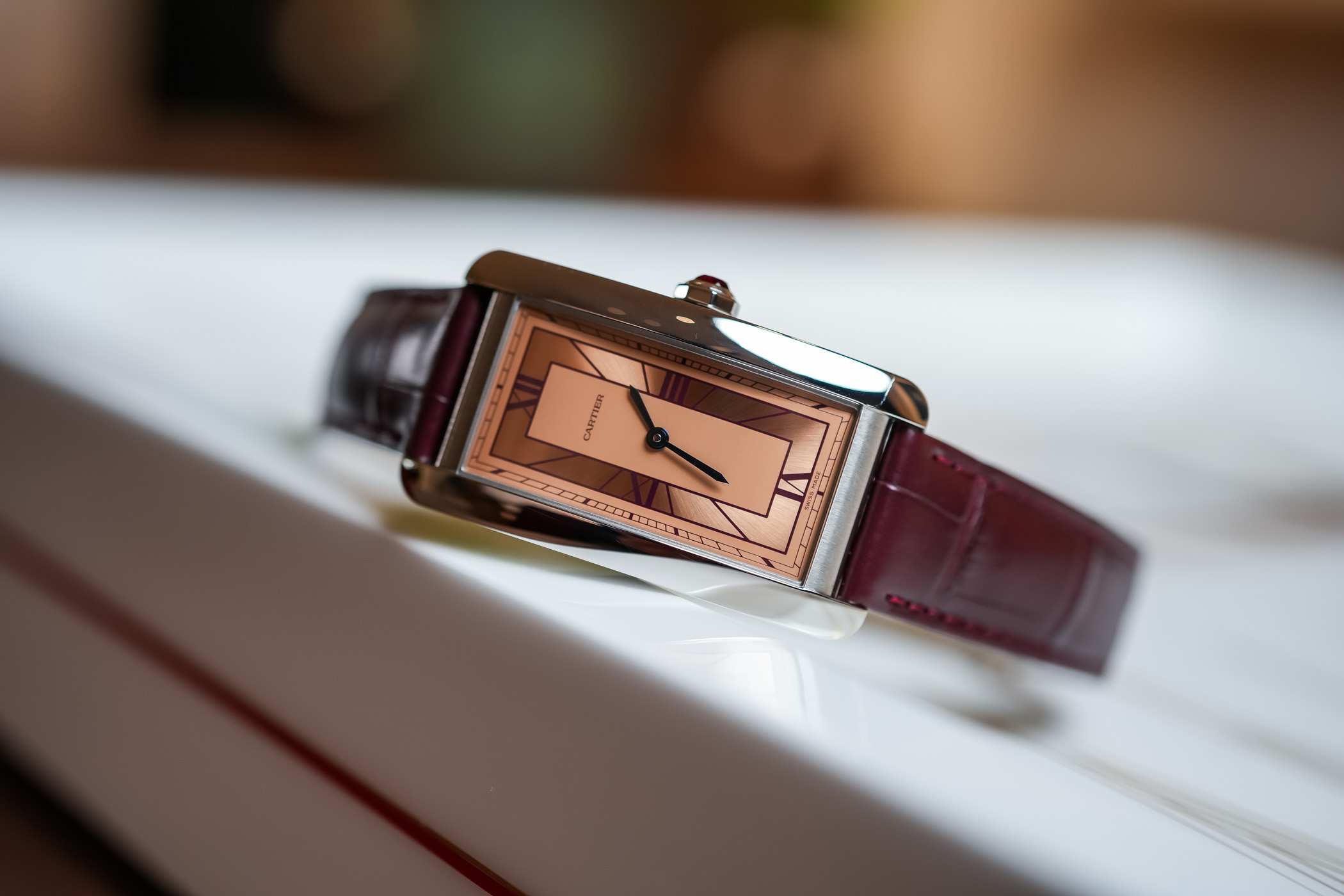
The major variants developed through the 20th century. Tank Louis Cartier (1922): refined proportions, more elegant; the iconic dress Tank silhouette. Tank Cintrée (1921): elongated case with curved-to-wrist profile; the most architectural Tank. Tank Anglaise / Asymétrique (1936): rotated 30° for left-wrist-favouring readability. Tank Américaine (1989): elongated rectangular for the American market. Tank Française (1996): integrated steel-link bracelet for sport positioning. Tank Solo (2004): simplified entry-level Tank. Tank Must (2021): contemporary CHF 2,500 entry positioning with quartz / Solar movement.
Iconic ownership elevated the Tank into cultural object status. Princess Diana wore a Tank Française from her wedding through her death; Andy Warhol wore a Tank Cintrée (which he reportedly never wound, treating it purely as ornament); Jacqueline Kennedy Onassis wore a Tank from the 1960s through her death (auctioned at Sotheby's 2017 for USD 379,500); Steve McQueen, Yves Saint Laurent, and Truman Capote all wore Tanks publicly. The watch became the defining elegant rectangular dress watch of the 20th century.
Modern Cartier production positions the Tank across five tiers: Tank Must entry (CHF 2,500-4,500); Tank Française sport (CHF 4,500-12,000); Tank Louis Cartier dress (CHF 9,000-30,000); Tank Américaine elongated (CHF 8,000-20,000); Tank Privé / Crash / Asymétrique haute-horlogerie (CHF 50,000-200,000+). The Tank remains ~30% of Cartier watch revenue and is one of the strongest brand-equity assets in luxury watchmaking.



Comments 1