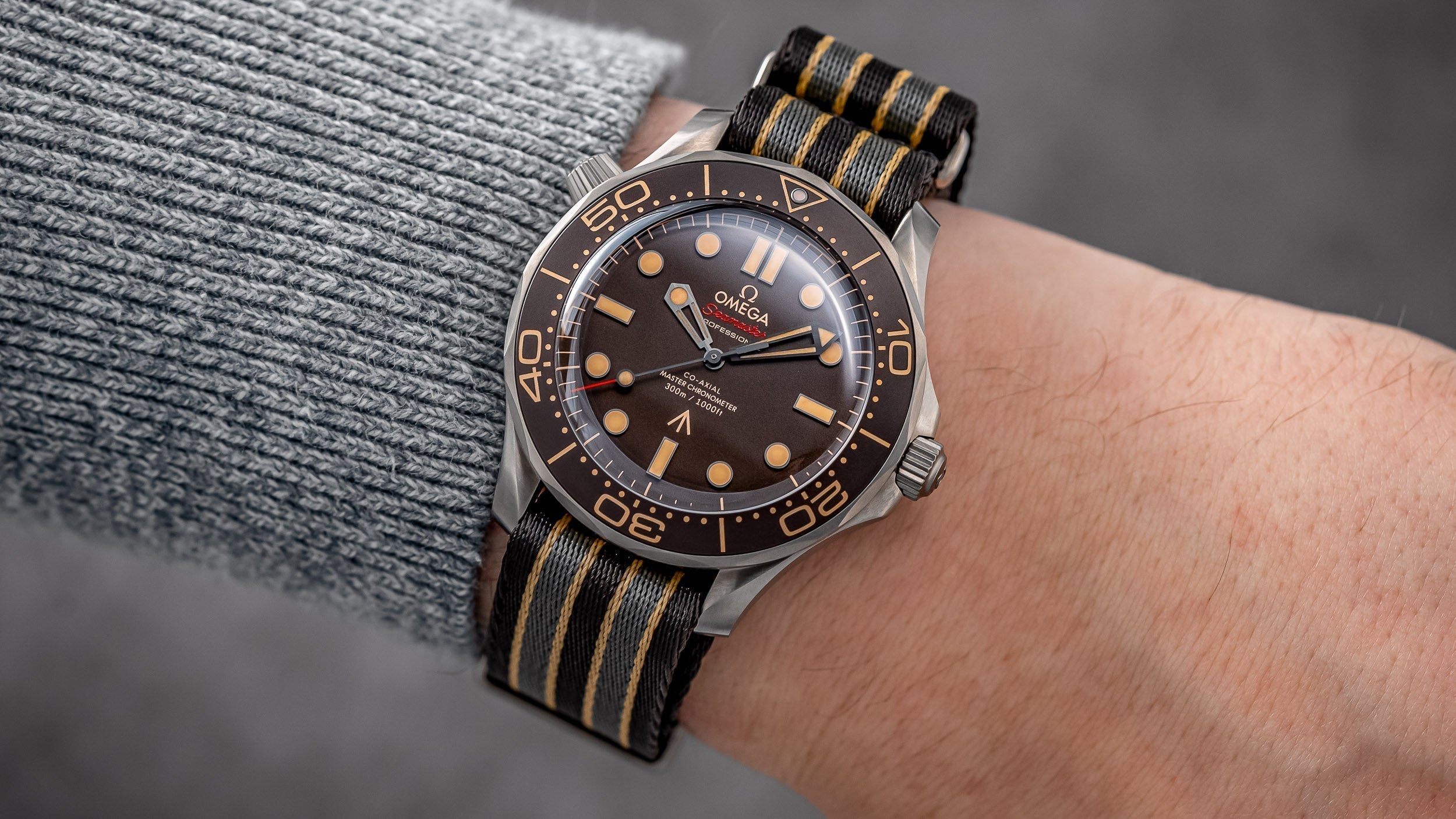
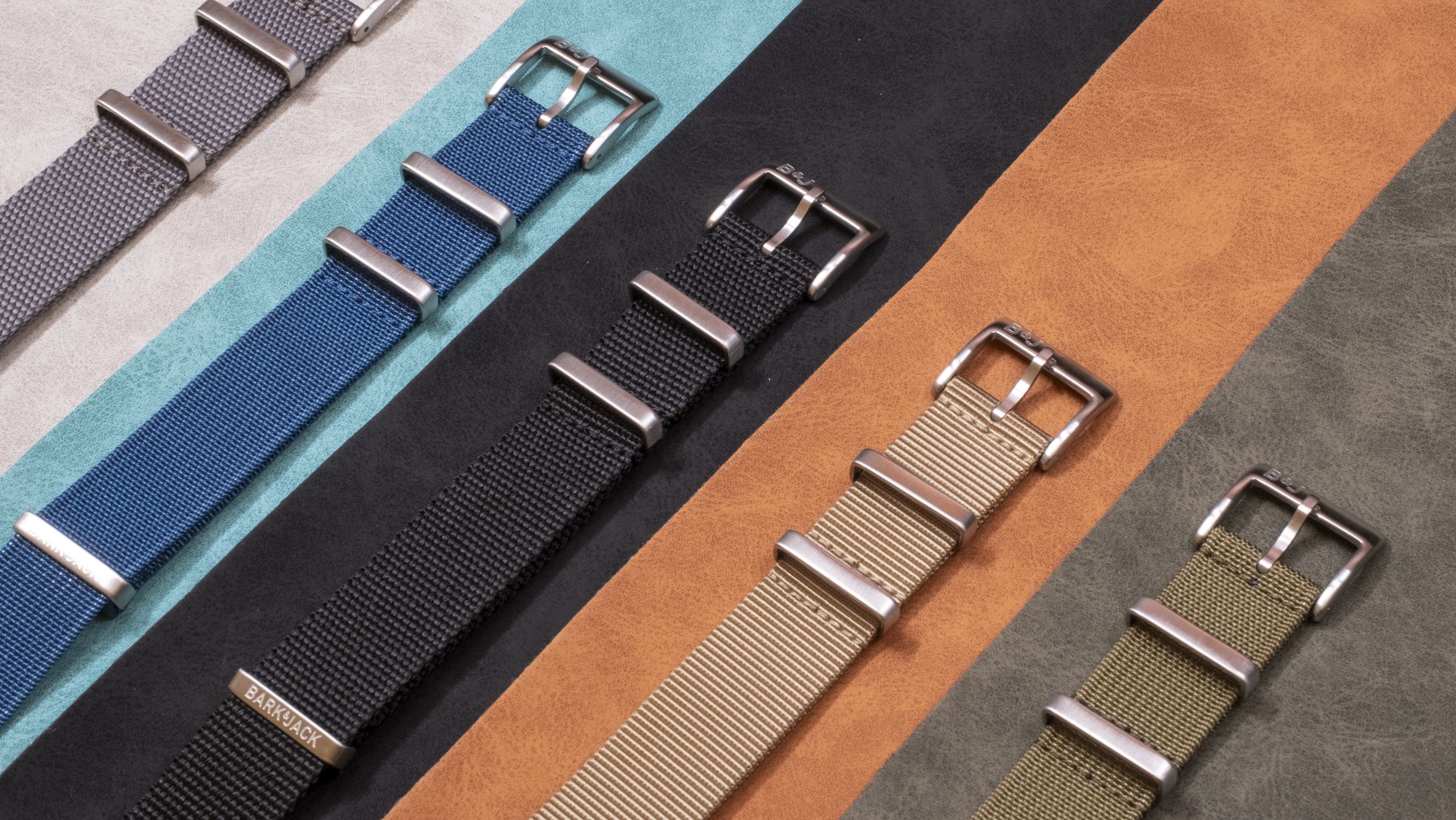
The NATO strap traces its origin to the British Ministry of Defence (MoD) specification G10 Mk1, issued 30 November 1973 for issuing service watches to British forces. The MoD spec required a single-piece nylon strap that could be threaded through both spring bars and looped behind the case-back, so the watch couldn't fall off if a single spring bar broke. The original Government-issue colour was 'Admiralty Grey'; the standard width was 18mm or 20mm depending on the issued watch.
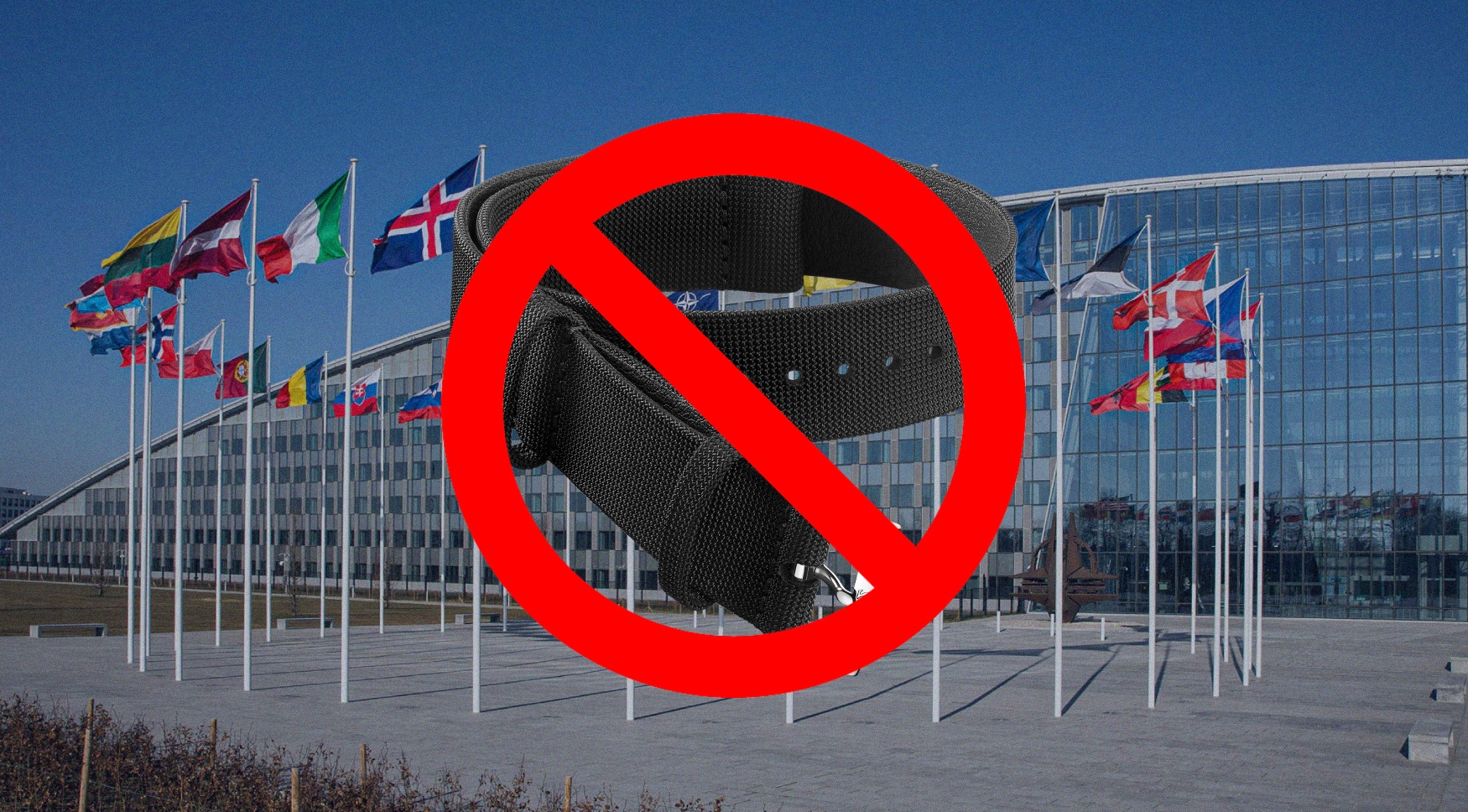
The 'NATO' name is a misnomer: it's never been an actual NATO standard, but the term stuck through 1980s-90s civilian watch culture because British regimental strap makers (Phoenix, William's Limited, Erika's MN) produced colourful regimental-stripe variants alongside the original G10 grey. The James Bond Sean Connery / Goldfinger Submariner ref. 6538 was filmed wearing a striped regimental strap (often miscalled a NATO); the cultural association between Bond, Submariner, and striped fabric strap dates to that 1964 film.
"The NATO is the only strap that lets you wear a dive watch with a suit and not look stupid. Or at least less stupid."- Watch enthusiast forum on the modern NATO strap
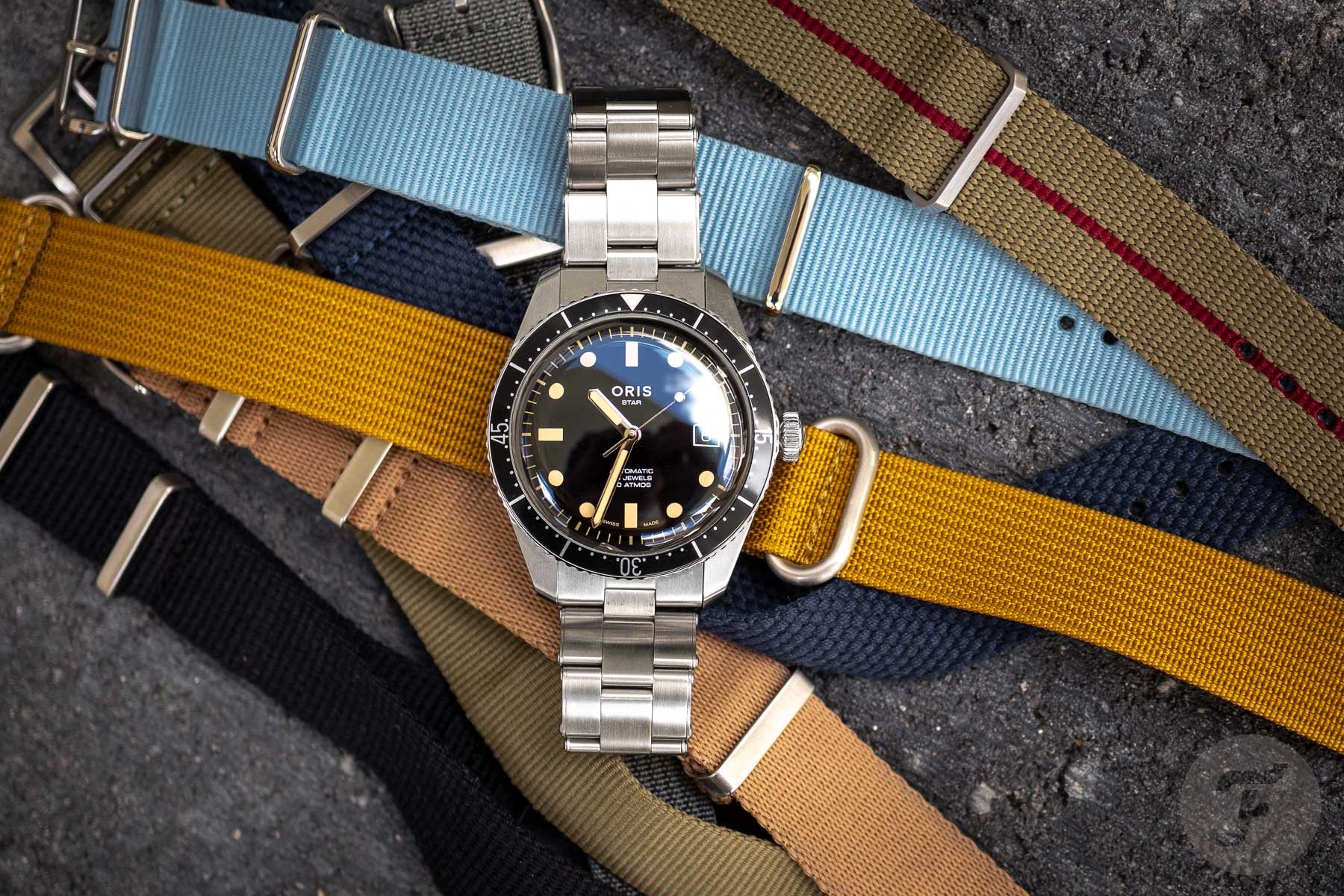
Modern variants and naming. NATO strap: the standard 4-loop British G10 design. Zulu strap: typically thicker nylon, larger / chunkier hardware, often 5-loop. Marine Nationale (MN): French Navy issue strap (parachute-cord webbing, more elastic, distinctive flat woven texture). RAF / Royal Navy regimental: striped variants for specific British regiments. Modern strap makers include Erika's Originals (premium MN), Cincy Strap Co., Crown & Buckle (entry-tier), and brand-direct (Tudor, Omega, IWC offer NATO-style straps as accessories).
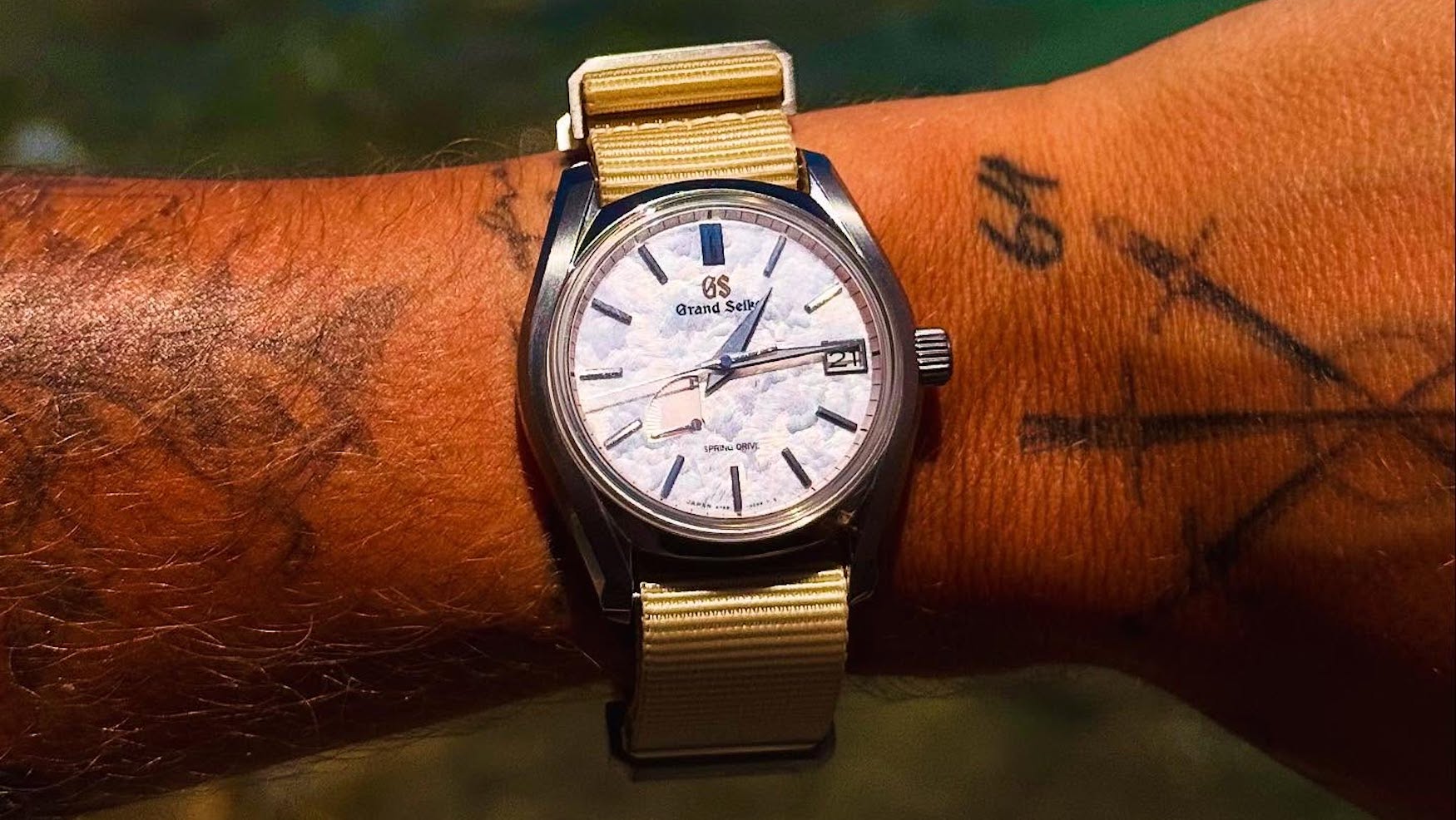
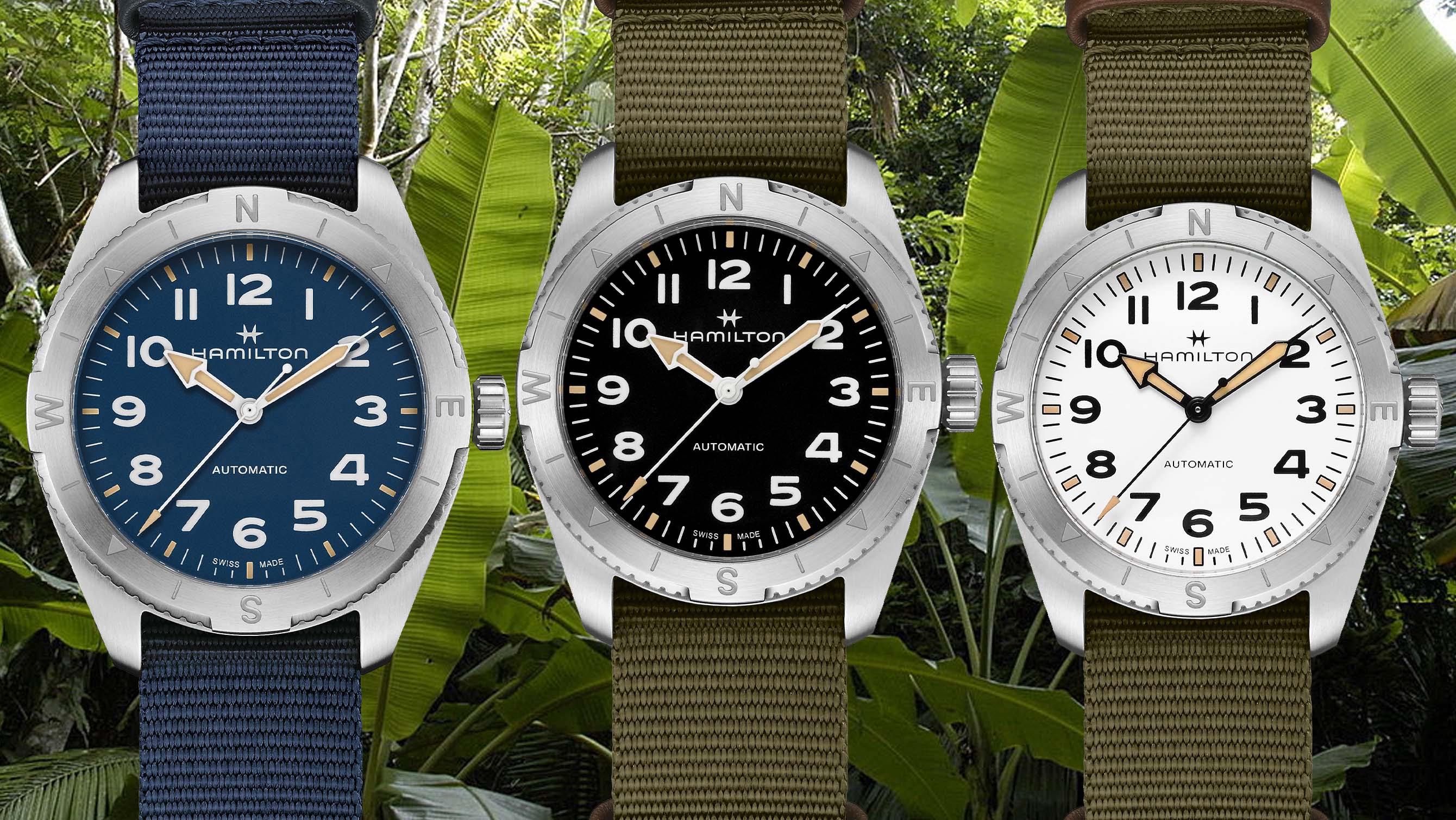
Why collectors love NATOs: cheap (CHF 30-80 entry, CHF 100-200 premium), easy to swap (single piece, no spring bar tools needed), comfortable, and adds a casual / military aesthetic to dress and sport watches alike. The trade-offs: nylon traps moisture (less breathable than leather in heat); the watch sits ~2-3mm higher off the wrist than on a bracelet/strap (the second strap layer behind the case-back); and the look isn't appropriate for dressy occasions. Most collectors keep 3-5 NATOs in rotation for a single watch.





Comments 1