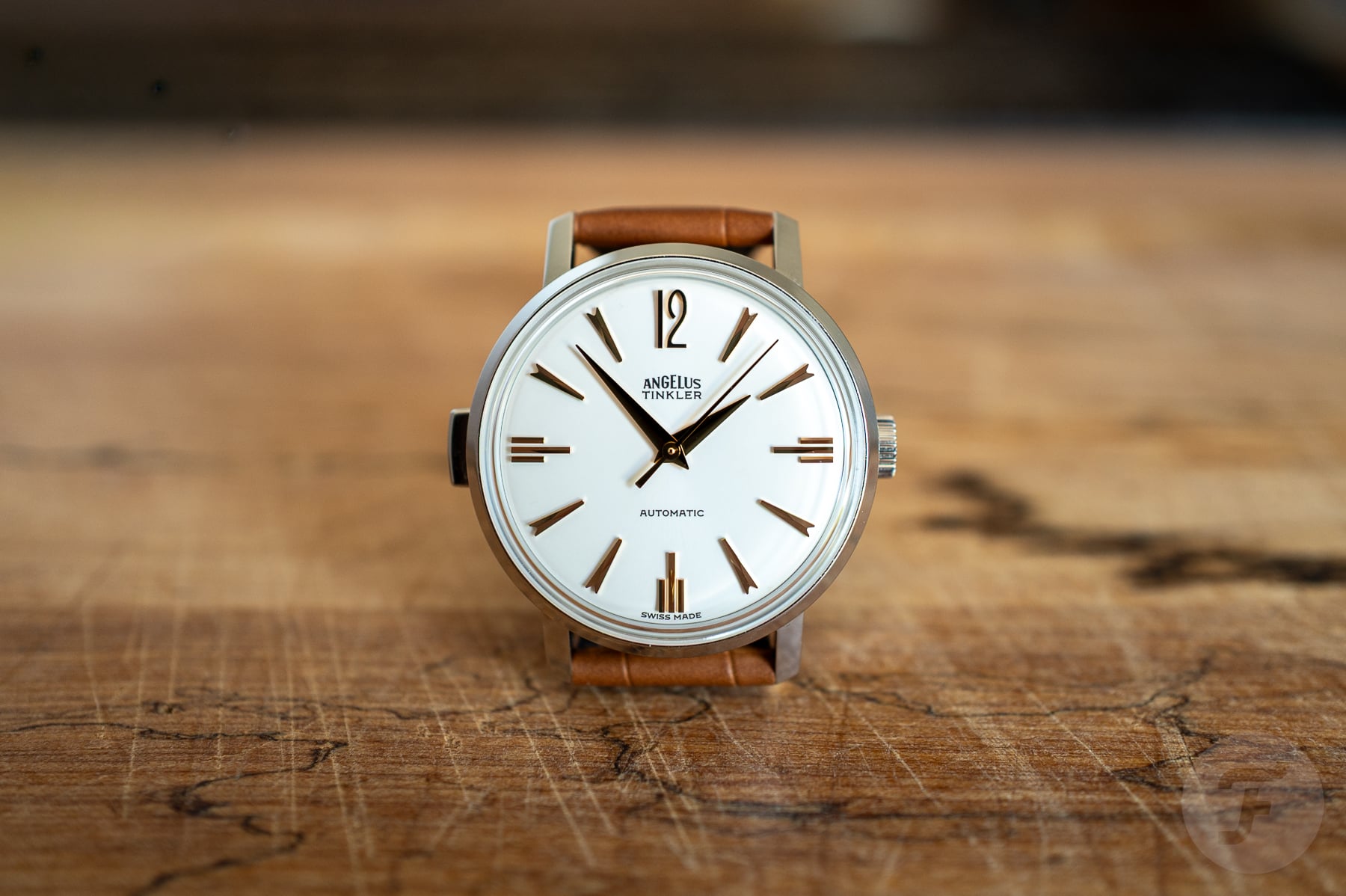
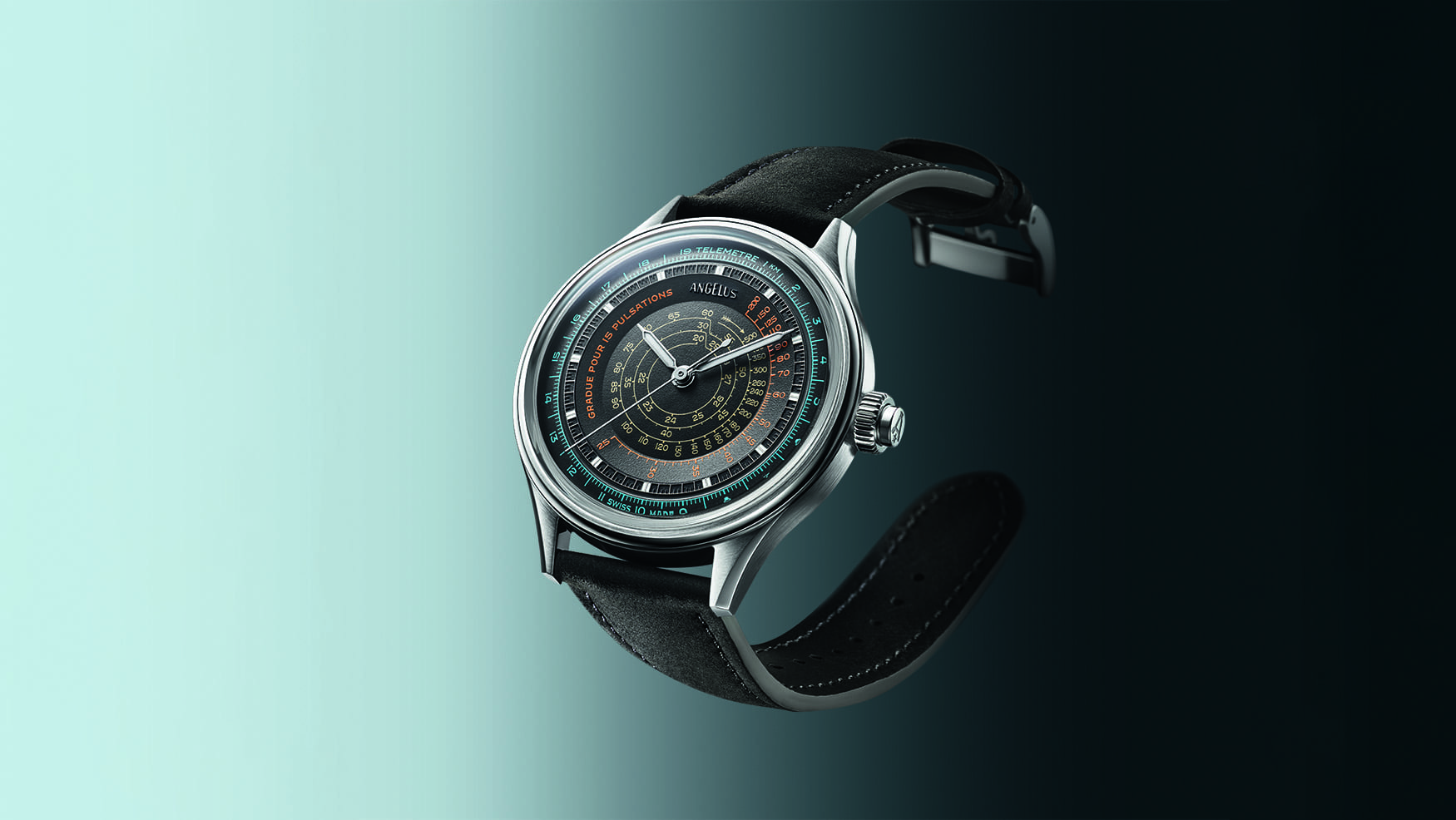
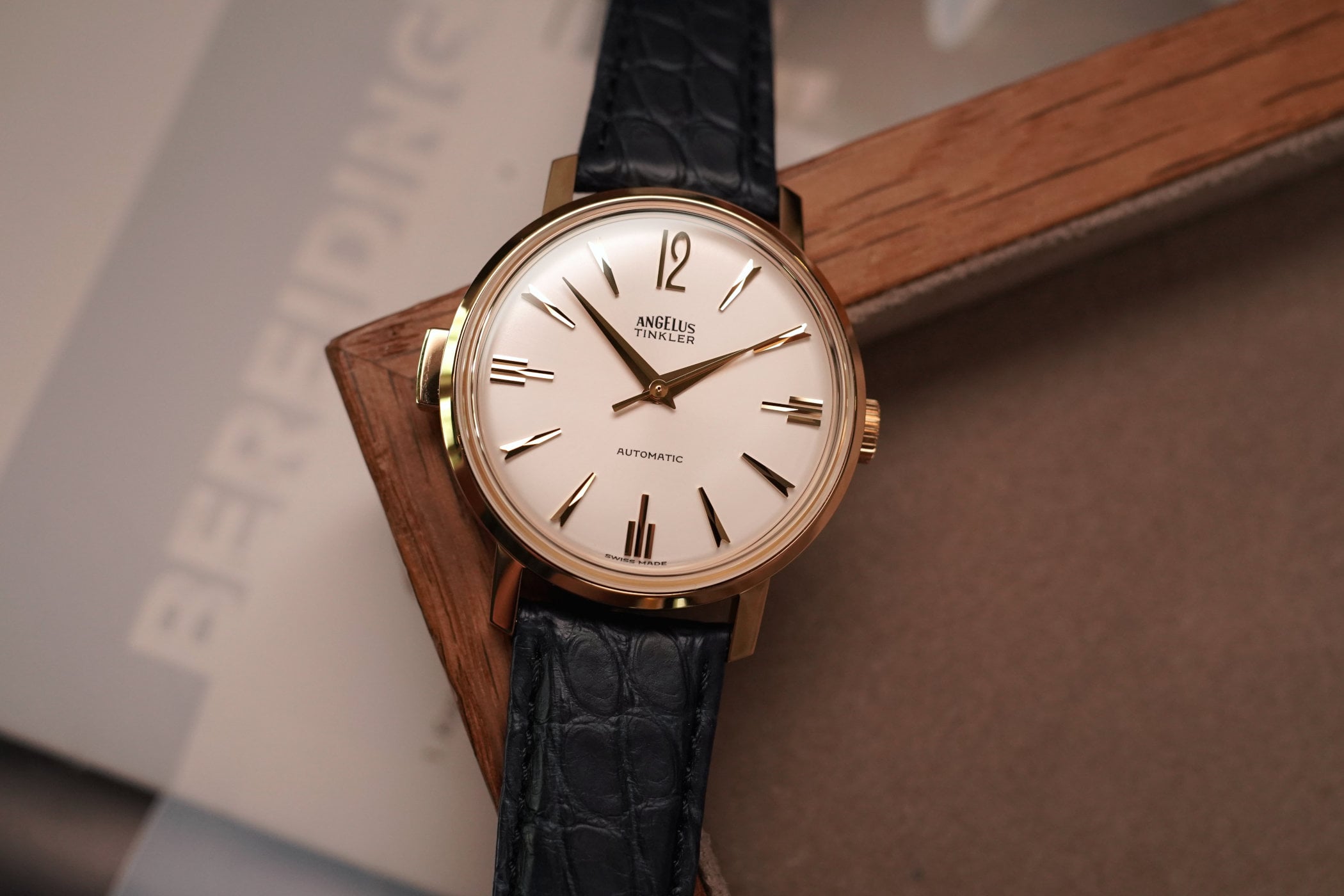
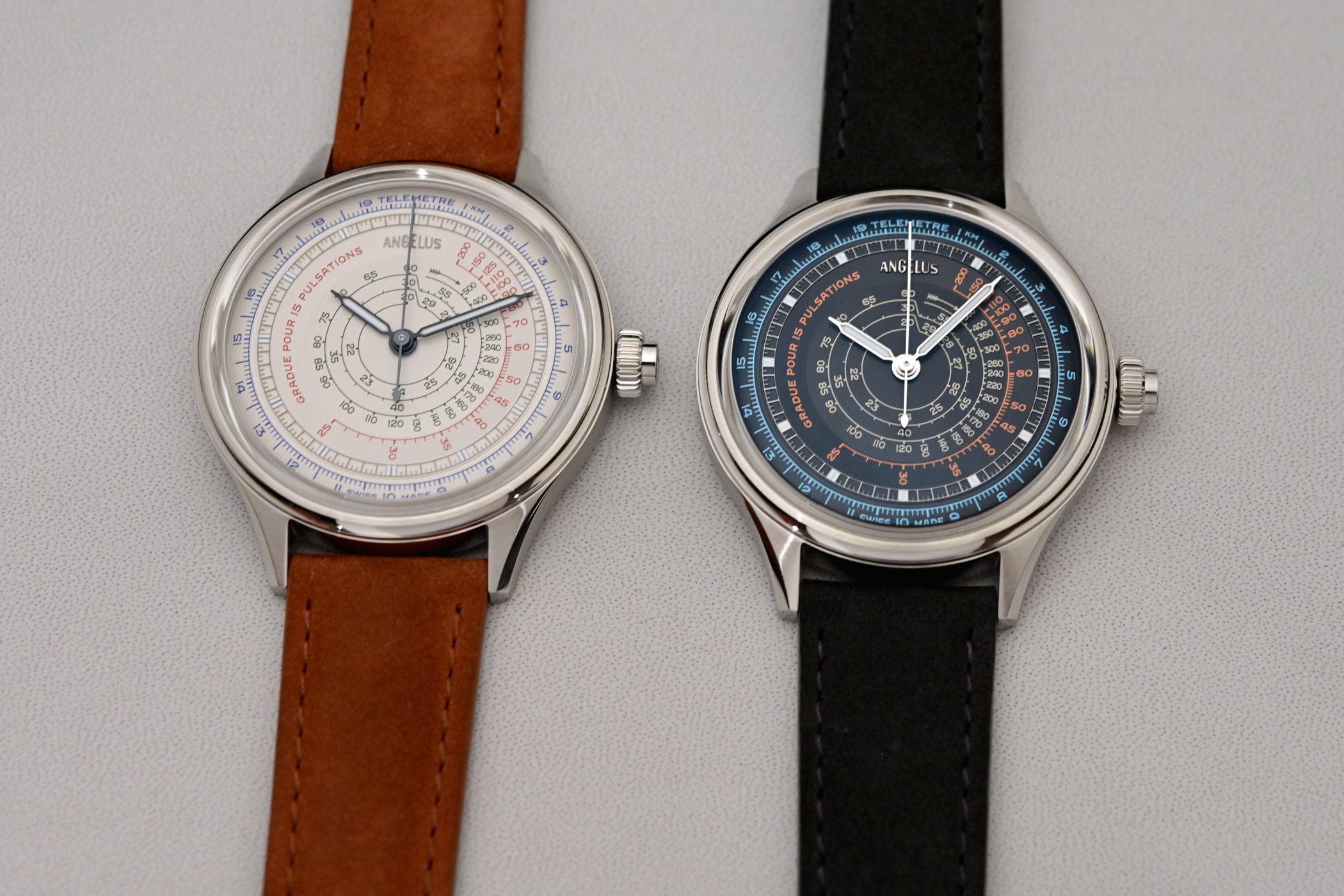
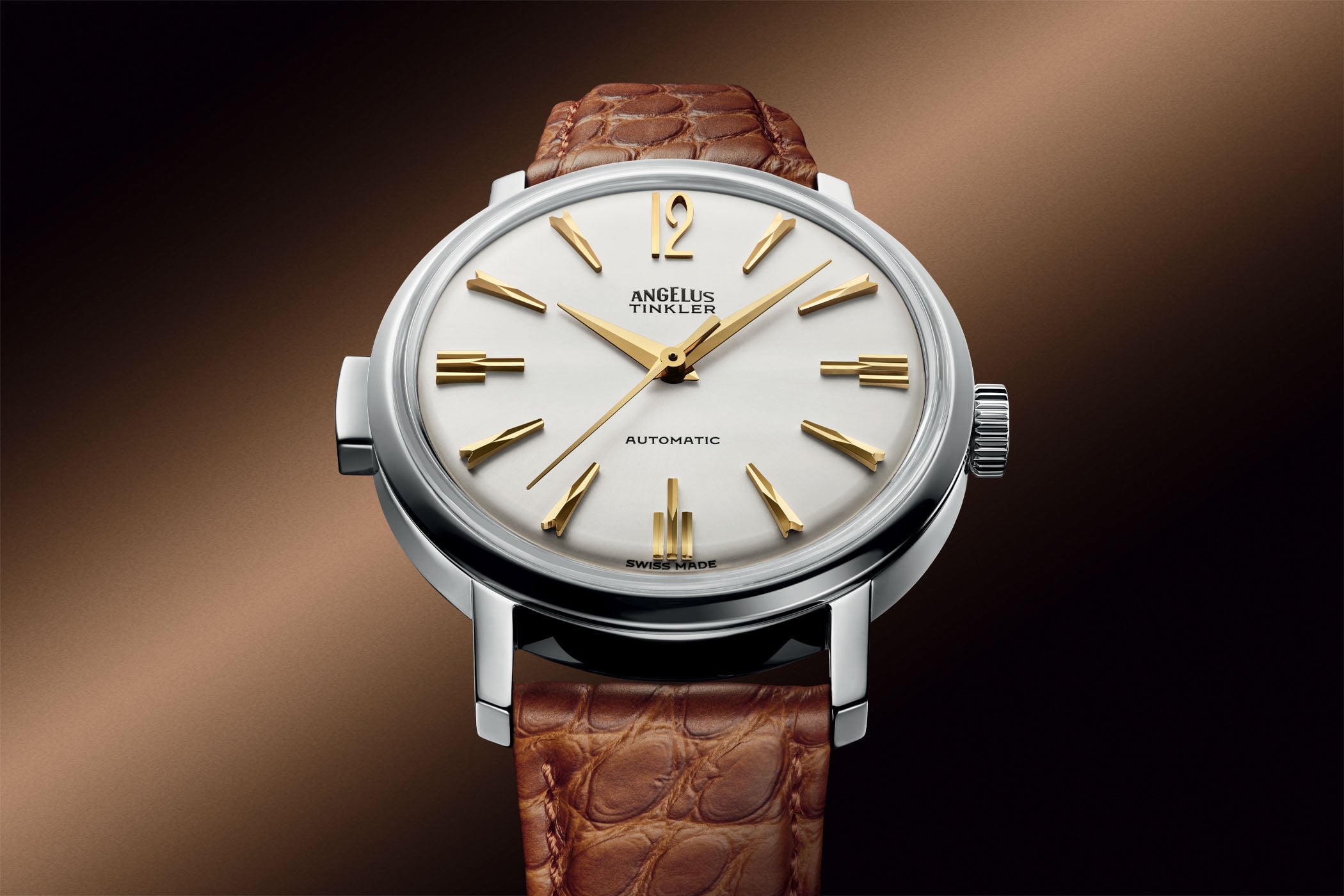
Albert and Gustav Stolz founded Angelus in Le Locle in 1891, initially producing pocket watches and alarm clocks. Through the first half of the 20th century Angelus built a reputation for two innovations: the first alarm wristwatch (launched in 1931, sixteen years before Vulcain's Cricket), and the Chronodato (1942), a triple-calendar chronograph that combined date, day, and month indicators with a 30-minute chronograph counter on a single dial.
The Chronodato and its successors made Angelus a respected mid-tier Swiss house through the 1940s and 1950s. The firm produced its own calibres at its Le Locle workshop and supplied movements to other brands on an OEM basis. The brand's best-known calibre was the Cal. 215, a manually-wound chronograph with column-wheel architecture that is today collected as a vintage movement.
Like most mid-tier Swiss houses Angelus was devastated by the quartz crisis. Production ceased in the late 1970s and the Angelus name became dormant. In 2011 Angelus was revived by La Joux-Perret, the Swiss movement manufacturer based in La Chaux-de-Fonds, which itself had been acquired by Citizen Group in 2012. The revival positioned Angelus as La Joux-Perret's in-house haute-horlogerie brand, complementing the group's other acquired Swiss brand, Arnold & Son.
The modern Angelus collection is built around the U-series skeleton tourbillons: the U10 Tourbillon Lumière, U20 Tourbillon Diamond, U30 Tourbillon Lumière, and the rectangular U50 Diver Tourbillon. All are fully skeletonised tonneau-shaped cases with exposed La Joux-Perret-developed tourbillon movements. Retail runs from approximately CHF 48,000 (U20 steel) to CHF 150,000+ (U10 rose gold with diamond-set bezel) and CHF 250,000+ for specific high-jewellery variants. Production is small; Angelus sits at the upper end of the La Joux-Perret group portfolio alongside Arnold & Son's technical astronomical references.