Joseph Bulova founded his jewellery shop at 52 Maiden Lane in New York in 1875, initially selling watches alongside other imported luxury goods. By 1911 Bulova had pivoted entirely into watchmaking, and in 1912 his company opened a dedicated watch factory in Biel, Switzerland for Swiss movement production. The 1926 "At the tone, the time will be..." radio advertisement was the first nationally broadcast radio commercial in the United States, and it made Bulova a household name. By the 1950s, Bulova was the largest watch company in the US and the second-largest in the world by volume.
The landmark technical achievement was the 1960 Accutron: the first fully electronic watch, replacing the mechanical balance wheel with a tiny tuning fork that oscillated at 360 hertz. The Accutron was accurate to within one minute per month, a precision level previously requiring chronometer grade mechanical watches, and its distinctive humming sound became the brand's acoustic signature. NASA certified the Accutron for space use: the watch was installed in the Apollo 11 lunar module (as a clock) and carried as Dave Scott's personal watch on Apollo 15 after his Omega Speedmaster crystal broke on the moon's surface.
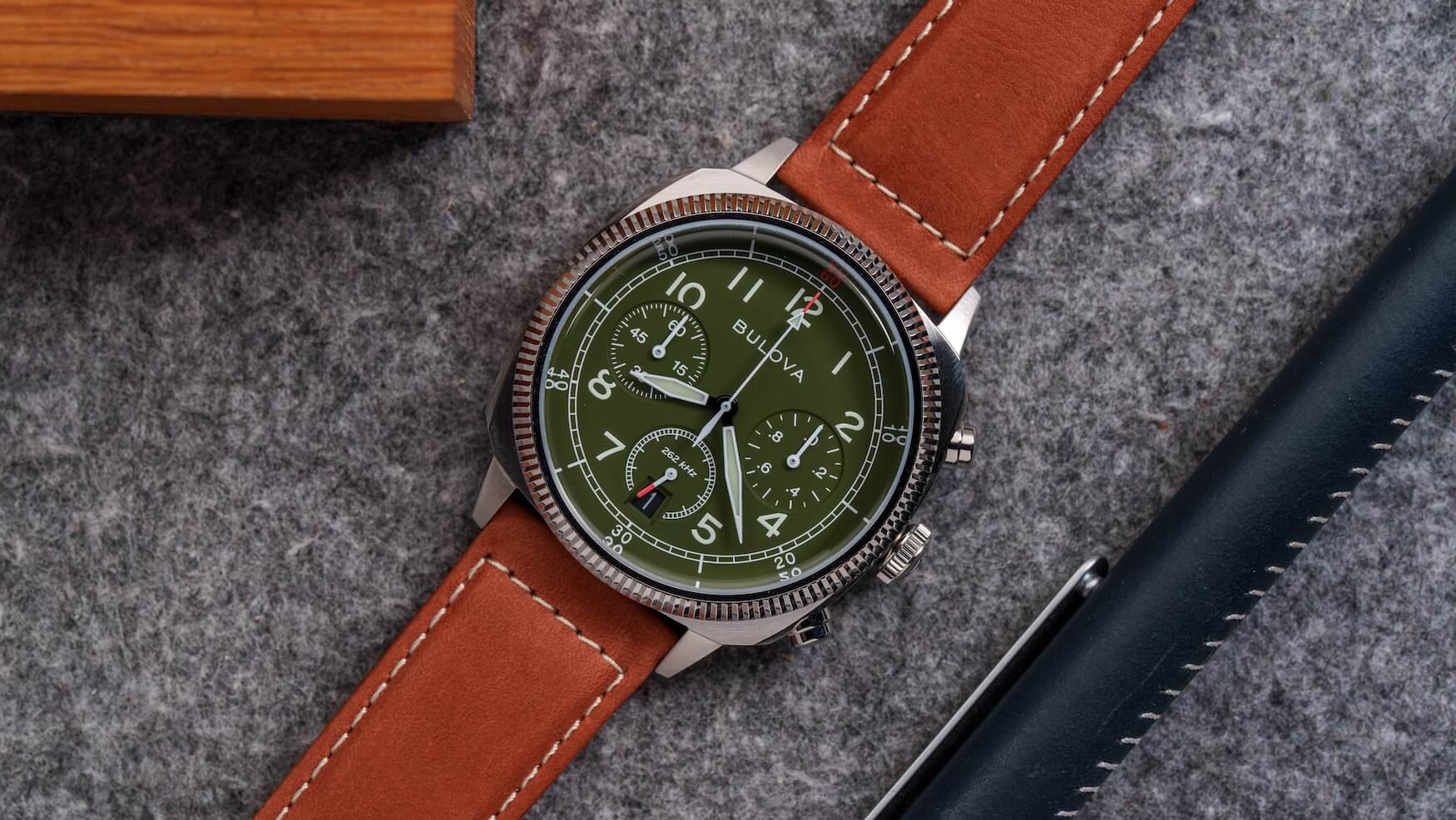
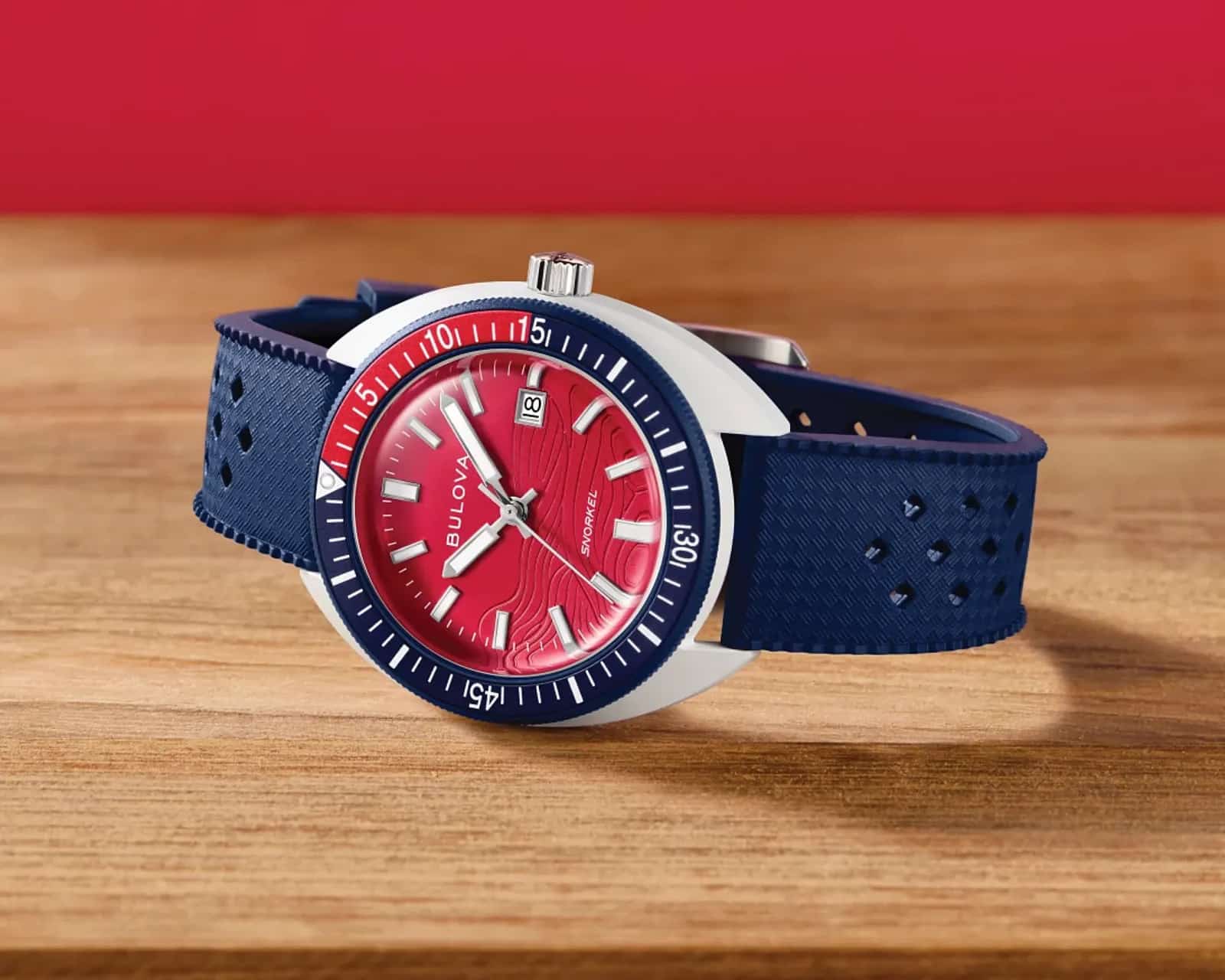
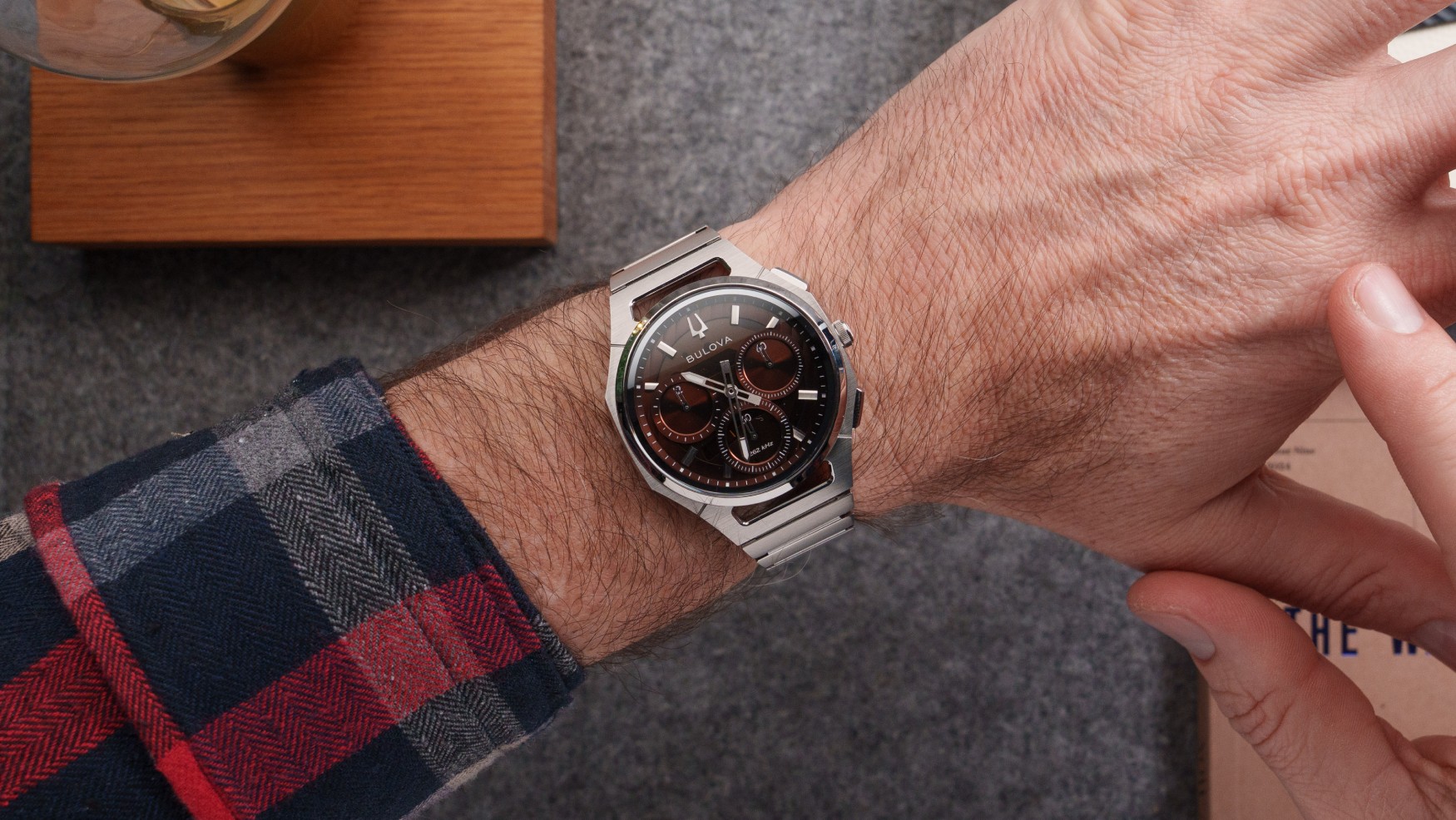
Citizen Watch Company acquired Bulova in 2008. Modern Bulova has expanded the catalogue across several distinct calibre families: the Precisionist line with its 262 kHz high-frequency quartz, the Accutron Spaceview revival with electrostatic movement, the Marine Star and Oceanographer dive watches, and the Lunar Pilot chronograph that commemorates Dave Scott's moon-worn reference. Pricing remains accessible (Precisionist quartz from ~$300, Lunar Pilot ~$650, Spaceview Accutron ~$3,300), preserving the brand's original democratic mission.