
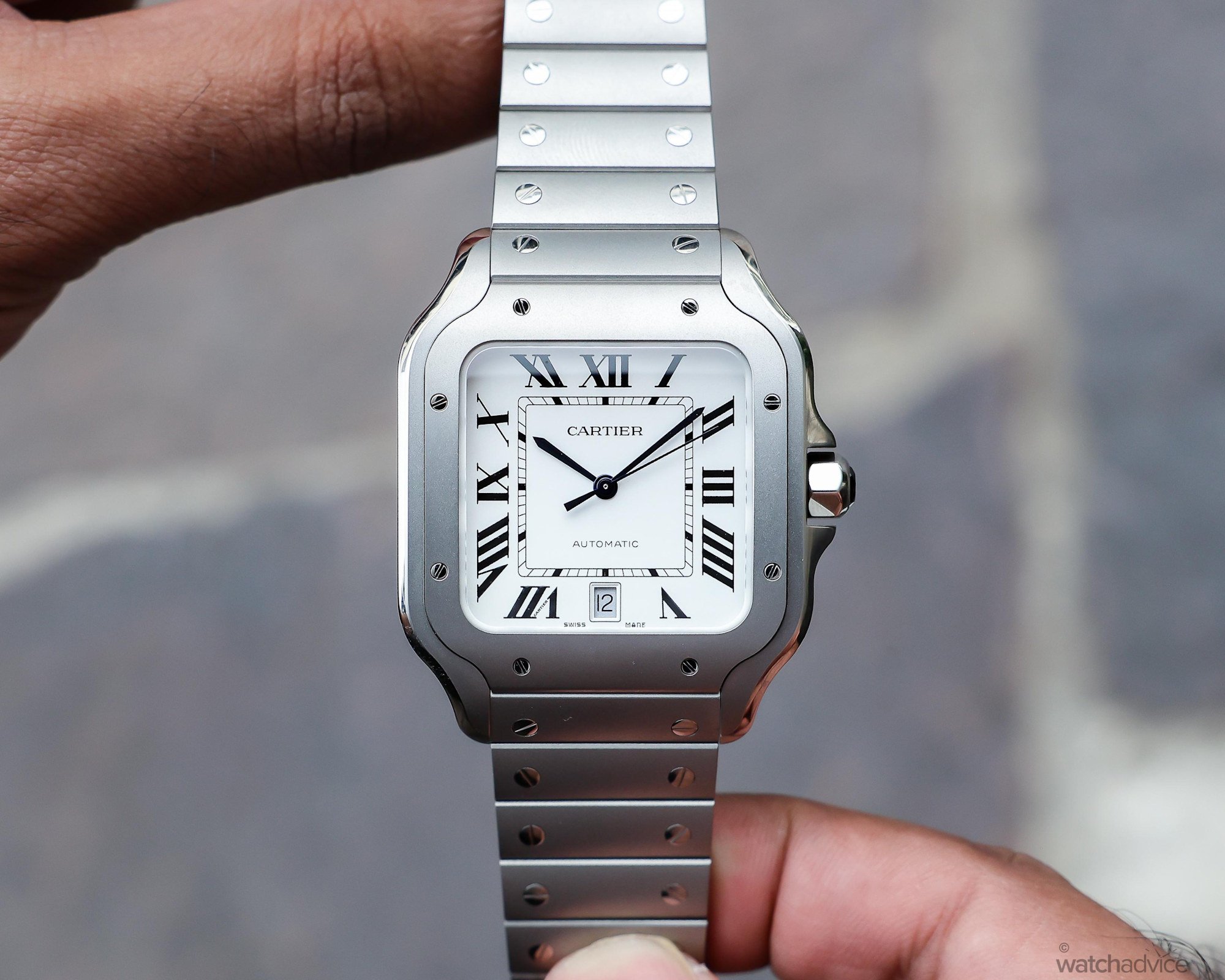
The Santos was designed in 1904 by Louis Cartier for his friend, the Brazilian aviation pioneer Alberto Santos-Dumont. Santos-Dumont had complained that he could not fly his dirigibles and early aeroplanes while trying to read a pocket watch - he needed something on his wrist that he could glance at without taking his hands off the controls. Cartier responded with a rectangular wristwatch featuring exposed screws on the bezel, Roman numerals, and a leather strap - design language borrowed from the industrial architecture of the period, particularly the Eiffel Tower, whose visible rivets had become a symbol of modernist engineering. The Santos entered limited production in 1904 and was released to the public in 1911.
At a time when wristwatches were considered effeminate and gentlemen carried pocket watches, the Santos was one of the first watches designed specifically for a man's wrist and the first designed for use in flight. Its square-cushion case profile and exposed screw aesthetic were radical, introducing an industrial design vocabulary that would ripple through 20th-century design - most directly into the luxury sports watches of the 1970s, where designers like Gerald Genta cited early Cartier as inspiration for the Royal Oak and Nautilus.
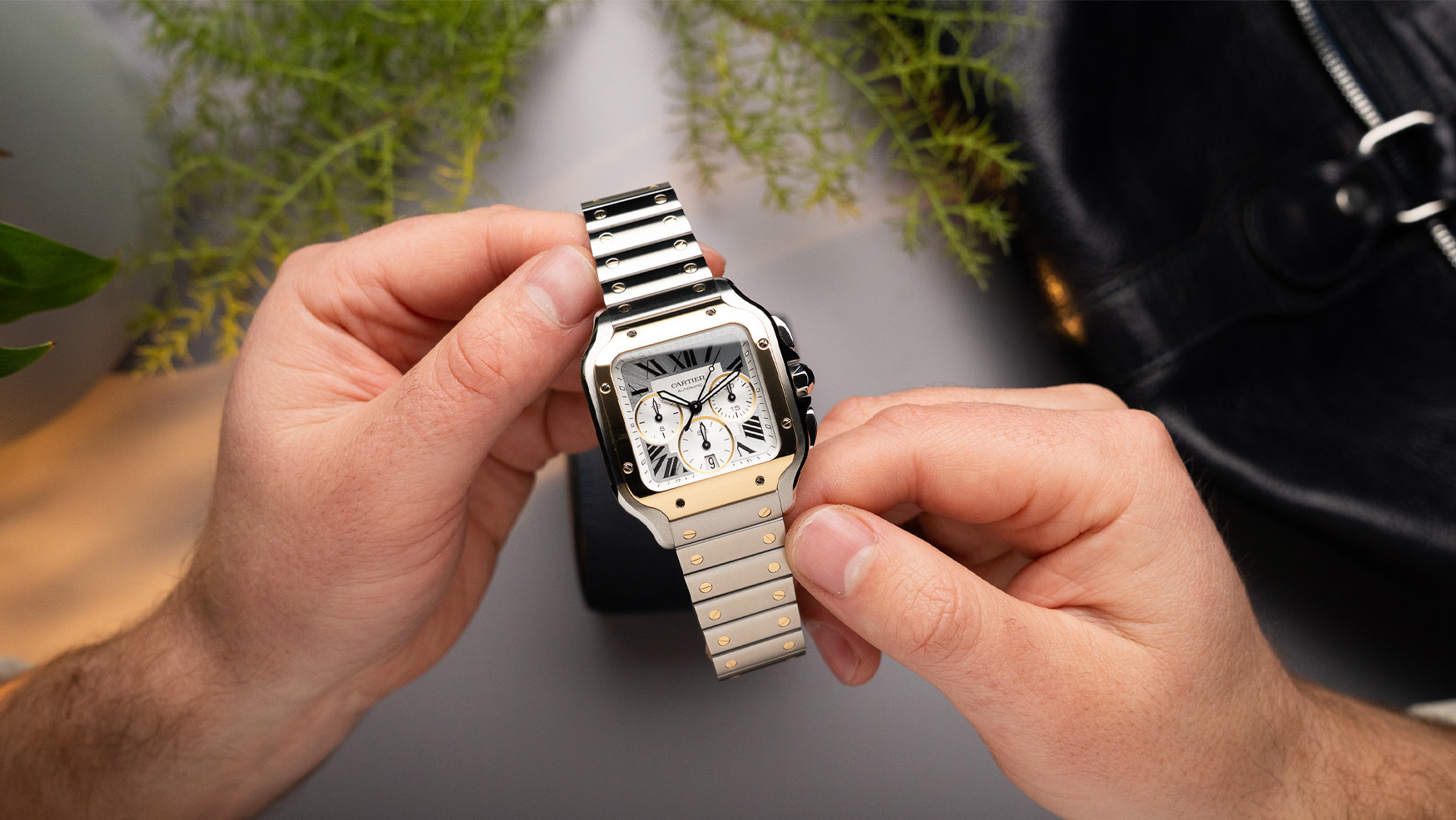
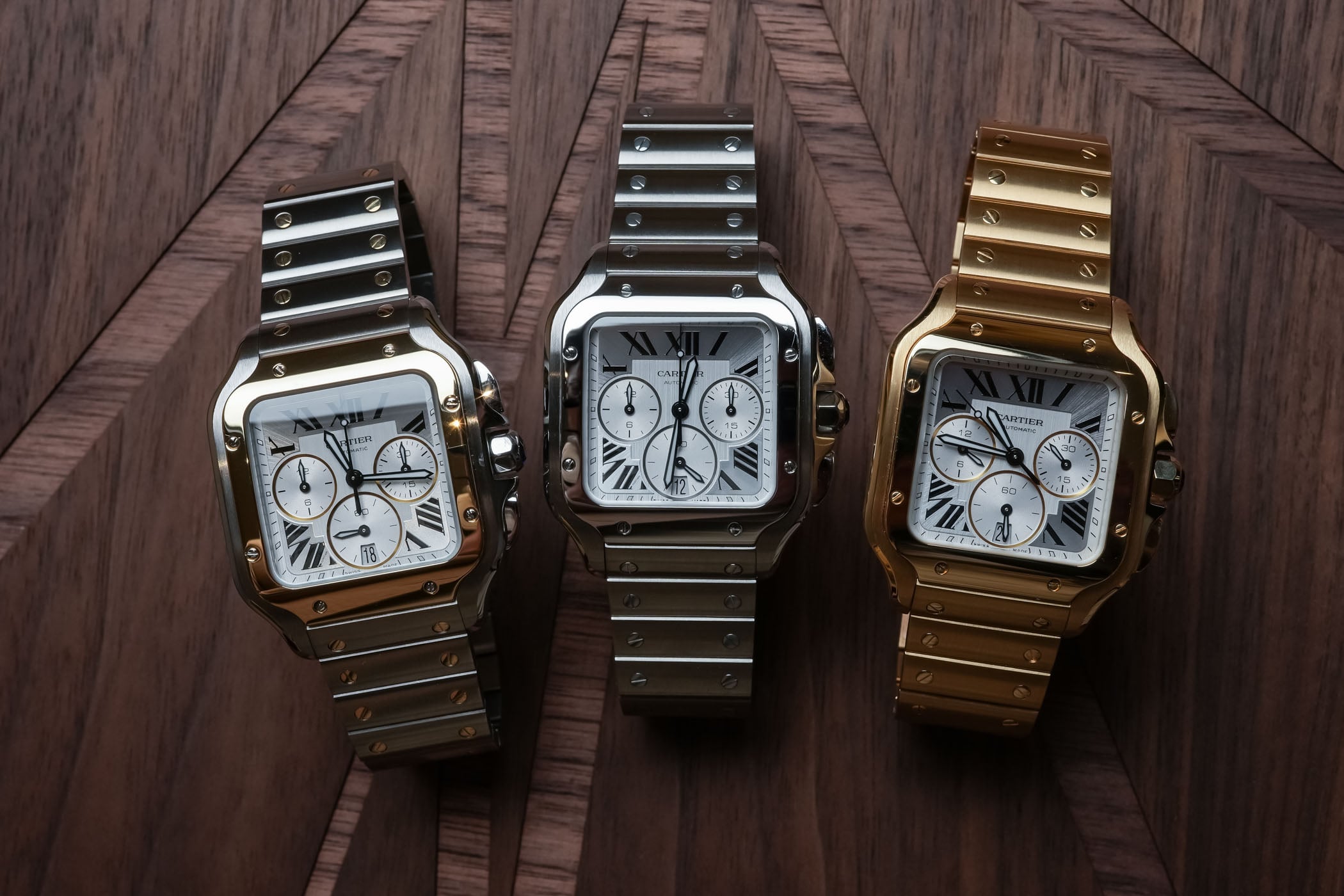
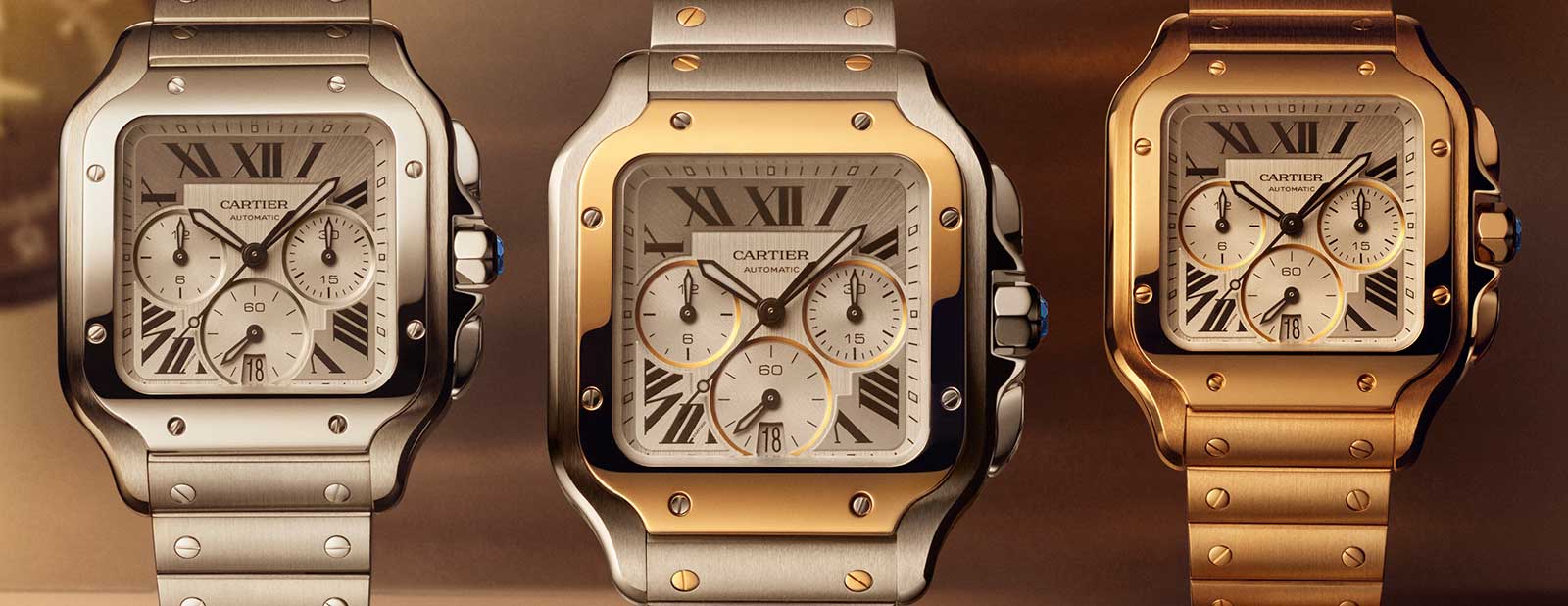
The Santos was redesigned in 1978 by Jean-Jacques Cartier as the Santos de Cartier - a modernised steel-and-gold integrated bracelet design that became one of the defining luxury watches of the 1980s. This reference, available in steel, two-tone, and full gold, became a fixture of Wall Street and international business culture, and remains the reference most buyers recognise today. Successive generations through the 1990s and 2000s refined the case and bracelet while retaining the core design language.
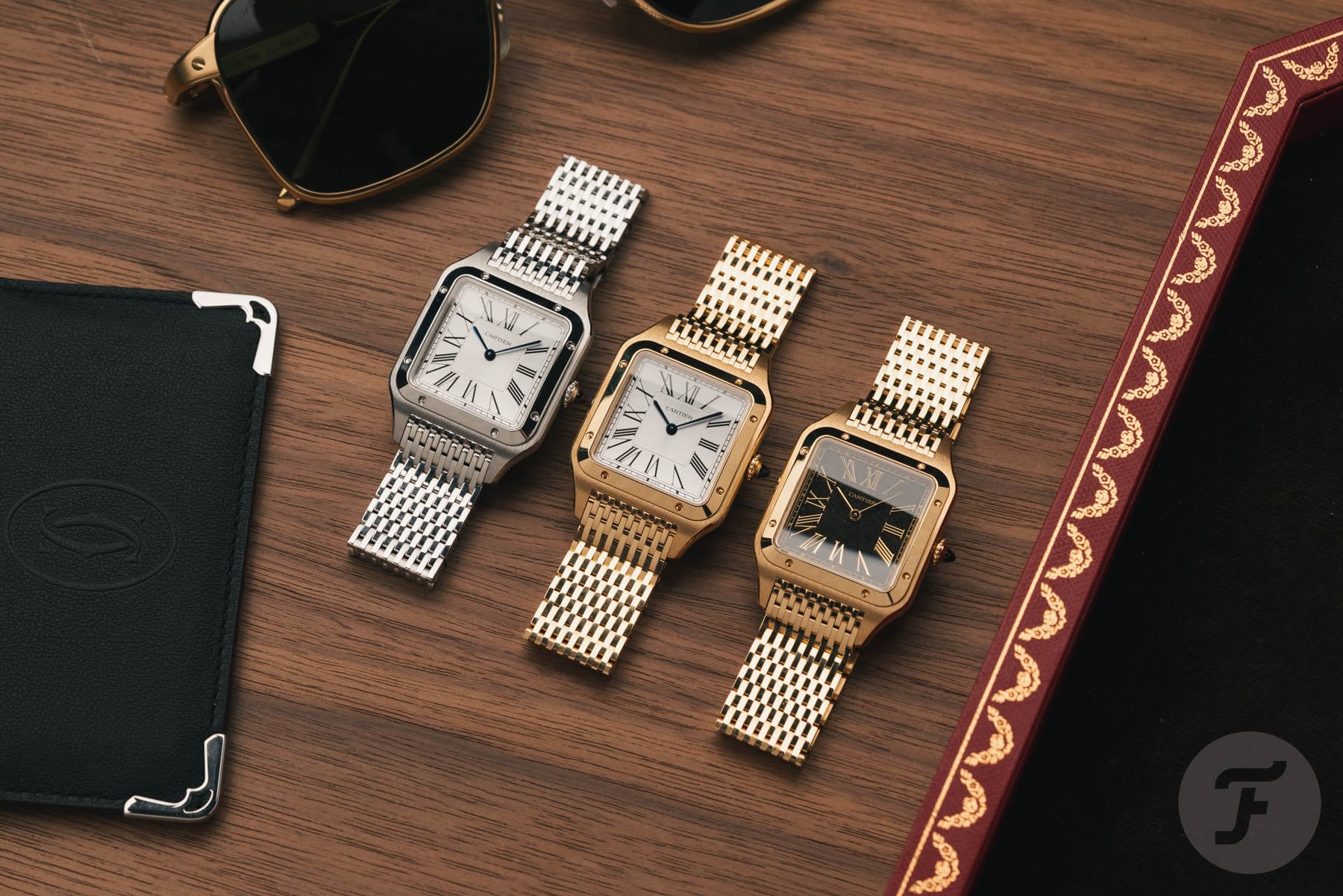
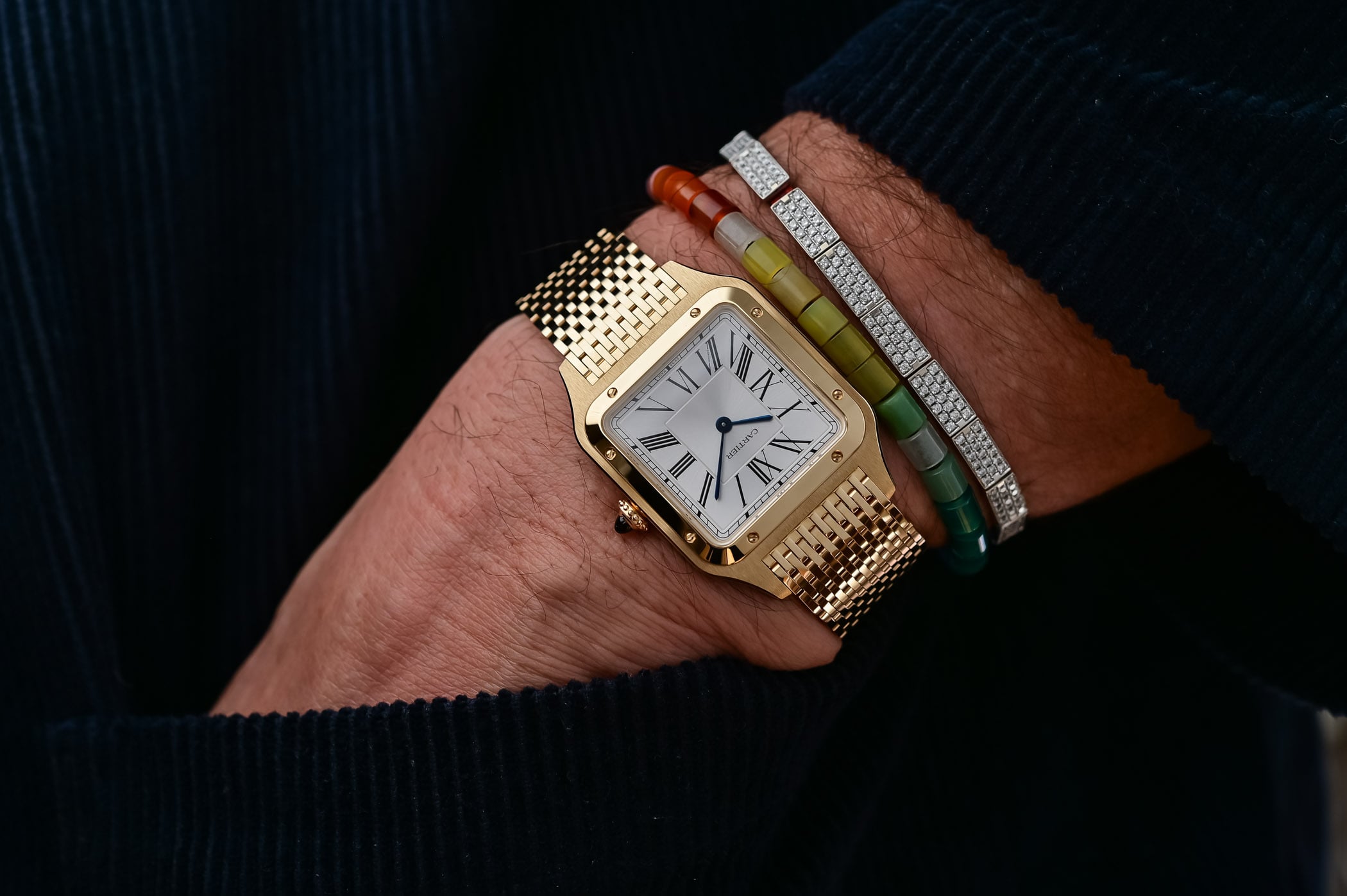
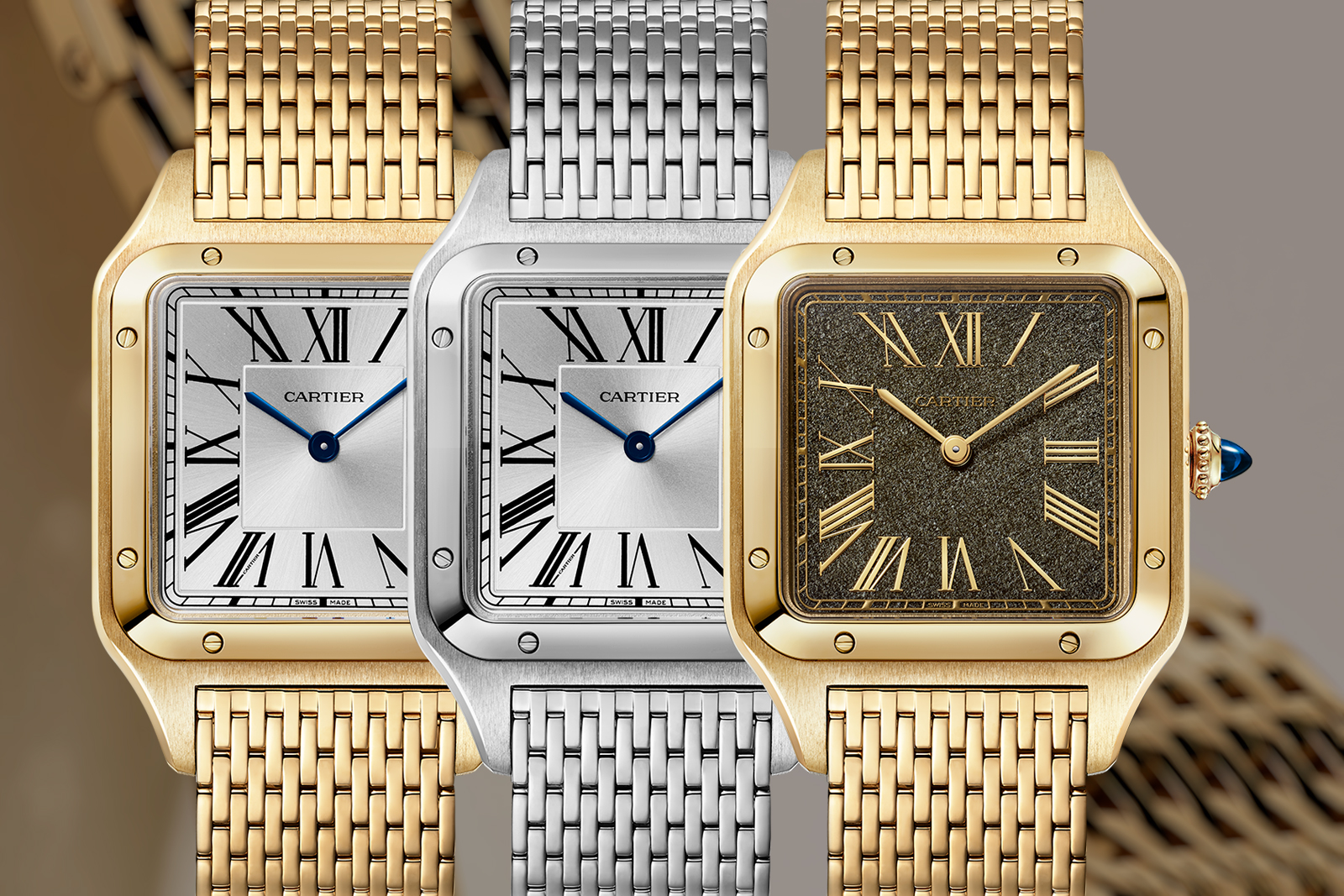
The current Santos de Cartier was unveiled in 2018, representing the largest redesign in forty years. It introduced the QuickSwitch rapid bracelet-change system (tool-free swap between the steel bracelet and leather strap), the SmartLink self-adjusting bracelet, and the in-house Cal. 1847 MC with magnetic shielding and 42-hour power reserve. Two sizes - Medium (35.1mm) and Large (39.8mm) - target both smaller and larger wrists from the same template. The Santos-Dumont (thinner, quartz or slim manual-wind, smaller case) sits alongside as a more dressy historical tribute. Retail runs from ~$6,700 (Medium steel) to ~$40,000 (large full gold).



Comments
No comments yet, be the first to weigh in.