
Omega
Speedmaster Professional
310.30.42 · 42mm · 50m
NASA-qualified manual chrono, 42mm hesalite Moonwatch.
Two manual-wind 1957 / 1969 chronograph icons, both reissued at original case sizes. Speedmaster Pro vs Chronomaster Original 38: cam-switch hesalite vs column-wheel sapphire.
The Speedmaster Professional launched in 1957 with the column-wheel Cal. 321. NASA qualified the 105.003 in 1965 and Buzz Aldrin wore one on the lunar surface in 1969. Today's ref. 310.30.42 runs the cam-switch Cal. 3861: simpler architecture, same 42mm hesalite spec.
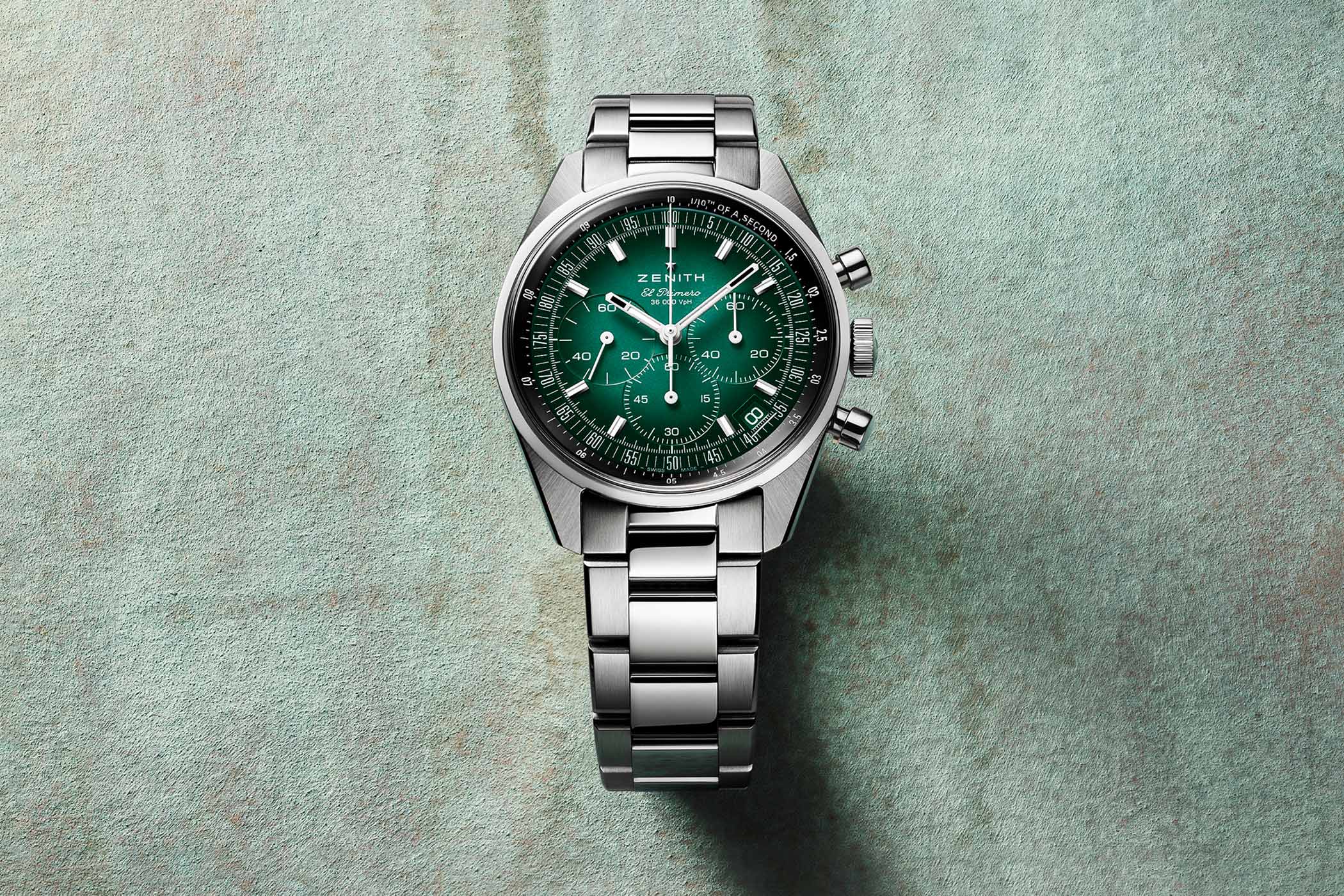
Zenith's Chronomaster Original 38 revives the 1969 A386, the watch that introduced the 36,000 vph automatic El Primero. The current 03.3200.3600 ships in a 38mm modern case with the new El Primero 3600, which adds a 1/10-second indication on the central seconds.
| Attribute | Omega Speedmaster Professional | Zenith Chronomaster Original 38 |
|---|---|---|
| Reference | 310.30.42 | 03.3200.3600 |
| Case diameter | 42mm × 13.2mm | 38mm × 12.6mm |
| Bezel | Aluminium tachymeter | Black tachymeter ceramic-coated |
| Crystal | Hesalite (plastic) standard | Sapphire (box-style) |
| Movement | Cal. 3861 (in-house) | El Primero 3600 (in-house) |
| Architecture | Cam-switching, manual-wind | Column wheel + lateral clutch, automatic |
| Beat rate | 21,600 vph (3 Hz) | 36,000 vph (5 Hz) |
| Reserve | 50 hours | 60 hours |
| Antimagnetic | 15,000 gauss (Master Chrono) | Standard |
| Water resistance | 50m | 50m |
| Retail price | ~€7,400 | ~€8,400 |
The Speedmaster runs manual-wind by NASA spec preservation: Buzz Aldrin's wrist had no rotor, so today's wrist doesn't either. Wind 30-40 turns each morning. The Chronomaster is automatic with the El Primero 3600's rotor: never wind, just wear. Different rituals; different daily relationships.
Speedmaster Cal. 3861 uses cam-switching for the chronograph (mechanically simpler, NASA-spec preserved, slightly tactile pusher feel). Chronomaster El Primero 3600 uses column-wheel + lateral clutch (the haute-horlogerie standard, smoother engagement). Architecture is one of the most-debated chronograph topics in modern watchmaking.
The Speedmaster ships in two crystal options: hesalite (plastic, NASA-spec, lighter, scratchable but shatter-proof) at €7,400 or sapphire-sandwich at ~€8,000. The Chronomaster ships only with a box-style sapphire crystal that mimics the rounded acrylic of the 1969 A386. The hesalite Speedmaster has the most-vintage feel; the box sapphire matches it in look while staying scratch-proof.
If you want the most-iconic chronograph in horology: Speedmaster Pro. NASA, Apollo, manual-wind, hesalite. The watch.
If you want a technically-superior 38mm chronograph that wears smaller: Chronomaster Original 38. 5 Hz, 1/10-second, automatic, box sapphire.
Buy on which heritage matters more (NASA vs El Primero), and on whether 38mm or 42mm fits your wrist. The €1,000 retail-price gap is rounding error at this tier.
Question, suggestion, or just want to say hi? Drop a note.
Comments 3