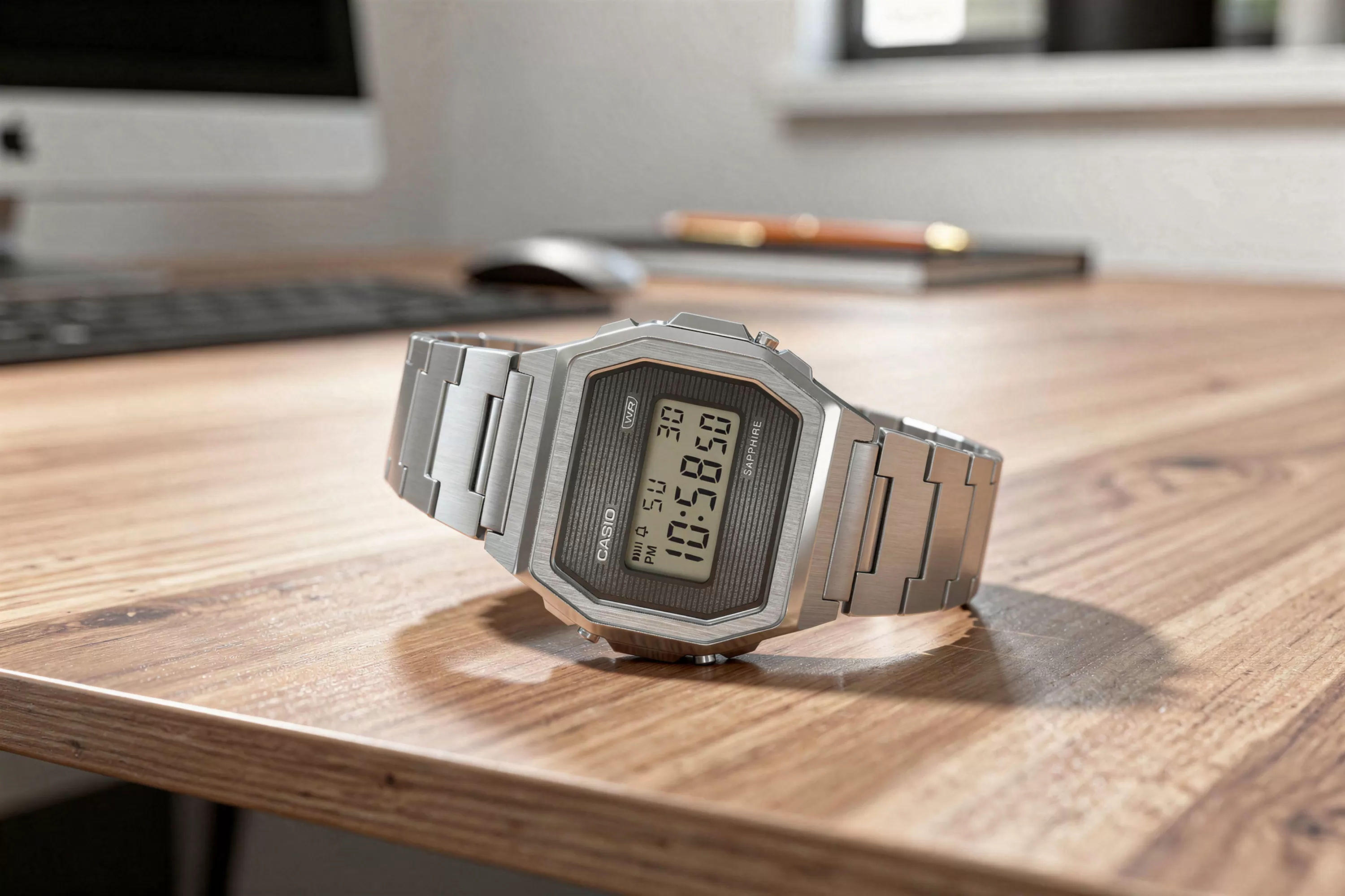
Synthetic sapphire crystal is transparent single-crystal aluminium oxide (Al₂O₃), grown commercially since 1902 via the Verneuil process invented by Auguste Verneuil. A powdered alumina feedstock is melted at 2,050°C in an oxygen-hydrogen flame and deposited on a rotating seed crystal to form a cylindrical boule of pure corundum. The boule is then sliced, ground, and polished into a watch crystal. Sapphire's Mohs hardness of 9 means it can only be scratched by diamond (Mohs 10) and a few exotic lab materials like moissanite.
Watch crystals before sapphire were mineral glass (ordinary soda-lime glass, Mohs ~5-6) or acrylic/plexiglas (Mohs ~2). Mineral glass scratched and chipped easily; acrylic scratched even more easily but could be polished out and was cheap and shatter-resistant. Jaeger-LeCoultre fitted the first sapphire crystal to a wristwatch in 1947 (Futurematic reference). Sapphire remained a premium option through the 1950s and 1960s, used by Patek Philippe, Vacheron Constantin, and high-end Omega. Rolex adopted sapphire crystals across the entire line in the late 1970s, making sapphire the expected default for any serious watch.
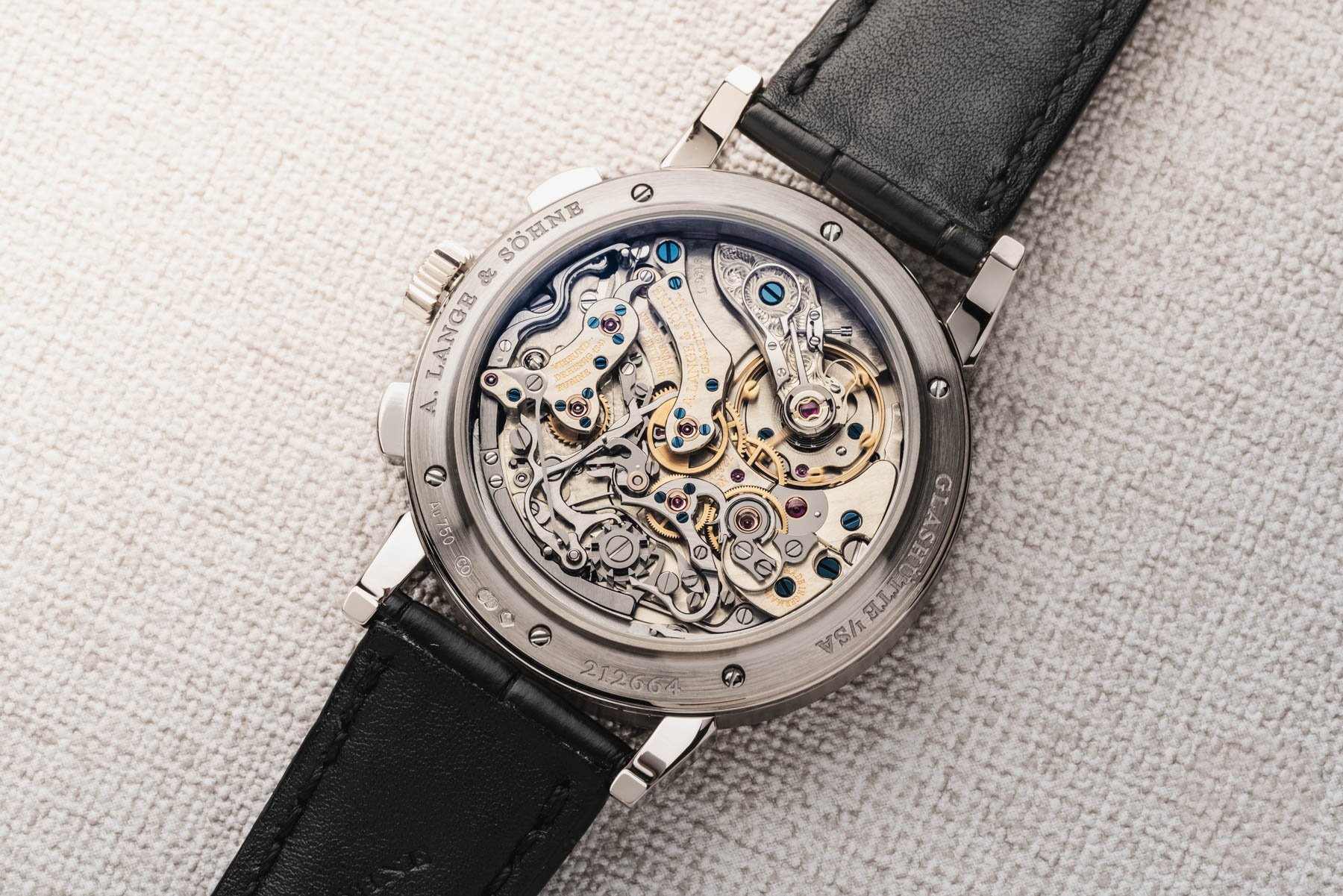
Sapphire has two significant trade-offs versus acrylic. It is brittle: a hard point impact at the edge can shatter it where acrylic would deform. And it is highly reflective, roughly 8 percent at each surface, reducing readability under strong light. Modern watches use anti-reflective coatings (multi-layer magnesium fluoride / silicon dioxide films) on one or both surfaces to reduce reflection to below 1 percent. Single-sided AR (usually on the inside) is the most common compromise: the outside stays durable; the inside is protected from scratching.
Sapphire is now used for more than crystals. Full sapphire cases are a flagship material in modern haute horlogerie: Hublot Big Bang Unico Sapphire, Audemars Piguet Royal Oak Concept, Richard Mille RM 056, Greubel Forsey Sapphire. A full sapphire case takes 500 to 1,500 hours of CNC machining per case; scrap rates during cutting are high because a single micro-fracture ruins a blank. Prices run into the high six figures.






Comments 3