Watch brandsWatch wikiWatch videosVariousWatch calendarSaved articles
WristBuzz Various Compare Omega Speedmaster Pro vs Aqua Terra
⚖ Head-to-head comparison

Omega Speedmaster Professional Moonwatch vs Omega Seamaster Aqua Terra 38mm

The Omega one-watch dilemma. Speedmaster Professional Apollo chronograph at €7,400 vs Aqua Terra 38mm Master Chronometer at €6,400. Heritage vs versatility, manual chronograph vs daily automatic.
Updated 2026-07-17 By Ronald Calls, WristBuzz Editor
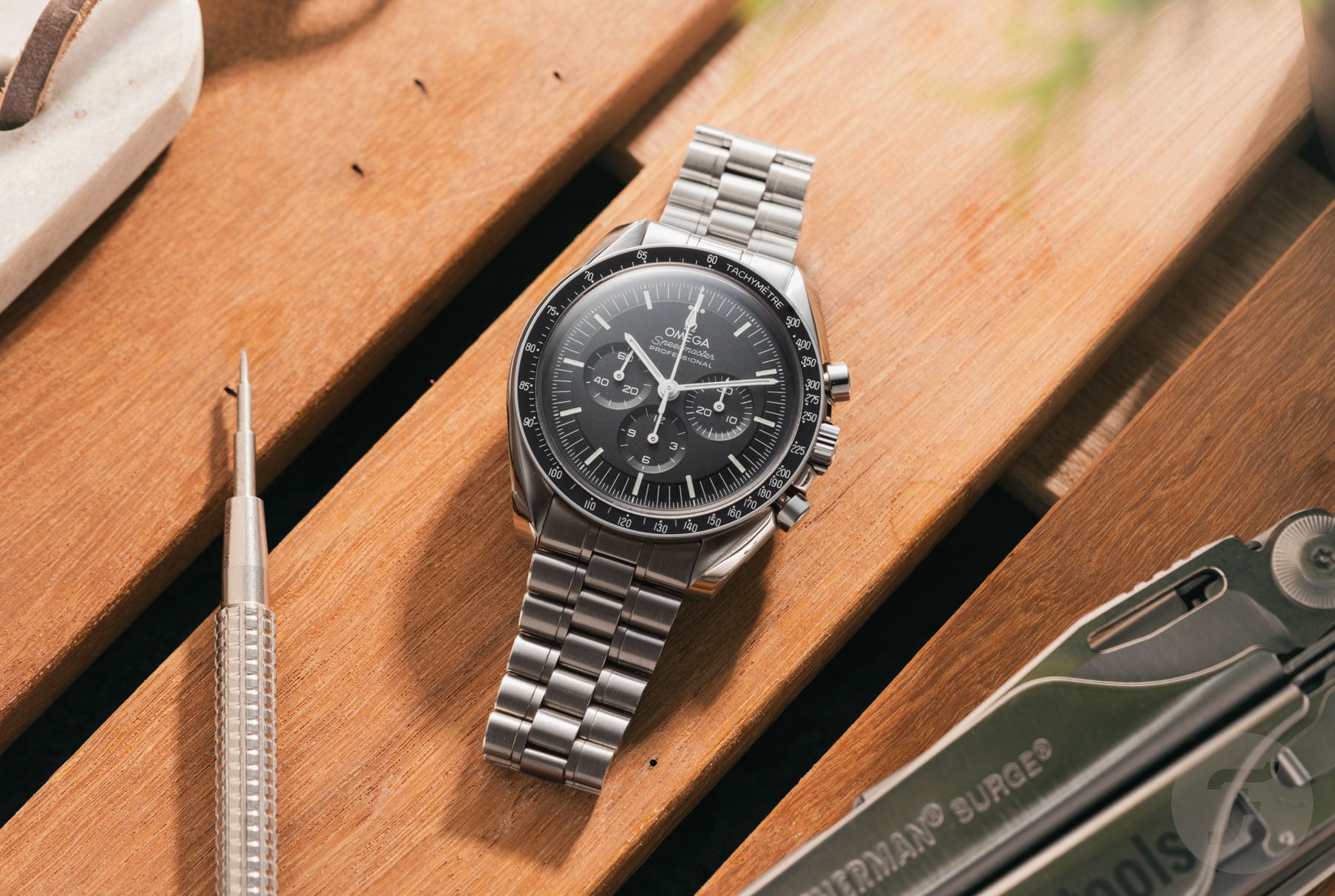
Omega Speedmaster Professional Moonwatch
Omega

Speedmaster Professional Moonwatch

310.30.42 · 42mm · 50m
Introduced 1957 ~€7,400 retail
NASA-qualified manual chronograph. Worn on the lunar surface 1969-1972.
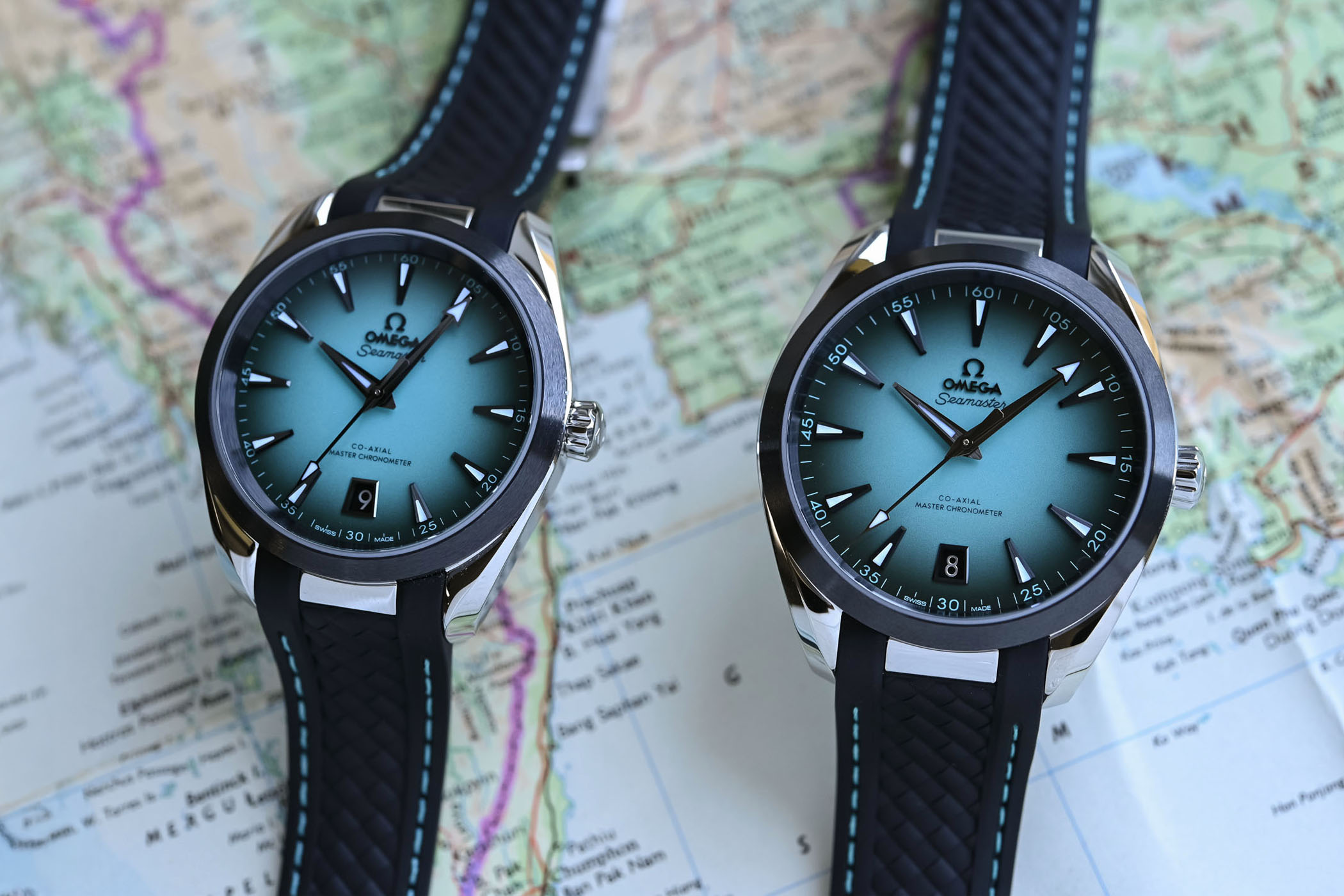
Omega Seamaster Aqua Terra 38mm
Omega

Seamaster Aqua Terra 38mm

220.10.38 · 38mm · 150m
Introduced 2002 ~€6,400 retail
Master Chronometer dress-sport, 15,000-gauss antimagnetic, the daily Omega.

The Omega first-watch decision

Both watches cost similar money (€7,400 vs €6,400) and live at the same first-luxury-Omega tier. The decision is about what you want from the watch: heritage and a manual-wind chronograph (Speedmaster Pro), or a Master Chronometer everyday automatic that disappears under a shirt cuff (Aqua Terra 38). Two completely different watch-buying decisions wearing the same brand.

The Speedmaster has the strongest heritage story in modern watchmaking: NASA-qualified for spaceflight in 1965, on the lunar surface 1969-1972 with Apollo 11 through 17, manual-wind preserved as part of the original NASA spec. The Aqua Terra has the strongest technical spec at the price: METAS Master Chronometer (±0/+5 sec/day, 15,000-gauss antimagnetic), Co-axial Cal. 8800, 150m water resistance. Different buyers, different watches.

Spec sheet

Attribute Omega Speedmaster Professional Moonwatch Omega Seamaster Aqua Terra 38mm
Reference 310.30.42 220.10.38
Case diameter 42mm × 13.2mm 38mm × 12.2mm
Architecture Manual-wind cam-switching chronograph Automatic 3-hand + date
Movement Cal. 3861 (in-house) Cal. 8800 Co-axial (in-house)
Reserve 50 hours 55 hours
Beat rate 21,600 vph (3 Hz) 25,200 vph (3.5 Hz)
Certification Master Chronometer (15,000 gauss) Master Chronometer (15,000 gauss)
Crystal Hesalite (NASA spec) or sapphire +€600 Sapphire
Water resistance 50m 150m
Strap / bracelet Steel bracelet or leather Steel bracelet or leather
Lume Super-LumiNova hands + indices Super-LumiNova hands + indices
Retail price ~€7,400 (hesalite) ~€6,400

Heritage chronograph vs Master Chronometer daily

The Speedmaster Pro sits at the absolute centre of horological heritage. Buzz Aldrin wore his Speedmaster on the lunar surface during Apollo 11 (Armstrong's Speedmaster stayed in the LM as a backup timer when its clock failed). The watch was used on every Apollo mission through Apollo 17, on Skylab, on the Apollo-Soyuz mission, and is currently NASA-issued for ISS missions. Cal. 3861 (replacing the older 1861) preserves the manual-wind cam-switching architecture as part of the NASA-flight-qualification preservation.

The Aqua Terra 38 has no equivalent heritage but holds technical primacy. Cal. 8800 is METAS Master Chronometer certified: ±0/+5 sec/day after casing, 15,000-gauss antimagnetic, 55-hour reserve, Co-axial escapement (George Daniels' design, lower long-term wear). The teak-pattern dial (vertical lines, like yacht decking) reads dressier than the Speedmaster's sub-dial-heavy face. 150m water resistance vs 50m.

Manual-wind ritual vs automatic daily

The Speedmaster is manual-wind: the buyer winds the watch every 2-3 days as a ritual. Some collectors love this; others find it inconvenient for a daily watch. 50m water resistance means it's shower-safe but not really a swim watch. Heritage purists keep it on the steel bracelet; Apollo provenance buyers swap to a NATO.

The Aqua Terra is automatic: never wind, just wear. 38mm size disappears under a shirt cuff, fits 6.25-7.25 inch wrists naturally. 150m water resistance is genuine swim-friendly. Bracelet is among the best in the Omega catalogue (similar quality to the Datejust).

Hesalite vs sapphire crystal

The Speedmaster Pro ships standard with a hesalite (acrylic) crystal: this is the NASA-spec crystal because acrylic shatters into fewer fragments in zero-G than sapphire. Modern collectors split: hesalite buyers want the historical spec; sapphire buyers want the modern scratch-resistance. The sapphire version costs €600 more (€7,400 hesalite, ~€8,000 sapphire).

The Aqua Terra ships with sapphire (modern standard). Sapphire is harder than steel; hesalite scratches with daily wear but the marks polish out with Polywatch. For a buyer who is rough on watches, sapphire matters; for a buyer who values heritage spec, hesalite is the right answer.

Pros and cons

Speedmaster Professional Moonwatch · Pros
  • NASA Apollo provenance (most-storied chronograph)
  • Manual-wind preserves NASA flight-qualification spec
  • Hesalite crystal NASA-spec (sapphire optional)
  • Master Chronometer (15,000-gauss antimagnetic)
  • Apollo / Speedmaster cultural reference
Speedmaster Professional Moonwatch · Cons
  • €1,000 over Aqua Terra
  • Manual-wind requires daily / 2-3 day attention
  • 50m water resistance (vs Aqua Terra 150m)
  • 42mm × 13.2mm wears bigger than Aqua Terra 38
Seamaster Aqua Terra 38mm · Pros
  • 38mm wears clean under a shirt cuff
  • 150m water resistance (genuine swim-friendly)
  • Co-axial Cal. 8800 with 55h automatic
  • Teak-pattern dial works dressy and casual
  • Bracelet quality among the best in the Omega catalogue
Seamaster Aqua Terra 38mm · Cons
  • No equivalent heritage to the Speedmaster
  • €6,400 still entry-luxury territory
  • 3-hand + date only (no chronograph complication)
  • Less culturally distinctive than the Speedmaster

Verdict: which one?

If you want the most-storied chronograph in production and you don't mind manual-wind: Speedmaster Pro. Apollo provenance, NASA spec, the watch a serious collector keeps for life.

If you want the most-versatile daily Omega at the price: Aqua Terra 38. Master Chronometer, automatic, swim-friendly, disappears under a cuff. The first-Omega answer for buyers who want one watch for every occasion.

For most first-Omega buyers, the Aqua Terra is the answer. For collectors specifically drawn to chronographs and Apollo / motorsport heritage, the Speedmaster is the right choice. Many serious collectors end up with both: Speedmaster for heritage, Aqua Terra for daily wear.

Common questions

Speedmaster Pro or Aqua Terra 38: which is the better first Omega?
For most first-Omega buyers wanting one watch for everything, the Aqua Terra 38: Master Chronometer automatic, 150m water resistant, 38mm so it slips under a cuff, around €6,400. Pick the Speedmaster Pro (~€7,400) if you are specifically drawn to chronographs and Apollo heritage and do not mind manual-winding. Many collectors end up with both.
Is the Speedmaster Professional automatic or manual-wind?
Manual-wind. The Moonwatch keeps its hand-wound cam-switching architecture (Cal. 3861) as part of preserving the NASA flight-qualification spec, so you wind it every two to three days. The Aqua Terra is automatic - just wear it - with a co-axial Cal. 8800 and a 55-hour reserve.
What is the deal with the Speedmaster hesalite crystal?
Hesalite is acrylic plastic - it is the NASA-spec crystal because acrylic breaks into fewer fragments than sapphire in zero gravity. It scratches with daily wear but polishes out with Polywatch. Omega also offers a sapphire-sandwich version for about €600 more; the Aqua Terra comes with sapphire as standard. Heritage buyers take hesalite; people rough on watches take sapphire.
Which is more water resistant and wearable day to day?
The Aqua Terra 38 - 150m water resistance makes it genuinely swim-friendly, and at 38mm x 12.2mm it wears cleanly under a shirt cuff. The Speedmaster Pro is 50m (shower-safe, not a swim watch) and at 42mm x 13.2mm wears bigger than the Aqua Terra.

Comments 11

  1. Anonymous
    Been wearing a Speedmaster Pro for eight years and still love it, but the manual wind thing does feel dated next to modern automatics. That said, there's something about the heritage and the Apollo connection that keeps me coming back. The Aqua Terra is probably the smarter everyday choice though.
    1. TT replying to Anonymous
      manual chronograph or daily driver; pick one.
  2. Anonymous
    The manual vs automatic thing is overblown. Both are fantastic watches. Real question is whether you'll actually wear the Speedmaster enough to justify the thousand euro premium.
    1. Kevin O. replying to Anonymous
      Fair point on both being excellent, but I'd push back on the wear-time question. I owned a Speedmaster for three years and barely touched it, convinced myself the same story. Sold it. Then I realized what I actually missed wasn't the watch itself, it was the *ritual* of hand-winding it before bed. That intangible thing matters more than the euros. The Aqua Terra won't give you that. So yes, consider your actual habits, but also consider what kind of relationship you want with the thing.
  3. Chronograf
    This is the El Primero argument all over again, isn't it. Manual workhorse or daily driver. Speedmaster's got the pedigree, but €1k difference buys a lot of versatility with the AT. Neither choice is wrong, just depends if you want to feel like an astronaut or actually wear the thing.
  4. Mike
    Speedmaster Pro wins if you actually use a chronograph. Otherwise Aqua Terra.
  5. Anonymous
    the manual winding on the speedmaster is kind of a pain in 2024 but the heritage factor is real. aqua terra feels safer.
  6. DJ
    Manual wind heritage vs automatic versatility. Speedmaster wins on story, Aqua Terra wins on wrist time.
  7. Ben W.
    Interesting comparison but let's be real about the market context here. The Speedmaster Pro's Apollo credentials command a significant premium, and a thousand euros of that €7,400 is honestly mythology tax. The Aqua Terra Master Chronometer is the more rational choice for actual daily wear, but good luck finding one at list without playing the AD game or hunting secondhand.
  8. BigWristBilly
    19cm wrist here, so the 38mm Aqua Terra is actually sized right for me. The Speedmaster Pro is pushing it at 42mm, even though I love the manual heritage aspect. Tough call.
  9. Theo
    The Aqua Terra makes more sense for Riviera weather, honestly. That 38mm feels right on the wrist during summer, and the automatic movement means you're not hand-winding every morning. The Speedmaster is iconic, sure, but manual chronographs feel a bit formal for casual Mediterranean days.

Leave a comment

All comments are reviewed before they go live. Email is for our records only - it's never published.