The 1969 launch
The El Primero was unveiled on 10 January 1969, narrowly beating the Heuer/Breitling/Hamilton Cal. 11 (the "Chronomatic") and Seiko's Cal. 6139 to the title of the world's first automatic chronograph. Zenith's claim to "first" is contested in scholarly horology because all three groups developed in parallel; what is uncontested is the 5 Hz frequency. 5 Hz means 36,000 vph (10 ticks per second): the chronograph seconds hand visibly sweeps in 1/10-second increments, where every other chronograph of the era ticked at 18,000-21,600 vph (5-6 ticks/sec). Higher beat = finer measurement granularity = better short-interval accuracy. The El Primero was not just first; it was technically ahead.
The "saved" story
In 1975, with Zenith mid-quartz-crisis and recently sold to American conglomerate Zenith Radio Corporation, the new owners ordered the El Primero tooling destroyed. Watchmaker Charles Vermot, who had spent his career developing the calibre, refused. He hid the tools, presses, drawings, and tooling jigs in the attic of the Zenith building in Le Locle and walled them up. When demand for mechanical chronographs returned in the early 1980s, Vermot revealed the cache. Zenith was able to restart El Primero production in 1984 with original tooling intact. By 1988 the El Primero was the chosen movement for the new Rolex Daytona; that single supply contract made the El Primero one of the most-recognised mechanical movements of the late 20th century.
The Rolex era (1988-2000)
When Rolex updated the Daytona in 1988 to a self-winding chronograph (ref. 16520), they bought the El Primero from Zenith but extensively modified it. Rolex slowed the frequency from 5 Hz to 4 Hz, replaced the rotor and winding system, swapped the balance, and re-regulated everything to chronometer spec. The Rolex-modified El Primero was called Cal. 4030. The Daytona 16520 ran the 4030 from 1988 to 2000, when Rolex finally launched the in-house Cal. 4130 in the new ref. 116520. Pre-2000 Daytonas (with the Zenith-based 4030) are sometimes called "Zenith Daytonas" by collectors and trade at USD 25-40k in 2026 versus USD 30-50k for in-house 4130 versions.
Modern El Primero variants
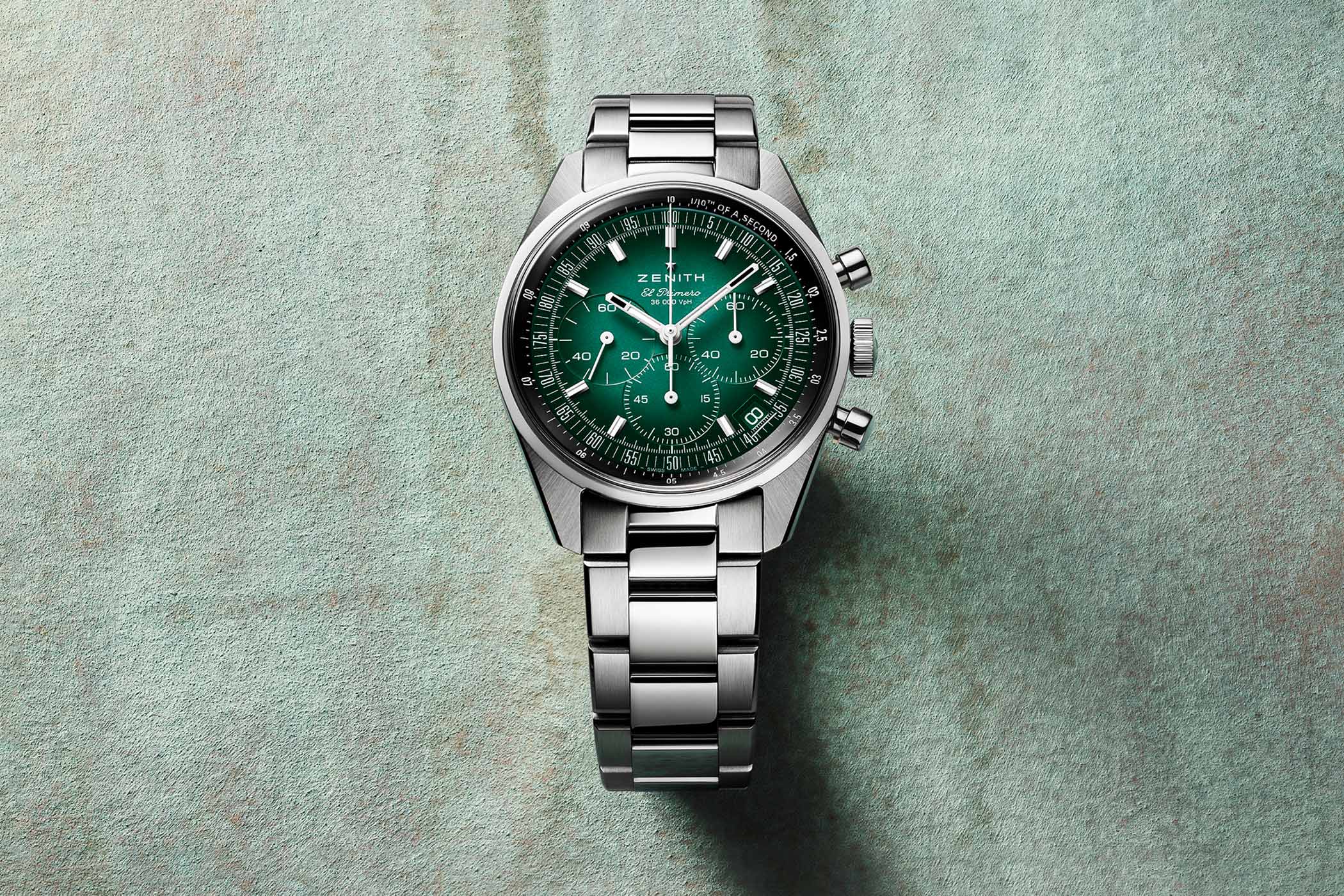
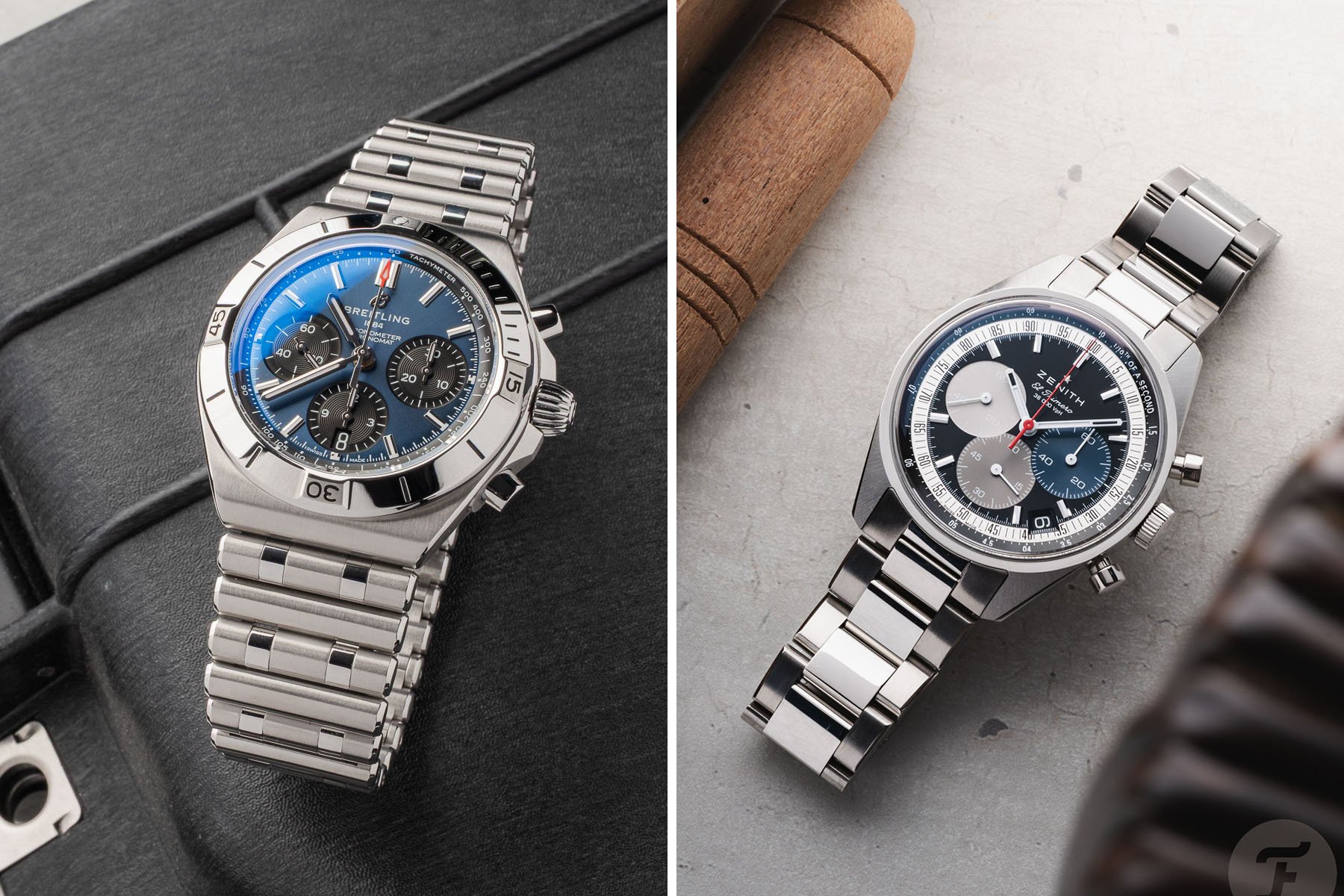
Zenith still produces the El Primero in 2026, in many variants. El Primero 400 / 4061: the classic 5 Hz architecture, in the modern Chronomaster Original. El Primero 3600: 2021 redesign with 1/10-second on the central hand (truly visible 1/10-second chronograph). El Primero 9004: in the Defy 21, runs at 50 Hz (360,000 vph!) for a 1/100-second chronograph; uses two separate gear trains and balance assemblies, one for the watch and one for the chrono. El Primero 21: chronograph-only, 50 Hz. The 9004 and 21 are arguably the most technically advanced industrial chronograph movements available; nothing else comes close to 50 Hz.
Watches it powers
Zenith Chronomaster Original (the canonical El Primero watch), Chronomaster Sport, Defy 21 (50 Hz, 1/100-sec), Defy Skyline, Pilot Big Date Flyback, Chronomaster Revival (vintage reissues with original 5 Hz architecture). Outside Zenith, the El Primero powered the Rolex Daytona 16520 (1988-2000), plus a small number of TAG Heuer, Ebel, and Bulgari chronographs in the 1990s and 2000s.
Service notes
Service for a modern El Primero runs CHF 700-1,000 at Zenith and CHF 500-700 at qualified independents. The 5 Hz frequency means the escapement runs 20% faster than a 4 Hz movement, which historically translated into faster wear; modern El Primero (post-2000) uses harder materials and the wear advantage has narrowed. Service interval: 5-7 years for daily wear; the high beat rate means oil aging is more critical than in slower movements. For pre-2000 Zenith Daytona movements (Rolex Cal. 4030), service is best done at Rolex; aftermarket parts for the modified version are restricted.


Comments
No comments yet, be the first to weigh in.