 SJX Watches
Insight: Barraud’s Weight and the Marine Chronometer
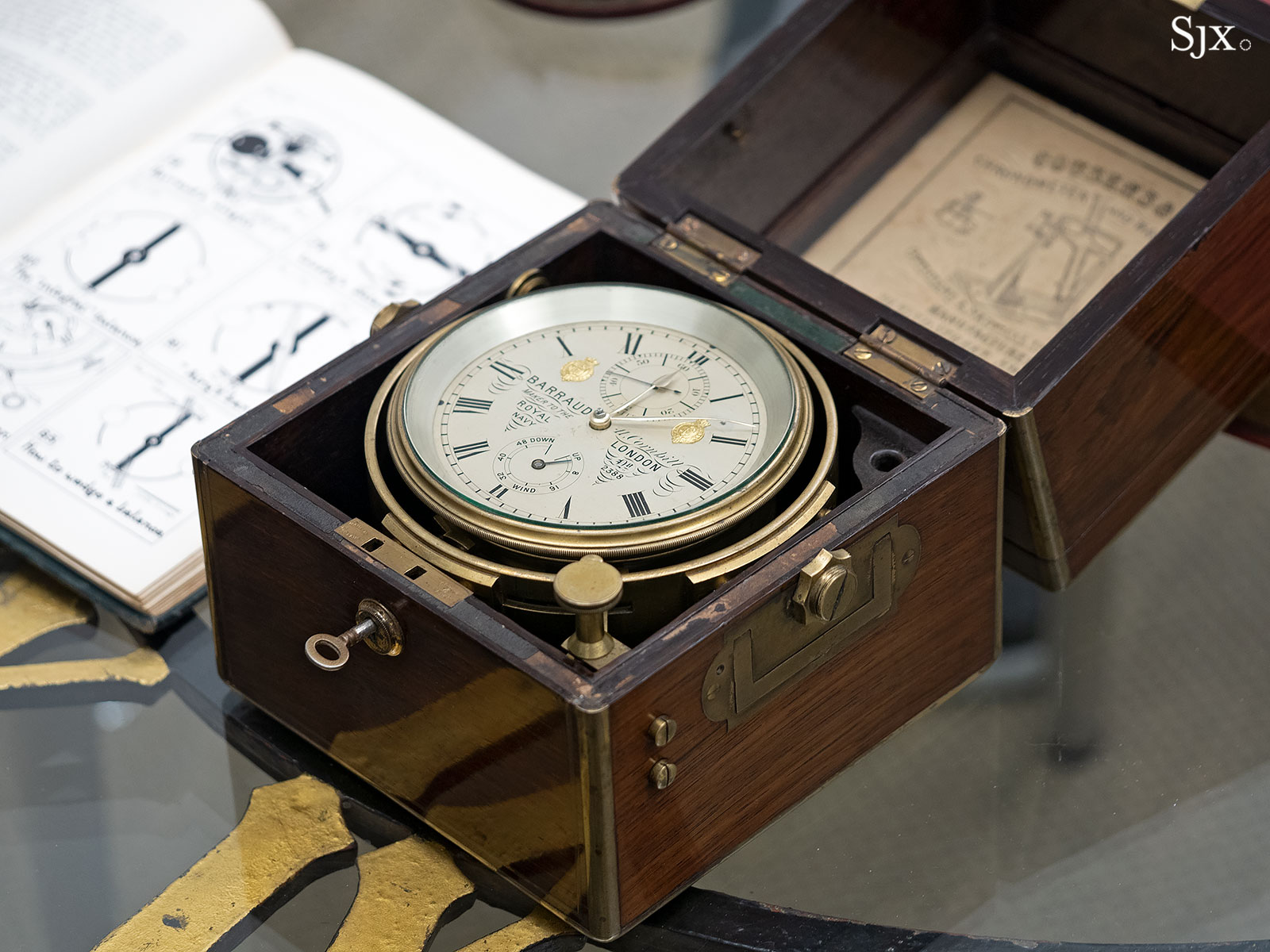
Although precision watchmaking is today mostly synonymous with Switzerland, the oft forgotten truth is that much of the technological progress and development in horology during the 18th and early 19th centuries originated in England. The preeminence of English watchmaking during that period is perhaps personified by John Harrison, the carpenter-turned-clockmaker best known for his invention of the marine chronometer. Harrison and his contemporaries advanced horology in an era where the pursuit of accurate timekeeping was of national importance for the United Kingdom: the marine chronometer enabled ships to traverse the highs seas while maintaining positional accuracy over extremely long distances, an achievement that no doubt helped the rise of the globe-spanning British Empire. The curious chronometer On a recent visit to Charles Frodsham & Co Ltd. – the English chronometer manufacturer now run by Philip Whyte and Richard Stenning that’s making wristwatches equipped with a natural escapement – a rather curious timekeeper from England’s heyday as a watch and clockmaking nation emerged. Dating to 1845, it was marine chronometer no. 2388 manufactured by Barraud, later Barraud & Lund, a now defunct English watchmaker (though a descendant of the company, Lund & Blockley, remains in operation to this day as a retailer in Mumbai). While the well-preserved state of the clock was impressive in itself, closer inspection of the movement revealed a peculiar feature. Sitting...