Watch brandsWatch wikiWatch videosVariousWatch calendarSaved articles
PopularRolexOmegaPatek PhilippeAudemars PiguetTudorGrand SeikoCartierSeikoIWCTAG HeuerBreitlingJaeger-LeCoultreA. Lange & SohneZenith

Results for The Rolex Submariner History

41,165 articles · 6,980 videos found · page 1099 of 1605

View Rolex brand page
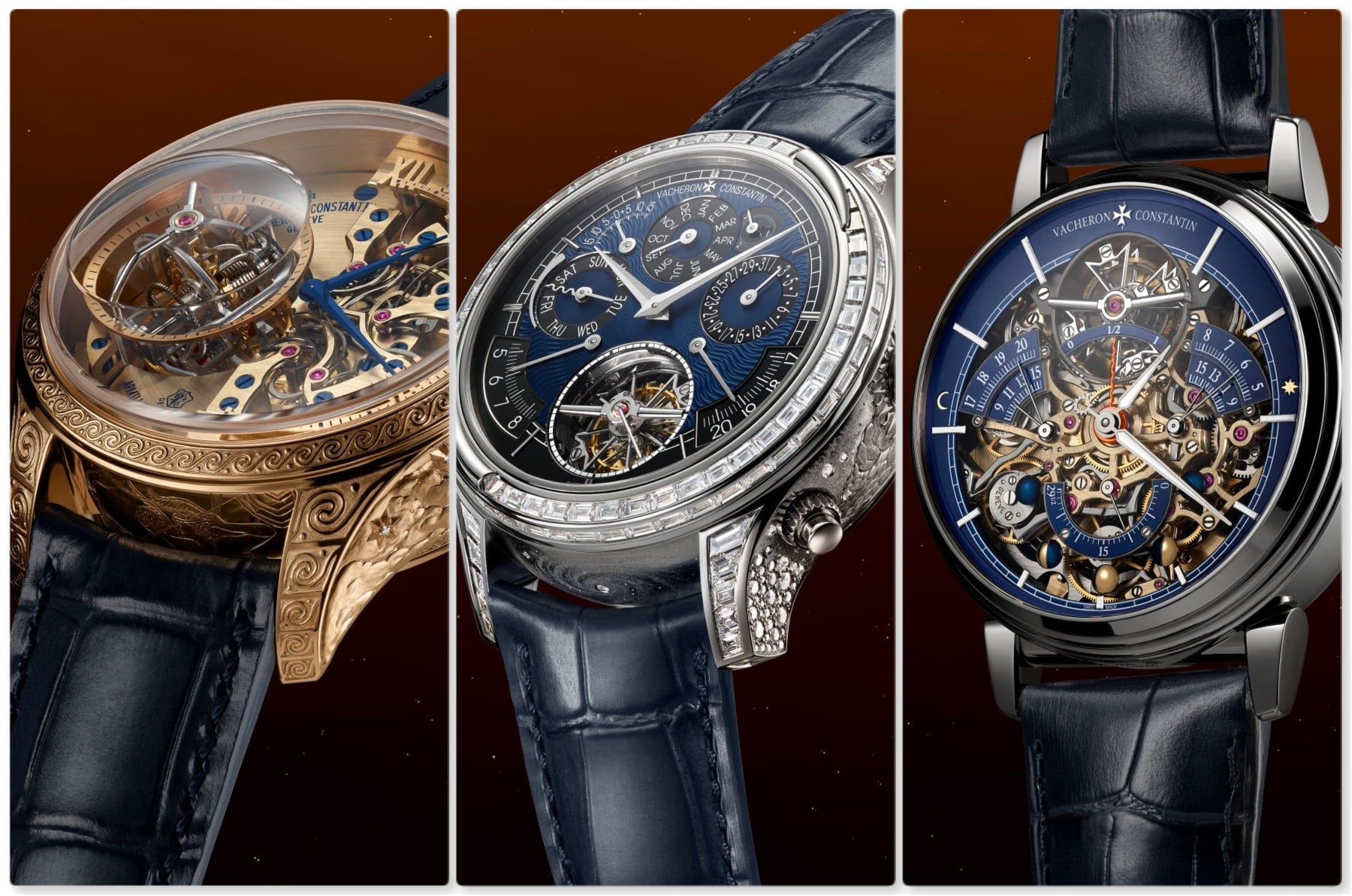
Introducing: A Complicated Trio Of One-Offs From Vacheron Constantin With Astronomical Themes Fratello
Vacheron Constantin Nov 4, 2025

Introducing: A Complicated Trio Of One-Offs From Vacheron Constantin With Astronomical Themes

If you’re celebrating 270 years of uninterrupted watchmaking history, you’ve seen it all, and sometimes you need to find new challenges to keep things exciting. A new collection of Les Cabinotiers timepieces titled La Quête (The Quest) keeps the watchmakers at the world’s longest continually operating watch brand on their toes and the collectors happy. […] Visit Introducing: A Complicated Trio Of One-Offs From Vacheron Constantin With Astronomical Themes to read the full article.

Exaequo Adds New References to their Lineup of Dali Inspired Melting Watches Worn & Wound
Cartier Crash Oct 28, 2025

Exaequo Adds New References to their Lineup of Dali Inspired Melting Watches

It’s hard to overstate the impact that Salvador Dalí-and, by extension, the Surrealist movement-had on popular culture. What might now feel like a strange detour in an art history textbook was, in reality, a radical reimagining of what art could be. Dalí’s obsession with the unconscious, symbolism, and dream logic reframed art as a psychological response to culture, rather than just a mirror of it. In doing so, Surrealism paved the way for the Avant-Garde, Pop Art, and the way we think about art today. It’s no surprise, then, that Dalí’s legacy continues to ripple through design and (not to be dramatic here) time itself. Brands have long used his vision as a jumping-off point for their own explorations of time and perception, most notably, of course, through reinterpretations of some of Dali’s most famous works, like his 1931 The Persistence of Memory. The Cartier Crash, with its iconic “melting clock” case, is probably the most famous representation of this style; but it is not the only one. In fact, Exaequo has been producing its own version of a melting watch since 1990, with its latest references, the Polyhedron series, debuting at Time to Watches in Geneva earlier this year. While there will undoubtedly be comparisons between Cartier’s and  Exaequo’s two versions of a wobbly little timepiece, there is a marked difference between the two brands’ approach to the same reference source (not least of all the price). For the Polyhedron,  Exaequo...
Tudor Black Bay 58 Burgundy Review: Tudor's Best Dive Watch Yet? Teddy Baldassarre
Tudor Oct 27, 2025

Tudor Black Bay 58 Burgundy Review: Tudor's Best Dive Watch Yet?

The Tudor Black Bay 58 Burgundy was released at this year's Watches & Wonders to nothing short of acclaim by enthusiasts. Not just a fresh color, this is a redesigned Tudor Black Bay 58, essentially from top to bottom. What you’re looking at is the next generation of everybody’s favorite Black Bay size, and it debuts in a color you simply cannot ignore, and one tied to Tudor history. The Burgundy Black Bay 58 took the burgundy color usage of Black Bays from the past while leaning into the bright color scheme much more boldly than before. Rather than just adding another bezel color, Tudor decided to make the whole dial and front of the case a study in this shade of red. Where the past few years have seen Tudor experiment with satin-finished dials in its hardcore sports watches, from the Pelagos to the Black Bay 54, the 58 range has been steadfast in its use of matte or textured dial surfaces. That all changed with this iteration, as we get a punchy, sunburst burgundy dial color. You might think this is an infusion of modernity in a model known to harken back to the past, but it isn’t. It’s just harkening to a different moment in time – to a watch that Tudor never technically released. Indeed, that would be a certain 1990s Tudor Submariner Ref. 79190 prototype that had a similar red bezel/red dial combination. And while that watch never made it to the production stage, it heavily influenced the brand’s decision when it released the very first Black Bay with a bu...

Credor Watches: Japan's Answer To Switzerland's Best Teddy Baldassarre
Credor Oct 23, 2025

Credor Watches: Japan's Answer To Switzerland's Best

Similar to Switzerland at the heart of Europe, Japan has a hierarchy of complexity in its watches, with brands like Grand Seiko often being the first to come to mind in the luxury segment. However, just like the artistic free spirits from Switzerland who uphold centuries-old principles of the craft, there is a brand with tremendous mystique that is quickly emerging as a name to be reckoned with. It simply goes by the name, Credor. A Brief History of Credor Watches Much like Grand Seiko, Credor was born as a luxury offshoot of Seiko, established in 1974 to produce precious metal watches under the "Crêt D'or" name, which translates from French as “pinnacle of gold”. The name evolved to “Credor” in the 1980s, which saw the introduction of the brand's triple-peaked logo capped by three stars. It remained as a co-brand with Seiko on watch dials throughout the ‘90s, was sold mainly in Japan, and appeared on watches that combined luxury with sport, along with select jewelry pieces.  The focus on both kinds of watches –  the luxury-sport and the jewelry – had one distinct commonality: a specific focus on design with a bent toward capturing a certain opulent fervor of the 1980s and ‘90s. You can see some similarities in these watches as what was coming out of Switzerland by way of a certain Gérald Genta (and the connection between he and Credor doesn’t stop there). Credor In The 1990s The 1990s are something of an inflection point for the brand, when the Seiko...

Celebrating 55 Years Of Titanium Watches With Citizen Fratello
Citizen Citizen recently organized Oct 14, 2025

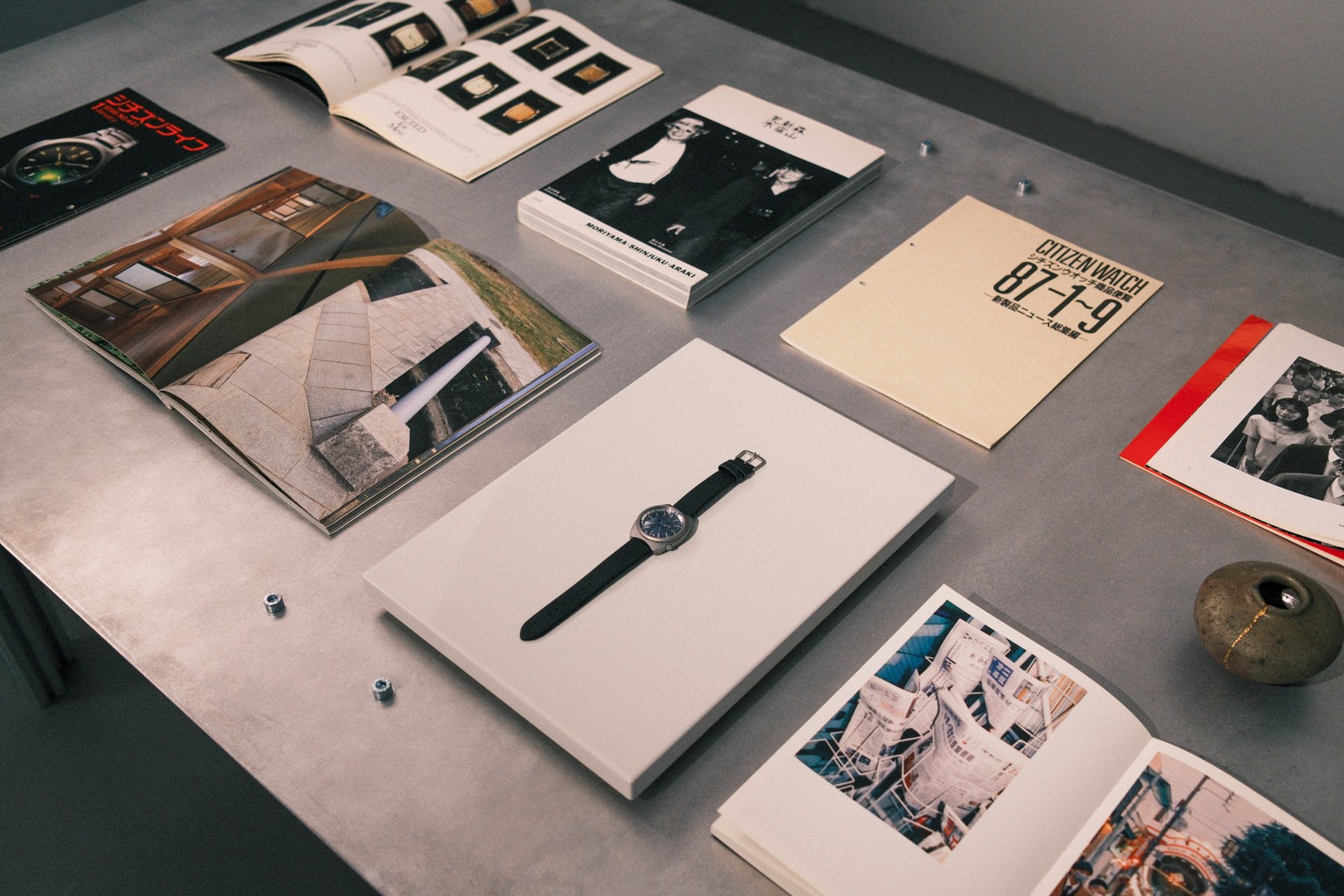
Celebrating 55 Years Of Titanium Watches With Citizen

Citizen recently organized a traveling exhibition showcasing its 55-year history with titanium. I was invited to the Paris edition, so I made my way to the French capital with my camera and notepad. In case you were unaware, Citizen was the first brand to make a wristwatch out of this lightweight metal. While titanium may […] Visit Celebrating 55 Years Of Titanium Watches With Citizen to read the full article.

Cartier Introduces a New Santos in Titanium (and a Cool Steel Reference with Lume) Worn & Wound
Cartier Introduces Oct 13, 2025

Cartier Introduces a New Santos in Titanium (and a Cool Steel Reference with Lume)

When the topic of Cartier comes up, usually it’s in the context of a discussion of their beautiful, design oriented dress watches. We all know what we’re talking about here: shaped cases, precious metals, exotic gem set jewelry pieces. This is Cartier’s stock-in-trade, and watch for watch there’s probably no brand on the planet better at making those kinds of watches. But if you look through Cartier’s history, there are plenty of oddball creations that don’t fit neatly into the dress watch narrative. True sports watches are rare (RIP, Calibre de Cartier divers) but there are many notable releases from recent years that run right up to the edge of a sportier category. The Drive de Cartier (also discontinued) was an explicit attempt to make a “men’s” watch that was quite elegant but also larger and could easily read as more casual. The Cartier Roadster collection is another example of a line that viewed sporty/casual styles through a uniquely Cartier lens. And, of course, the Santos has existed for many years in oversized and complicated variants (not to mention black coated examples) that fit nicely into this niche.  And last week, Cartier announced yet another new Santos that might, in its way, be among Cartier’s sportiest watches ever, thanks to the material used as well as the finish chosen. The new Santos de Cartier in titanium features a bead blasted titanium case and bracelet, and comes in the larger Santos case size, measuring 39.8mm × 9.3mm. Ac...

Seiko SARB033: Why This JDM Watch Has A Cult Following Teddy Baldassarre
Seiko Oct 8, 2025

Seiko SARB033: Why This JDM Watch Has A Cult Following

The Seiko SARB033 has joined the ranks of Seiko watches that are more popular and coveted than ever - despite never having been sold outside Seiko's home country of Japan and also despite exiting the market entirely back in 2018. In this article, we explore the SARB033 and its closest siblings from the elegant collection and try to uncover what makes these hard-to-find timepieces so appealing.  Seiko SARB Collection History: Seiko introduced its SARB collection exclusively to the Japanese market in 2006, positioning it as a more upscale alternative to the sportier 5 Sport line, which also offered watches with the brand’s own automatic movements at very approachable prices. The SARB series (no, the letters don’t stand for anything, we checked) was built around the Seiko Caliber 6R15 movement, more on which below, introduced by Seiko one year prior.  The first generation of SARB watches (SARB001, SARB002, and SARB005) appears to take inspiration from the King Seiko “Vanac” editions that made a brief but impactful splash on the market in the 1970s, with their angular cases, funky dial colors and textures, and faceted crystals. The next wave (SARB007, 009, 011) goes for more of a rounded, “Retro Modern” character, with vintage designs influencing the three-hand-date dials. On the heels of that trio came the first models in the series to really break through to widespread enthusiast acclaim outside their native Japan, the mountaineering-inspired “Alpinist” m...

SJX Podcast: Quest of Time SJX Watches
Vacheron Constantin just unveiled Oct 1, 2025

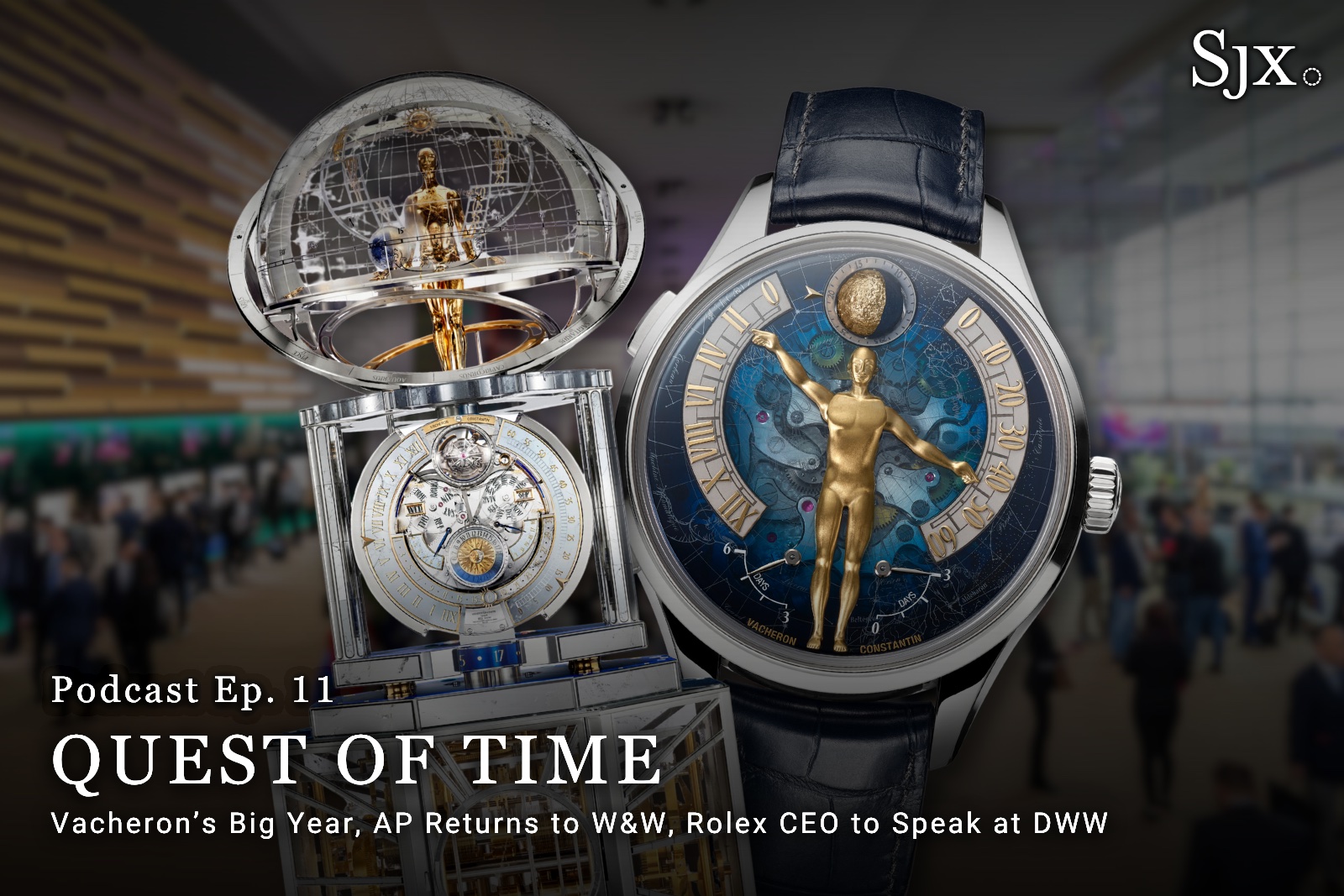
SJX Podcast: Quest of Time

On episode 11 of the SJX Podcast, SJX and Brandon Moore discuss the monumental La Quête Du Temps astronomical clock that Vacheron Constantin just unveiled in Paris alongside the companion Quest of Time wristwatch. We also tackle Tudor’s first moon phase complication and what it means for the brand’s collection of dress watches. SJX also shares his views on the news that Rolex chief executive Jean-Frédéric Dufour will be giving the keynote at Dubai Watch Week, a move that’s largely unprecedented for the industry’s most impenetrable brand. We also chat about the other big news in the world of watch fairs, Audemars Piguet’s return to Watches & Wonders in 2026. Last but not least, we discuss what Girard-Perregaux’s new movement platform might reveal about the future of the brand. Listen on Apple Podcasts, Spotify, and Youtube.  

Zenith’s DEFY Skyline Chronograph Review: A Beautiful Blue Ceramic Masterpiece WatchAdvice
Zenith s DEFY Skyline Chronograph Sep 20, 2025

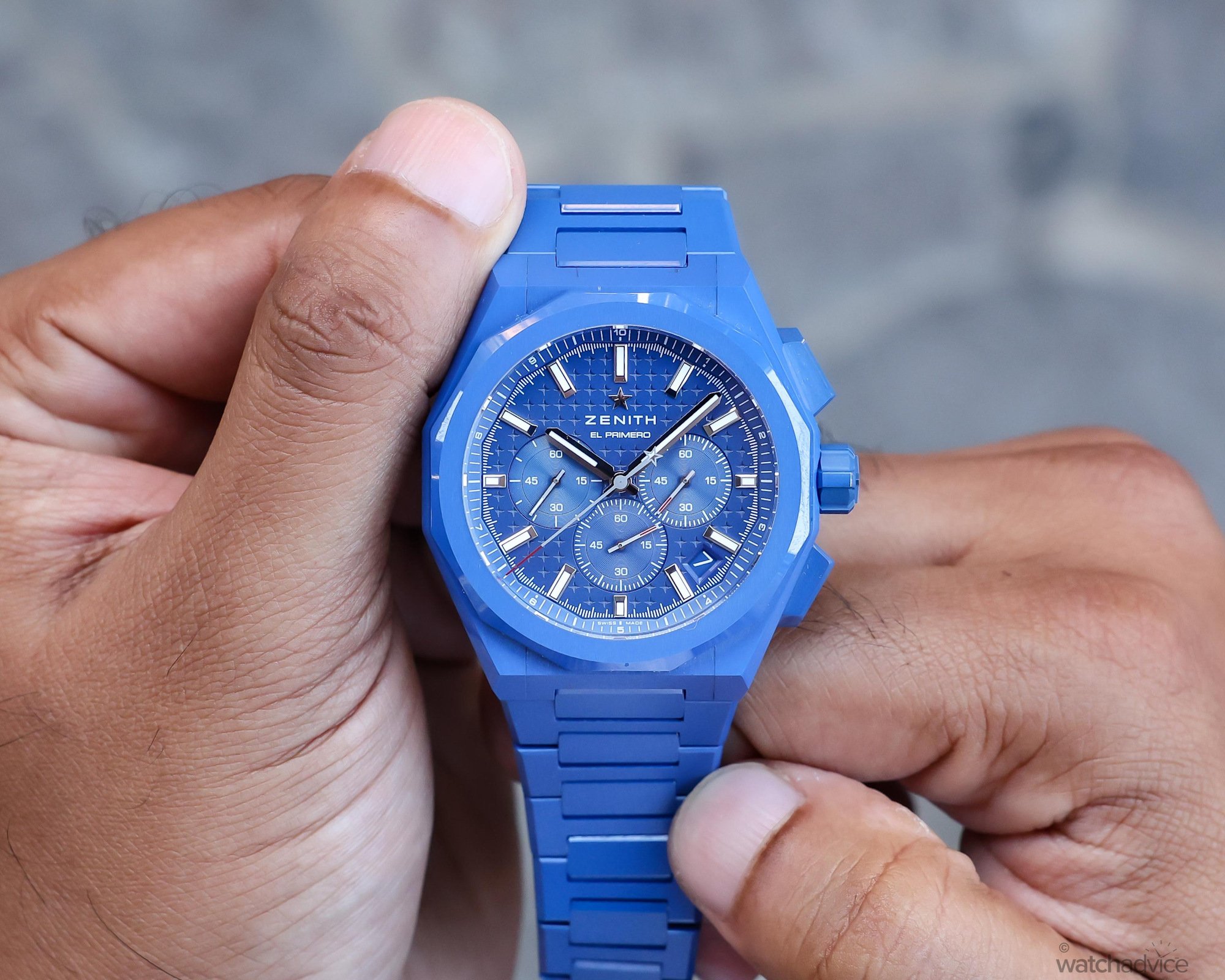
Zenith’s DEFY Skyline Chronograph Review: A Beautiful Blue Ceramic Masterpiece

This isn’t just another colour variant, it’s Zenith pushing the DEFY Skyline Chronograph into full-ceramic territory with its signature blue. The result is a watch that turns heads like a show car but wears like a daily driver. A fitting 160th-anniversary statement piece that blends Zenith’s history with its future. What We Love Full royal-blue ceramic case and bracelet give the watch a bold, cohesive look that stands out from almost anything else in this price segment. Despite the 42 mm size, the ceramic construction keeps the watch surprisingly light and wearable, even on slimmer wrists. Zenith’s El Primero 3600 combines high-frequency accuracy, 1/10th-second timing, and a 60-hour reserve. What We Don’t Matching blue sub-dials keeps the design cohesive, but doesn’t have visual separation compared to contrasting colours. The date at 4:30 is a necessary compromise but still slightly disrupts dial symmetry. Ceramic links can be trickier to size and adjust compared to steel bracelets. Overall Rating: 9/10 Value for money: 9/10 Wearability: 9/10 Design: 9/10 Build quality: 9/10 Earlier this year, Zenith released a host of blue ceramic timepieces in celebration of its 160th anniversary. The timepieces included the Pilot Big Date Flyback, Chronomaster Sport, DEFY Skyline Chronograph, and, of course, the very special Zenith G.F.J timepiece. These special limited edition models were given the blue colour treatment as it’s a signature colour of the brand. The colour ...

When Were Wristwatches Invented? Teddy Baldassarre
Sep 10, 2025

When Were Wristwatches Invented?

Even though it seems like watches have been around forever - at least judging by the ongoing heat of the pre-owned and vintage market and its influence on modern design - they are actually a relatively modern addition to human civilization, and have only been widely worn on the wrist for a little over 100 years. The history of the watch, however, has roots that run far deeper, to the very beginnings of timekeeping by humans. Here we briefly explore the watch’s origins and its development into a modern-day accessory and tool and attempt to answer the question, "When were wristwatches invented?" (Very) Early Timekeeping Modern timekeeping devices can all be traced back to the sundials and water clocks developed by the ancient Egyptians and used by the early Babylonians, Greeks, and Chinese. The influence of these ancient methods and devices resonates deeply to this day when it comes to contemporary timekeeping. In fact, it’s even made for some questionable stories that have nonetheless been shared as a type of folk history. For example, it is said that the clockwise movement of a clock is due to early timekeepers mimicking the movement of sundials, which, obviously, move from east to west. Of course, this theory doesn’t take into account that it would only hold true in the Northern Hemisphere, as someone in the southern hemisphere would see the sundial move counterclockwise. But back to what we know to be true... These relatively primitive devices eventually gave r...

What is a Chronograph Watch? Teddy Baldassarre
Sep 3, 2025

What is a Chronograph Watch?

Chronograph watches are among the most popular styles of timepieces: iconic models like the Rolex Daytona, Omega Speedmaster, TAG Heuer Carrera, and Breitling Navitimer, for example, have become some of the most famous and collectible watches in the modern era and have contributed to the enduring appeal of the chronograph to generations of enthusiasts. If you're new to the watch game, however, you might be wondering not only what all the buzz is about but what these watches actually do that makes them so special. Read on for a comprehensive primer on chronograph watches, from their earliest ancestors to the most ambitious, avant-garde timekeeping technology available in chronographs today. Chronograph vs. Chronometer As I explore in depth in our guide to chronometers, one of the first hurdles to clear for newcomers to watch appreciation is the clarification of two very common horological categories: Chronometer and Chronograph. Quite simply, a chronometer (from the Greek chronos, meaning time, and meter, meaning measure) is any watch or clock that keeps reliably accurate time, usually as determined by an outside independent testing agency, whereas a chronograph (from chronos and graph, i.e., to “write time”) is any watch or clock with the ability to track and record intervals of time, aka a stopwatch. The terms are not interchangeable but they are also not mutually exclusive: a watch equipped with chronograph functions can also be a chronometer if it has met a s...

13 Best French Watch Brands (2026) Teddy Baldassarre
Sep 1, 2025

13 Best French Watch Brands (2026)

Switzerland is the modern world’s center of watchmaking, with Germany a distant but respectable second in Europe and Japan having long staked out its own spot as the premier watch producer in Asia. Great Britain and the U.S.A., while no longer world leaders, both have a proud history of watchmaking and maintain a small but steadily growing cottage industry in the modern era. But France has its own respectable horological heritage, centered around the commune of Besançon (below), which borders Switzerland’s own heartland of watchmaking, the Vallée de Joux.  France was, in fact, a home for many historically significant watchmakers and clockmakers, including Julien Cordray, Jean-Antoine Lépine, Ferdinand Berthoud, and Abraham-Louis Breguet (actually born in the Prussian principality that would become Neuchâtel, Switzerland, but renowned as a Paris-based watchmaker to French royalty). The latter three all plied their trade in workshops on Place Dauphine at the western tip of Paris' Île de la Cité in the Seine. Watchmaking was a thriving industry in France for a century, up until KIng Louis XIV’s (below) revocation of the Edict of Nantes in 1685, which ushered in the religious persecution of Huguenot watchmakers, who fled to Switzerland to essentially establish that nation as a horological power. The French Revolution in the 18th Century, which halted the sales of luxury goods like watches in France, further eroded the country’s watch industry, and it has never ...

Tissot Gentleman Powermatic 80 Review Teddy Baldassarre
Tissot Aug 27, 2025

Tissot Gentleman Powermatic 80 Review

As it stands, Tissot remains one of the most cost-effective and dynamic points of entry into the wild world of Swiss watches. Last week, we took a deep dive into the history of Tissot, charting its journey from its beginnings all the way back in 1853 to how the brand has adapted to the watchmaking landscape of today. We are gathered here today to plunge even more granularly into the contemporary Tissot catalog with, you guessed it, the Gentleman collection, which is among the brand’s top contenders for a one-and-done watch collection, if such a thing truly exists.  Though we’ve already taken on the subject of the Tissot Gentleman in various roundups and a couple of our videos, we, surprisingly, haven’t dedicated a standalone review to the subject. So buckle up, because all that’s about to change moving forward.  Tissot Gentleman History While I’ve already alluded to our more sweeping article on Tissot’s over-century-long legacy, it’s always necessary to chart some hot historical plot points first, so we can have a more holistic view of how the brand has arrived at the Gentleman as we know it today. The story begins in 1853 in Le Locle, Switzerland (one of the historical hearts of Swiss watchmaking), with father-son duo Charles-Félicien Tissot and Charles-Émile Tissot, who turned their home into a humble watch factory. At its start, the Tissot workshop began as a comptoir d’etablissage, combining the father’s skill as a gold case fitter with his son's ...

Prix Gaïa 2025 Awarded to Dr Helmut Crott for Scholarship SJX Watches
Aug 25, 2025

Prix Gaïa 2025 Awarded to Dr Helmut Crott for Scholarship

Awarded annually by the Musée International d’Horlogerie (MIH), one of Switzerland’s leading timekeeping museums, the Prix Gaïa recognises individuals who have contributed to watchmaking in three categories. This year’s winner in the “History [and] Research” category is Dr Helmut Crott. Best known for having founded the eponymous auction house, Dr Crott is also an author, scholar, and former owner of Urban Jürgensen, amongst other roles. In 2021 he authored Le Cadran, an in-depth study of dials and dial making techniques of 20th century wristwatches. Le Cadran by Dr Helmut Crott Past winners of the Prix Gaïa include Reinhard Meis, Jonathan Betts, Pierre-Yves Donzé, Kathleen Pritschard, and Ludwig Oechslin, all scholars and authors who have contributed substantively to the body of knowledge in the field. Alongside Dr Crott, this year’s winners are Jean-Jacques Paolini for “Entrepreneurship”, and Roger W. Smith for “Craftsmanship [and] Creation”. As the successor to Georges Daniels’ brand of English watchmaking, Mr Smith now produces watches under his own name, with his achievements and timepieces well known. Jean-Jacques Paolini Mr Paolini, on the other hand, is less known outside the industry, but he is arguably most responsible for building the enterprise that’s the largest employer in La Chaux-de-Fonds. In 1980, Mr Paolini took over his family’s case and bracelet manufacturing business, developing its operations sufficiently that it was acq...

"Are Tissot Watches Good?" Teddy Baldassarre
Tissot Aug 20, 2025

"Are Tissot Watches Good?"

Tissot is one of the world's largest Swiss watchmakers and can look back on a rich history upon which it is still building today. In the modern era, Tissot is widely known for its large and diverse portfolio of watches, which ranges from dressy to sporty to high-tech, for its high-profile sports timing presence, and for its incredible value for the money. But there is a lot more that you may not know about Tissot and its many contributions to watchmaking history. Here, we delve into the highlights and tackle the easily answerable question of "are Tissot watches good?". (And if you're interested in learning more about particular Tissot Watches that are available now, check out our companion article on the Best Tissot Watches for Men.) Tissot’s Watchmaking Milestones Began in 1853 Tissot is one of the oldest watch manufacturers in the world, tracing its history back to 1853. Its founders were the father-son watchmaking team of Charles-Félicien and Charles-Émile Tissot, who turned their home in the Swiss Jura town of Le Locle, where the company remains headquartered today, into a small factory. By 1858, the family firm had gained a major foothold in Tsarist Russia, which became the largest market for the savonette pocket watches that were its specialty at the time. (At one point, Charles-Émile’s son, Charles Tissot, the third generation of the Tissot family to join the business, moved to Moscow to open an office there.) Tissot is recognized as the producer of the first...

Omega Speedmaster Guide Teddy Baldassarre
Omega Aug 13, 2025

Omega Speedmaster Guide

The Omega Speedmaster, aka the Moonwatch, is one of the most legendary and collectible watch models in the world. Originally conceived as a wristwatch for race car drivers, it has since become much more associated with its pivotal role in history as the watch used by the astronauts on the Apollo 11 mission in 1969, thus making it the first watch worn on the moon. Now the undisputed centerpiece of the modern Omega watch portfolio, the original Speedmaster has not only changed very little from the timepiece that symbolized America’s Space Race supremacy more than 50 years ago; it has also given rise to dozens of special editions, innovative variations, and the use of bold new technologies and avant-garde materials in the pioneering spirit of early space exploration. 1957: A YEAR OF MASTERY The Space Race that dominated the 1960s had yet to kick off in 1957, the year that Omega, a Swiss watch manufacturer founded in 1848, released a trio of sport-oriented tool watches with “Master” in their names, all descended stylistically from the first Seamaster of 1948, one of the first waterproof dress watches. One was the Seamaster 300, an evolution of the original that was built for deep-sea diving (I explore the Seamaster collection in depth here). The second was the Railmaster, a watch aimed at scientists and technicians whose technical hallmark was its extreme magnetic resistance (more on the Railmaster here). The third, and most influential, was the Speedmaster, which as i...

Bulova Introduces a New Lunar Pilot with a Timascus Dial Worn & Wound
Bulova Introduces Aug 7, 2025

Bulova Introduces a New Lunar Pilot with a Timascus Dial

Cosmically speaking, 150 years might not be a very long time, but in the relatively young scale of recorded human history, it’s a mighty long while indeed. Airplanes, space travel, personal computers, microchips, sliced bread, washing machines, and the Internet were all invented within the past 150 years or so, making it even more impressive when a brand reaches the same level of longevity. This year, Bulova has done just that. To celebrate their sesquicentennial, the American watchmaker has a new release based on an icon of their past: the Lunar Pilot Timascus. The new release calls back to the original watch of the same name-the Lunar Pilot Chronograph-which was created in 1971 and ultimately worn on the moon. In the futuristic year of 2025, Bulova has teamed up with Brazilian artist Thiago Rosinhole to put his signature astronaut character “Budii” on the new Lunar Pilot, furthering the space-faring theme and giving the watch a touch of quirky character on top of historical heritage.  Still, the new Lunar Pilot leans less on the use of the character (who I was admittedly unfamiliar with until the collaboration announcement) and more on a creative use of color to spice up the classic chronograph style seen on other Lunar Pilot models throughout the brand’s history and current lineup. Nestled within a stainless steel case that measures 43.5mm in diameter is the “tiamscus” dial. If you, like me, were wondering what that means, it’s actually a fairly strai...

Omega Speedmaster White Dial Moonwatch Review Teddy Baldassarre
Omega Aug 6, 2025

Omega Speedmaster White Dial Moonwatch Review

The Omega Speedmaster is a strange watch. Omega’s most iconic chronograph enjoys an enviable history that has made it a household name, and instantly recognizable to even the most casual of enthusiasts. It has aged gracefully, changing surprisingly little since its introduction in 1957, which has no doubt buoyed its status as a bona fide icon. Along with, you know, landing on the moon and all that. But digging just a little bit deeper than the Moonwatch Professional reveals a mother lode of Speedmaster references of all shapes, sizes, and colors. Getting a grasp on the full lineage of the Speedmaster is daunting, and it’s something that we plan on breaking down in layman's terms in the near future, but it’s important to understand how these older (and at times obscure) references inform Omega’s latest and greatest releases. Of course, I am talking about the Omega Speedmaster Moonwatch with a white dial. The newest Speedmaster Moonwatch Professional, released earlier this year, is the first regular-production steel Moonwatch to receive a white dial. There have been plenty of other Speedmasters to feature a white dial - from recent limited-edition Snoopy references, to the famed Alaska Project watches that originated in 1969 (and were seen again in a reissue from 2008) - so it’s not an entirely new look for the Moonwatch. This new variation is a bit different and, to my eye, draws inspiration from a different reference in the back catalog: the so-called Albino ...

Reflecting on Twenty Years of MB&F; SJX Watches
MB&F; Aug 4, 2025

Reflecting on Twenty Years of MB&F;

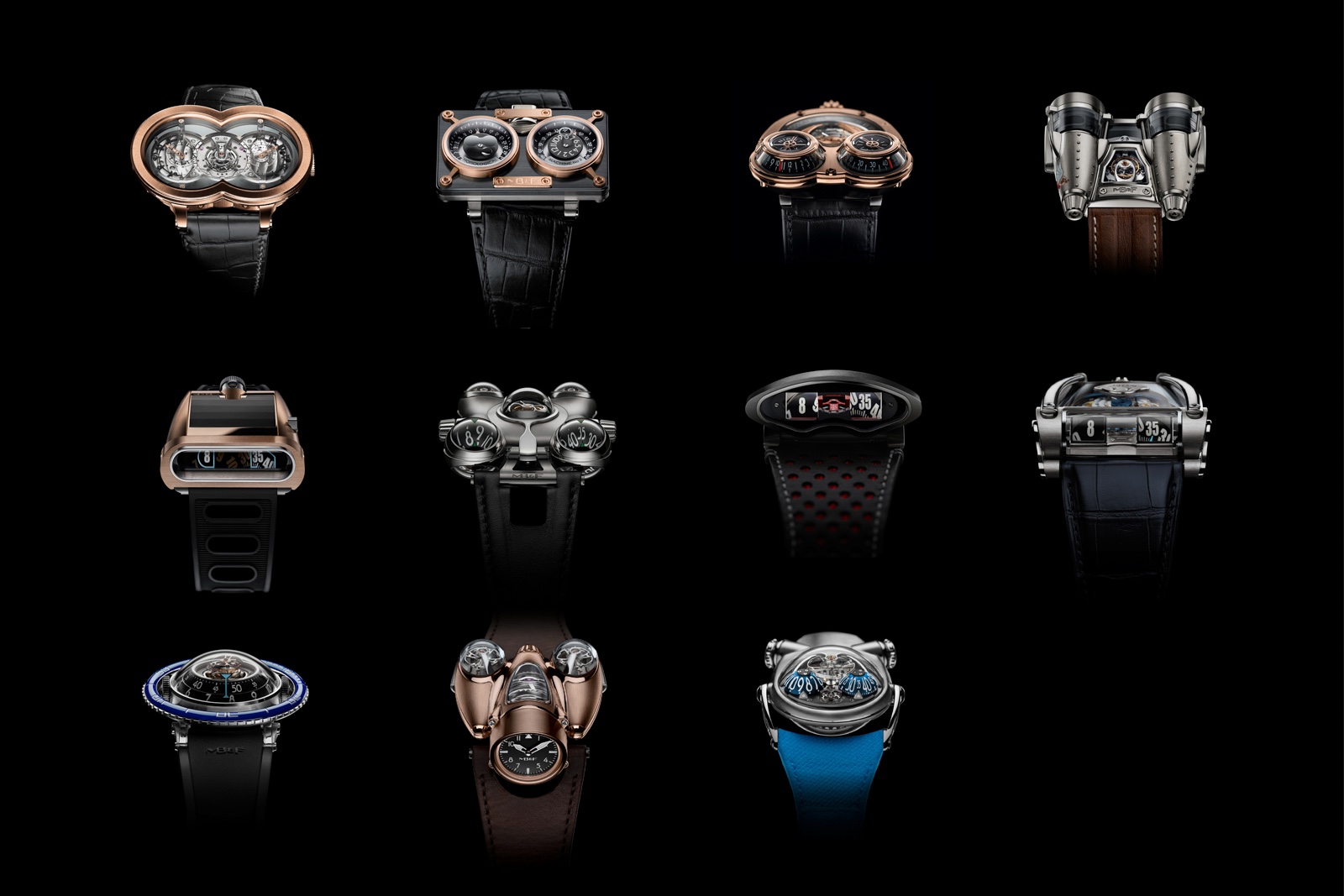
It’s difficult to picture what the independent watchmaking landscape would look like without MB&F;. In some ways, it feels like the brand has always been around, perhaps because for me, it has. I first discovered MB&F; in 2008 when the HM2 was launched, but even back then the brand had an aura of polish that belied its short history. With the benefit of hindsight, Max Büsser’s decision to step away from corporate life, and leave the top job at Harry Winston Rare Timepieces to build his own brand rooted in collaboration, transparency, and imagination, seems obvious. But at the time, it was seen as a risky move that would never work. To understand why it did, we need to go back to the early 2000s. Max Büsser during the launch of the HM1 It’s called what? Let’s rewind. In the early 2000s the watch community was obsessed with the topic of in-house movements. The internet was slowly helping collectors find one another and share insider knowledge, which revealed how many watches were powered by the same handful of movements. If a new brand wanted to be taken seriously, it was increasingly important to be a manufacture and do as much as possible in-house. It was a simpler time, and we had yet to see such widespread misuse of the term.  So when Mr Büsser explained that MB&F; stood for ‘Maximilian Büsser & Friends,’ and that he would actively celebrate the friends and collaborators that he was working with, people told him he was crazy. But he understood that the coll...

Tudor Black Bay Chrono Review Teddy Baldassarre
Tudor Jul 23, 2025

Tudor Black Bay Chrono Review

The Tudor Black Bay Chrono hit the market, somewhat unexpectedly, in 2017, boldly elevating the already red-hot Black Bay collection into a new tier of horological prestige and marking the debut of a collaboration (again, rather unexpected) between Rolex-owned Tudor and its Swiss sport-watch competitor Breitling. Nearly a decade later, the model still represents the highest level of complication in Tudor’s 21st-Century lineup, and yet this Tudor chronograph also remains very manageable, as a subfamily, in terms of material, size, and colorway options - an area in which the larger Black Bay collection, some might argue, has gone a bit far in the opposite direction, now encompassing three distinctive iterations: original Black Bay, Black Bay 58, and Black Bay 54 (which we reviewed here), all touting different sizing and multiple colorways and materials. And this doesn’t even include the other “complicated” extension of the line, the Black Bay GMT, which recently debuted in the “58” sizing and which seems to unveil a new bicolor bezel or dial color every year since its 2018 debut. Originally called the Heritage Black Bay - as it was clearly an homage to vintage dive watches from Tudor’s watchmaking history, which began in 1946 - the OG Black Bay model traces its aesthetic roots to the Oyster Prince Submariner, released in 1954, one year after big brother Rolex rolled out its own much more famous Submariner watch. This original version, Ref. 7922, used the ...